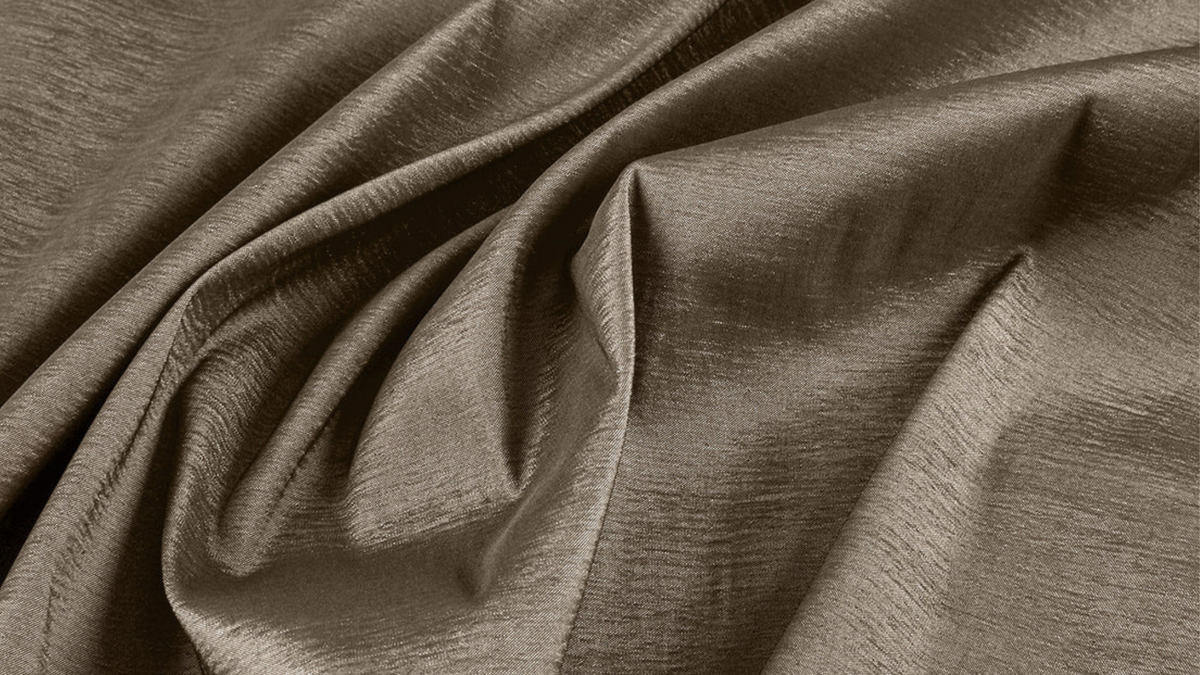
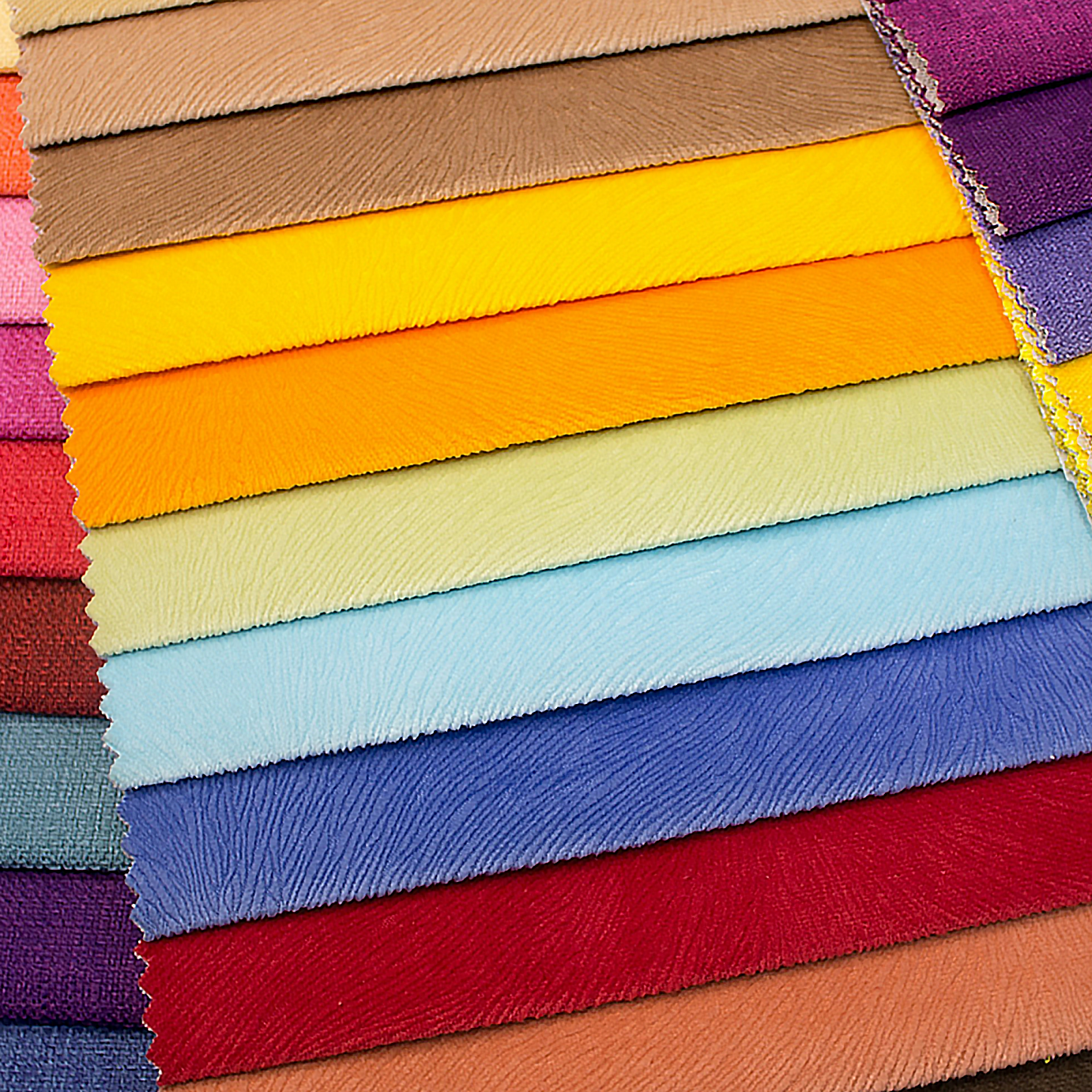
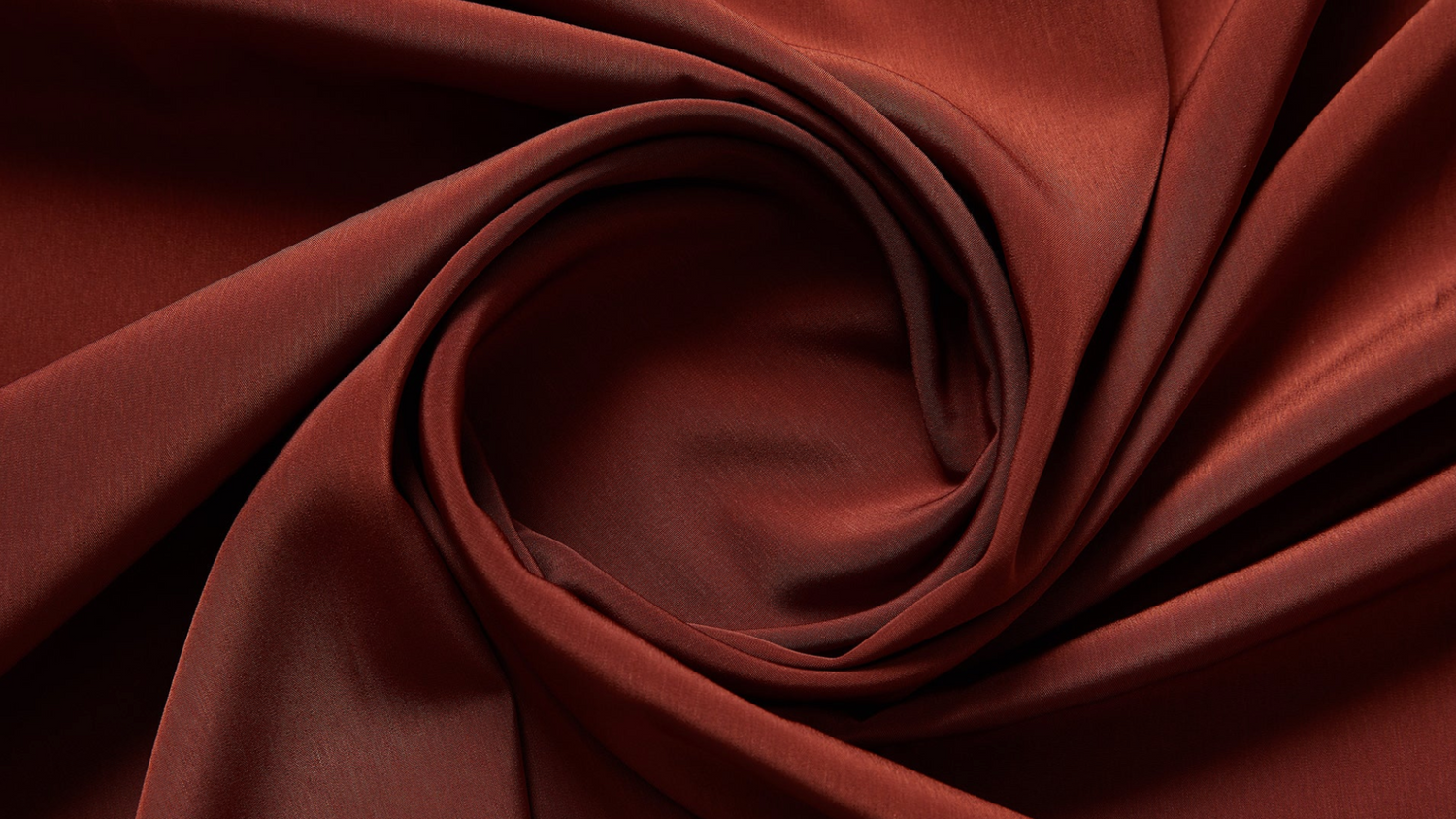
Crepe de Chine (pronounced ‘krep-duh-sheen’) is a true classic cherished by designers and style aficionados for its distinctive drape, refined texture, and remarkable versatility. In this guide, we cover what makes Crepe de Chine a workroom staple, how polyester Crepe de Chine compares to silk, and everything you need to know to sew, care for, and source it confidently.
What is Crepe de Chine fabric?
Crepe de Chine (sometimes called simply “ crepe”) is a lightweight, finely woven fabric known for its distinctive crepe texture. It is traditionally made from silk, though polyester Crepe de Chine has become a widely used alternative across ready-to-wear, costume, and fashion design.
Crepe de Chine is generally considered a high-quality fabric well-suited to fluid, draping garments. Here are some key characteristics,
- Texture: Crepe de Chine has a unique texture characterized by a slightly crinkled or pebbly surface. This texture is created through a special weaving process that gives the fabric a soft, subtle rippling effect.
- Weight: It is a lightweight fabric, which makes it ideal for flowy, draping garments. Polyester Crepe de Chine is commonly available in weights ranging from approximately 60 gsm (very lightweight, sheer) to 120 gsm (mid-weight, more opaque), giving sewists and designers precise control over drape and coverage.
- Drape: Crepe de Chine drapes beautifully, making it a popular choice for dresses, blouses, and other garments that need fluid movement and a soft, elegant look.
- Shine: Crepe de Chine has a natural sheen that varies by fiber. Polyester CdC typically has a more uniform, semi-lustrous finish than the organic, variable sheen of silk, making it a popular choice for printed garments where color consistency matters.
- Versatility: It is a versatile fabric suitable for both casual and formal wear. It is often used in evening gowns, lingerie, blouses, scarves, and other quality clothing items.
- Comfort: Because it’s lightweight and breathable, Crepe de Chine is comfortable to wear in warm weather.
- Printability: This fabric’s surface is well-suited to printing, allowing a wide range of patterns and designs.
- Care: Silk Crepe de Chine requires delicate hand washing or dry cleaning to maintain its quality and shape. Polyester Crepe de Chine is generally machine washable on a gentle cycle in cool water, making it significantly easier to care for than silk CdC and a practical advantage for everyday garments.
- Color Retention: Crepe de Chine tends to hold dye well, resulting in vibrant and long-lasting colors.
Polyester Crepe de Chine is woven from continuous-filament polyester yarns that are twisted at high tension before weaving, producing the same characteristic crepe texture as silk but with greater dimensional stability and lower cost.
For buyers specifically searching for polyester Crepe de Chine, the fabric delivers the elegant drape and printability of traditional CdC at a more accessible price point and with simpler care requirements.

Zelouf Silky Crepe de Chine in Cobalt
Polyester vs. Silk Crepe de Chine: Which Should You Choose?
Polyester and silk Crepe de Chine share the same characteristic crepe texture and fluid drape, but they differ in ways that matter significantly depending on your budget, care preferences, and intended use.
|
Property |
Polyester CdC |
Silk CdC |
|
Cost |
Typically $5 - $20 per yard |
Typically $20 - $60+ per yard |
|
Care |
Machine wash, gentle cycle, cool water |
Hand wash or dry clean |
|
Drape |
Excellent; slightly stiffer than silk |
Exceptionally fluid |
|
Sheen |
Uniform, semi-lustrous |
Organic, variable |
|
Breathability |
Moderate |
High |
|
Wrinkle Resistance |
High |
Low to moderate |
|
Colorfastness |
Excellent; holds print detail well |
Good |
|
Best Use Cases |
Dresses, blouses, linings, costumes, everyday wear |
Bridal, couture, heirloom garments |
Cost: Silk CdC typically costs 20-60+ per yard; polyester CdC typically costs 5-20 per yard, depending on quality and supplier. That price difference is significant for larger projects or high-volume production runs.
Care: Polyester CdC is machine washable on a gentle cycle, while silk CdC requires hand washing or professional dry cleaning. For garments that will be worn and laundered frequently, polyester is the practical choice.
Drape and Sheen: Silk CdC has an unmatched fluidity and a naturally variable sheen that reads as elevated in person. Polyester CdC offers a consistent semi-lustrous finish that photographs and prints exceptionally well.
Breathability: Silk CdC breathes more freely and wicks moisture more effectively. In warm or humid conditions, silk has a clear comfort advantage. A poly-silk blend (often 60% polyester / 40% silk or 70/30) offers a middle ground, with better drape and breathability than 100% polyester at a lower price than 100% silk.
Wrinkle Resistance: Polyester CdC is notably more wrinkle-resistant than silk. Its synthetic fiber memory means it recovers from light creasing more readily, making it a strong choice for travel garments and event wear that needs to be packed.
Colorfastness: Polyester CdC accepts digital and sublimation printing exceptionally well. The tight weave holds fine detail, and the synthetic fiber produces vivid, colorfast results that often outperform silk in print clarity.
For bridal, couture, or heirloom garments, silk CdC remains the premium choice. For everyday dresses, blouses, linings, costumes, and high-volume production, polyester CdC delivers excellent results at a fraction of the cost.
What is Polyester Crepe de Chine Used For?
Polyester Crepe de Chine is one of the most versatile fabrics in a designer’s toolkit. Its combination of drape, printability, and easy care makes it suitable for a wide range of garments and applications.
- Dresses and Skirts: The fluid drape of polyester CdC makes it a natural fit for wrap dresses, A-line skirts, and maxi silhouettes. It moves well and holds its shape through a full day of wear.
- Blouses and Tops: Lightweight enough for layering, polyester CdC produces blouses with a polished, elevated hand feel without the care demands of silk.
- Linings: Its smooth surface sits comfortably against skin and reduces static in structured garments, making it a reliable lining choice for jackets, skirts, and dresses.
- Scarves and Accessories: Polyester CdC takes print exceptionally well and holds color through repeated washing, making it a go-to for printed scarves and accessories.
- Costumes and Theatrical Wear: Polyester CdC’s cost advantage over silk makes it practical for large yardage needs in costume and theatrical production, where drape and visual impact matter more than fiber content.
- Eveningwear: The semi-lustrous finish of polyester CdC reads as elevated on stage and in photographs, making it a workable choice for formal and eveningwear at accessible price points.
A particular strength of polyester CdC is its printability. It accepts digital and sublimation printing exceptionally well. The tight weave holds fine detail, and the synthetic fiber produces vivid, colorfast results that often outperform silk in print clarity, making it a preferred base for printed polyester Crepe de Chine fabric across fashion and costume design.
Are there any disadvantages of crepe de chine fabric?
Crepe de Chine fabric is generally regarded as a high-quality material, but like any fabric, it has its disadvantages and limitations. Many of the disadvantages below apply primarily to silk Crepe de Chine. Polyester CdC addresses several of them while introducing its own trade-offs.
- Delicacy: Crepe de Chine, especially when made from silk, is delicate and can be susceptible to snags, pulls, and damage from sharp objects or rough handling.
- Wrinkling: Silk Crepe de Chine can wrinkle easily. This may require careful handling and storage to prevent excessive creasing.
- Care Requirements: Silk Crepe de Chine typically requires delicate hand washing or dry cleaning, which adds to the cost and maintenance of garments.
- Price: High-quality Crepe de Chine made from pure silk can be expensive compared to synthetic alternatives. Polyester CdC, by contrast, is considerably more affordable, typically 30 - 70% less expensive than comparable silk CdC, making it accessible for larger projects, costumes, and everyday wear.
- Limited Stretch: Crepe de Chine usually has limited stretch or give, which may affect the comfort and fit of certain garments.
- Transparency: Some versions of Crepe de Chine, especially lighter colors, may be somewhat sheer so that you may need a lining or careful undergarment selection.
- Absorbency: Silk Crepe de Chine can absorb moisture easily, which may lead to water spots or staining if it comes into contact with liquids. Polyester CdC does not share this weakness. It is hydrophobic, meaning it resists water absorption and is far less prone to water spotting.
- Temperature Sensitivity: Silk Crepe de Chine can be sensitive to high heat, so take care when ironing or steaming to avoid damage.
- Static Cling (polyester-specific): Polyester CdC can generate static electricity, especially in dry climates or during winter months. A fabric softener in the wash cycle or an anti-static spray before wearing will resolve this.
- Heat Sensitivity (polyester-specific): Polyester CdC has a lower melting point than silk and will scorch or permanently distort if ironed above a low-heat setting, typically below 150°C / 300°F. Always use a pressing cloth and a dedicated synthetic or low setting on your iron.
- Breathability: Polyester CdC is less breathable than silk CdC. In very hot or humid conditions, silk will wick moisture more effectively. For warm-weather garments, a lighter gsm polyester CdC or a poly-silk blend may be preferable.
- Color Fading: While Crepe de Chine holds dye well, prolonged exposure to direct sunlight can cause colors to fade over time.
- Limited Availability: High-quality silk Crepe de Chine may not be readily available in all regions, making it less accessible for some buyers.
Despite these trade-offs, Crepe de Chine remains a popular choice across fashion applications. The right fiber choice depends on your intended use, care preferences, and project budget.
Is crepe de chine fabric difficult to sew?
Polyester Crepe de Chine is generally considered easier to sew than silk CdC. It frays slightly less aggressively, holds its shape better on the cutting table, and tolerates minor machine tension variations more forgivingly. That said, both versions of the fabric benefit from careful technique. Here are the key factors to consider,
- Needle and Thread: For polyester CdC specifically, use a size 70/10 or 75/11 sharp (Microtex) needle. Pair it with a fine polyester thread rather than cotton. Polyester thread has the same stretch coefficient as the fabric, which prevents seam breakage under stress.
- Pinning: Be careful when pinning, as the fabric can snag easily. Use fine, sharp pins and place them within the seam allowance to minimize visible holes.
- Seam Preparation: Finish raw edges before sewing to prevent fraying. French seams or a narrow zigzag stitch both work well on Crepe de Chine.
- Stabilizing: If your fabric is particularly slippery, place a sheet of tissue paper underneath it when cutting or sewing. This prevents shifting and gives the feed dogs something to grip.
- Sewing Machine Settings: Adjust your machine for lightweight fabrics. Lower the tension and use a shorter stitch length (around 2.0 mm) to prevent puckering.
- Handling: Guide the fabric gently through the machine. Avoid stretching or pulling, as this will distort the seams.
- Pressing: For polyester CdC, set your iron to the synthetic or low setting, no higher than 150°C (300°F). Polyester will permanently distort at higher temperatures. Press with a pressing cloth and use steam sparingly, as excess moisture can leave marks on the fabric surface.
- Static Management: Polyester CdC can cling to itself and to your cutting mat. Lightly mist the fabric with water before cutting, or use a static-reducing spray, to keep layers aligned and prevent shifting.
- Rotary Cutter vs. Scissors: A sharp rotary cutter with a fresh blade produces cleaner edges on polyester CdC than scissors, reducing fraying at the cut edge before you reach the serger or zigzag stitch.
- Seam Allowances: Use a narrow seam allowance, typically 1/4 inch (6mm) or 3/8 inch (9mm), to reduce bulk.
- Practice: If you are new to sewing with Crepe de Chine, test your machine settings on scrap pieces first before cutting into your project yardage.
With the right setup, polyester Crepe de Chine is a rewarding fabric to work with. The fluid results are well worth the attention to detail.

Zelouf Ashley Crepe Chiffon in Teal Delight
Does crepe fabric wrinkle easily?
Silk Crepe de Chine is known to wrinkle relatively easily. The fabric’s fine, lightweight nature and characteristic crepe texture mean even slight handling, folding, or extended wear can cause creases to appear.
Polyester Crepe de Chine is notably more wrinkle-resistant than its silk counterpart. The synthetic fiber’s memory means it recovers from light creasing more readily, making polyester CdC a practical choice for travel garments, event wear that needs to be packed, or garments that will be worn for extended periods.
To minimize wrinkles when working with or wearing Crepe de Chine, consider the following:
- Storage: Store garments on hangers where possible to minimize folds and creases. Avoid overcrowding your closet.
- Hanging: Hang garments in a well-ventilated area to let wrinkles fall out naturally over time.
- Steam: Use a handheld steamer to gently remove wrinkles. Keep the nozzle slightly away from the fabric surface to avoid direct contact with concentrated heat.
- Avoid Overloading: When washing, give the fabric space to move freely in the machine. Overloading leads to more wrinkles and uneven cleaning.
- Ironing: For polyester CdC, use the lowest heat setting on your iron (the synthetic or nylon setting) and iron on the wrong side of the fabric. Never apply high steam directly to polyester CdC. For silk CdC, use a low to medium setting with a pressing cloth.
- Professional Cleaning: For valuable or delicate silk Crepe de Chine garments, professional dry cleaning is the safest option and will help maintain the fabric’s appearance over time.
Proper storage and handling go a long way toward keeping Crepe de Chine looking its best, regardless of fiber content.
How to Care for Polyester Crepe de Chine
One of the biggest practical advantages of polyester Crepe de Chine over silk is its forgiving care routine. Most polyester CdC can be laundered at home without professional dry cleaning, which makes it a strong choice for everyday garments, high-volume production pieces, and anything that will see frequent wear.
Step-by-step care routine
- Machine wash on the gentle or delicate cycle in cool water (30°C / 86°F max).
- Use a mild, color-safe detergent. Avoid bleach, which can weaken synthetic fibers and affect color.
- Place the garment in a mesh laundry bag to prevent snags and reduce abrasion during the wash cycle.
- Tumble dry on low heat or, preferably, air dry flat or on a hanger. Air drying reduces the risk of heat distortion and extends the fabric’s life.
- Iron on the synthetic or low setting with a pressing cloth if needed. Keep the iron below 150°C (300°F) and avoid prolonged contact with any single area of the fabric.
A few additional notes worth keeping in mind:
- Avoid washing polyester CdC with rough fabrics like denim or towels. The abrasion can pill the surface over time and dull the semi-lustrous finish.
- Store polyester CdC garments hanging rather than folded where possible. If you must fold them, place acid-free tissue paper between folds to prevent permanent crease lines from setting in.
- Anti-static spray or a dryer sheet in the wash cycle will address any static cling, particularly in dry climates or winter months.
With this straightforward routine, polyester Crepe de Chine holds its drape, color, and finish through repeated laundering, which is why it is a preferred choice for designers and manufacturers working at volume.
Where can I buy crepe de chine fabric?
When shopping for polyester Crepe de Chine, a few key specifications will help you find the right fabric for your project.
- Weight (gsm): For blouses and dresses, look for 75-100 gsm. For lining applications, 60-75 gsm works well. For structured tops or skirts, 100-120 gsm provides more body and opacity.
- Width: Polyester CdC is commonly sold in 58-60 inch widths, which is wider than many natural-fiber fabrics and allows for more efficient pattern layout, particularly useful when working with larger cuts or matching prints.
- Finish: Look for descriptions like “matte crepe de chine” (reduced sheen, more casual hand feel) vs. [satin-back Crepe de Chine](URL of Zelouf satin-back crepe de chine collection page) (reversible, with a satin face on one side and crepe on the other). Each finish serves different design purposes and reads differently under light.
At Zelouf Fabrics, we carry hundreds of polyester Crepe de Chine fabric options available wholesale and by the yard, including solids, prints, and satin-back styles. We also stock silk Crepe de Chine for projects where the natural fiber is the right call. With more than 35 years in the NYC Garment District, we know what workrooms and designers need, and we ship fast to keep your timeline on track.