
Shop Muslin Fabric by the Yard for Garments, Quilting and Backdrops
Muslin is one of the most versatile cotton fabrics on the market. It is a finely woven, plain-weave cloth used for centuries in everything from couture pattern-making to bookbinding. The name traces to Mosul (modern Iraq), the historical textile-trading hub, while the fabric itself was perfected in Dhaka, in present-day Bangladesh.
At its peak in the 17th and 18th centuries, Dhaka muslin, called woven air or woven wind by Mughal emperors, was so fine it was exported to European courts and traded by the British East India Company. You may also see it spelled mousseline (French) or musselin (German). It is pronounced MUZ-lin.
Modern commercial muslin typically runs 68x72 threads per inch (a standard print cloth construction), though finer grades reach 200 threads per inch. Our unbleached cotton muslin collection delivers the natural cotton base most makers want, in continuous yardage. For other lightweight cotton options, explore our cotton fabric, poplin, and voile collections.
A Brief History of Muslin Fabric
Muslin’s story begins in Dhaka, in what is now Bangladesh, where weavers used ultra-fine native Phuti karpas cotton to produce cloth so sheer that Mughal emperors called it Baft Hawa (“Woven Air”), and European traders paid fortunes to ship it west.
The fabric’s name entered European languages through Mosul, the Iraqi trading city where merchants first encountered it, giving rise to mousseline in French and musselin in German. By the 17th century, Bengal muslin had become one of the world’s most coveted textiles. The British East India Company controlled much of its export trade, shipping bolts to courts from Versailles to St. Petersburg.
The Industrial Revolution changed everything. Machine-spun cotton from English mills undercut handwoven Bengal muslin on price, and the colonial trade structure that followed effectively dismantled the weaving communities that had sustained the craft for generations. The Phuti karpas cotton variety, the biological foundation of true Dhaka muslin, nearly went extinct.
Today, a Bengal muslin revival is underway. Researchers and weavers in Bangladesh have worked to reintroduce the Phuti karpas plant and reconstruct the hand-weaving techniques that produced thread counts exceeding 1,200 per inch.
The fabric that modern makers use, the plain-weave unbleached cotton muslin sold by the yard for toiles, quilting, and fabric arts and crafts, is a direct descendant of that tradition, simplified for industrial production but carrying the same fundamental construction logic: a balanced plain weave, natural cotton fiber, and an open hand that accepts dye, paint, and the maker’s intention equally well.
Common Applications
Sewing Toiles & Pattern-Making:
Pattern-makers and dressmakers cut “muslins” before cutting expensive fashion fabric. The drape is faithful enough to refine fit and silhouette without committing to final yardage. A standard bodice toile uses roughly 2 to 3 yards, while a full dress toile can require 5 to 7 yards. Because muslin’s drape closely mimics medium-weight wovens, it is the industry standard for fitting before cutting silk, wool, or suiting. It is the workhorse of every couture studio.
Quilting & Quilt Backing:
Soft to the touch, easy to needle, and a clean canvas for dye or paint. Unbleached cotton muslin is a staple quilting cotton backing for hand-quilted and machine-quilted projects where a breathable, natural cotton reverse is the right call.
Photography & Theatrical Backdrops:
Paintable, dye-friendly, and easy to drape. Muslin backdrops have anchored portrait studios and stage sets for decades. A standard portrait backdrop is 10x12 ft, approximately 4.5 yards of 108”-wide fabric, or 8 to 9 yards of 47”-wide muslin seamed together. Muslin backdrops are preferred over vinyl because they absorb light rather than reflect it, eliminating hotspots. Our backdrop and draping collection covers the wider category if you need more options.
Baby Items & Swaddles:
Naturally breathable and gentle on skin, muslin is why muslin swaddles, burp cloths, and bibs dominate baby registries. Pre-wash before sewing to account for shrinkage.
Natural Dyeing & Tie-Dye:
Because unbleached muslin contains no optical brighteners or chemical finishes, it takes fiber-reactive dyes, indigo vat dyes, and natural plant dyes (madder, weld, woad) without a scour step, though a mordant such as alum is still recommended for plant dyes. The plain weave lets pigment penetrate evenly, which is why muslin is a foundation fabric for fabric arts, arts and crafts dyeing, and muslin fabric arts projects alike.
Kitchen & Food:
Strain stocks, make cheese, wrap butter (called “butter muslin”), and brew kombucha or beer. Butter muslin is woven at a finer count than standard cheesecloth, around 90 threads per inch, tight enough to strain soft cheese curds while still allowing whey to drain freely.
Skincare & Reusable Cloths:
Soft enough on skin for cleansing and exfoliating. Muslin face cloths are a long-standing skincare staple.
Types of Muslin Fabric
The practical differences between muslin types come down to weave density (measured in GSM or thread count), finish, and fiber certification. Common types you will encounter are:
Unbleached Muslin:
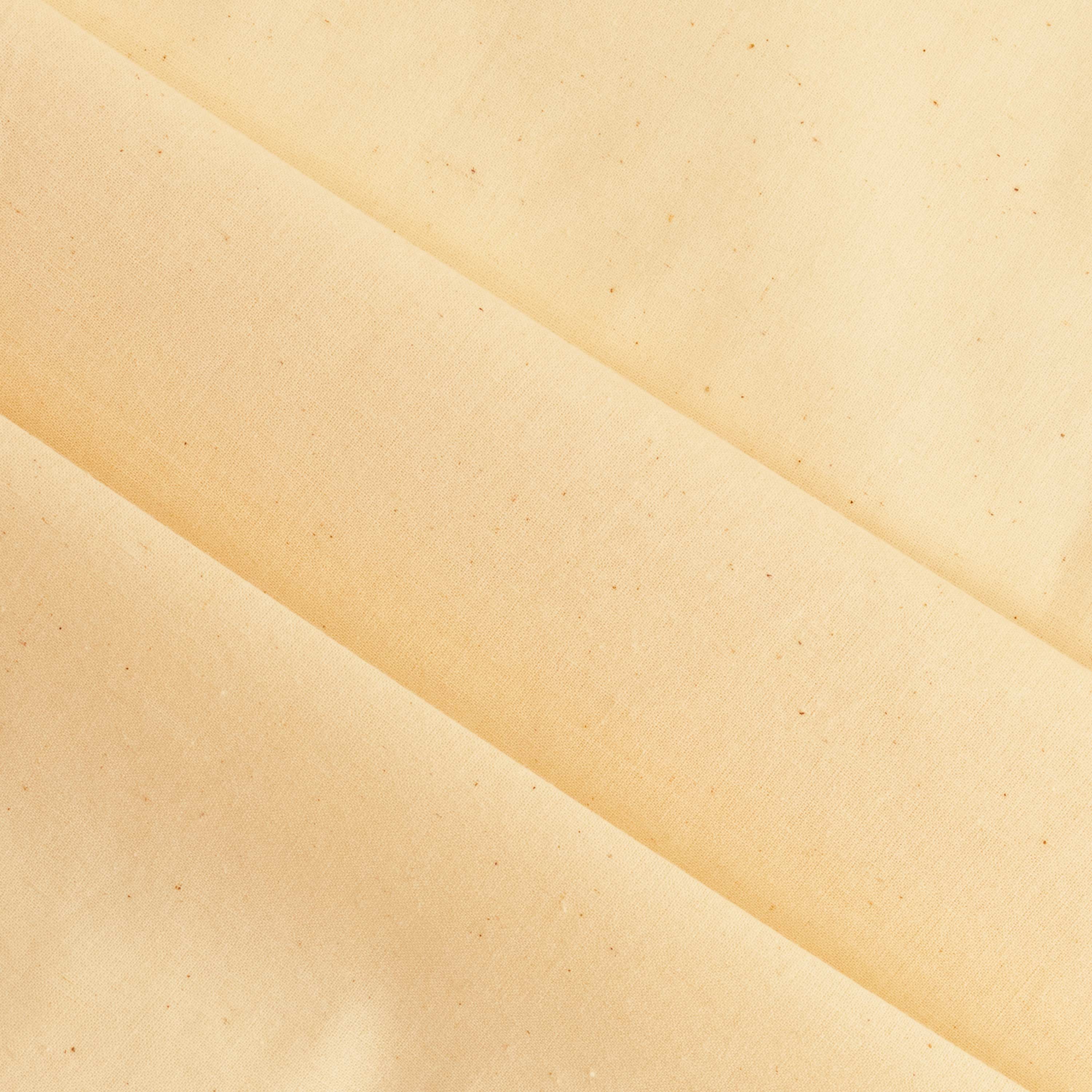
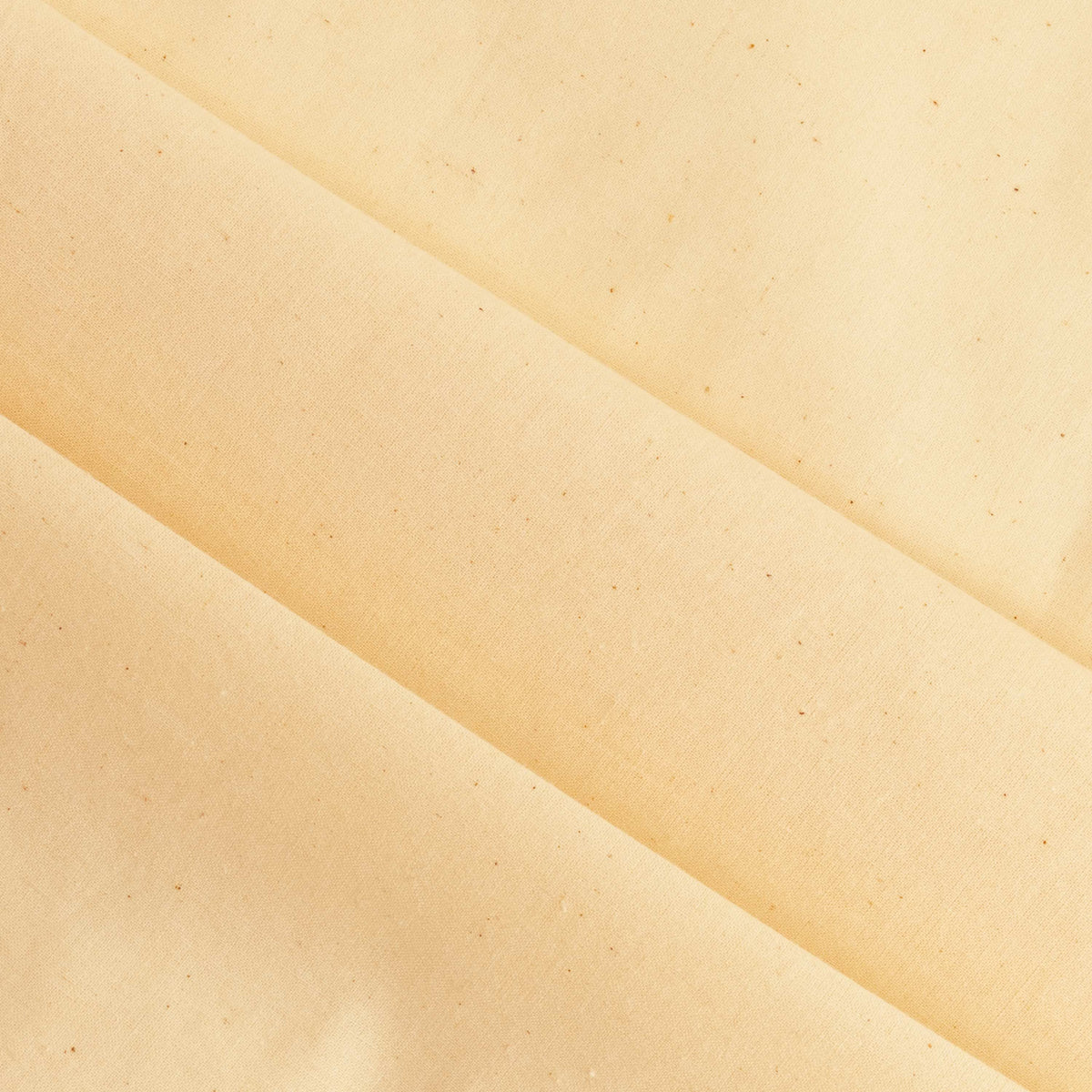
Unbleached muslin has a natural cream or off-white colour and typically weighs 100 to 130 GSM. Zelouf carries this fabric with its natural starch sizing intact, giving it a slightly crisp feel that softens after washing to reveal the cloth’s softer texture. It is a versatile base for dyeing, painting, and projects that call for a raw, natural look.
Bleached / White Muslin Fabric:
Pure white, ready for stark white applications without further treatment. Bleaching removes the natural cream tone but also strips some sizing - bleached muslin often feels softer straight off the bolt than unbleached.
Gauze Muslin (Single & Double Gauze):
Gauze has a loose, airy weave that allows airflow and creates a lightweight, breathable fabric. Single gauze typically weighs 50 to 70 GSM and is light enough to be nearly transparent. Double gauze combines two layers of single gauze with a light stitch pattern and weighs around 100 to 120 GSM. This construction gives the fabric a soft drape and slight loft, which make it ideal for baby swaddles and lightweight shirts.
Organic Muslin:
Woven from cotton grown without synthetic pesticides. GOTS (Global Organic Textile Standard) certification covers both the fiber and the processing chain, meaning no toxic dyes or finishing agents, relevant for baby items and skin-contact applications.
Printed Muslin:
Base muslin with printed patterns for apparel and fabric arts and crafts.
Black Muslin Fabric:
Dyed black, often used for backdrops and stage draping.
Dhaka Muslin:
Historically the finest muslin in the world. The finest historical Dhaka muslin, called Woven Air (Baft Hawa), had thread counts exceeding 1,200 per inch. The Bengal government has been working to revive the craft using the native Phuti karpas cotton variety, which was nearly extinct. Mostly a museum reference today, though the revival effort is ongoing.
Muslin vs Cotton, Linen, Gauze and Cheesecloth
Muslin vs Cotton:
Muslin is a plain-woven cotton fabric. Cotton refers to the fiber, while muslin describes the fabric’s weave and construction. Other cotton fabrics, such as poplin, sateen, and twill, use the same fiber but have different weave structures.
Muslin vs Linen:
Muslin is made from cotton, while linen comes from flax. Linen is also stronger, stiffer, and more textured, whereas muslin is softer, lighter, and more affordable.
Muslin vs Gauze:
Gauze has a looser, more open weave than standard muslin, which gives it a lighter, airier feel. Muslin has a denser weave and offers more coverage.
Muslin vs Cheesecloth:
Cheesecloth has a very loose, open weave that suits tasks such as straining liquids. Standard muslin has a tighter weave, which makes it a better choice for garments and sewing projects.
Key Considerations
Fiber Content:
Our muslin is 100% cotton, naturally breathable, dyeable, and biodegradable.
Weight and Width:
Our muslin is approximately 3 oz/yd² (roughly 100 GSM), 47” wide, plain-weave construction. That weight sits in the sweet spot for toiles, quilt backing, and light apparel, substantial enough to hold its shape on a dress form, light enough to drape without stiffness.
Thread Count:
Standard commercial muslin is woven at about 68x72 threads per inch, the classic print-cloth specification. Higher thread counts (above 140) produce a smoother hand suited to fine garments; lower counts (below 60) move into gauze territory.
Pre-Shrinking:
Cotton muslin shrinks roughly 3 to 5% on the first wash. Always pre-wash and dry before cutting any final garment, quilt, or backdrop.
Continuous Yardage and Bulk:
Most orders ship as uninterrupted cuts. We offer bolt or wholesale quantities for production runs. Contact us for bulk muslin fabric pricing.
How to Order Your Muslin
Order the exact yardage you need for your project. We cut continuous lengths to minimize seam interruptions on larger pieces like backdrops or quilt backs. Most US orders ship from New York within 1-2 business days, with free shipping on orders over $99 and a $20 minimum.
Pro Tip: Always wash, dry, and press your muslin before cutting.
Frequently Asked Questions
What is muslin fabric made of?
Authentic muslin is made of 100% cotton fibers woven in a plain weave. Some modern variants blend cotton with poly or rayon, but traditional muslin, including ours, is pure cotton.
What thread count is muslin fabric?
Standard commercial muslin is woven at approximately 68x72 threads per inch (the classic print cloth spec), giving a total thread count around 140. Finer muslin grades can reach 200+ threads per inch, while gauze muslin drops below 60. Higher thread counts produce a smoother, softer hand; lower counts give a more open, airy weave.
Is muslin cotton?
Yes. Muslin is a cotton fabric distinguished by its lightweight, plain-weave construction. All authentic muslin is cotton.
What does “muslin” mean and how do you pronounce it?
The word derives from Mosul (modern Iraq), historically a hub of textile trade; the fabric itself was perfected in Dhaka, in present-day Bangladesh. Muslin is pronounced “MUZ-lin” with two syllables and a soft “s.”
Is muslin breathable?
Very. The loose, open plain weave lets air pass through easily, which is why muslin is a go-to for baby swaddles, summer garments, and warm-weather curtains.
Is muslin soft?
Yes, and it gets softer with every wash. New muslin can feel slightly crisp because of natural sizing in the weave; a wash and tumble dry break it in.
Does muslin shrink?
Yes. Expect roughly 3 to 5% shrinkage on the first wash. Always pre-wash and dry muslin before cutting any final garment, quilt, or backdrop.
How do I wash muslin fabric?
Machine wash cold on a gentle cycle. Tumble dry low or hang to dry. Iron on medium with steam if needed. Avoid bleach on unbleached muslin, which can yellow the fibers.
Is muslin good for babies?
Yes. Muslin’s breathability reduces overheating during sleep, its soft hand is gentle on skin, and its loose weave makes it easy to wash and quick-drying. That’s why muslin swaddles dominate baby registries.
Is muslin the same as cheesecloth?
They’re related, not identical. Cheesecloth is a very loosely woven, gauzy form of muslin. Standard muslin (like ours) has a tighter weave and more body, better for garments, backdrops, and quilting; cheesecloth is better for straining liquids.
Is muslin the same as linen?
No. Muslin is cotton; linen is woven from flax. Linen is stiffer, stronger, and more textured. Muslin is softer, lighter, more affordable, and easier to sew.
What is butter muslin?
Butter muslin is a finer-woven version of cheesecloth, used to wrap butter or strain dairy. Woven at around 90 threads per inch, it is loose enough to let whey drain while holding soft cheese curds in place.
What is muslin gauze fabric?
Muslin gauze is muslin woven with an extra-open, airy structure. Single gauze is the lightest, running approximately 50 to 70 GSM; double gauze, with two layers bonded together, lands around 100 to 120 GSM and is what most muslin swaddles are made of.
Is unbleached muslin organic?
Unbleached muslin is undyed and unbleached, but “unbleached” doesn’t automatically mean organic. Organic muslin is specifically grown without synthetic pesticides and is usually GOTS-certified. Our muslin is unbleached natural cotton.
Can I buy muslin fabric by the bolt or in bulk?
Yes. We sell continuous yardage for small projects and can quote bolt or wholesale quantities for larger orders. Contact us for bulk muslin fabric pricing.
Where can I buy muslin fabric?
Zelouf Fabrics ships muslin by the continuous yard across the US, with free shipping on orders over $99 and a $20 minimum order. Most orders ship from New York within 1-2 business days.