
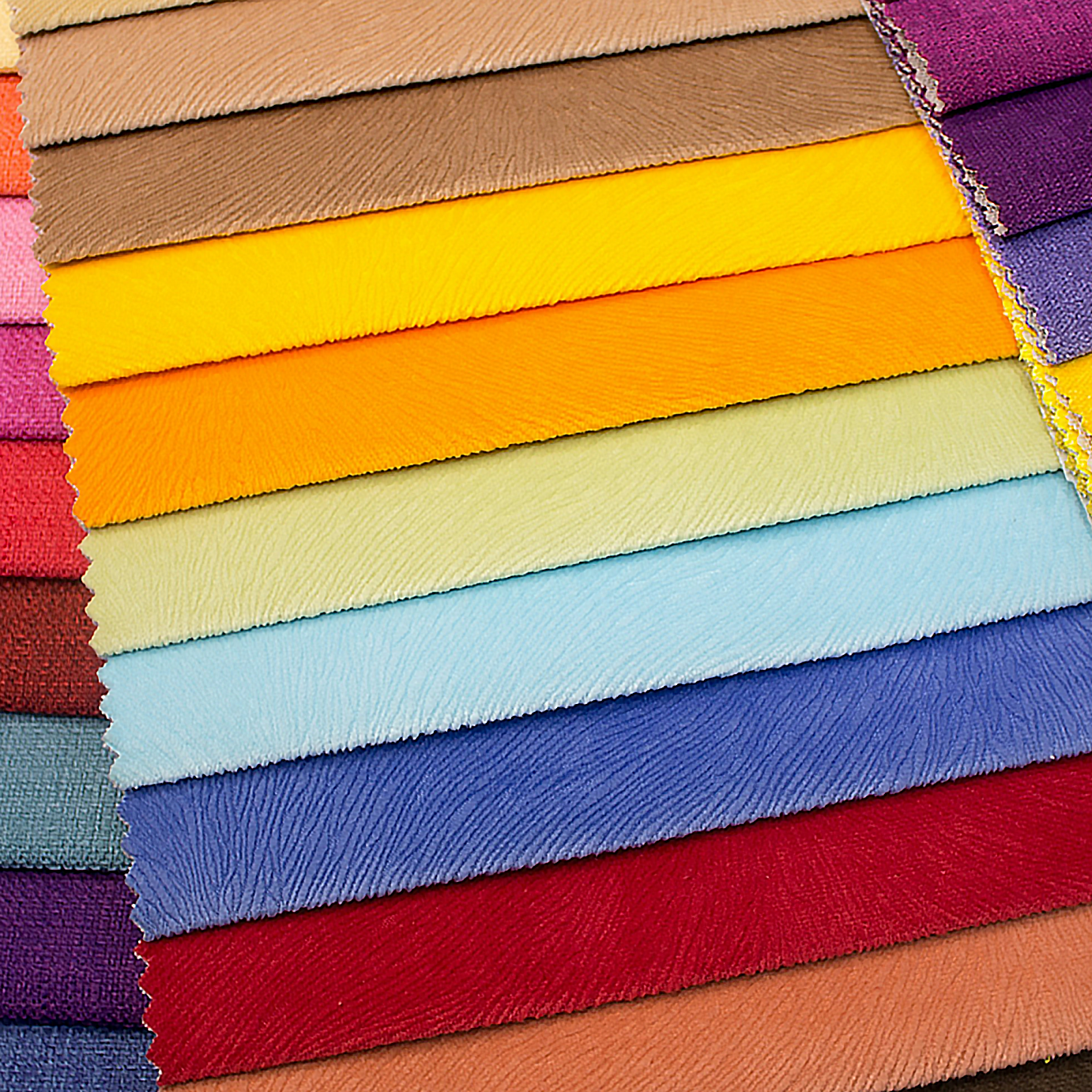
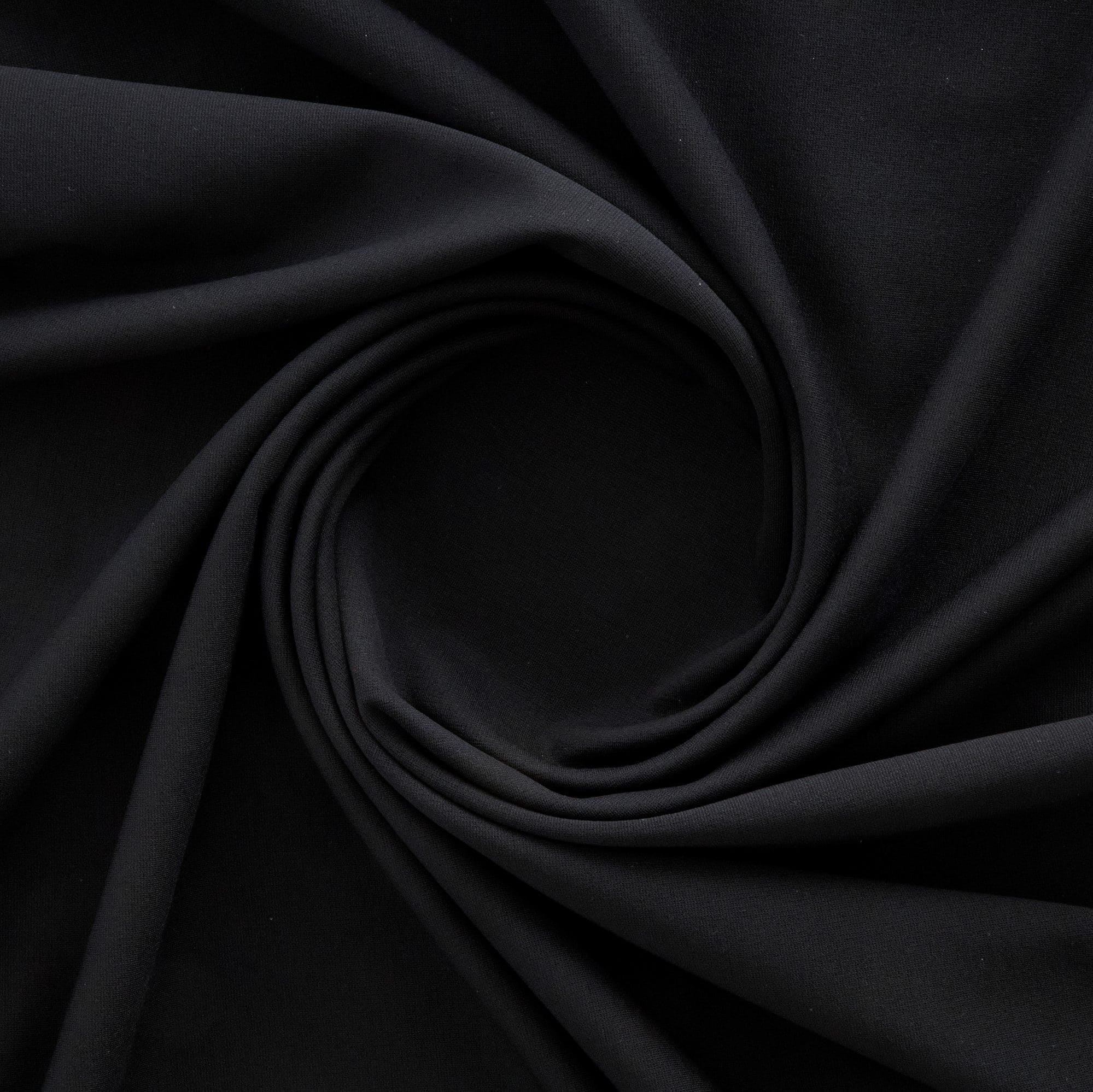
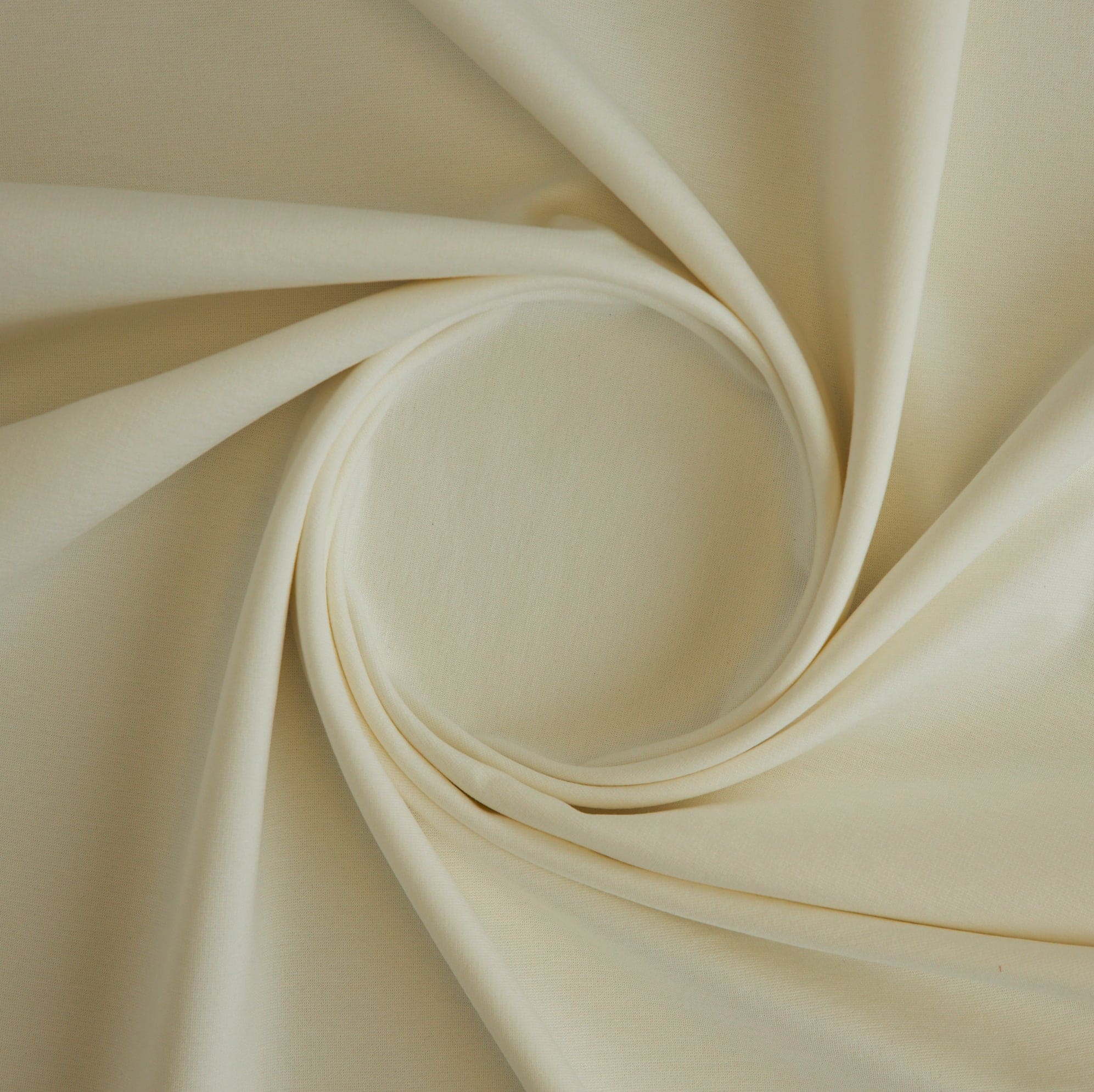
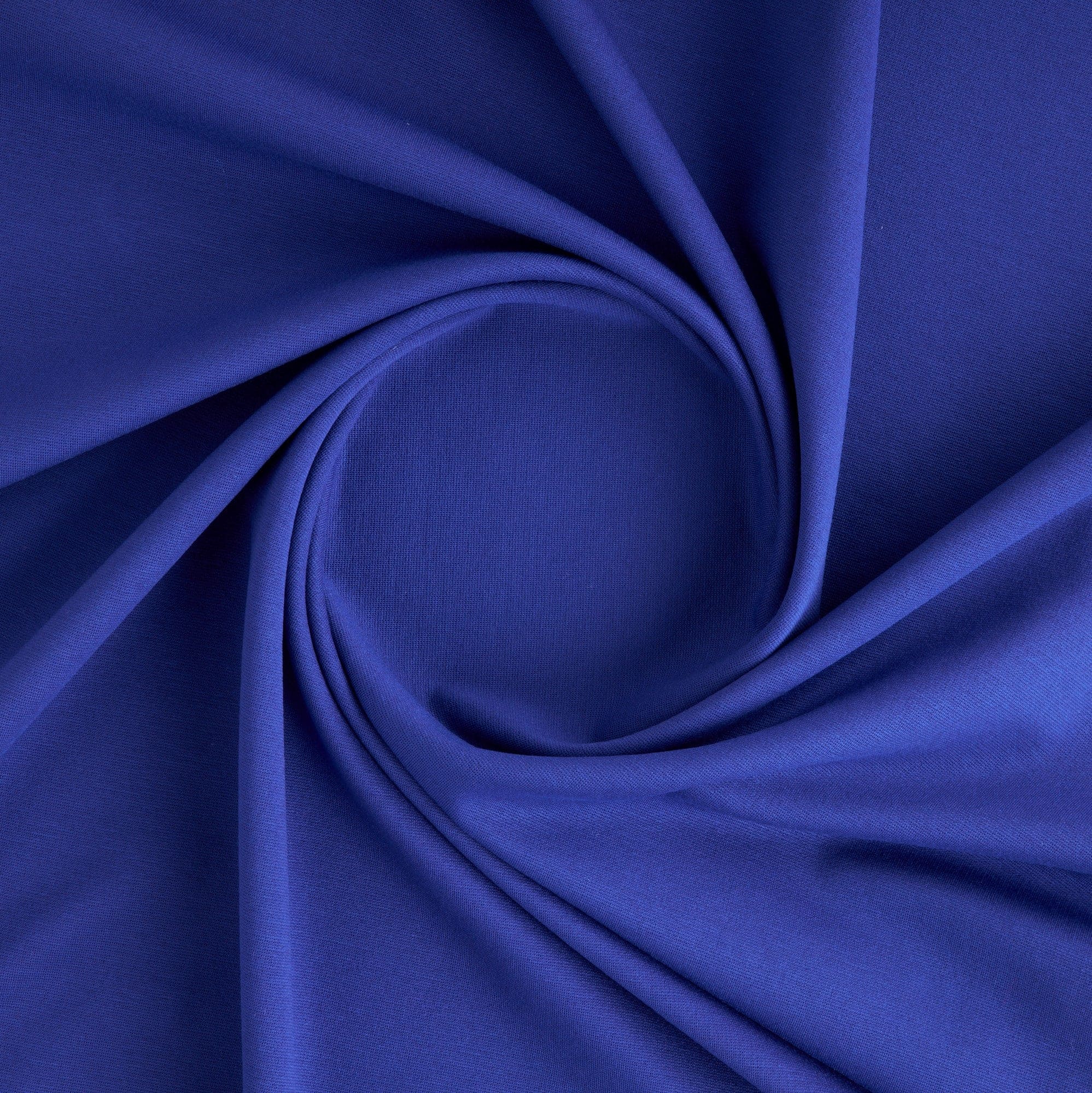
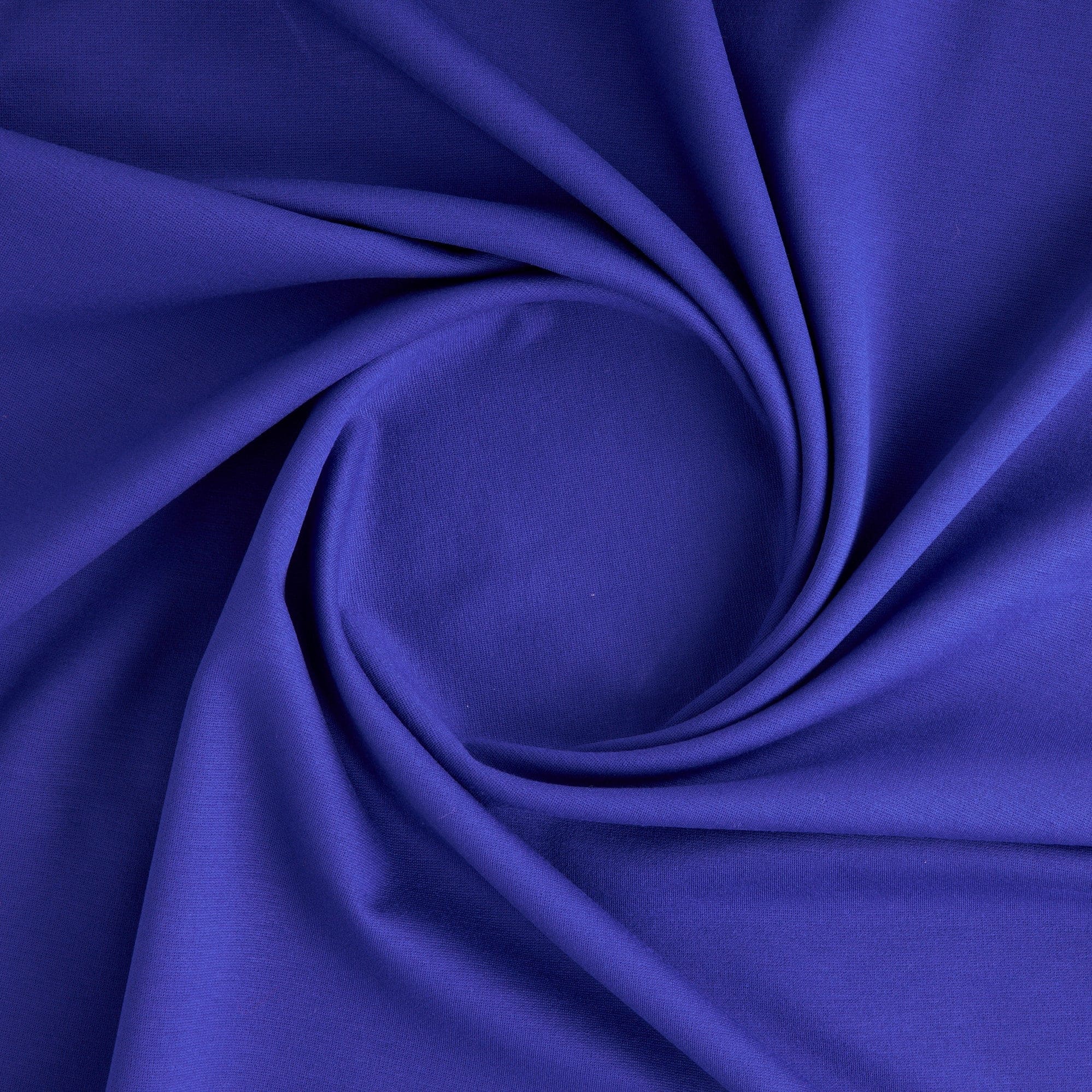
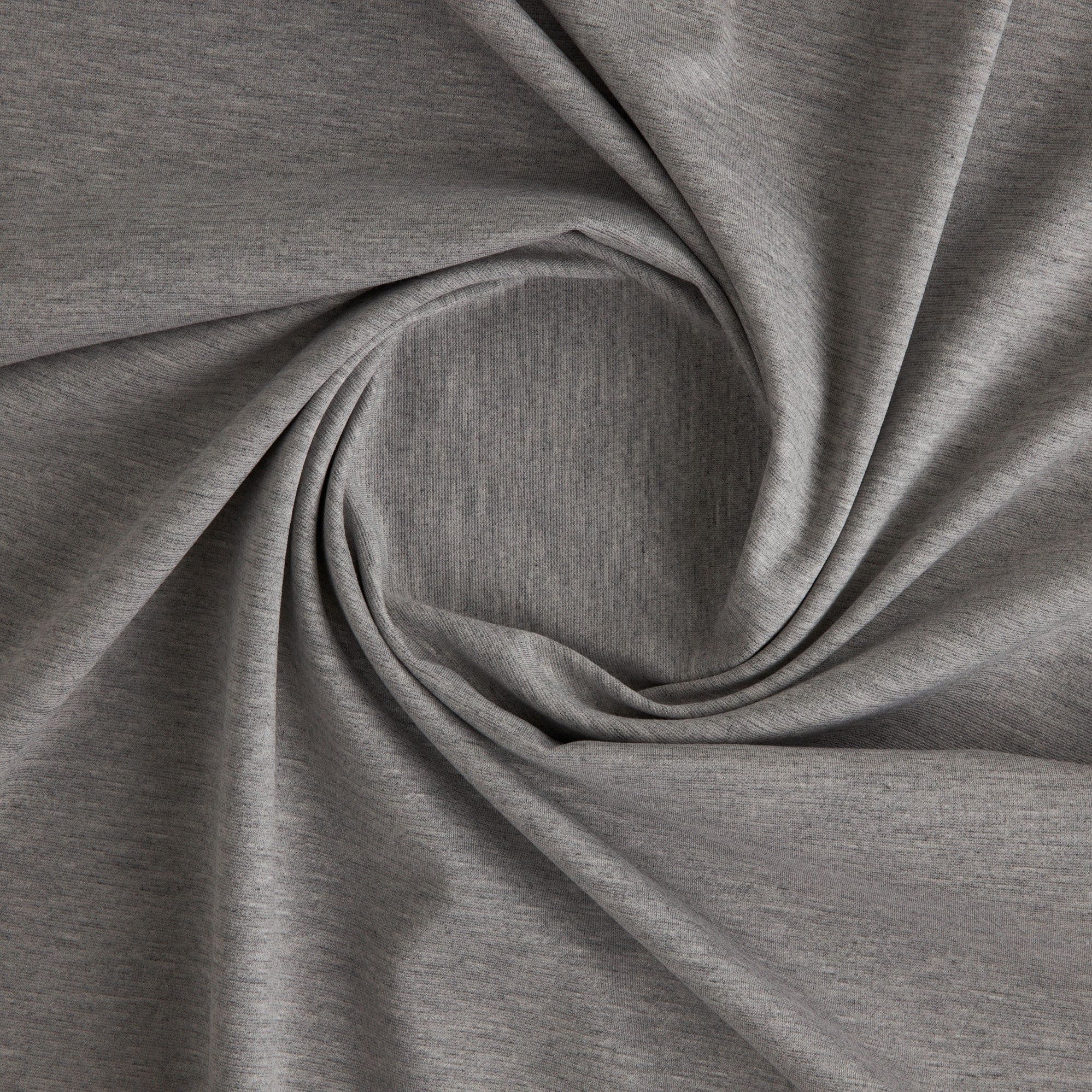
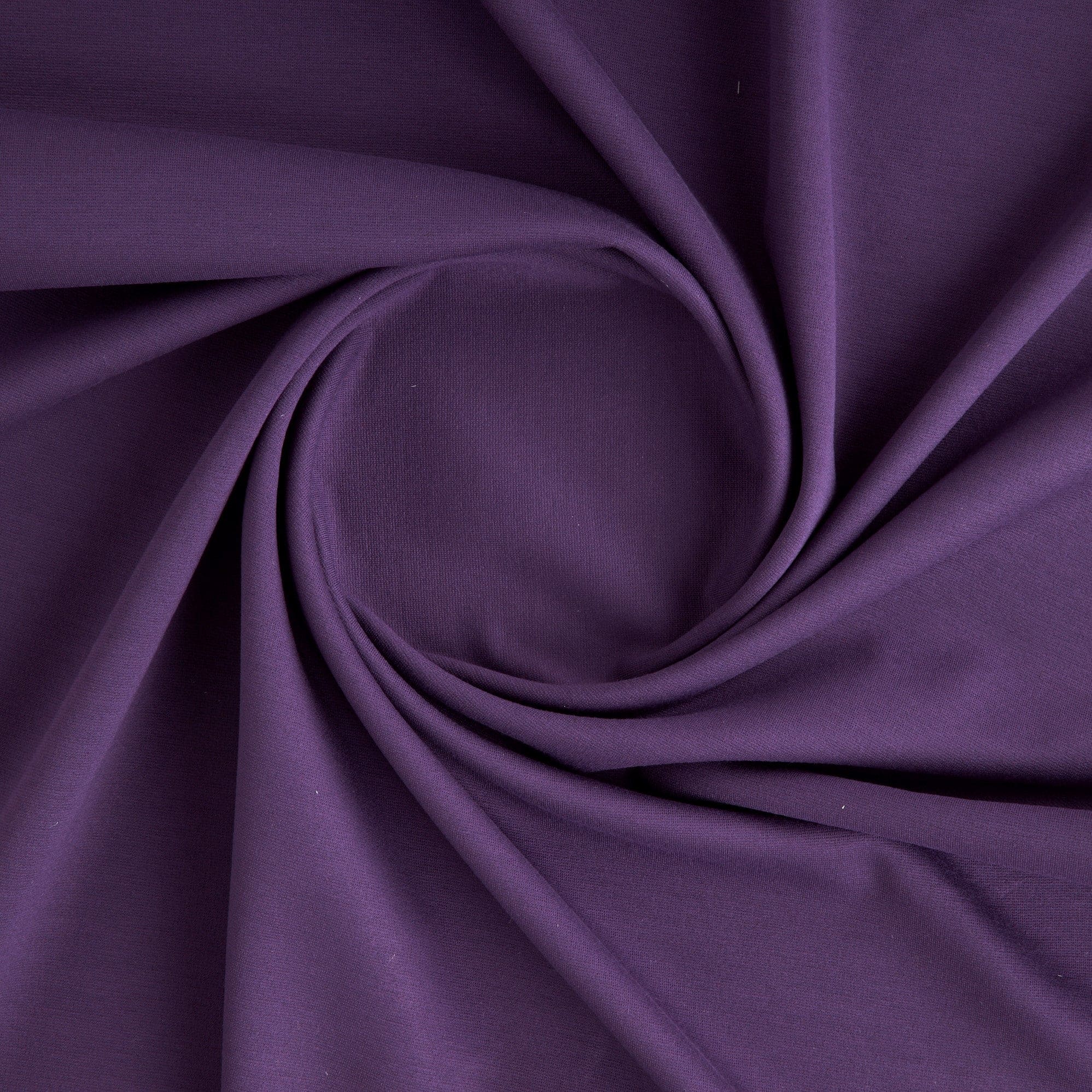
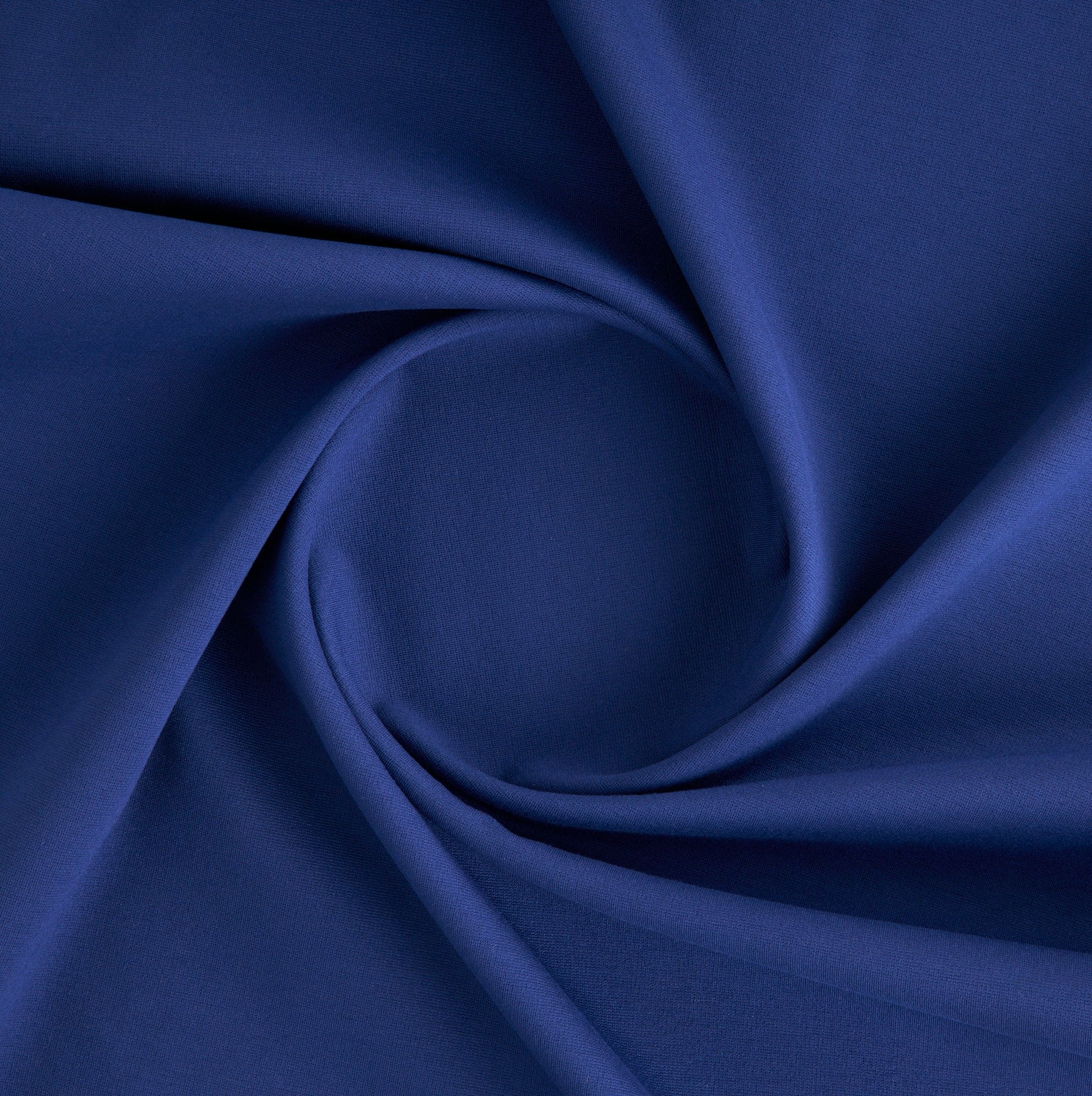
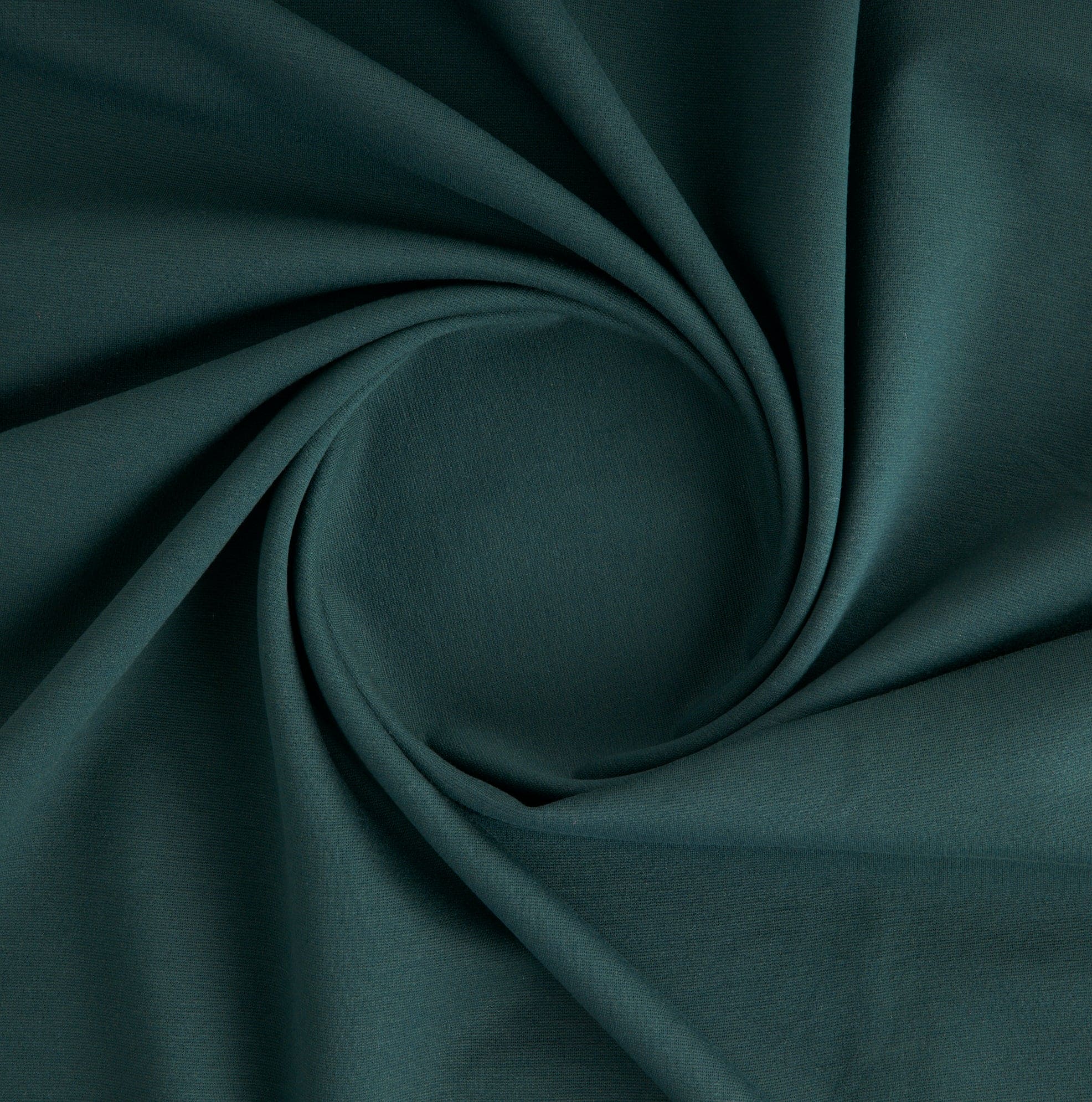
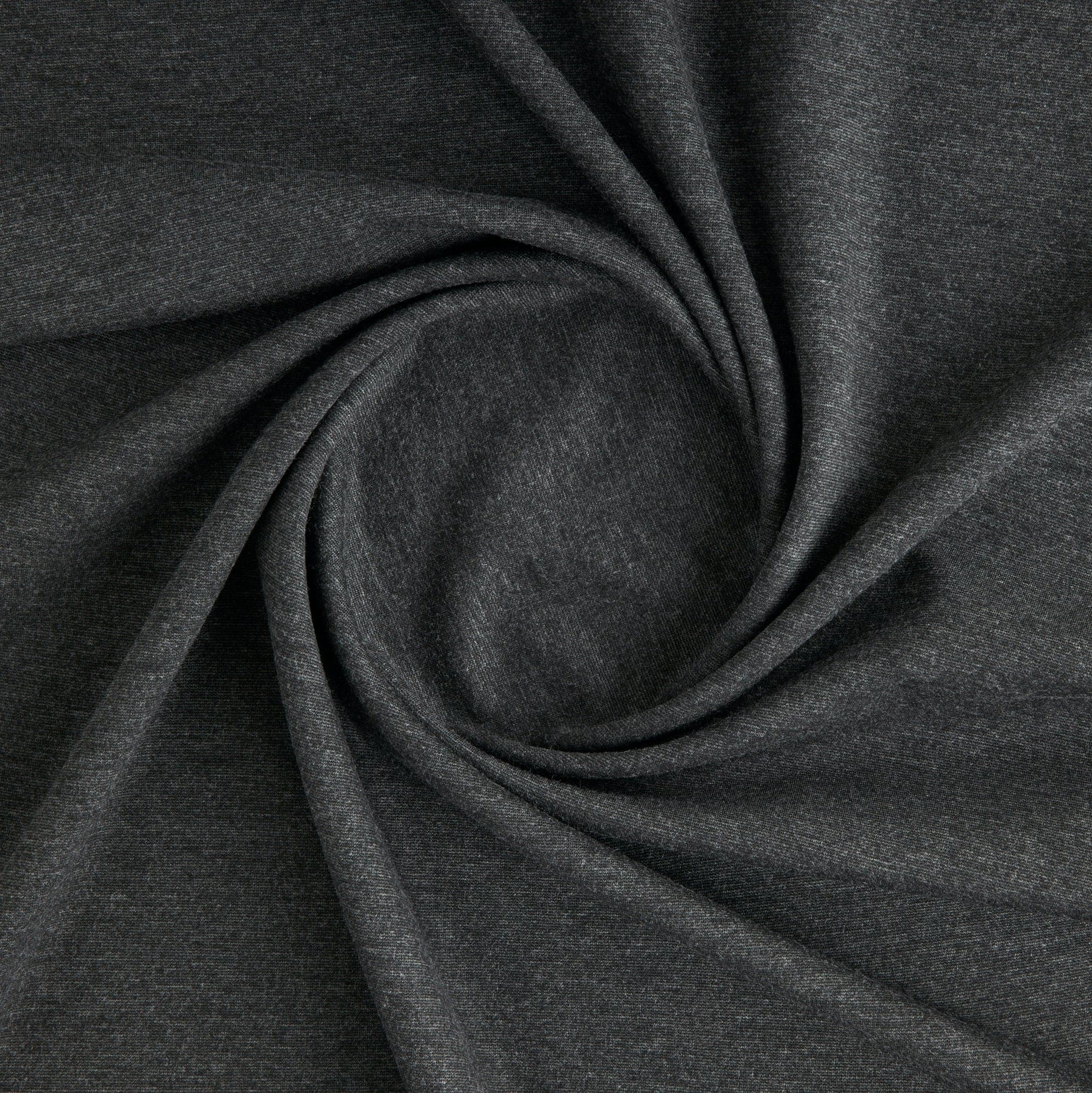
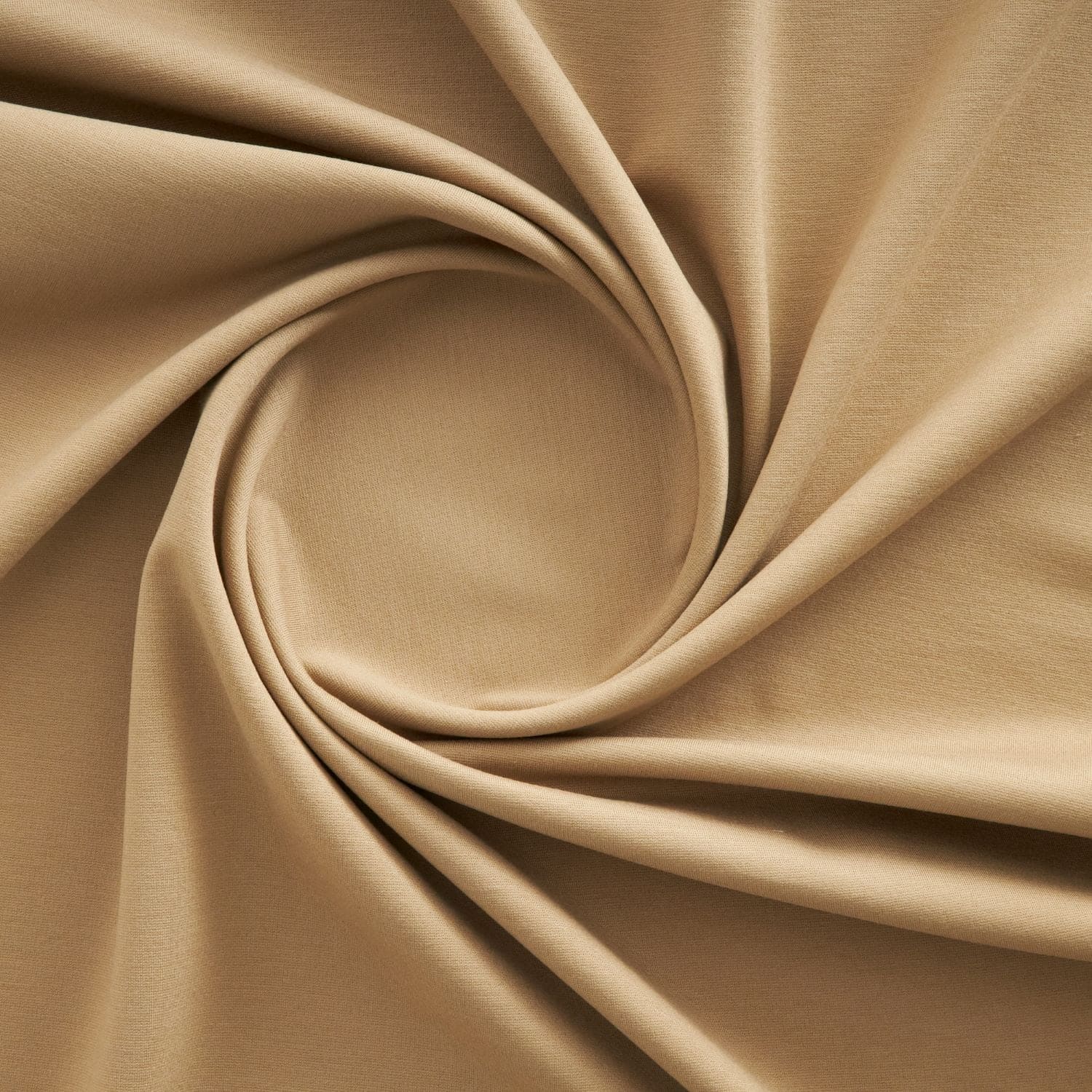
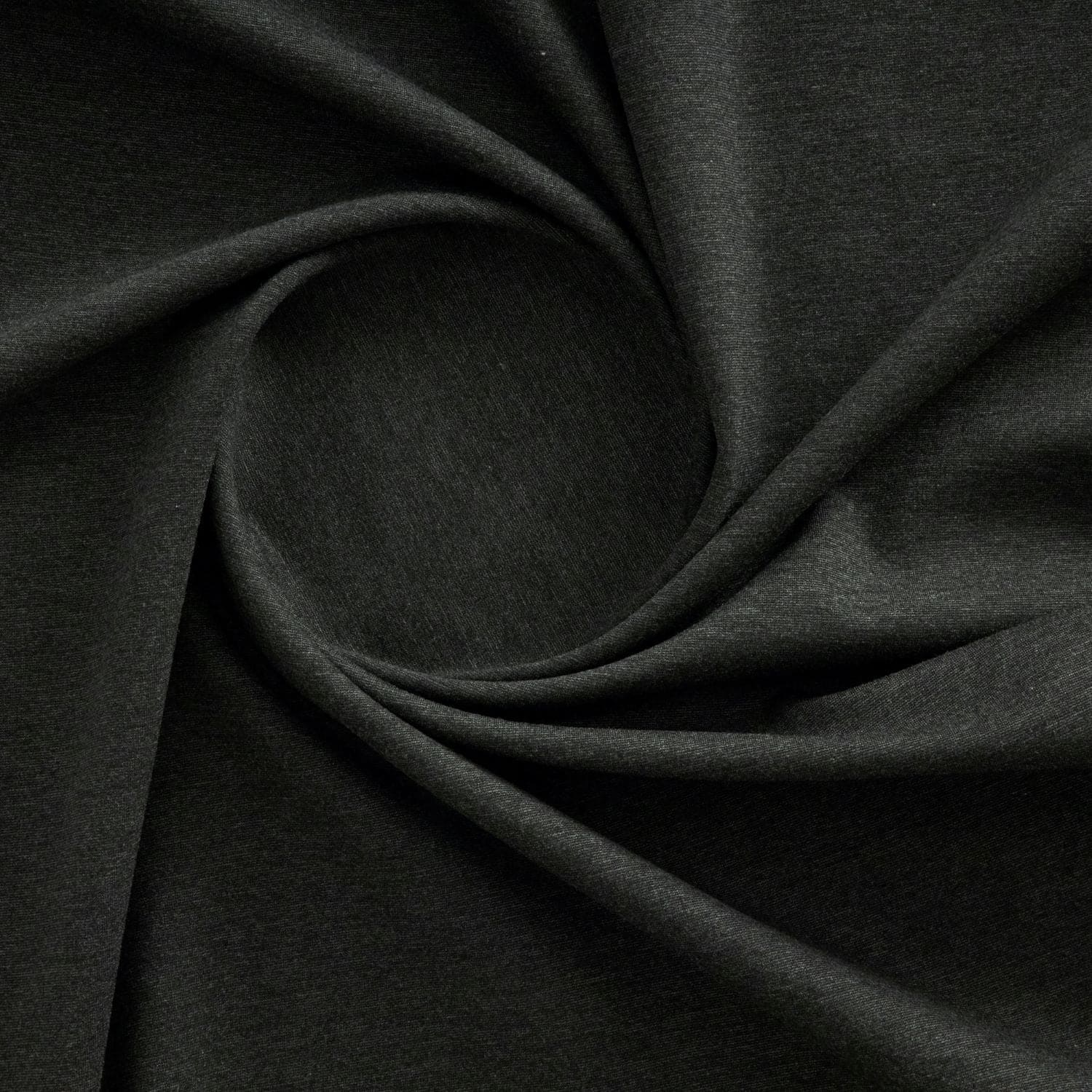
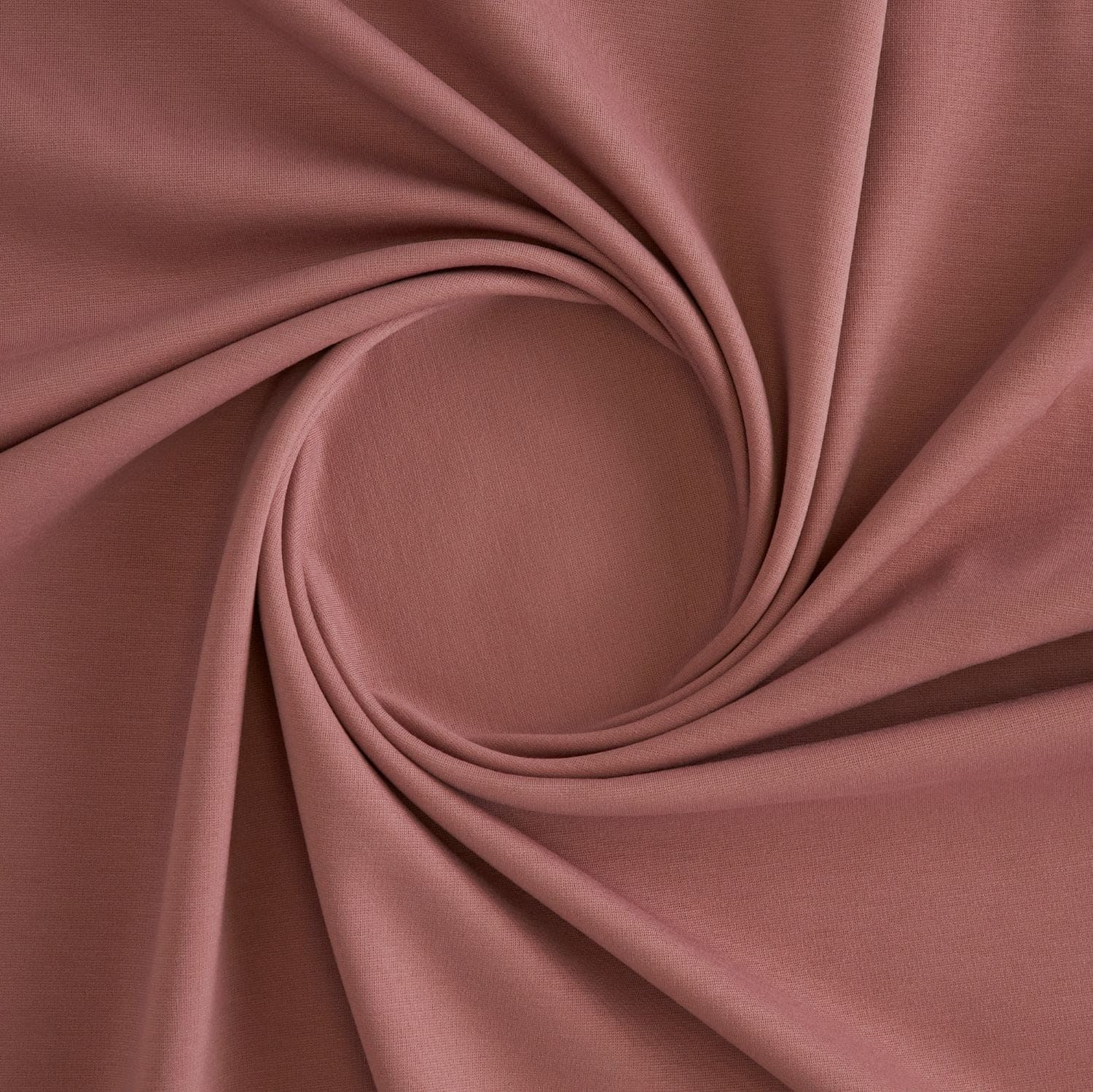
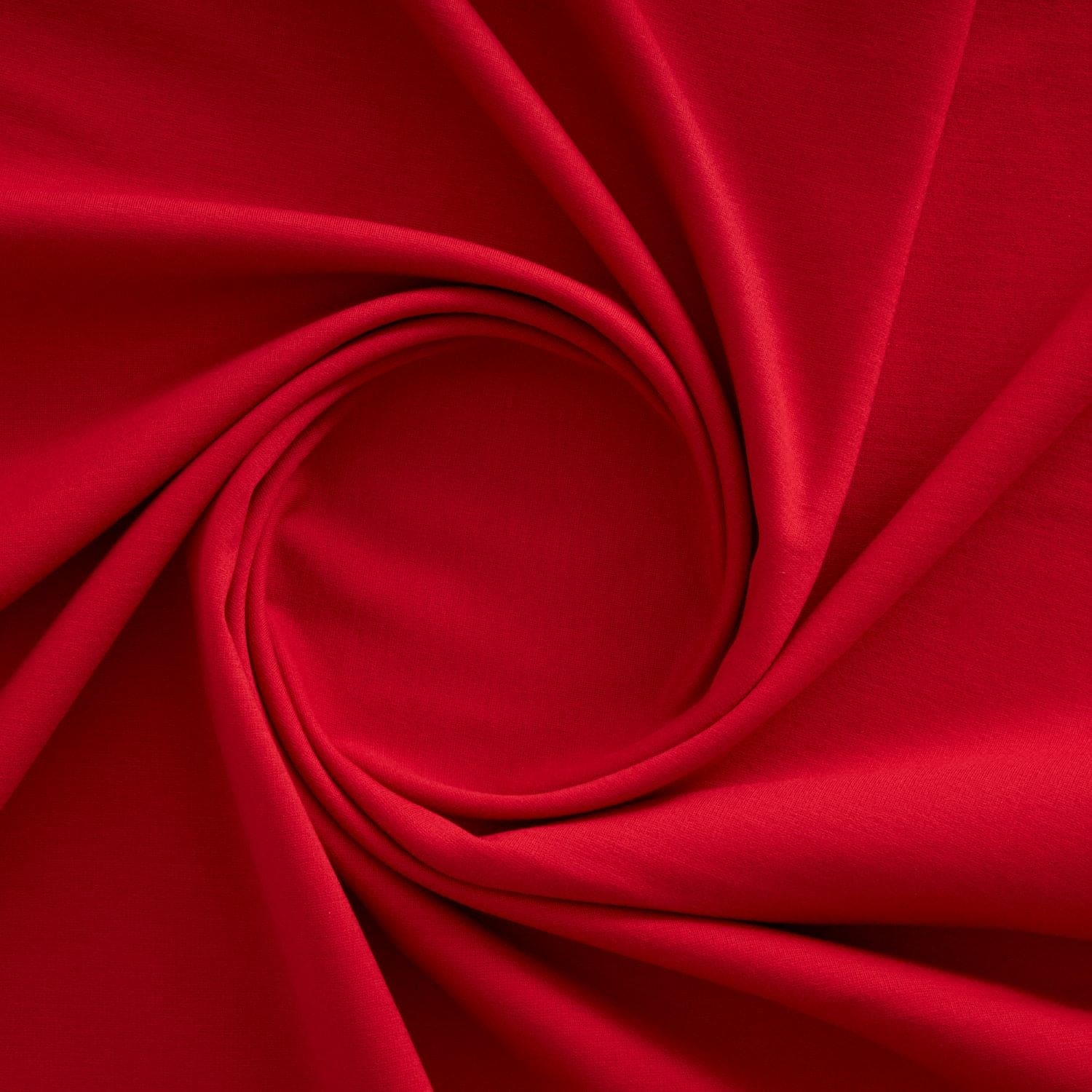
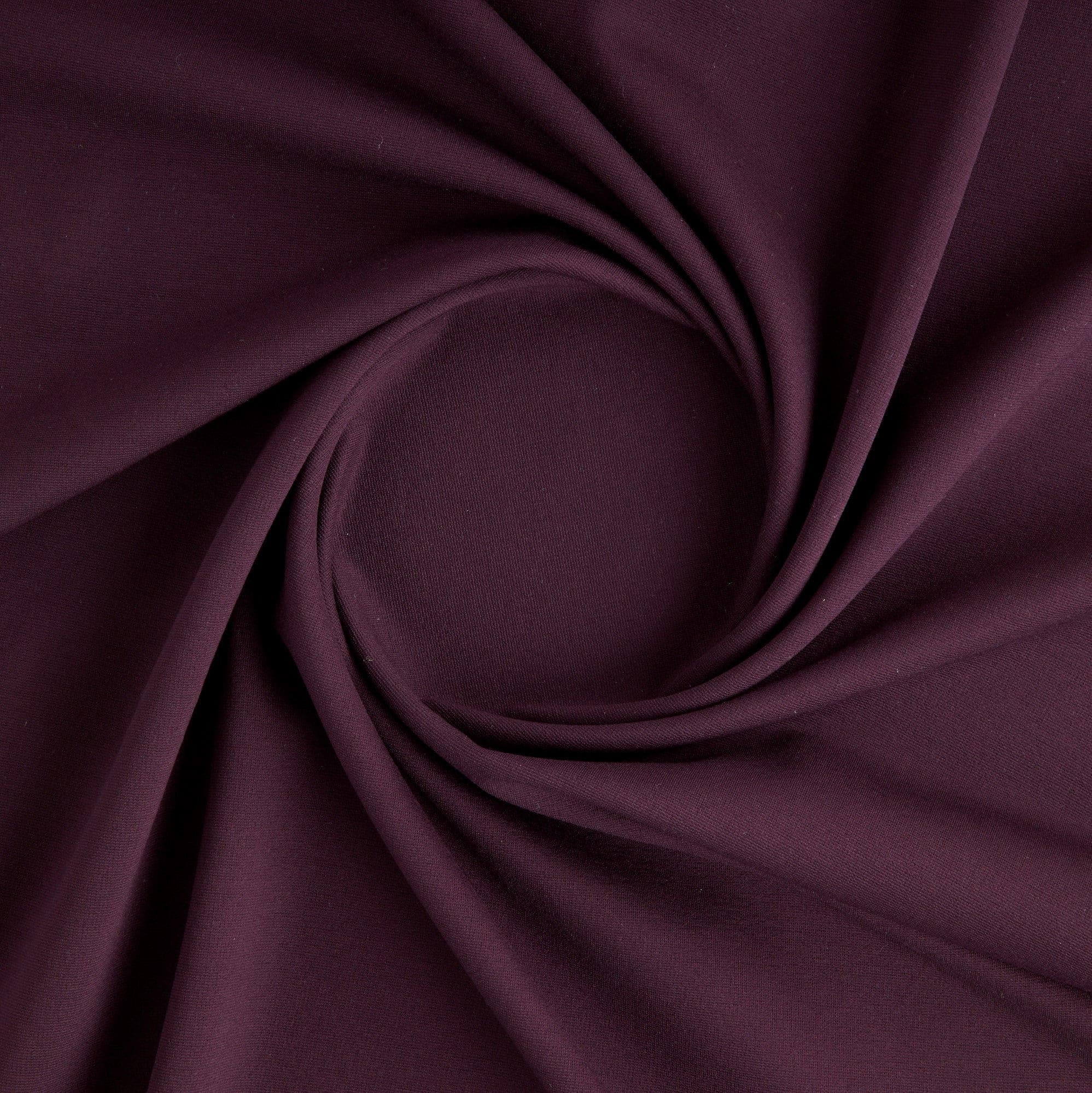
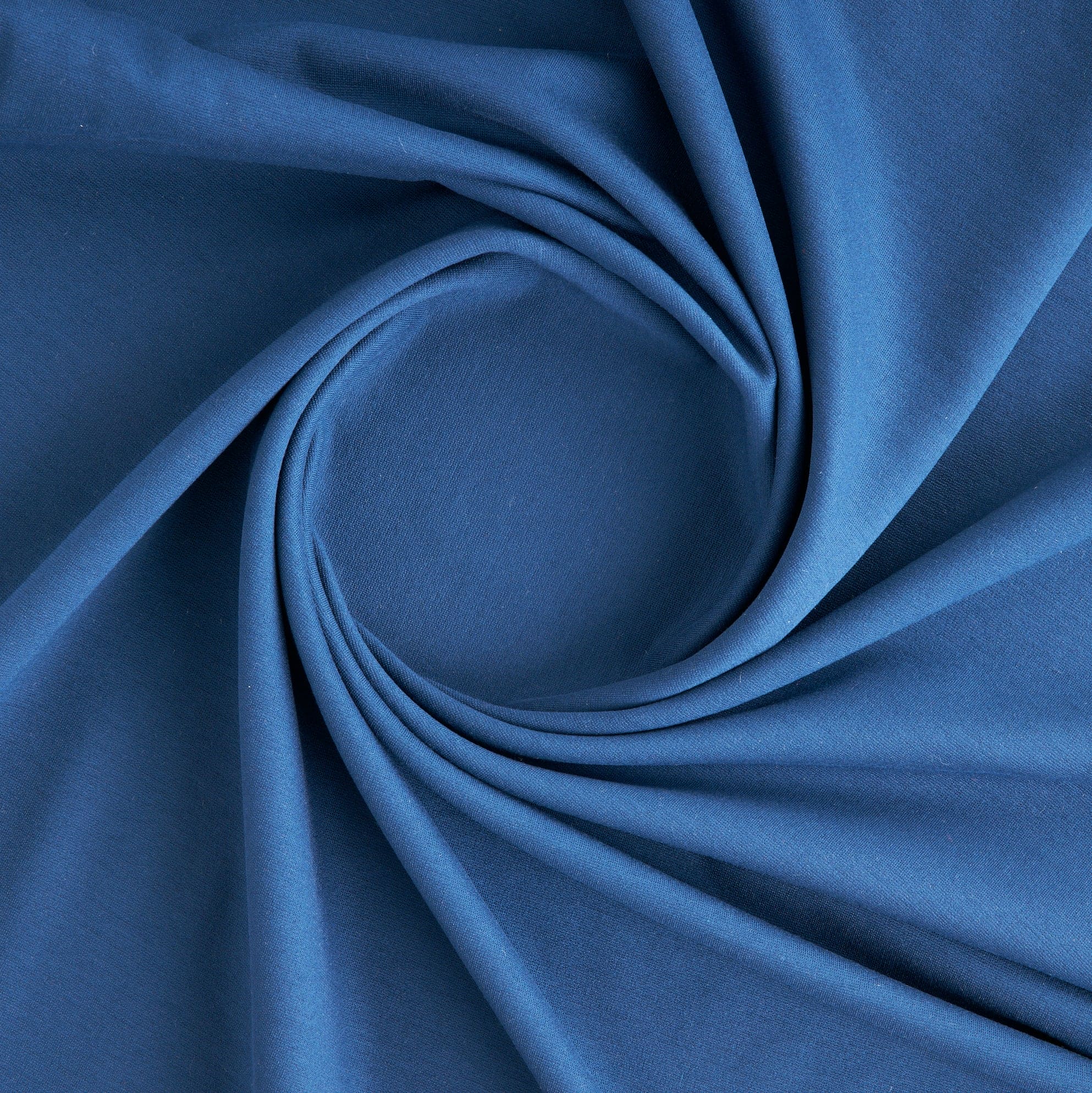
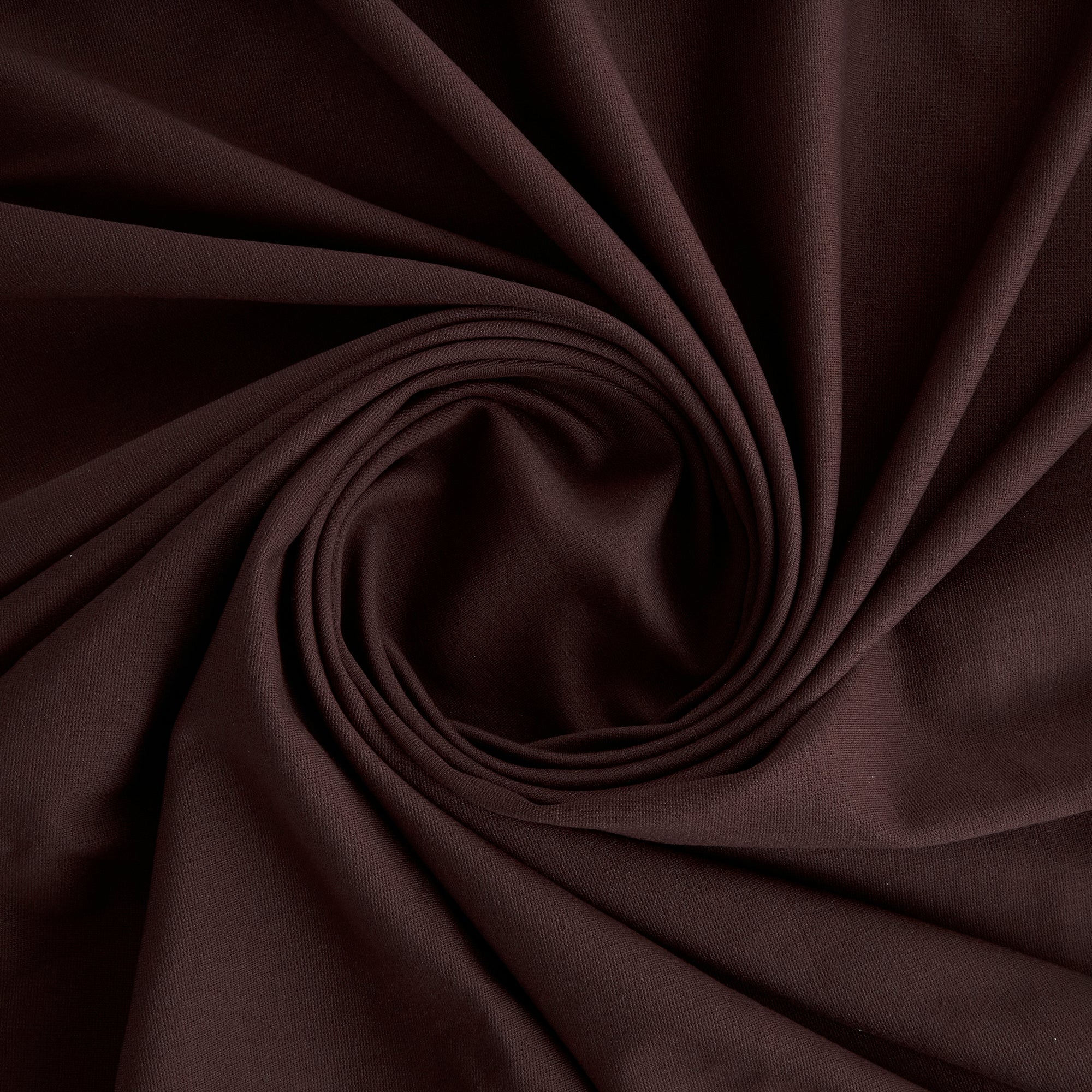
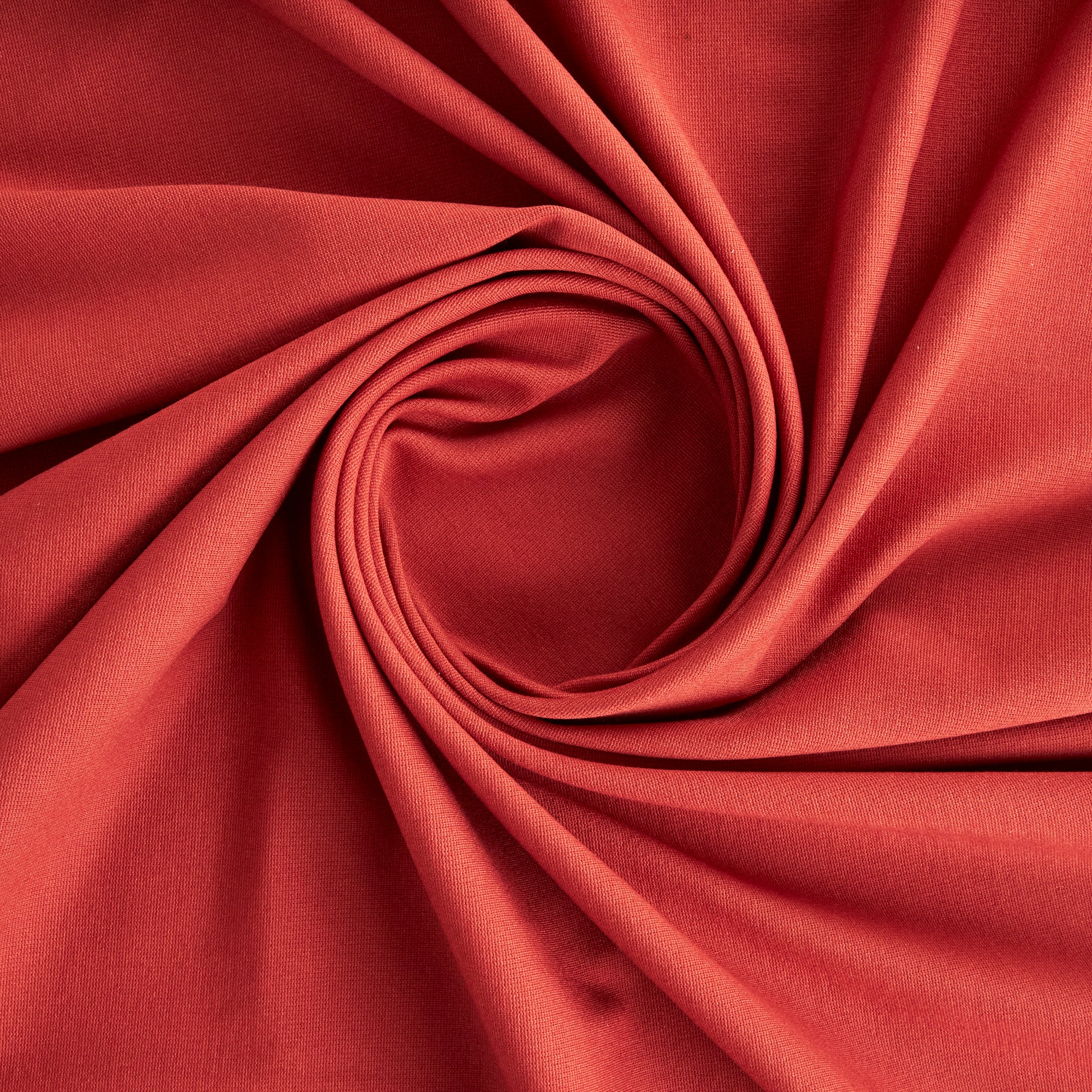
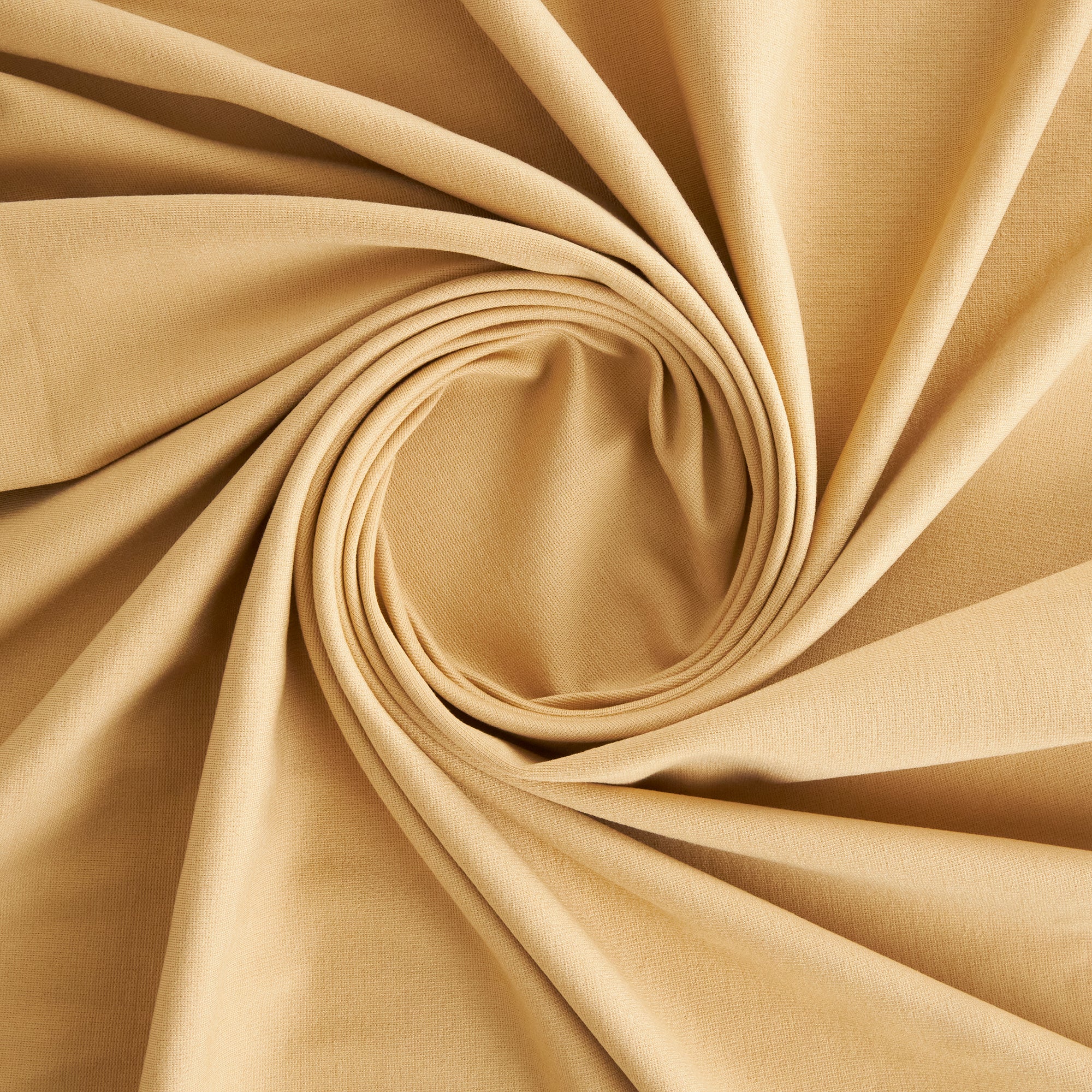
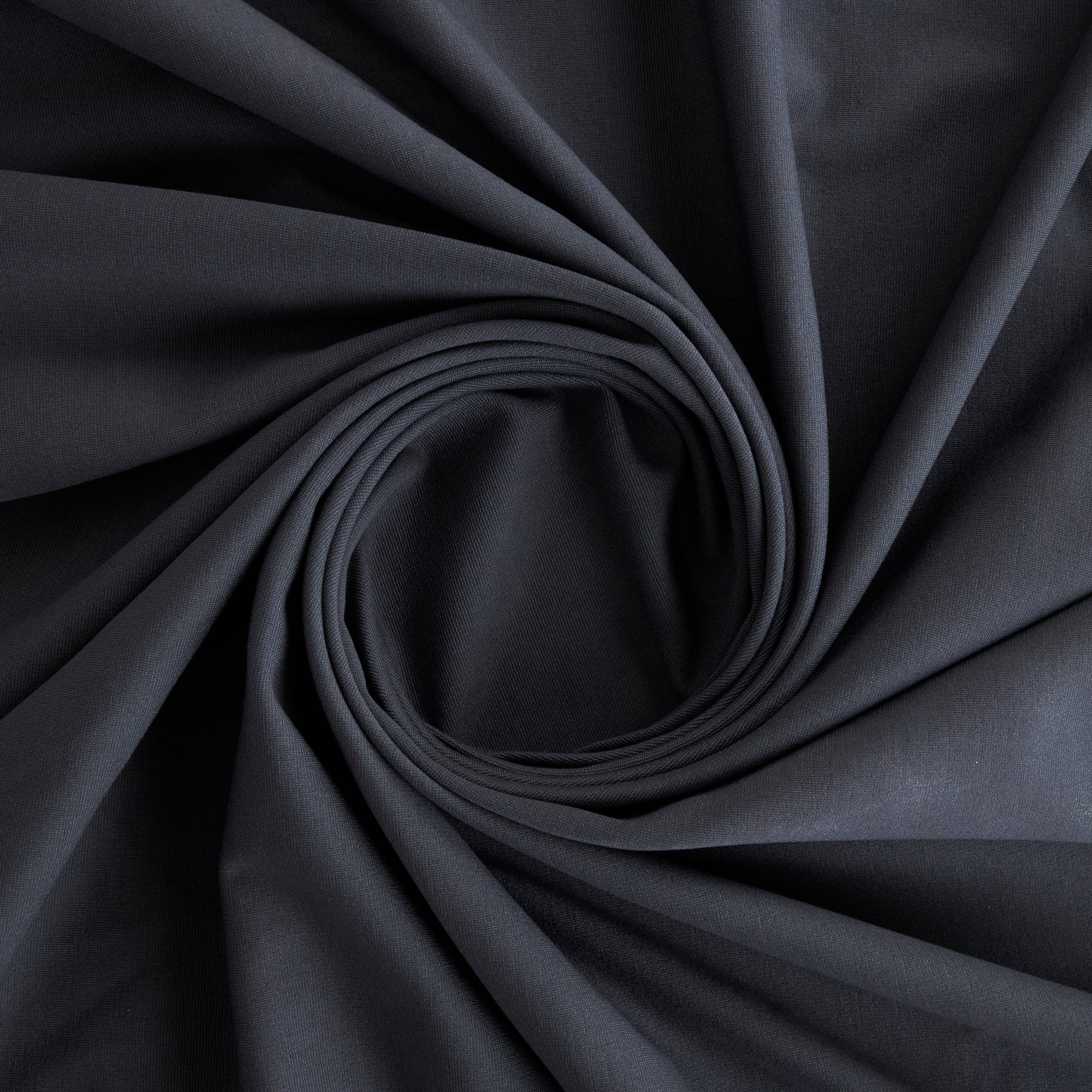
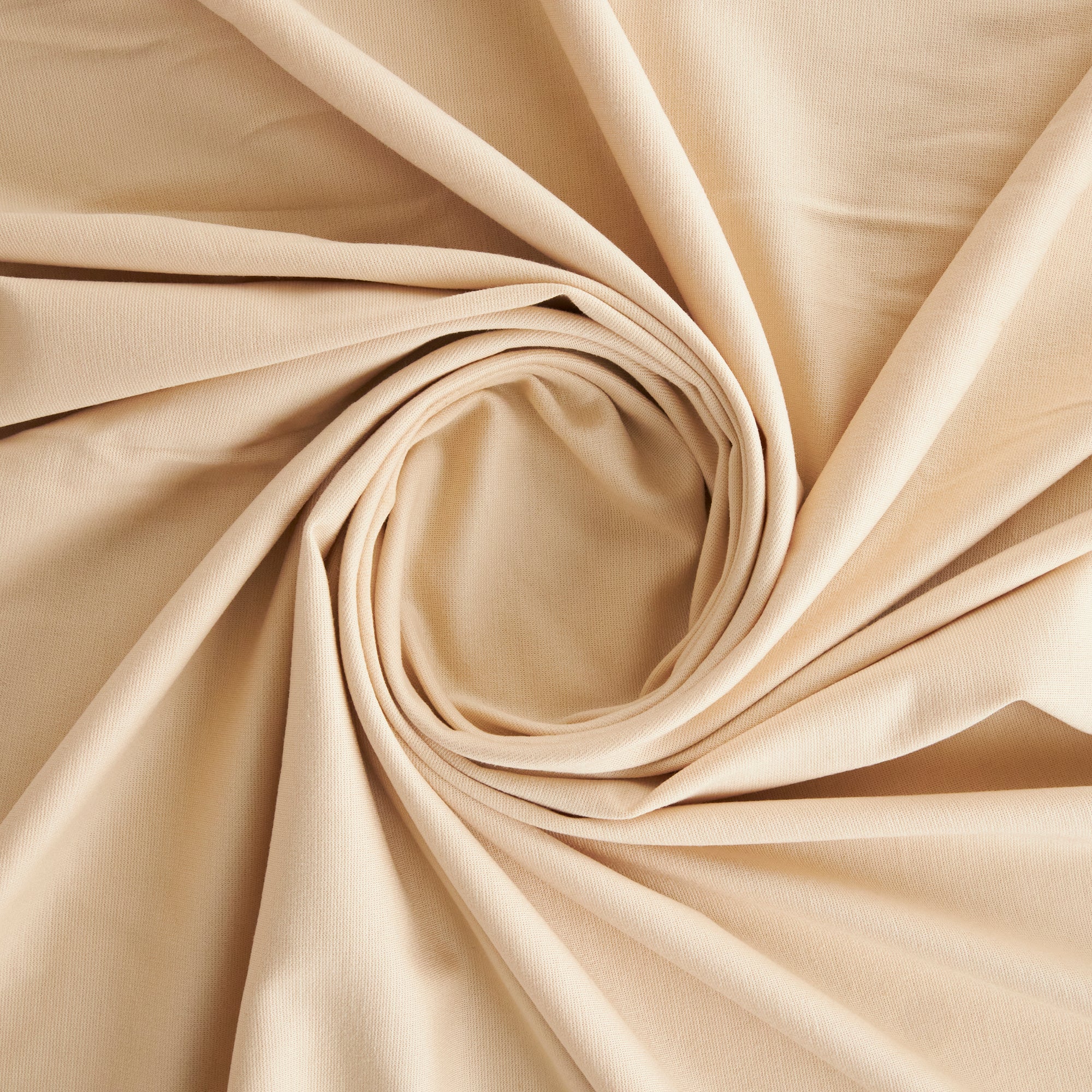
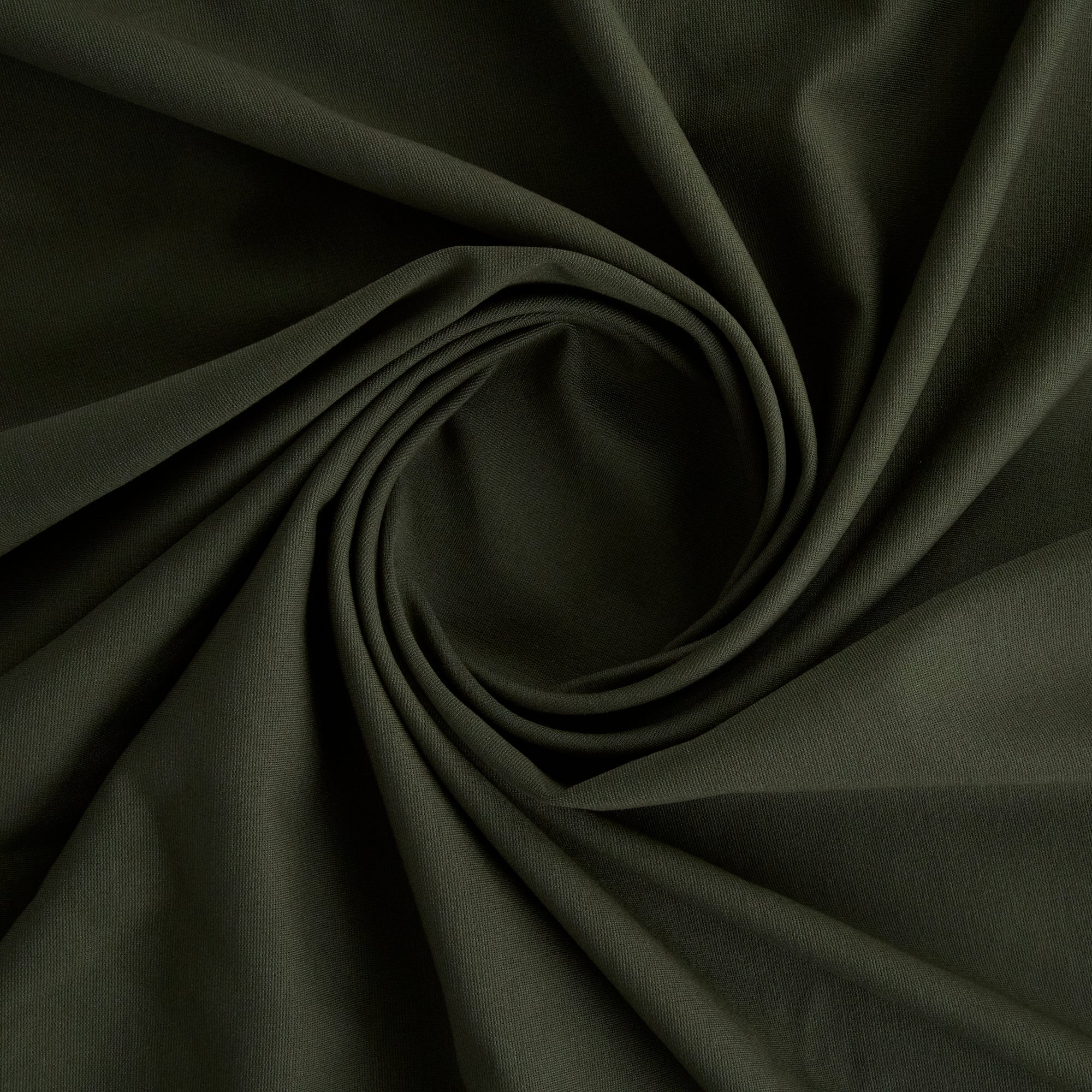
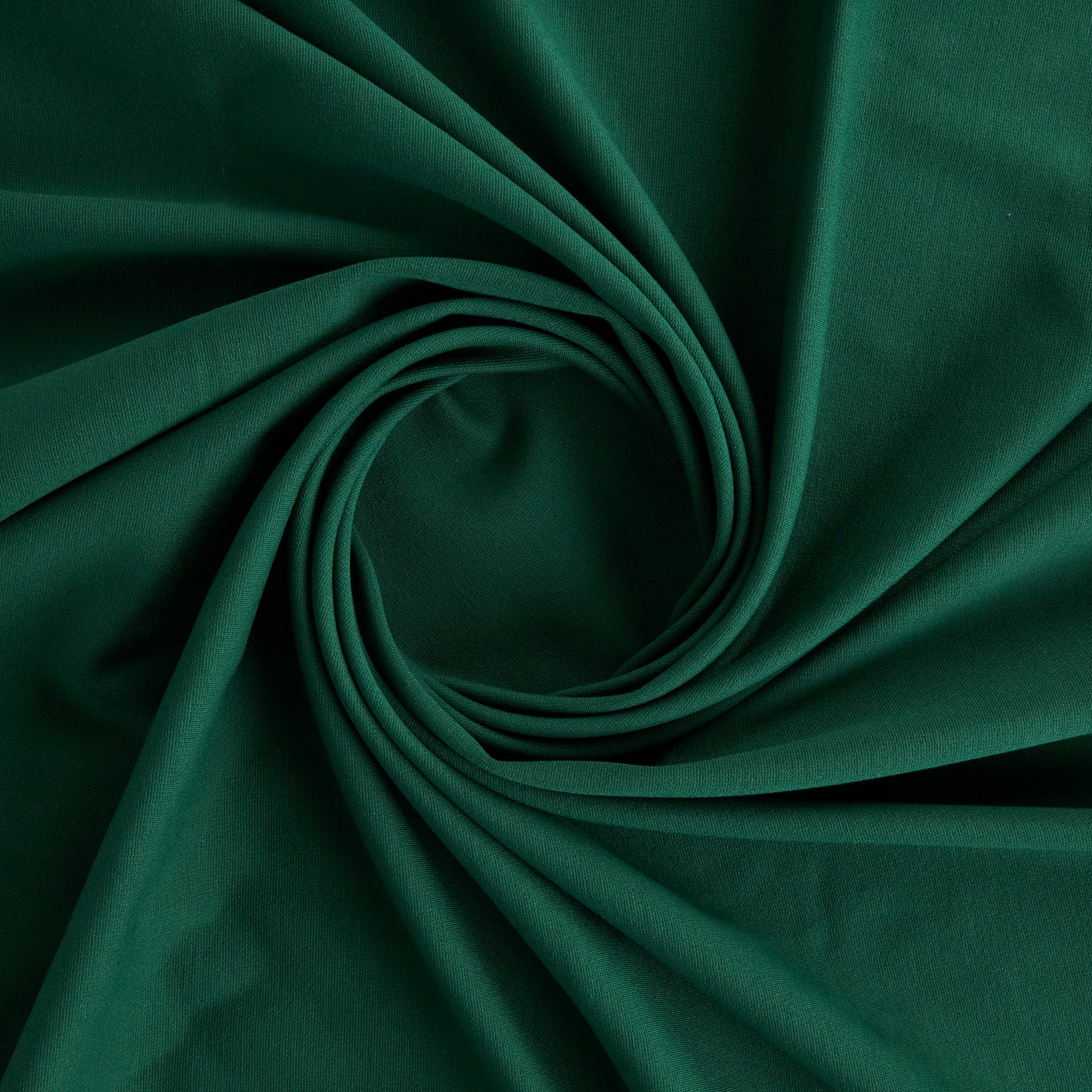
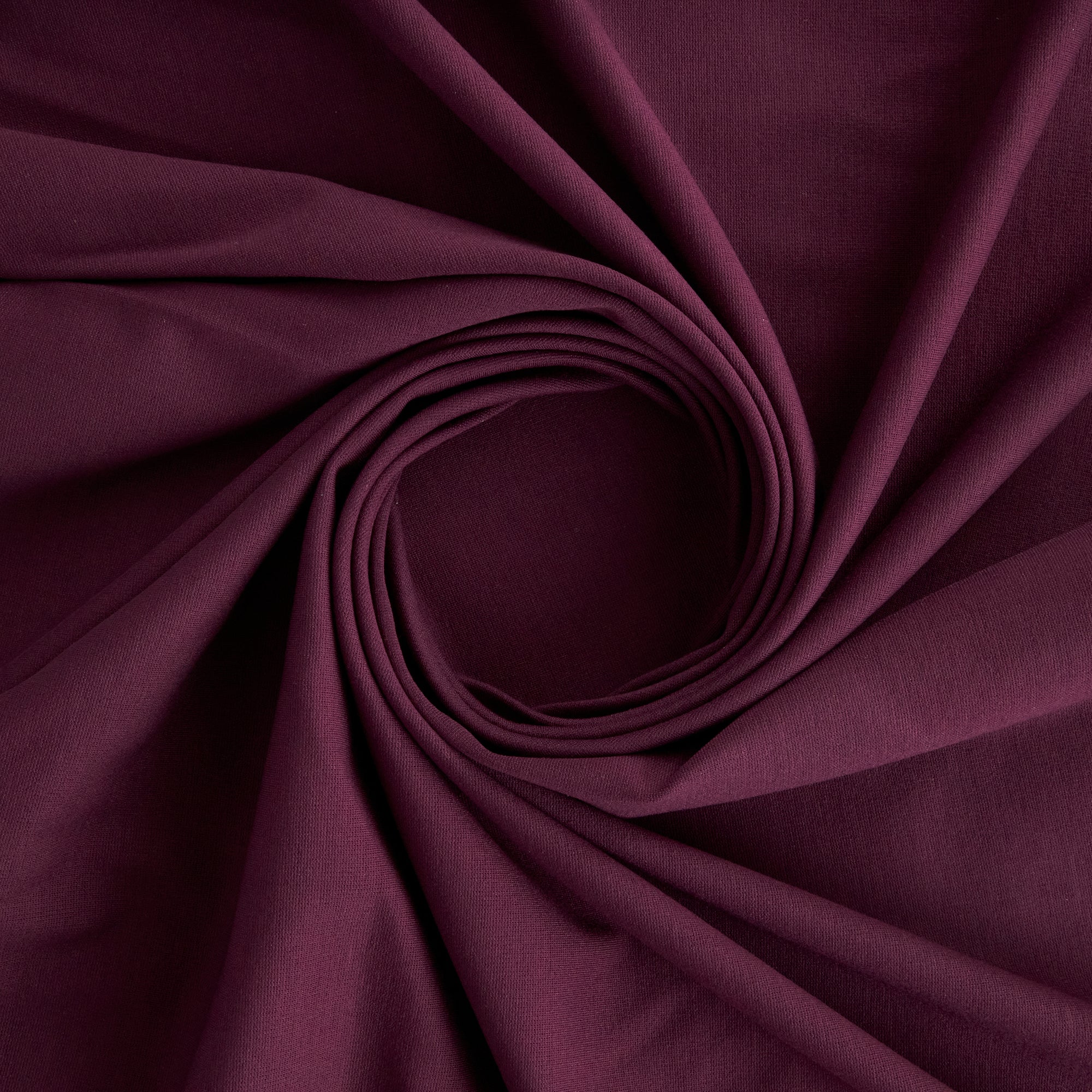


Zelouf’s ponte collection includes solid, printed, lurex, and metallic variations, available as ponte fabric by the yard for fashion designers, dressmakers, and home sewers. Whether you’re sourcing wholesale fabrics for a production run or cutting a single garment, the collection spans enough variation to suit most structured-knit projects.
What Is Ponte Fabric?
Ponte fabric gets its structure from double-knit construction, not from a single fiber type. Two layers of fabric are knitted simultaneously, producing a thicker, more stable hand than single-knit jersey while retaining comfortable stretch in both directions.
Fiber composition varies across the collection and affects how the finished fabric behaves:
- Polyester / rayon / spandex (the classic ponte blend, often 60% polyester / 35% rayon / 5% spandex): firm hand, good opacity, reliable recovery. The RAYON STRETCH PONTE is a representative example of this construction.
- Viscose / nylon / spandex: slightly softer hand with a touch more drape; the VISCOSE NYLON STRETCH PONTE falls into this category.
- All-polyester double knit (polyester ponte): the most stable and wrinkle-resistant of the three; a practical choice for wholesale fabrics used in production runs where consistency matters.
Stretch and Recovery
Ponte typically offers 25 - 50% stretch with strong four-way stretch recovery, meaning the fabric returns to its original dimensions after wear. That recovery is what makes it a reliable choice for body-conscious silhouettes.
Weight
At 200 - 300 gsm, ponte is heavier than jersey and lighter than scuba. Unlike scuba fabric, ponte has a softer hand and more drape; unlike jersey, it has more body and structure. If you are deciding between the two, our scuba and jersey collections are useful reference points for comparison.
Ponte is also worth comparing alongside wool fabric for structured garments where warmth is a factor, ponte’s synthetic fiber content gives it easier care and more stretch recovery, while wool offers natural temperature regulation.
What Is Ponte Fabric Used For?
Thanks to its structure and stretch, ponte fabric is one of the most versatile knits for both ready-to-wear designers and home sewers. Its opacity and body mean most garments do not require a lining, which simplifies construction and reduces material cost.
Common garment applications
|
Garment |
Why ponte works |
|
Fitted dresses and ponte fabric dresses |
The fabric’s compression and recovery hold a clean silhouette through a full day of wear. |
|
Ponte pants |
The firm hand eliminates the need for interfacing at waistbands; the stretch allows ease of movement without excess volume. |
|
Blazers and structured jackets |
Double-knit ponte holds a tailored shape without the stiffness of woven suiting. |
|
Pencil skirts |
The fabric’s weight and recovery keep the hem line clean and the silhouette controlled. |
|
Leggings and ponte leggings |
The 25-50% stretch range accommodates movement while the fabric’s opacity makes it suitable for standalone wear. |
|
Cardigans and ponte fabric patterns for layering pieces |
The stable knit base sews cleanly without excessive rolling at cut edges. |
Ponte works particularly well for plus-size and body-conscious silhouettes because its firm compression distributes evenly without pulling or distorting at seams.
Pattern Compatibility
look for patterns labeled for “stable knits” or “knits with 25 - 50% stretch.” Patterns designed for woven fabrics are generally not appropriate unless the design has significant ease built in.
Zelouf carries ponte fabric by the yard with no large minimum order, making it accessible for both single-garment projects and small production runs. If you work with sewing notions and trims alongside your fabric order, note that Zelouf also carries wholesale notions trims to complement your yardage purchase.
How to Sew Ponte Fabric
Ponte fabric is one of the more forgiving knits to sew, but a few technique adjustments produce cleaner, more professional results.
- Needle: use a ballpoint or stretch needle in size 75/11 or 80/12. A ballpoint tip pushes between the knit loops rather than piercing them, which prevents skipped stitches and fabric snags, a common issue when sewers use a standard sharp needle on double-knit constructions.
- Stitch: a narrow zigzag (1.5 - 2mm width) or an overlock stitch on a serger preserves stretch in seams that will be stressed. Avoid a straight stitch on side seams and inseams; it will pop under tension. For decorative or topstitched seams, a twin needle gives a clean, ready-to-wear finish.
- Presser foot: a walking foot feeds the double-knit layers evenly through the machine and prevents the fabric from stretching or shifting during sewing. This is especially useful on longer seams like trouser inseams.
- Cutting: use a rotary cutter and pattern weights rather than pins. Ponte can shift when pinned, particularly on the bias, and a rotary cutter gives a cleaner edge than scissors on a double-knit.
- Pre-washing: machine wash cold and tumble dry low before cutting. Ponte can shrink 3 - 5% on first wash, and pre-washing before you cut eliminates that variable from your finished piece. This step is easy to skip and consistently regretted.
- Hemming: a twin needle on a standard machine creates a professional stretch hem with two parallel rows of stitching on the face and a zigzag on the reverse. A coverstitch machine gives an equivalent ready-to-wear finish if you have one available.
For sewers new to knit construction, ponte is a practical starting point. Its stability and minimal fraying make it more forgiving than jersey or chiffon, and the sew easy learning curve means fewer wasted yards while you develop technique.
How to Care for Ponte Fabric
Most ponte fabrics are machine washable, making them a practical choice for everyday garments.
- Wash cold on a gentle cycle. Hot water accelerates fiber breakdown in spandex and elastane blends and can cause permanent shrinkage.
- Dry on low heat or lay flat to dry. High heat degrades elastane content over time, reducing the fabric’s stretch recovery.
- Iron on low-to-medium heat with a pressing cloth or steam setting. High heat can damage spandex content and leave a shine on the fabric face.
- Fabric softener, avoid it on spandex-blend pontes. Fabric softener coats elastane fibers and degrades their recovery over repeated washes.
- Pilling, if surface pilling develops with wear, a fabric shaver removes it cleanly without damaging the knit structure.
- Printed and metallic variants, the JOSIE LUREX PONTE and PAULINA PONTE may require extra care to preserve the metallic finish. Check individual product labels before washing.
Always verify care instructions on the specific product page, as fiber content varies across the collection and affects the right call for washing and drying.
Frequently Asked Questions About Ponte Fabric
What is ponte fabric made of?
Ponte fabric is typically a blend of polyester, rayon, and spandex, a common ratio is 60% polyester / 35% rayon / 5% spandex. Viscose/nylon blends also exist, as does all-polyester double knit ponte. The fiber mix affects drape, recovery, and hand, so it is worth checking the product page for the specific construction before ordering.
Is ponte fabric stretchy?
Yes. Ponte offers 25 - 50% stretch with strong recovery, meaning it returns to shape after wear. Most ponte constructions provide two-way stretch at minimum; double-knit ponte di Roma often delivers four-way stretch recovery depending on the spandex content.
What is the difference between ponte and scuba fabric?
Scuba is a thicker, stiffer double-knit with a smoother, more synthetic surface feel. Ponte is softer with more drape and is generally easier to sew. Scuba holds a more rigid silhouette; ponte moves with the body while still providing structure.
What is the difference between ponte and jersey?
Jersey is a single-knit with more drape and less body. Ponte is a double-knit with more structure and opacity. For garments that need to hold a shape without lining, ponte is the right call; for fluid, draped designs, jersey is worth considering instead.
Does ponte fabric shrink?
Ponte can shrink 3 - 5% on first wash. Pre-washing before cutting is the standard recommendation to account for this. After the initial wash, most ponte fabrics are dimensionally stable with cold-water care.
Is ponte fabric good for beginners?
Yes. Its stability, minimal fraying at cut edges, and forgiving double-knit construction make it one of the easier knit fabrics to sew. It is a better starting point for knit construction than jersey or chiffon, both of which require more handling care.
Can I buy ponte fabric by the yard?
Yes. Zelouf offers ponte fabric by the yard in solid, printed, lurex, and metallic options, with no large minimum order. The collection is available to fashion designers, dressmakers, and home sewers. Free swatches are available if you want to confirm hand and color before committing to yardage, particularly useful for color-critical projects or when ordering wholesale fabrics for a production run.