
‘Tis the season to sparkle and shine! Glittery fabric is everywhere right now, in so many dazzling designs. But what are the different types of glittery fabric and how do you work with them? Learn more in the Zelouf guide to glittery fabric.
What are the different types of glittery fabric?

Zelouf Cheetah Caviar Glitter Tulle
Glittery fabrics come in various types, each with its own characteristics, weight, and best use case. Here are the most common ones,
- Glitter Tulle, Tulle is a fine mesh fabric infused with glitter to create a sparkling effect. It is often used in evening gowns, veils, and decorative overlays. Glitter tulle typically weighs 15 - 30 gsm, making it one of the lightest glittery fabrics available. Its open mesh structure means glitter particles are bonded to the net rather than woven in, so expect some shedding with heavy use.
- Sequined Fabric, Sequins are small, shiny embellishments sewn onto a base fabric to create a sparkling surface. Sequined fabrics range from subtle to highly reflective depending on the size and density of the sequins. Sequins are most commonly made from PVC or mylar and range from 3mm micro-sequins to 10mm+ statement sequins. Heavier sequin density adds significant weight to a garment, which affects drape and pattern layout.
- Glitter Knit Fabric, This fabric features glittery threads woven into the knit, creating a sparkling effect used in sweaters, dresses, and skirts. Glitter knit typically contains metallic Lurex threads - a registered brand name for metalized polyester yarn - blended with nylon or polyester base yarns, giving the fabric stretch recovery alongside sparkle.
- Glitter Mesh, Similar to glitter tulle, glitter mesh features tiny glitter particles embedded in a mesh or net-like fabric, adding sparkle and texture. It is used in apparel, accessories, and craft projects.
- Metallic Jacquard, Jacquard fabrics with metallic threads woven into intricate patterns or designs. These fabrics have a rich, structured appearance and are often used in formal wear and eveningwear.
- Glitter Organza, Organza is a sheer, lightweight fabric that can be infused with glitter for a delicate yet sparkly effect. It is commonly used in formal wear, overlays, and decorative elements.
- Glitter Satin, Satin's smooth, glossy surface takes added glitter well, enhancing its natural sheen. It is used in evening gowns, lingerie, and accessories.
- Glitter Chiffon, Chiffon is a lightweight, sheer fabric that can be adorned with glitter for a subtle, elegant shimmer. It is often used in scarves, eveningwear, and bridal attire.
- Glitter Velvet, Velvet's plush pile takes glitter finishes beautifully, producing a rich, dimensional appearance. It is used in eveningwear, accessories, and upholstery.
- Glitter Spandex / Stretch Glitter Fabric, Glitter spandex combines a four-way stretch base - usually 80% nylon / 20% spandex - with a glitter or foil finish applied to the surface. It is the go-to choice for dance costumes, gymnastics leotards, and performance wear where both sparkle and freedom of movement are required.
- Foil Fabric, Foil fabric features a metallic foil laminated onto a knit or woven base, producing a mirror-like reflective surface distinct from particle-based glitter. It is widely used in stage costumes and carnival wear.
When choosing between types, consider the base fabric's stretch, weight, and sheer factor alongside the glitter finish. A structured evening gown calls for glitter satin or metallic jacquard; a flowing overlay calls for glitter chiffon or organza; activewear demands glitter spandex.
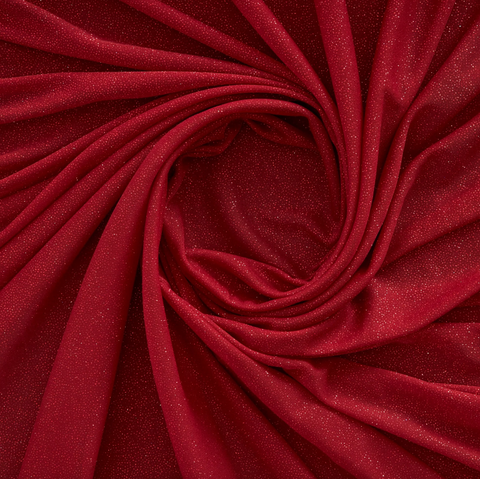
Zelouf Roller Glitter Chiffon in Sultry Rust
What is glitter fabric used for?
Glitter fabric's versatility makes it a staple across fashion, performance, home décor, and craft applications - here is a breakdown of the most common uses and which fabric types suit each best.
Fashion and Formalwear
Evening gowns and bridal wear are the most established applications for glitter fabric. Glitter satin and metallic jacquard provide the structured drape that formal silhouettes require, while glitter chiffon and glitter organza work well as sheer overlays that add shimmer without weight. Glitter velvet brings depth and richness to cocktail dresses and tailored separates.
Performance and Dance
Dance costumes, gymnastics leotards, and figure skating dresses demand fabrics that move with the body while holding up under stage lighting. Glitter spandex is the standard choice here - its four-way stretch and surface glitter finish deliver both performance and visual impact. Glitter mesh is frequently used as a layering fabric in performance wear, adding sparkle without restricting movement.
Costumes and Theatrical Wear
Halloween costumes, cosplay, theatrical costumes, and carnival wear all rely heavily on glitter fabric for visual effect. Glitter tulle, foil fabric, and sequined fabric are workhorses in this category. Sequined fabric in particular is a staple for stage costumes where high-intensity lighting needs to be reflected across a large space.
Home Décor
Glitter fabric translates well to home décor applications including throw pillows, table runners, and curtains. Glitter velvet and metallic jacquard are the most practical choices for upholstery and soft furnishings, as their glitter is woven in rather than surface-applied, reducing shedding onto other surfaces. Glitter organza and glitter tulle work well as sheer curtain panels or decorative overlays for event tablescapes.
Craft Projects
Crafters use glitter fabric for accessories, bags, hair pieces, and decorative items where small yardage cuts are the norm. Glitter mesh and glitter tulle are popular choices for wreaths, floral arrangements, and gift wrapping applications. Because craft projects rarely involve repeated laundering, surface-applied glitter fabrics are a practical option at this scale.
Can you make fabric glittery?
You can add glitter or create a glittery effect on fabric through several methods. The right approach depends on how much durability and wash-fastness you need from the finished piece.
- Glitter Sprays or Fabric Sprays, Look for sprays labeled "permanent" or "wash-fast" - temporary craft glitter sprays will shed heavily after the first wash. Brands like Rust-Oleum and Krylon offer fabric-compatible glitter aerosols. Always test on a scrap first, as some formulas stiffen the hand of lightweight fabrics.
- Fabric Glue and Loose Glitter, Apply fabric glue in your desired pattern, then sprinkle loose glitter over the wet adhesive. Ultra-fine glitter (0.008" / 0.2mm hex cut) adheres more evenly and sheds less than standard craft glitter. Aleene's Fabric Fusion or a dedicated fabric medium mixed with PVA glue both provide flexible, wash-resistant bonds.
- Glitter Heat Transfer Vinyl (HTV), Glitter HTV is cut with the glitter side down on a cutting mat - mirror the design before cutting. Apply at 305°F (152°C) for 10 - 15 seconds with firm pressure, then peel cold for best adhesion. Siser Glitter and Cricut Glitter Iron-On are two widely available options.
- Glitter Iron-On Transfers, Pre-made glitter iron-on transfers or patches can be applied using an iron or heat press. These are a fast option for adding a defined glitter motif to an existing garment.
- Glitter Fabric Paint, Fabric paints with glitter - such as Tulip Soft Fabric Paint in glitter finishes - remain flexible after heat-setting (tumble dry on low for 30 minutes), making them suitable for garments that need to move and wash repeatedly.
- Fabric with Embedded Glitter, Some fabrics come with glitter or metallic Lurex threads already woven in, providing a built-in glittery effect that requires no additional application.
For any DIY method, durability is the key variable, embedded-glitter and Lurex-woven fabrics will always outlast surface-applied glitter in repeated laundering. Follow the specific instructions for whichever product you choose, and always consider how the base fabric will respond to heat, adhesive, or moisture before committing to a full piece.
What are some tips for sewing glittery fabric?
Sewing with glittery fabric presents some specific challenges. These tips will help you get clean, professional results.
- Use the Right Needle, For most glittery fabrics, a universal or sharp needle works well. If the fabric is delicate or prone to snagging, switch to a microtex or ballpoint needle. For sequined fabric specifically, use a size 90/14 or 100/16 denim needle - sequins can deflect a finer needle and cause skipped stitches or breakage.
- Choose the Correct Thread, Select a high-quality polyester or nylon thread that matches the fabric and the color of the glittery elements. Both fiber types offer the strength and durability that glitter fabrics demand.
- Consider the Glitter Orientation, If the fabric has a directional nap, keep the glitter particles facing the same way across all pattern pieces. Mark orientation on each piece before cutting to avoid mismatched panels in the finished garment.
- Cutting Technique, Use a rotary cutter and self-healing mat rather than scissors when cutting glittery wovens and mesh - scissors can snag glitter particles and shift layers. Cut single layers where possible, and place pattern pieces on the wrong side of the fabric to protect the glitter surface from chalk or marker marks.
- Seam Finishing, Glitter wovens and organza fray readily at cut edges. Finish seams with a serger (overlock stitch), a narrow zigzag, or enclose them in a French seam for sheer fabrics. Bias tape binding is a clean finish for heavier glitter satin or velvet where a serger may not be available.
- Use a Walking Foot or Teflon Foot, Glittery fabrics can be slippery or have uneven surfaces. A walking foot feeds the fabric evenly through the machine. A Teflon foot or roller foot is particularly useful on fabrics with a metallic or vinyl surface.
- Test Stitch on Scrap Fabric, Before sewing the actual project, test stitches on a scrap of the same fabric to dial in tension, stitch length, and needle size without risking the main piece.
- Minimize Handling, Glittery fabrics shed particles, which creates a messy workspace and can clog your machine. Handle the fabric only as much as necessary.
- Use Supportive Stabilizers, For lightweight or stretchy glitter fabrics, use interfacing or stabilizing spray to prevent stretching or puckering during sewing.
- Clean the Sewing Machine Regularly, Glitter particles accumulate in the bobbin case and around the feed dogs. Clean the machine regularly to prevent buildup that can affect stitch quality.
- Secure Seams Carefully, Backstitch at the beginning and end of every seam. Avoid pulling at seams during or after sewing to protect both the fabric structure and the glitter surface.
How do I care for glittery fabric?
Glittery fabric rewards careful handling at every stage - washing, drying, pressing, and storage. Here are the key care practices to follow.
- Read the Label, Always check the care label first. Manufacturers provide washing, drying, and ironing instructions specific to the fabric's composition and construction.
- Hand Washing or Gentle Cycle, Hand washing is the gentlest option for most glittery fabrics. If machine washing, use a delicate or gentle cycle with cold water to minimize stress on the glitter particles and base fabric.
- Mild Detergent, Use a mild detergent formulated for delicate fabrics. Avoid bleach and harsh chemicals, which can damage both the glitter finish and the base fabric.
- Turn Garments Inside Out, Turning items inside out before washing reduces direct contact between the glitter surface and the machine drum or other garments, which helps preserve the finish.
- Manage Glitter Shedding, Place glitter garments in a mesh laundry bag before machine washing to contain shed particles and protect other items in the load. Wash glitter fabrics separately from dark-colored garments for the first few washes. A lint roller is the fastest way to remove stray glitter from other clothing or upholstery.
- Dry Cleaning, Metallic jacquard, glitter velvet, and heavily sequined fabrics are often labeled dry-clean only. When in doubt, take formal or structured glitter garments to a professional cleaner - water immersion can dissolve adhesive-bonded glitter or distort the base fabric's structure.
- Avoid Overcrowding, Do not overcrowd the washing machine or handwashing basin. Excessive friction between items can damage the glitter surface.
- Air Dry or Low Heat, Lay glitter fabrics flat on a towel or drying rack to air dry. If using a dryer, select a low heat setting. Never wring or twist glitter fabric - lay it flat to prevent distortion of the base fabric and cracking of any surface-applied glitter finish.
- Ironing with Caution, If pressing is necessary, use a low heat setting and a pressing cloth between the iron and the glitter surface. Never apply the iron directly to glitter particles.
- Store Carefully, Store glitter garments and yardage in a cool, dry place away from direct sunlight to prevent fading. Avoid folding for extended periods to prevent creasing that can crack surface finishes.
- Spot Clean Carefully, For small stains, spot clean with a mild detergent or suitable stain remover. Test on an inconspicuous area first to confirm it will not affect the glitter or base fabric.
Frequently Asked Questions about Glitter Fabric
Here are answers to the most common questions about working with and buying glitter fabric.
Does glitter fabric shed?
It depends on how the glitter is applied. Fabrics with woven-in metallic Lurex threads or integrated metallic yarn shed minimally because the glitter is part of the fabric structure itself. Surface-applied glitter - including glitter HTV, glitter spray, and adhesive-bonded finishes - sheds more noticeably, especially during the first few washes. Using a mesh laundry bag and washing on a gentle cold cycle reduces shedding significantly.
What is glitter fabric made of?
Most glitter fabrics use a polyester, nylon, or spandex base. The sparkle comes from one of three sources, metallic Lurex threads (metalized polyester yarn) woven or knitted into the base; PVC or mylar sequins sewn onto the surface; or glitter particles bonded to the fabric with adhesive. The base fiber determines the fabric's drape, stretch, and care requirements, while the glitter application method determines its durability.
Is glitter fabric stretchy?
Stretch depends entirely on the base fabric. Glitter spandex and glitter knit have four-way or two-way stretch and are suitable for fitted, active, or performance garments. Glitter satin, glitter organza, and metallic jacquard are woven constructions with little to no stretch, making them better suited to structured garments where ease of movement is built into the pattern rather than the fabric.
Can glitter fabric be machine washed?
Most glitter fabrics can be machine washed on a gentle or delicate cycle in cold water, inside a mesh laundry bag. Metallic jacquard and glitter velvet are frequent exceptions - both are often labeled dry-clean only because water immersion can distort the base fabric or loosen adhesive-bonded surface finishes. Always check the care label before washing.
How do I stop glitter fabric from fraying?
Serge or zigzag raw edges immediately after cutting - this is the most reliable method for wovens and mesh. A French seam is a clean alternative for sheer fabrics like glitter organza where a serger finish would show through. Pinking shears are a quick option for wovens when a serger is not available, though they are less durable than a stitched finish.
What needle should I use for glitter fabric?
A universal or sharp needle handles most glitter fabrics. Switch to a microtex needle for very fine or delicate glitter weaves. For sequined fabric, step up to a size 90/14 or 100/16 denim needle - sequins can deflect lighter needles and cause skipped stitches or needle breakage mid-seam.
Where can I buy glittery fabric?
Glitter fabric is available from specialty fabric retailers, online marketplaces, and wholesale suppliers - the right source depends on your project scale and budget.
Home sewers and small-project crafters typically buy by the yard. Most glitter fabrics are available in widths of 44 - 60 inches, so confirm the width before calculating yardage for your pattern. Buying online gives you access to a far wider range of types and colorways than most local stores carry, but request swatches before committing to full yardage - screen color rendering varies, and the difference between a woven-in Lurex finish and a surface-applied glitter finish is much easier to assess in hand than on a monitor.
Costume designers, dance studios, and apparel manufacturers sourcing glitter fabric at volume should look for a wholesale supplier who can guarantee consistent dye lots across multiple cuts. Dye lot consistency matters most when you are cutting multiple garments from the same colorway - even a subtle shift between bolts will show under stage lighting or in a production run.
At Zelouf Fabrics we carry thousands of glittery fabrics available by the yard or wholesale - explore our glitter collection to find the right type, weight, and finish for your project.