
How Brocade Fabric Is Made
Unlike printed or embroidered fabrics, brocade patterns are created by supplementary weft threads that float over the ground weave, producing the characteristic raised, three-dimensional texture. Those weft floats sit proud of the ground cloth, catching light differently than the base fabric and creating the visual contrast that makes brocade immediately recognizable.
The ground weave itself is a plain weave, twill, or satin, woven from the primary warp threads and a base weft. The loom then interlaces the supplementary weft threads at programmed intervals, which builds the pattern on top of the ground structure without replacing it.
This construction distinguishes brocade from several related fabrics:
- Damask uses only one set of warp and weft threads. The pattern is created by alternating between warp-faced and weft-faced areas of the same weave, making damask fully reversible. Brocade is not reversible.
- Brocatelle is a double-cloth variant in which the supplementary weft is trapped between two layers of ground fabric. This produces an even more pronounced raised effect than standard brocade.
- Tapestry weave builds imagery entirely from weft threads that cover the warp completely, with no supplementary thread system, producing a heavier, less drapeable result than brocade.
- Jacquard is the loom type, not a fabric. All brocade is Jacquard-woven, but Jacquard looms also produce damask, matelassé, and other figured weaves that are not brocade.
Also check out our full Jacquard fabric collection.
Our Brocade Fabric Selection
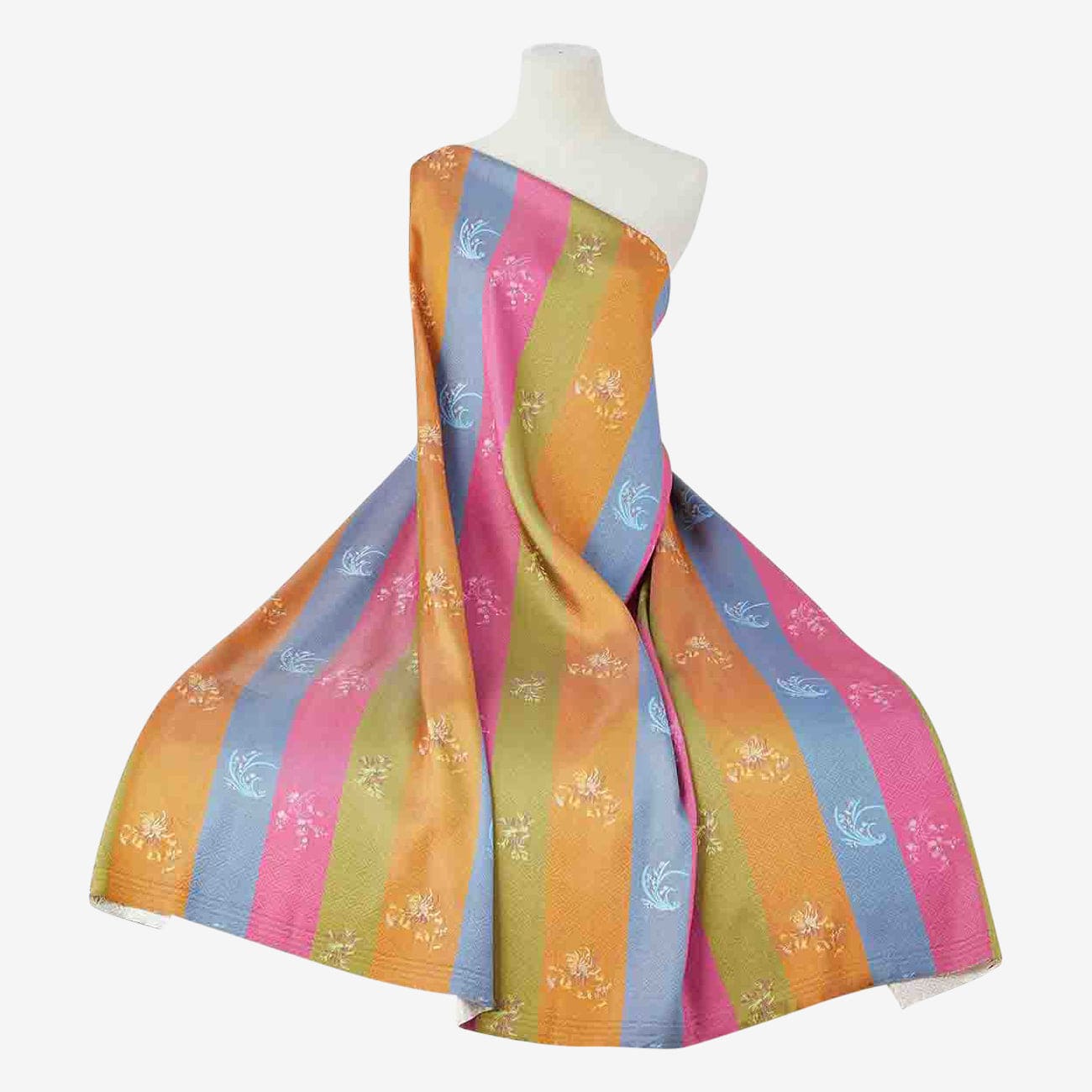
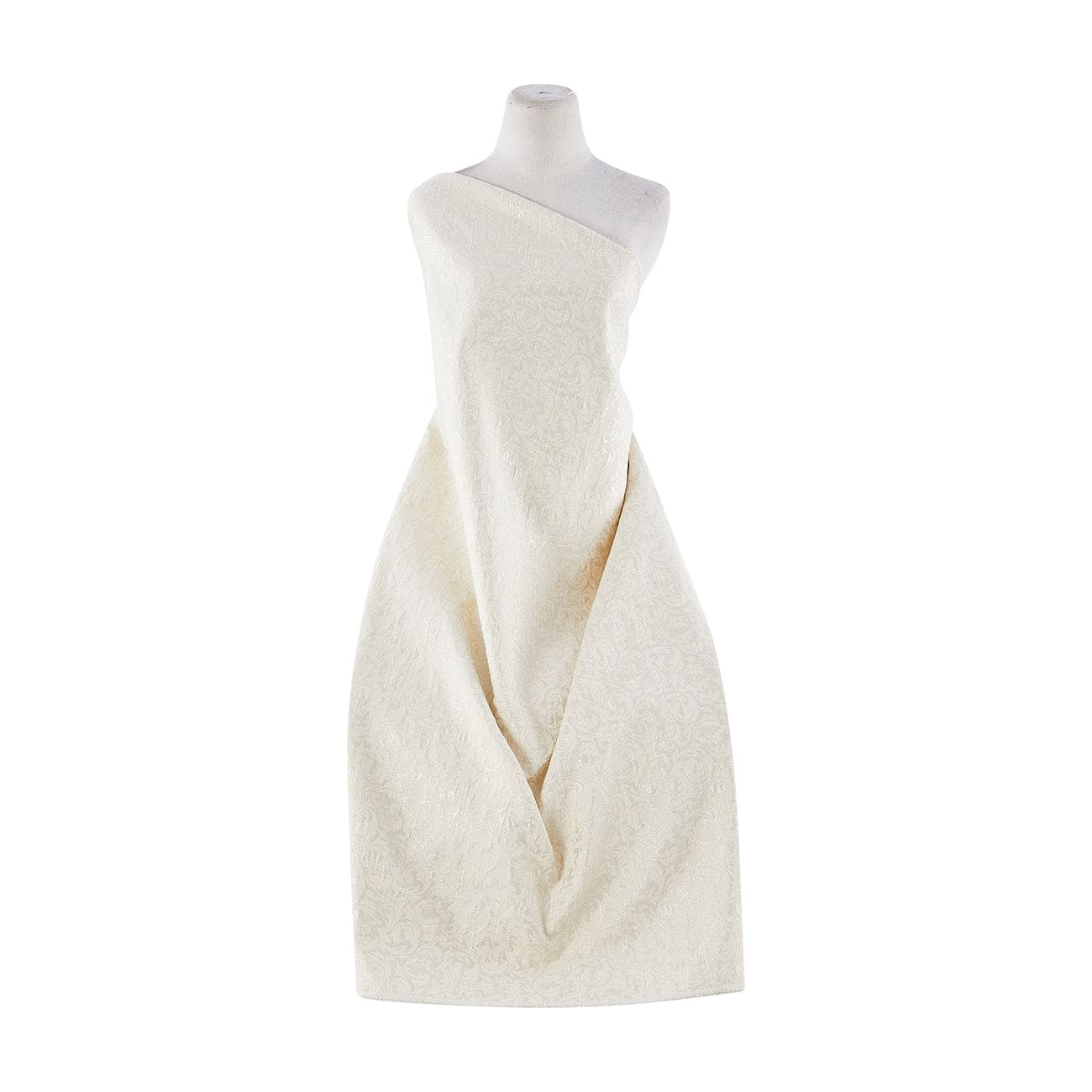
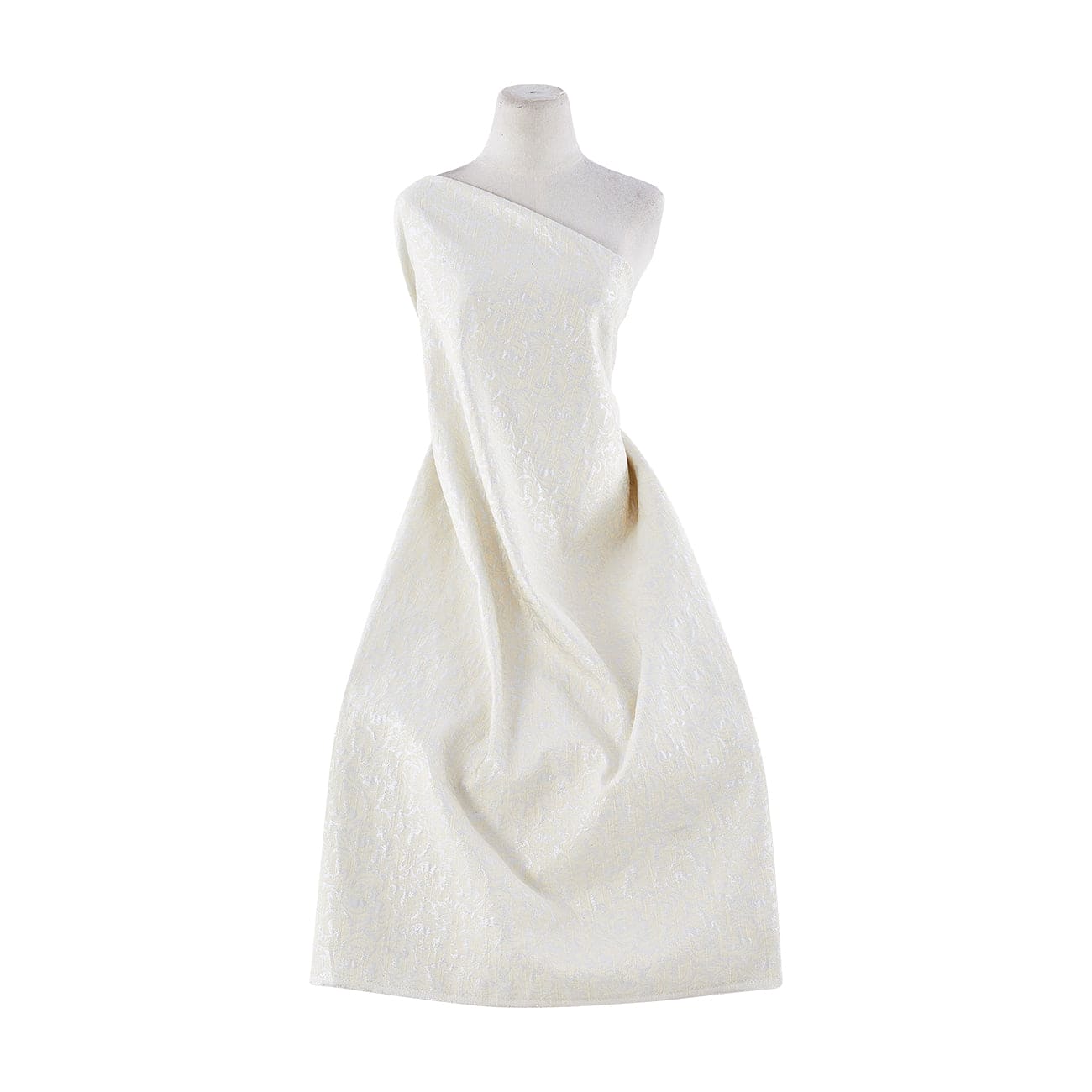
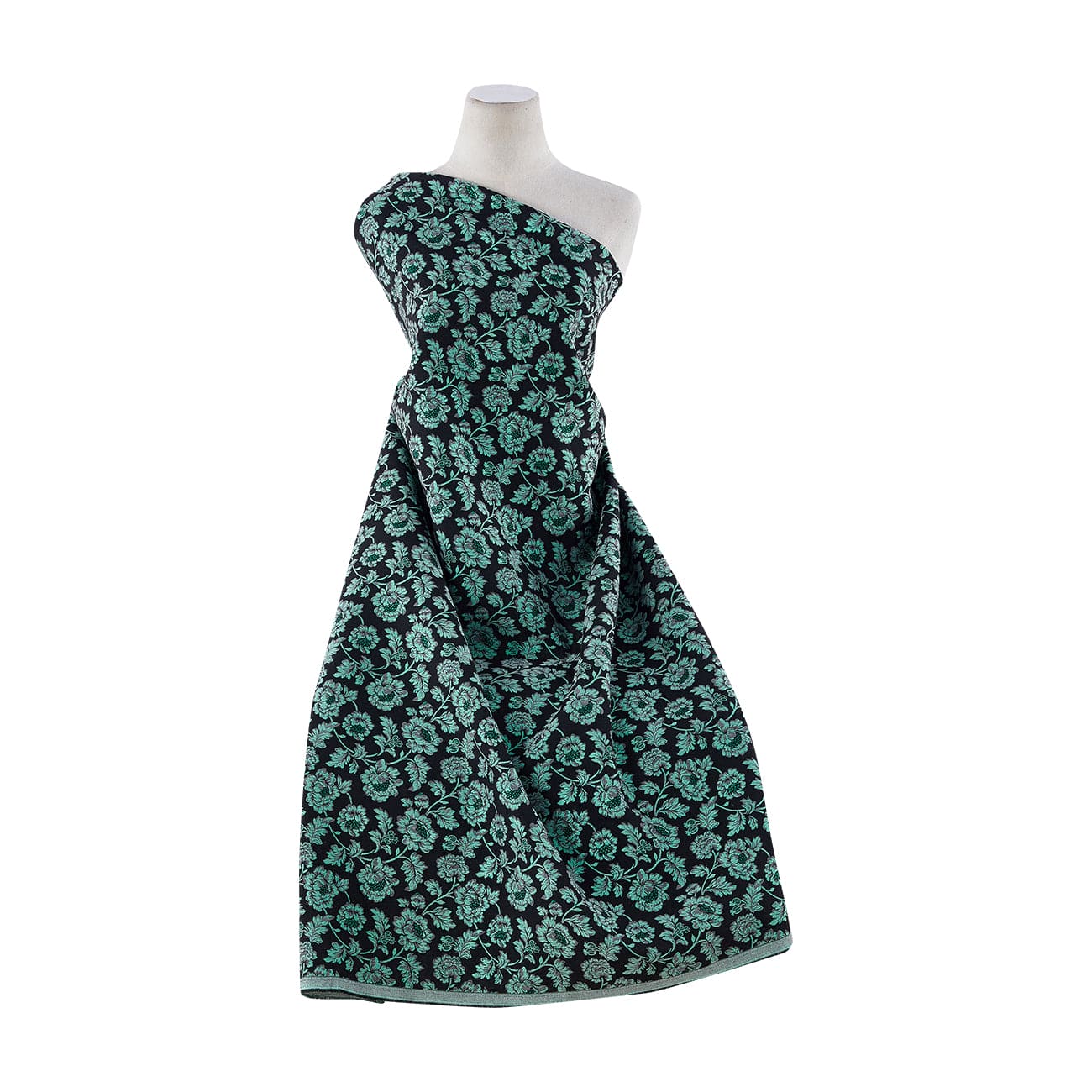
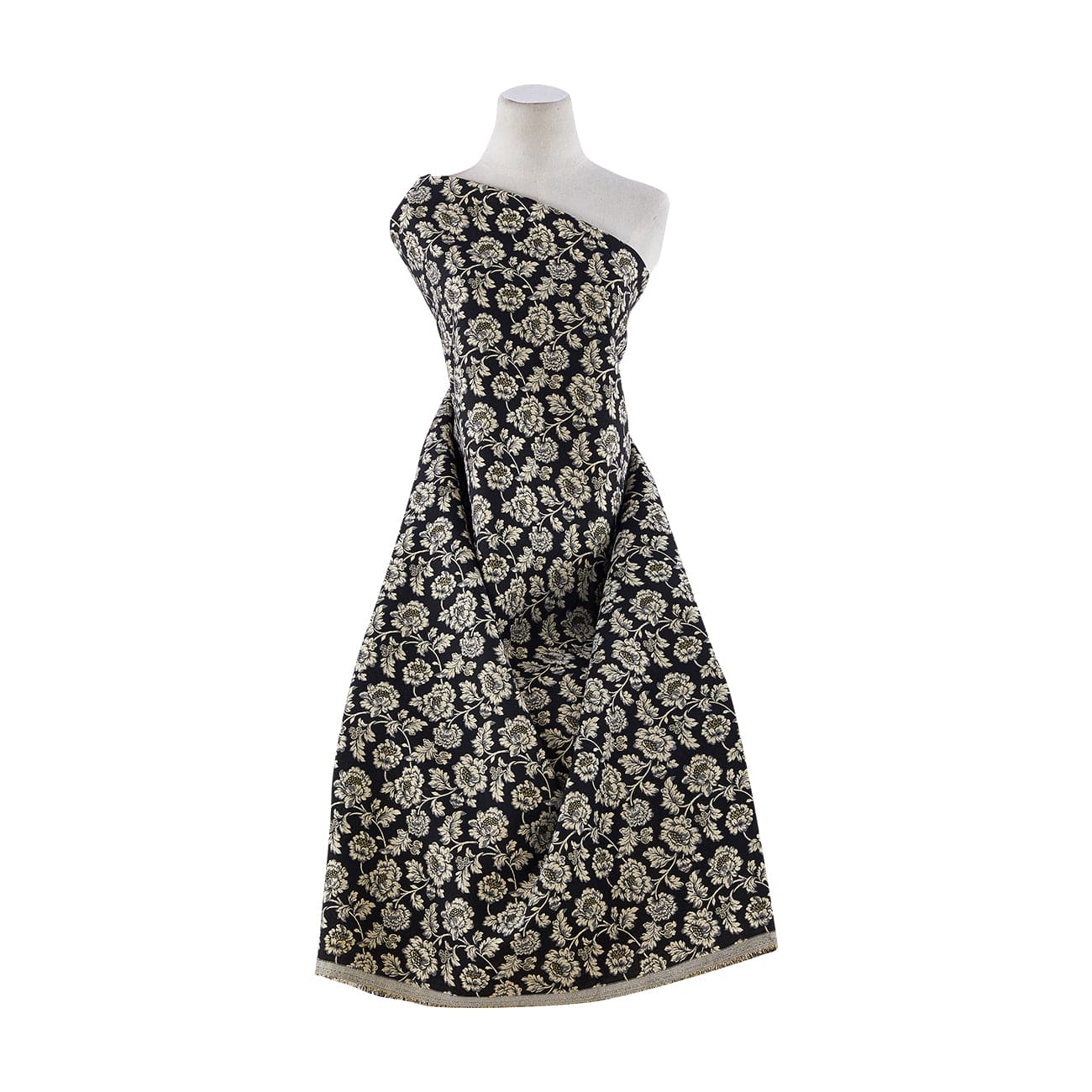
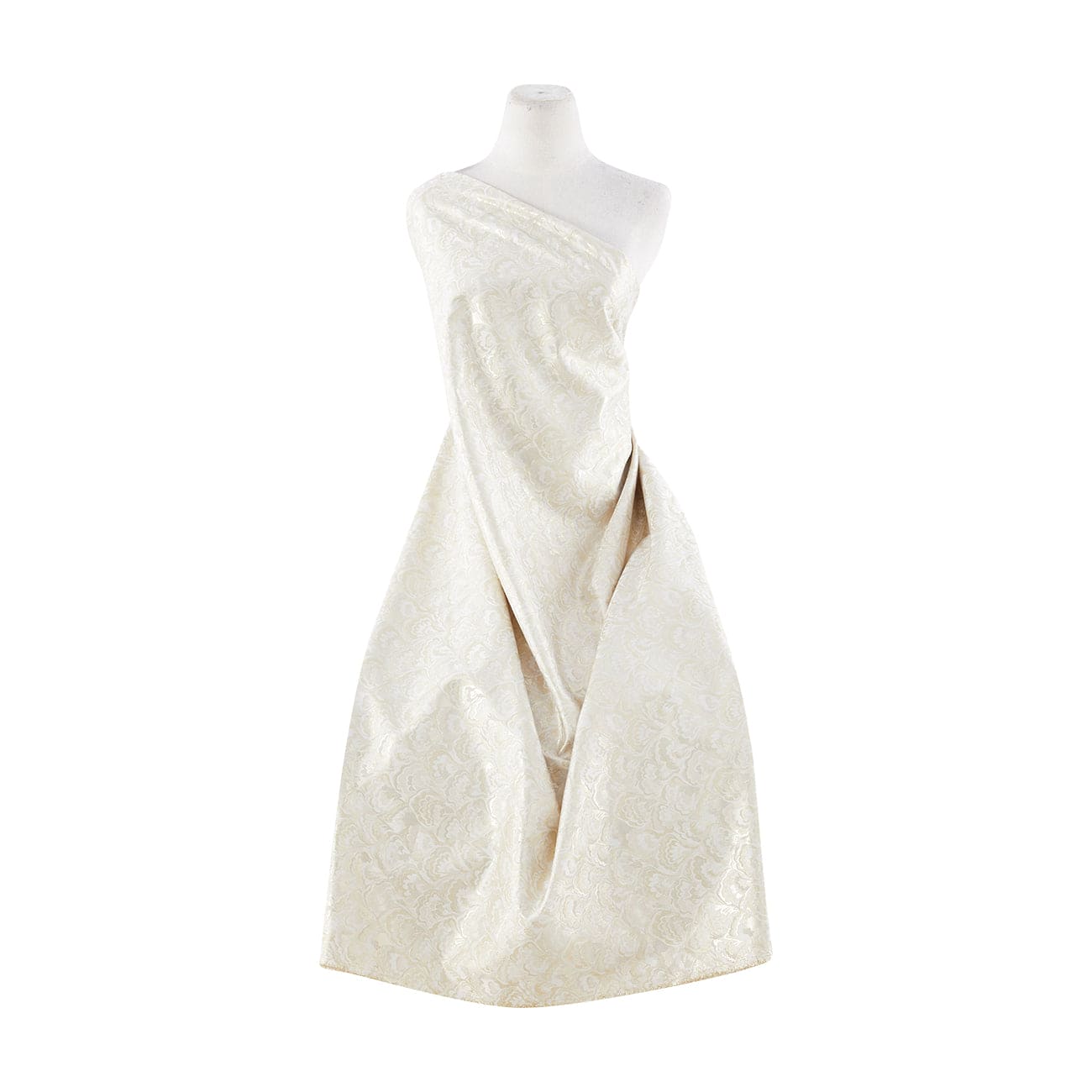
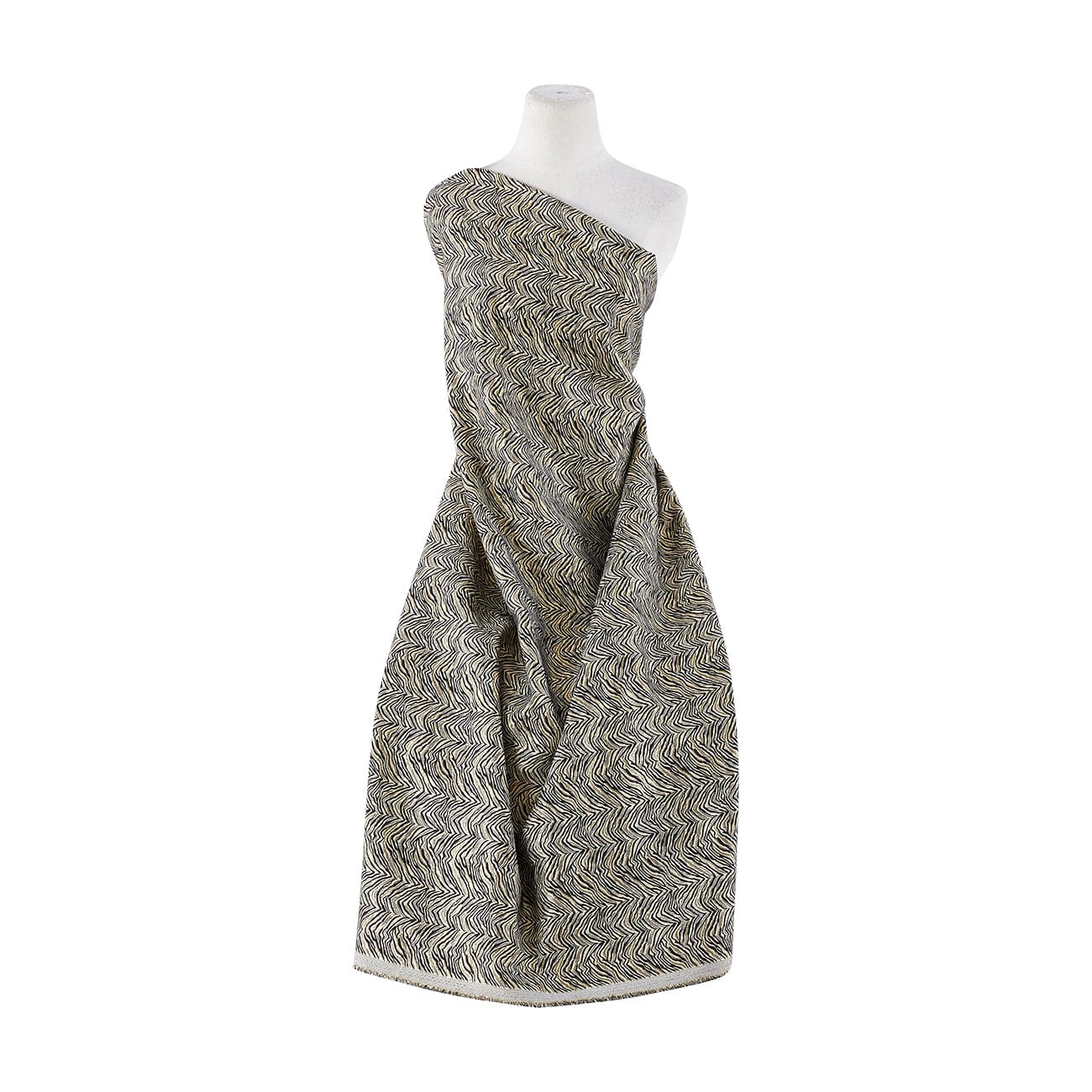
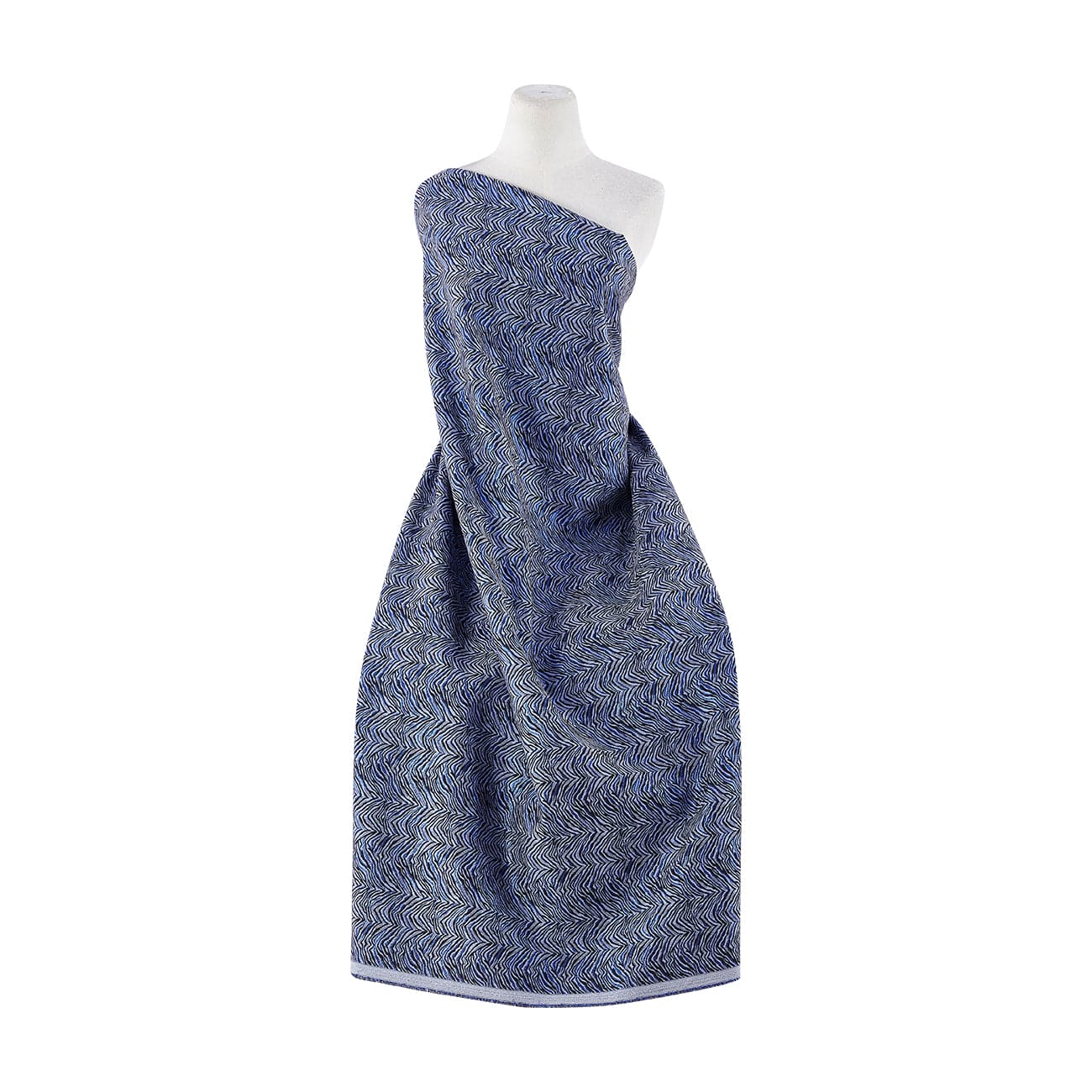
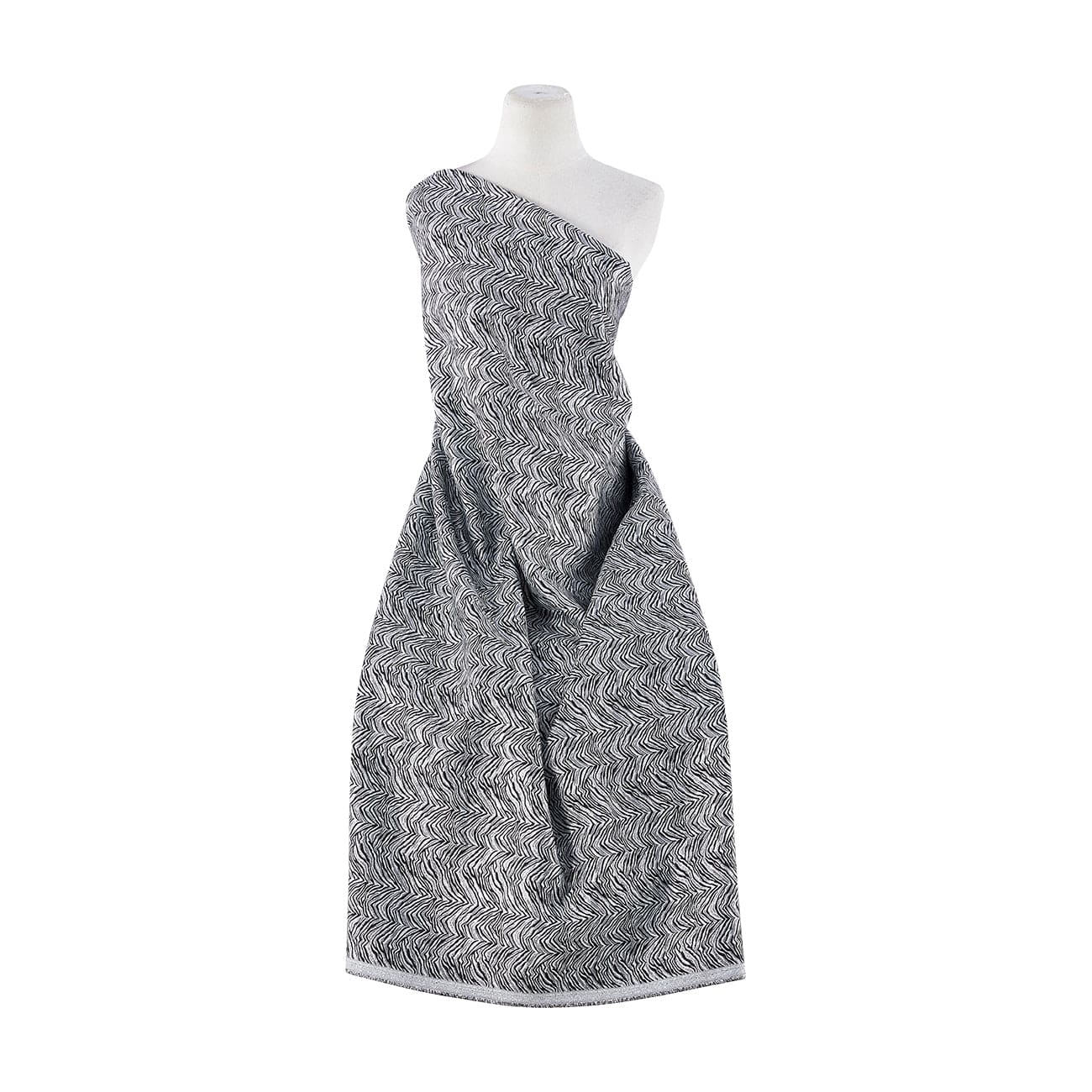
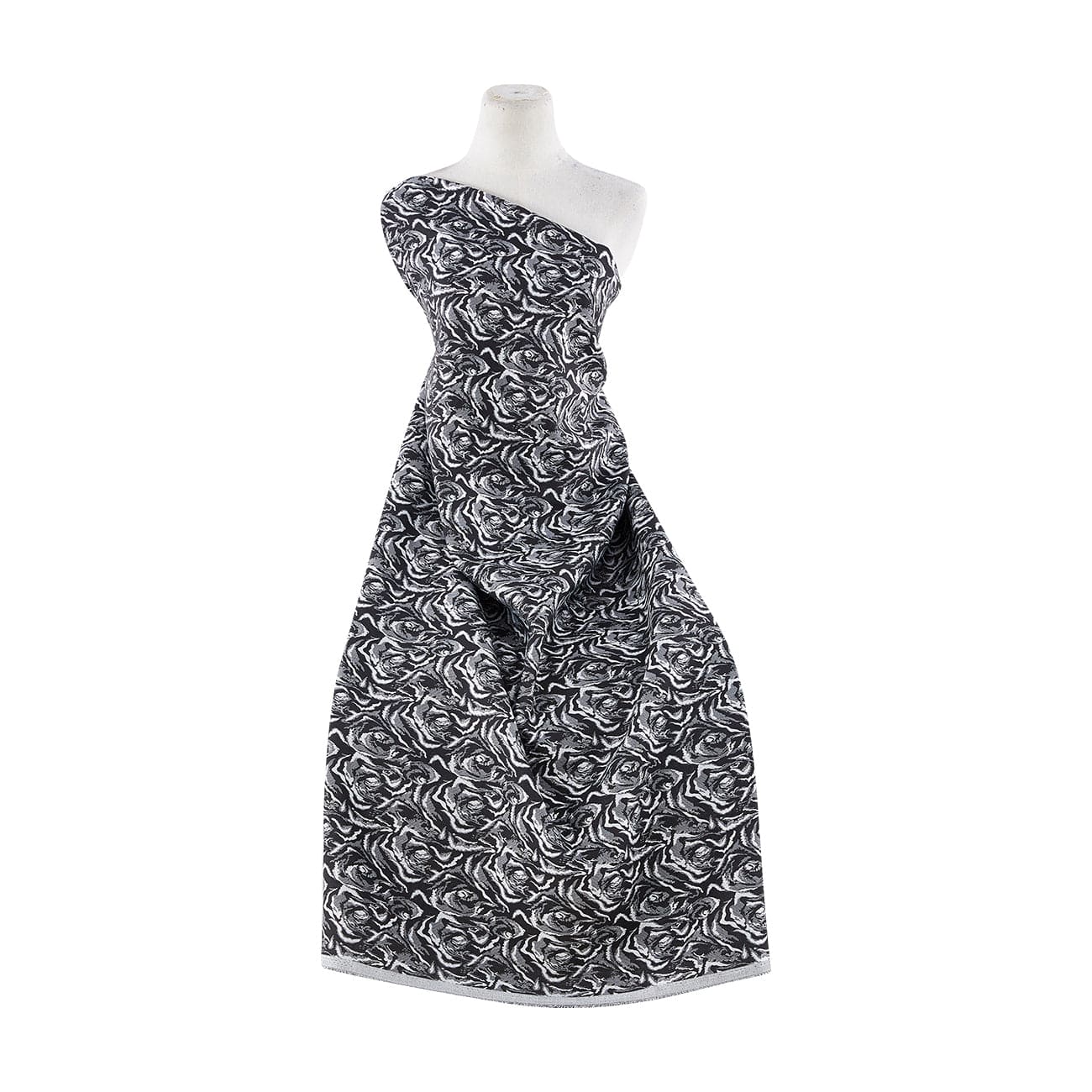
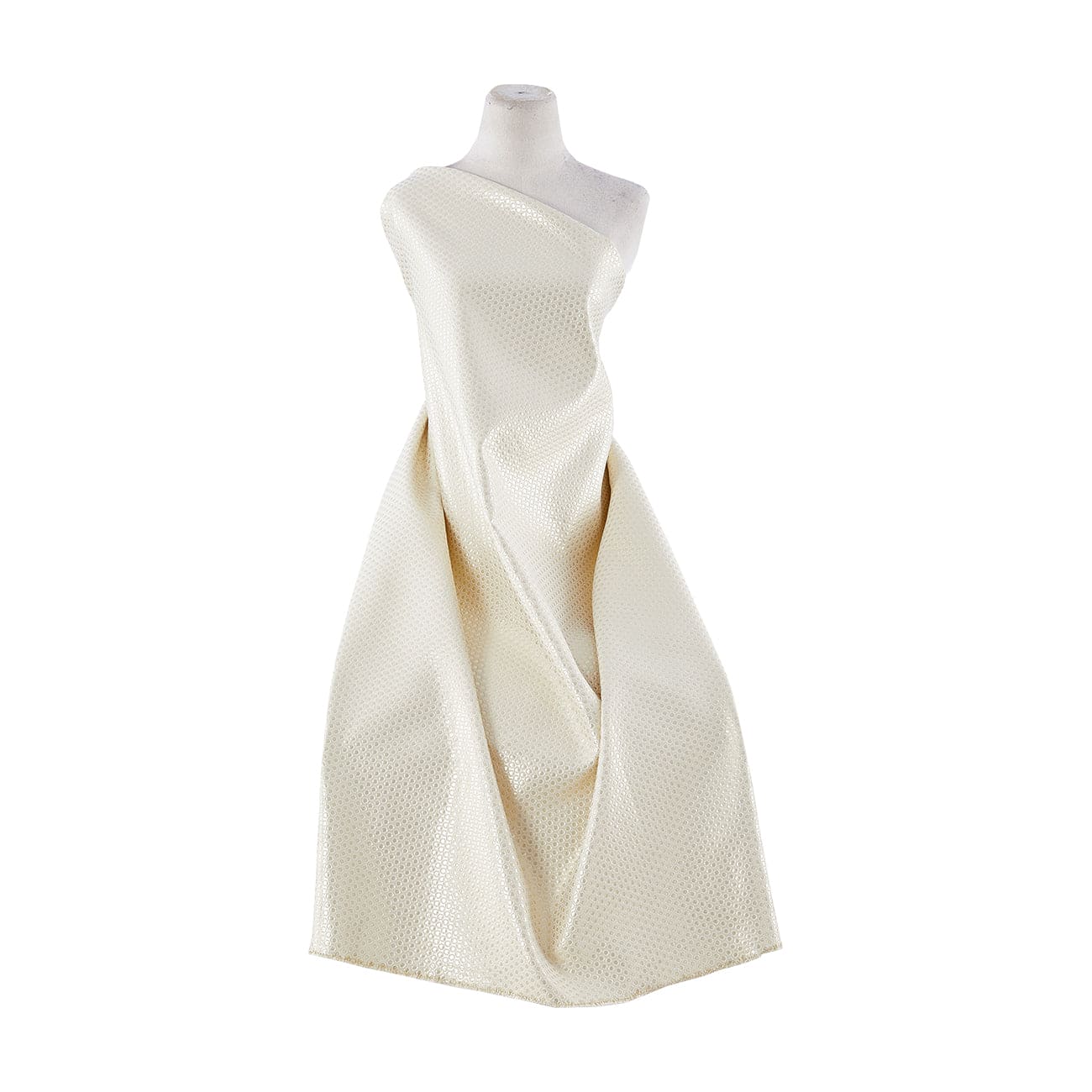
Our current brocade fabric by the yard collection focuses on richly patterned, metallic-accented designs built for standout visual impact rather than subtle texture. Popular styles include:
- Oriental brocade: This brocade comes with intricate patterning suited to structured garments and décor accents
- Floral brocade: This offers a softer, more traditional motif
- Floral brocade with metallic: This combines floral patterning with light-catching metallic threads for added drama
- Dot brocade: This is a versatile, non-directional pattern that works across multiple project types
Because these fabrics carry metallic accents woven directly into the surface, they photograph beautifully under stage and event lighting, which is part of why costume and formalwear buyers return to this category again and again.
Common Uses for Brocade Fabric
Brocade’s combination of structural pattern and lustrous sheen makes it one of the most versatile figured fabrics for both fashion and interior design.
Apparel and Fashion
This is one of the largest demand categories for brocade. Evening gowns and formal separates make strong use of the fabric’s woven patterns, adding visual interest without extensive surface embellishment.
Brocade also suits historical costumes and Renaissance faire garments. Designers use it for corsets, jackets, waistcoats, and doublets because its firm hand helps garments hold their shape without heavy interfacing.
For costume projects, explore our dance and costume collection alongside our brocade selection. For formal garments, our dress fabric collection offers additional fabrics for a complete look
Home décor
The second major category. Structured pillows, drapery panels, and table runners benefit from brocade’s firm hand and non-fraying visual presence, especially patterns like marble or scroll brocade that read well as a non-directional accent across multiple pieces in a room.
Accessories
Accessories round out the use spectrum. Structured handbags, evening shoes, and hair accessories use small yardage cuts of brocade to introduce pattern and texture without the construction complexity of a full garment.
How to Sew with Brocade Fabric
Brocade’s firm hand and tendency to fray at cut edges call for a few specific techniques to get clean, professional results.
- Cutting: Use a sharp rotary cutter or sharp scissors, as dull blades drag the supplementary weft threads and distort the cut edge. Cut one layer at a time when possible, especially with directional or large-scale patterns that require matching. Also, check for pattern direction on any brocade with a one-way metallic design before laying out your pieces.
- Pattern matching: Brocade’s figured motifs demand careful layout planning. Add 10 to 15 percent extra yardage to your estimate to account for pattern matching at seams, and center prominent motifs on bodice fronts and jacket panels before cutting.
- Needles and thread: A fine, sharp needle in a size appropriate for medium-weight wovens handles most brocades cleanly. For heavier metallic brocades, size up slightly. Use a thread that matches the ground fabric color rather than the metallic accents.
- Seam finishing: Brocade frays aggressively. A bound seam finish (wrapping each seam allowance individually with a bias strip) gives the cleanest result on unlined garments. For lined pieces, serge or bind the seam allowances before adding the lining.
- Interfacing and lining: Most brocade garments benefit from a full lining, which protects the reverse side’s weft floats from abrasion and gives the garment a finished interior. Choose a lightweight interfacing to avoid adding excessive stiffness to an already firm fabric.
How to Care for Brocade Fabric
Proper care preserves brocade’s raised pattern and metallic threads; the wrong washing method can flatten the weave or permanently damage the metallic accents.
- For metallic-accented brocade, press only on the reverse side, using a press cloth and a low-heat iron setting.
- Steam can permanently tarnish some metallic threads, so test on a scrap first. Never press directly on the face of a metallic brocade.
- Turn garments inside out before any washing to protect the surface floats, and lay flat to dry rather than tumble drying, which can distort the weave structure.
- Always check the fiber content label for the manufacturer’s recommended care method before washing any brocade for the first time.
Frequently Asked Questions
What is the difference between brocade and jacquard fabric?
Jacquard refers to the loom type used to weave complex patterns. Brocade is a specific fabric produced on a Jacquard loom that uses supplementary weft threads to create a raised pattern. All brocade is Jacquard-woven, but not all Jacquard fabric is brocade.
Is brocade fabric stretchy?
Most brocade is a woven fabric with minimal inherent stretch. If you need more give, pair it with a stretch lining or check the specific fiber content of your chosen brocade before cutting.
How many yards of brocade do I need for a dress?
Most full-length evening gowns require 4 to 6 yards. A structured jacket or blazer typically needs 2 to 3 yards. Always add 10 to 15 percent extra for pattern matching, especially with large-scale or directional motifs.
Can brocade fabric be used for upholstery?
Yes, particularly sturdier brocades built for durability. Lighter, more delicate brocade weights suit décor accents like throw pillows and drapery better than high-traffic upholstered seating.
What is the difference between brocade and damask?
Both are figured woven fabrics, but damask is reversible and uses only one set of threads. Brocade uses supplementary weft threads and is not reversible.