

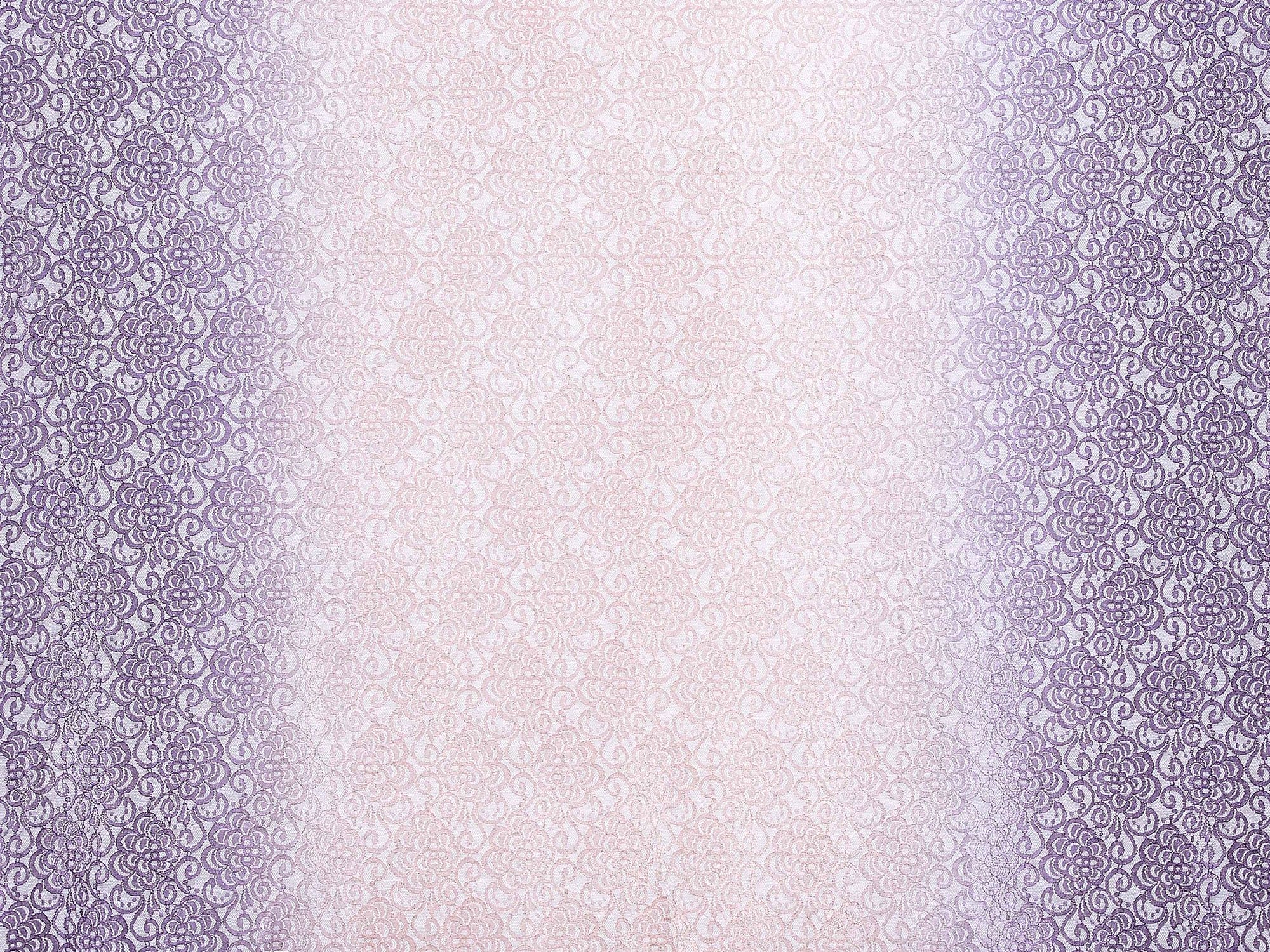
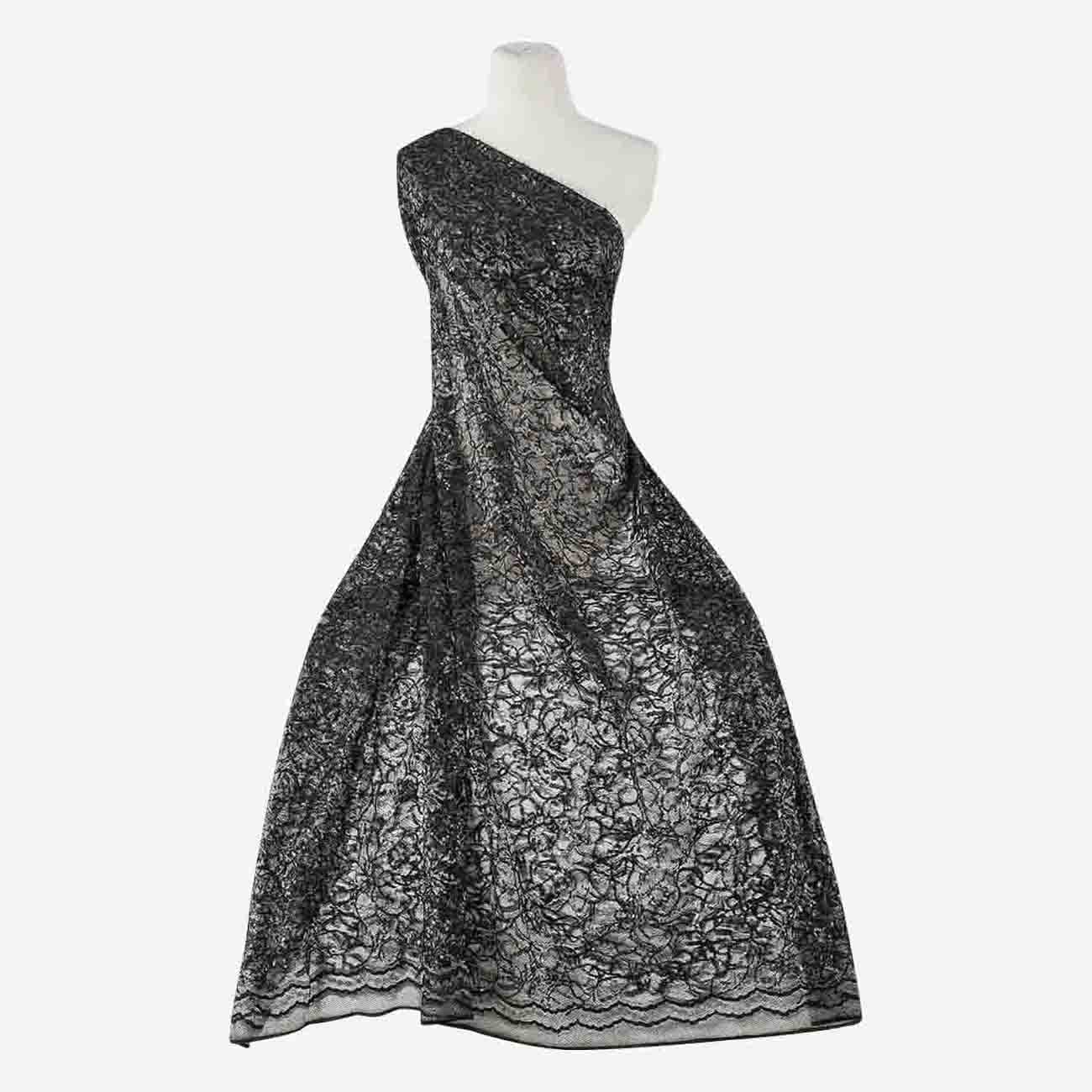
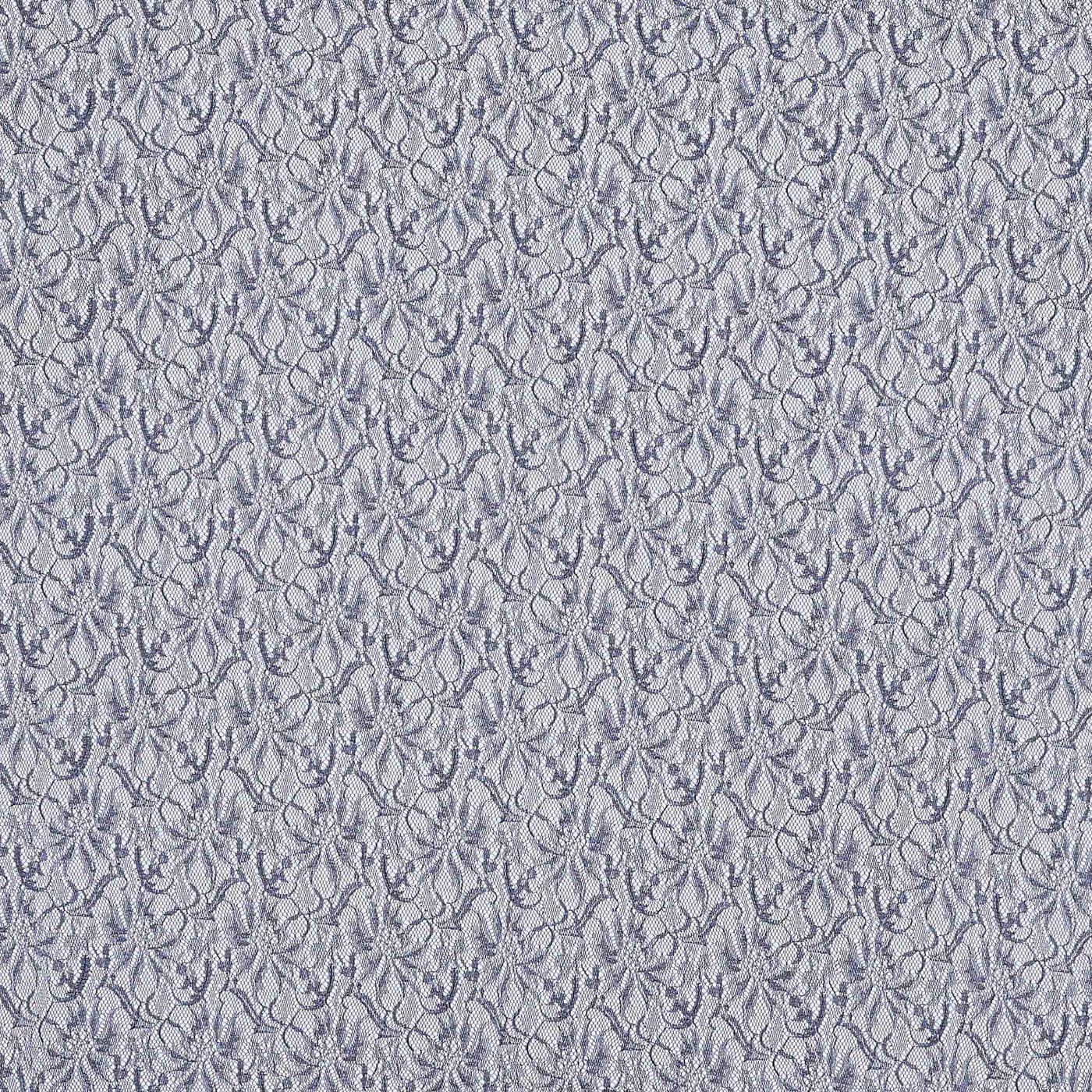

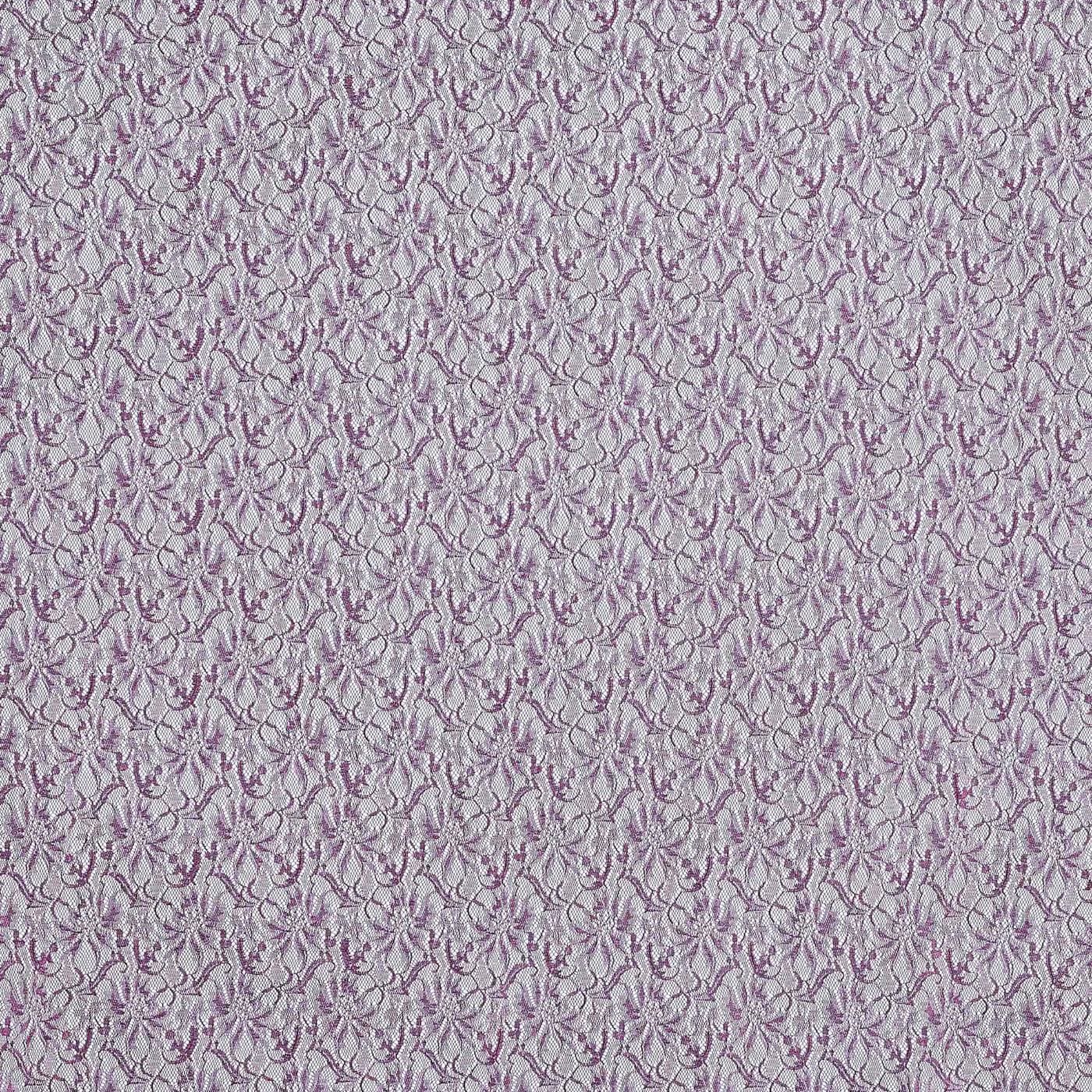









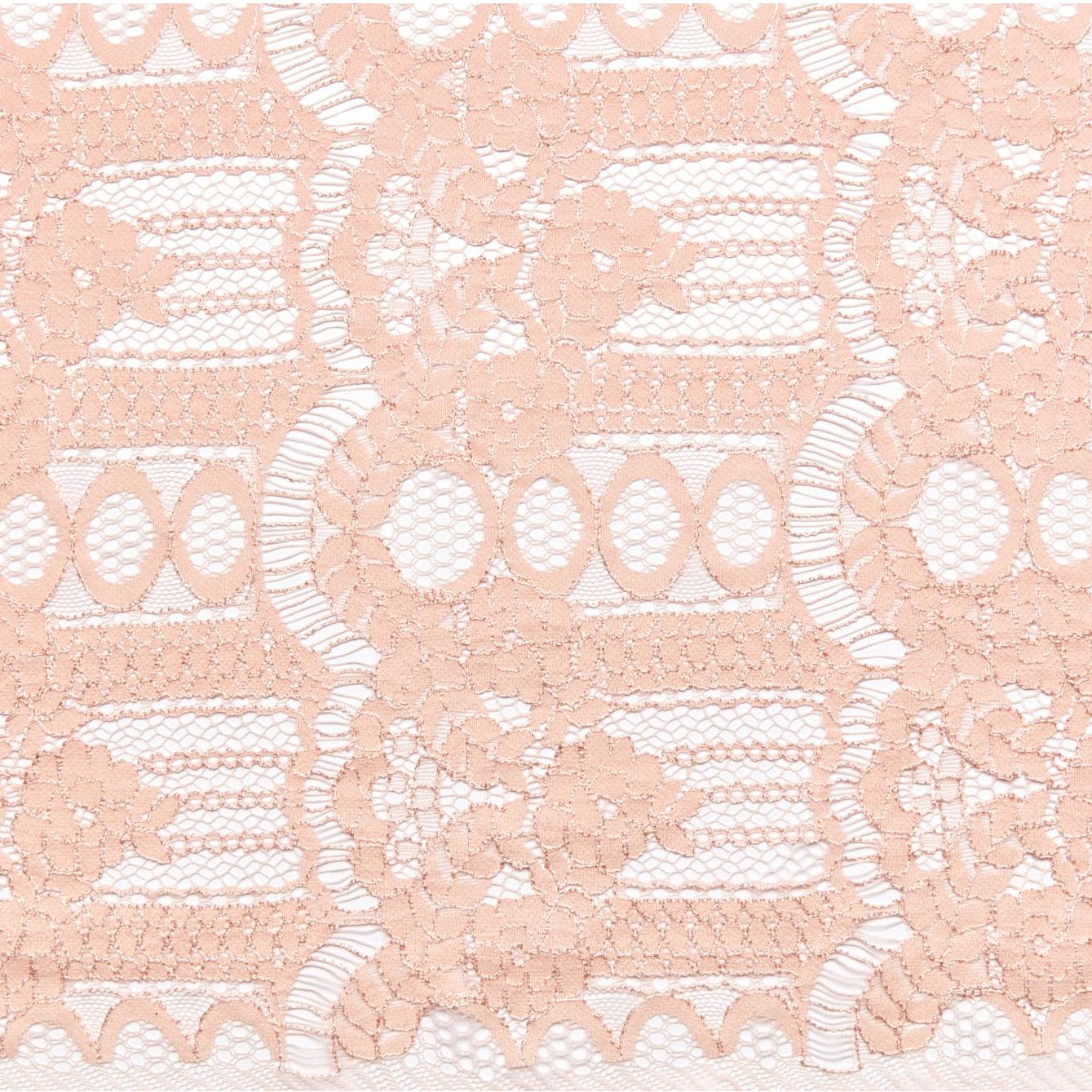
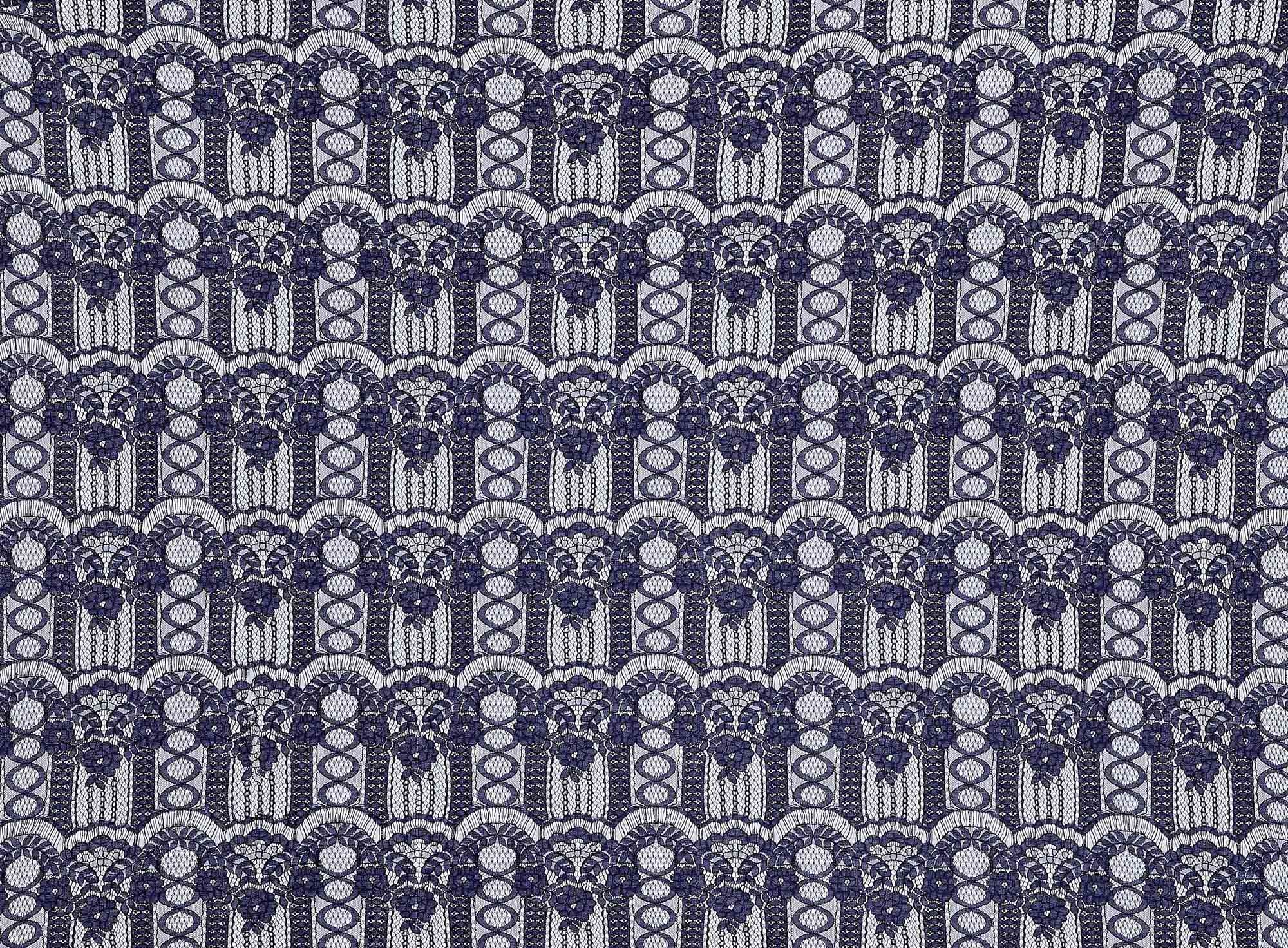

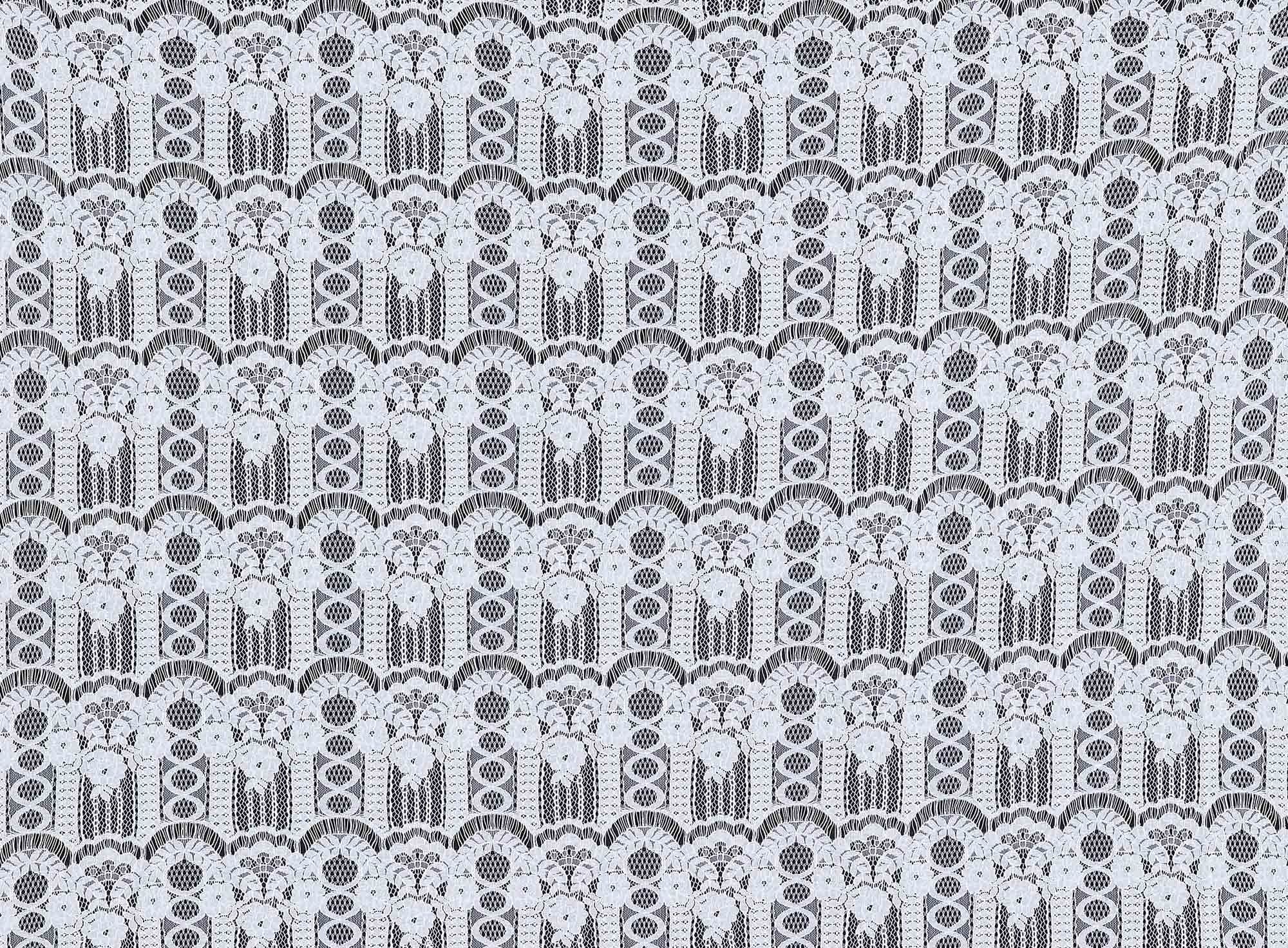


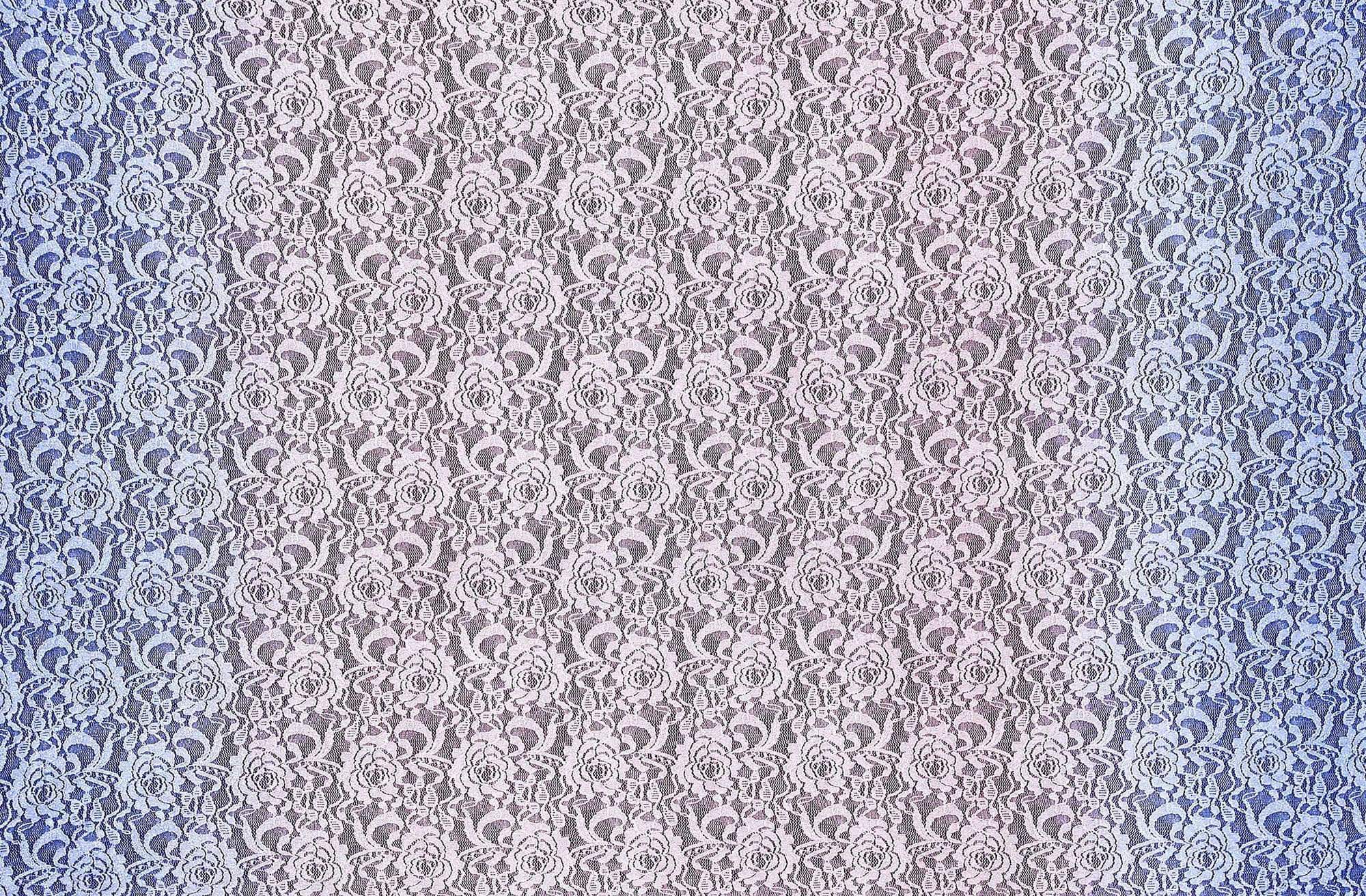
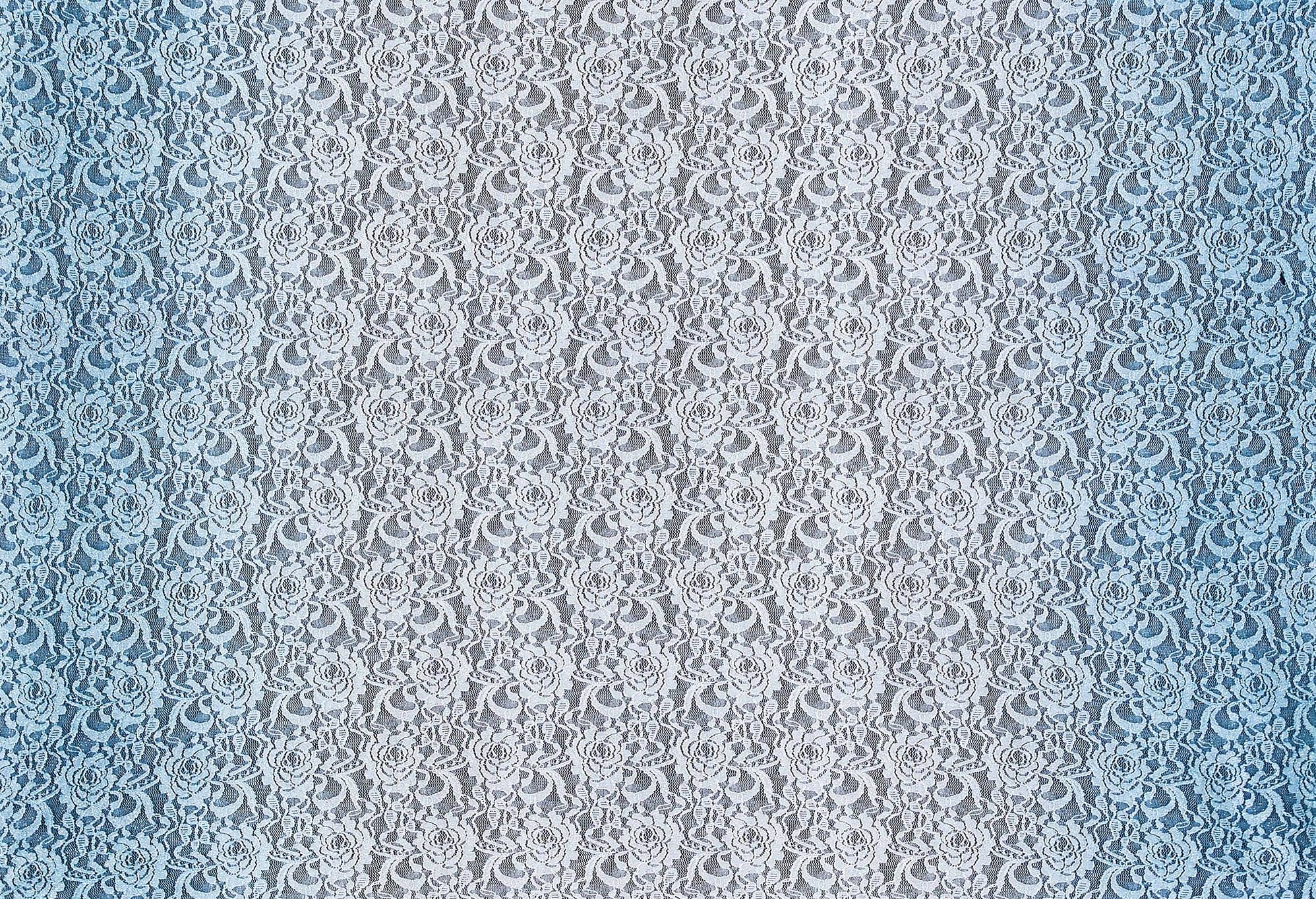
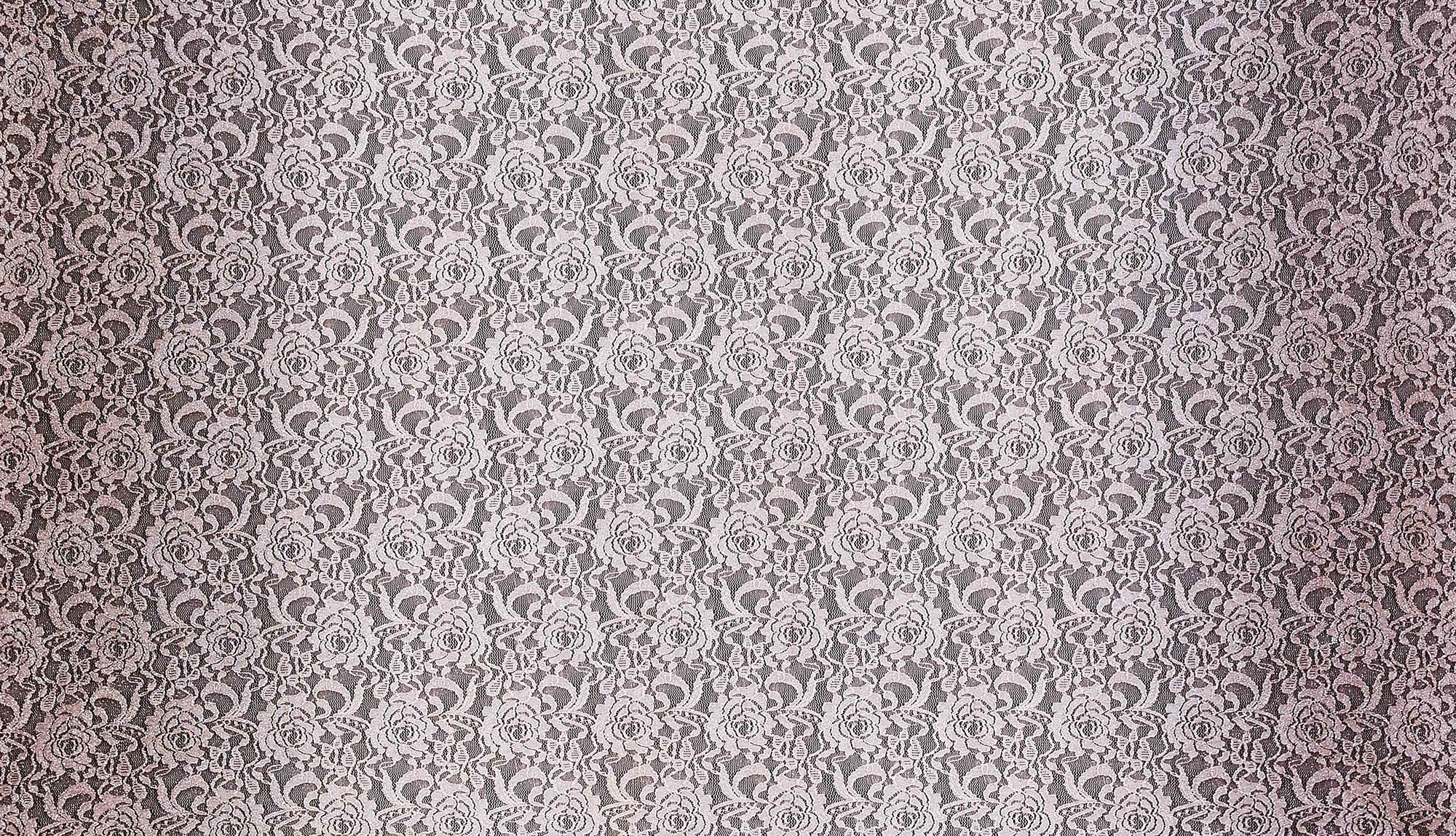
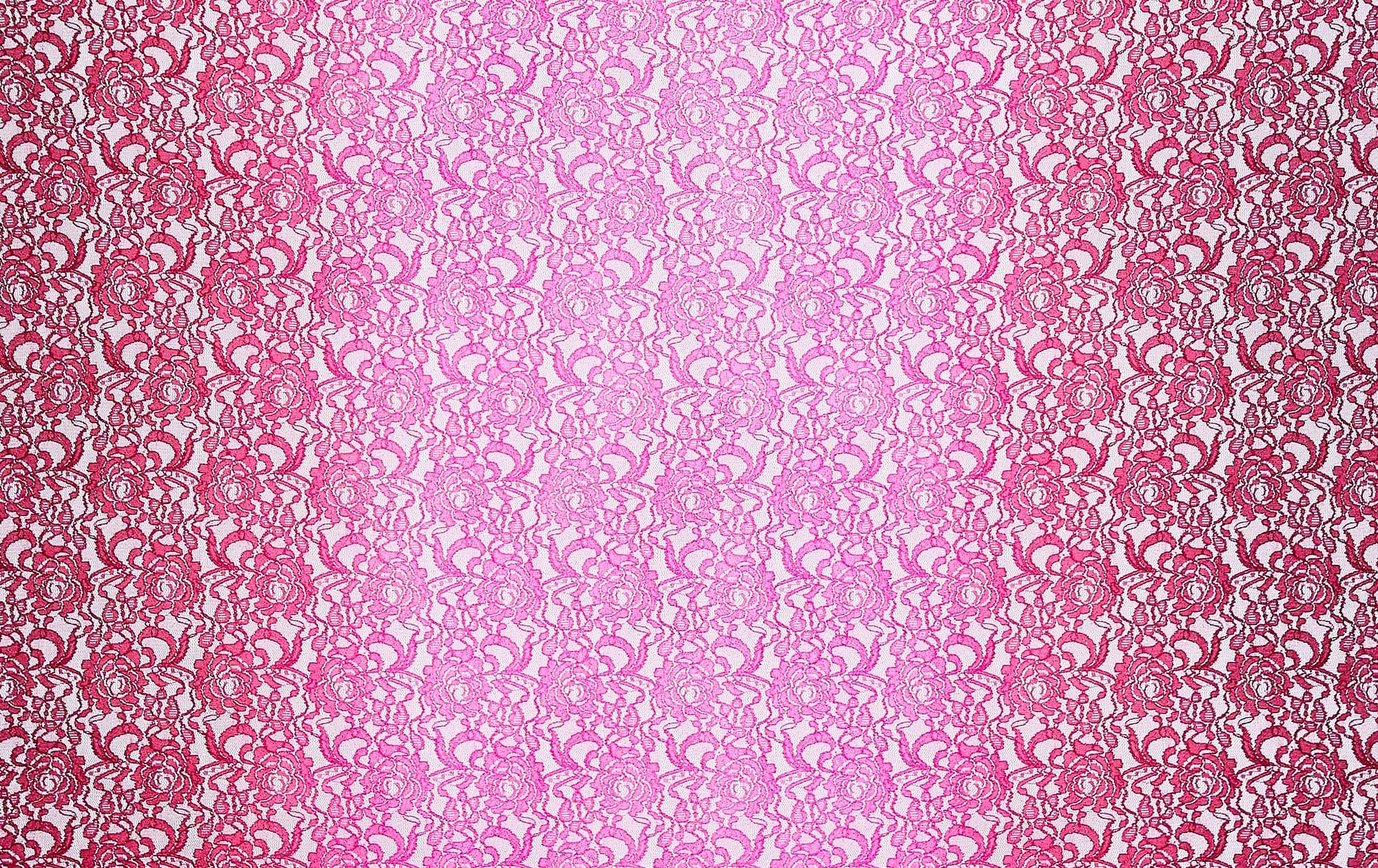
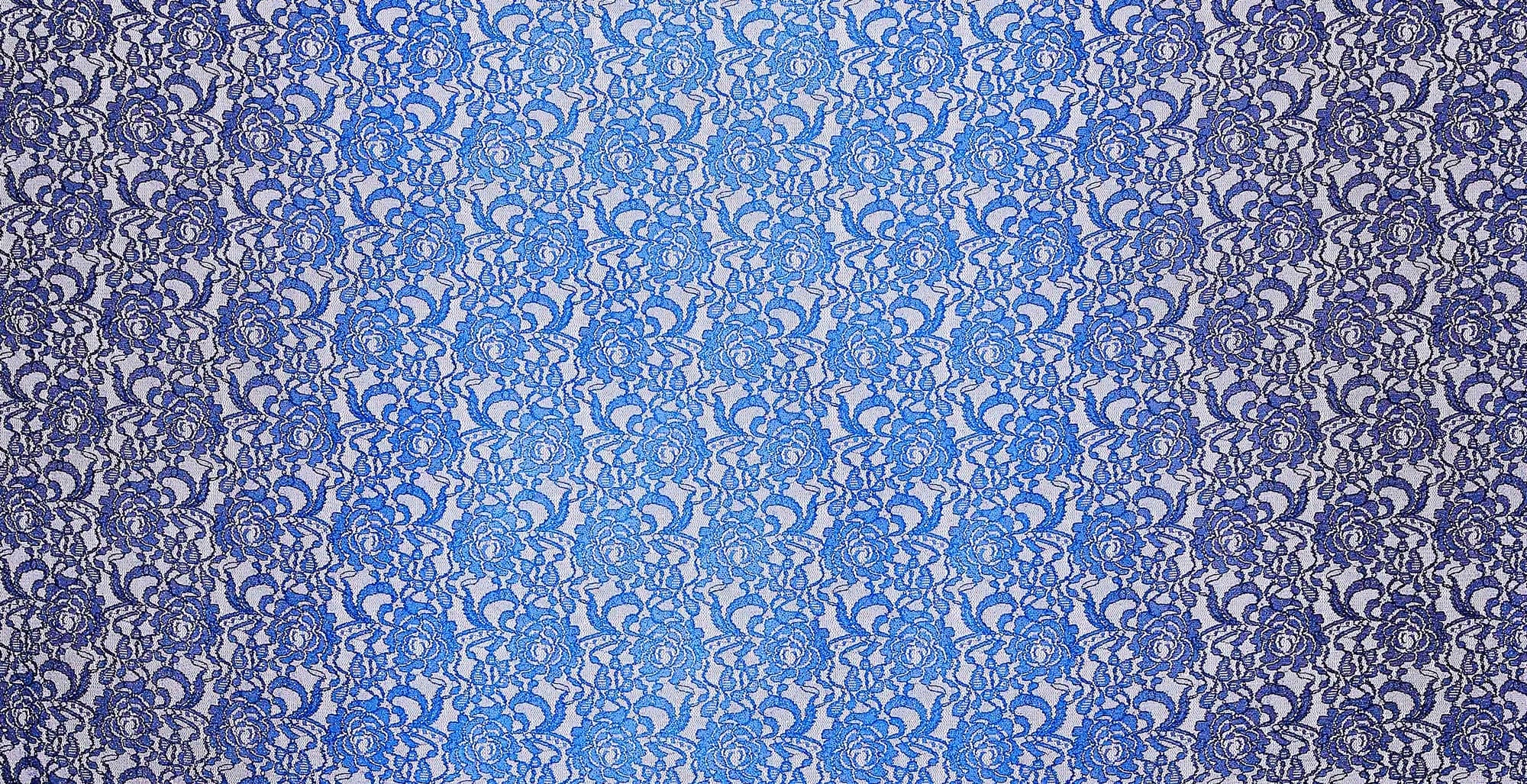

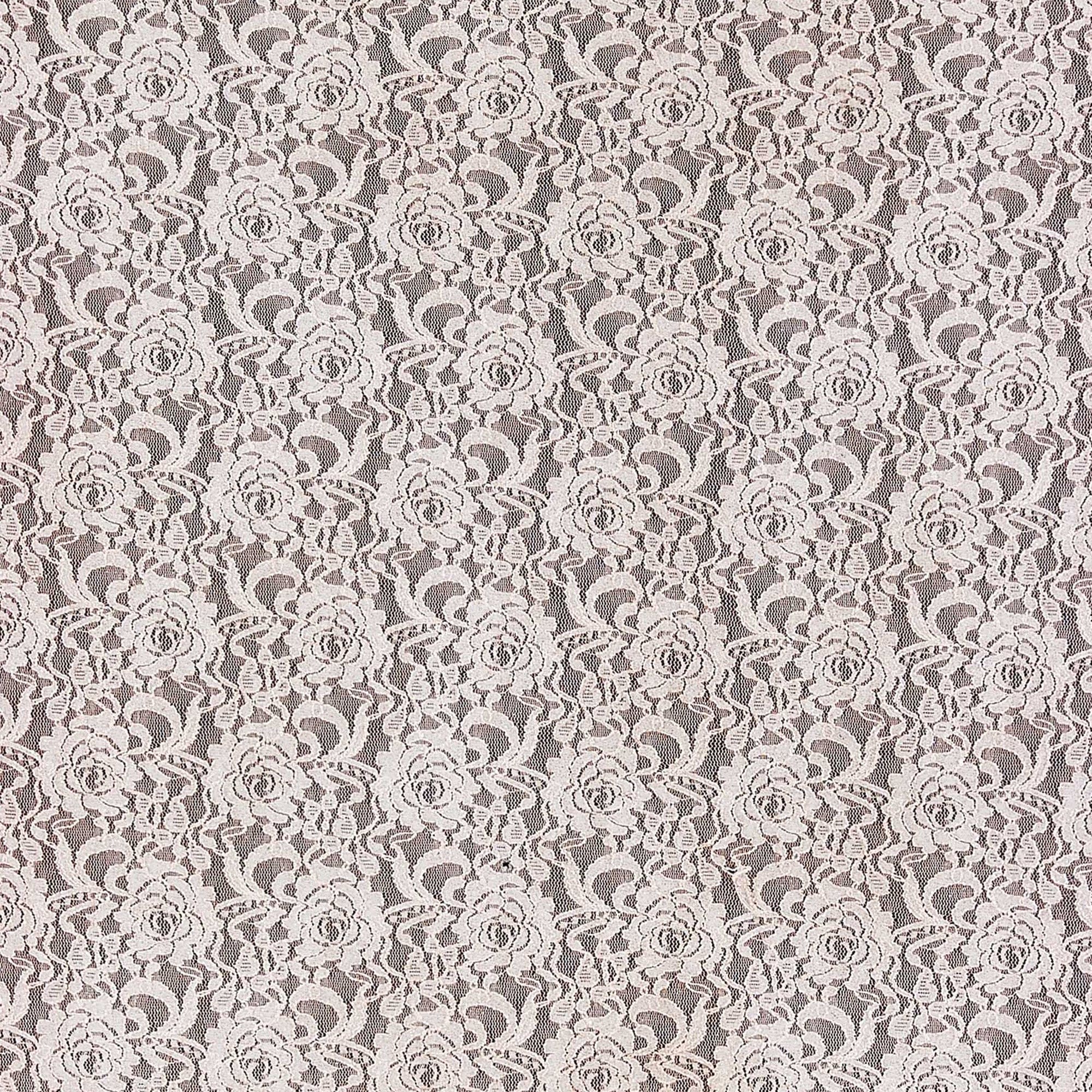
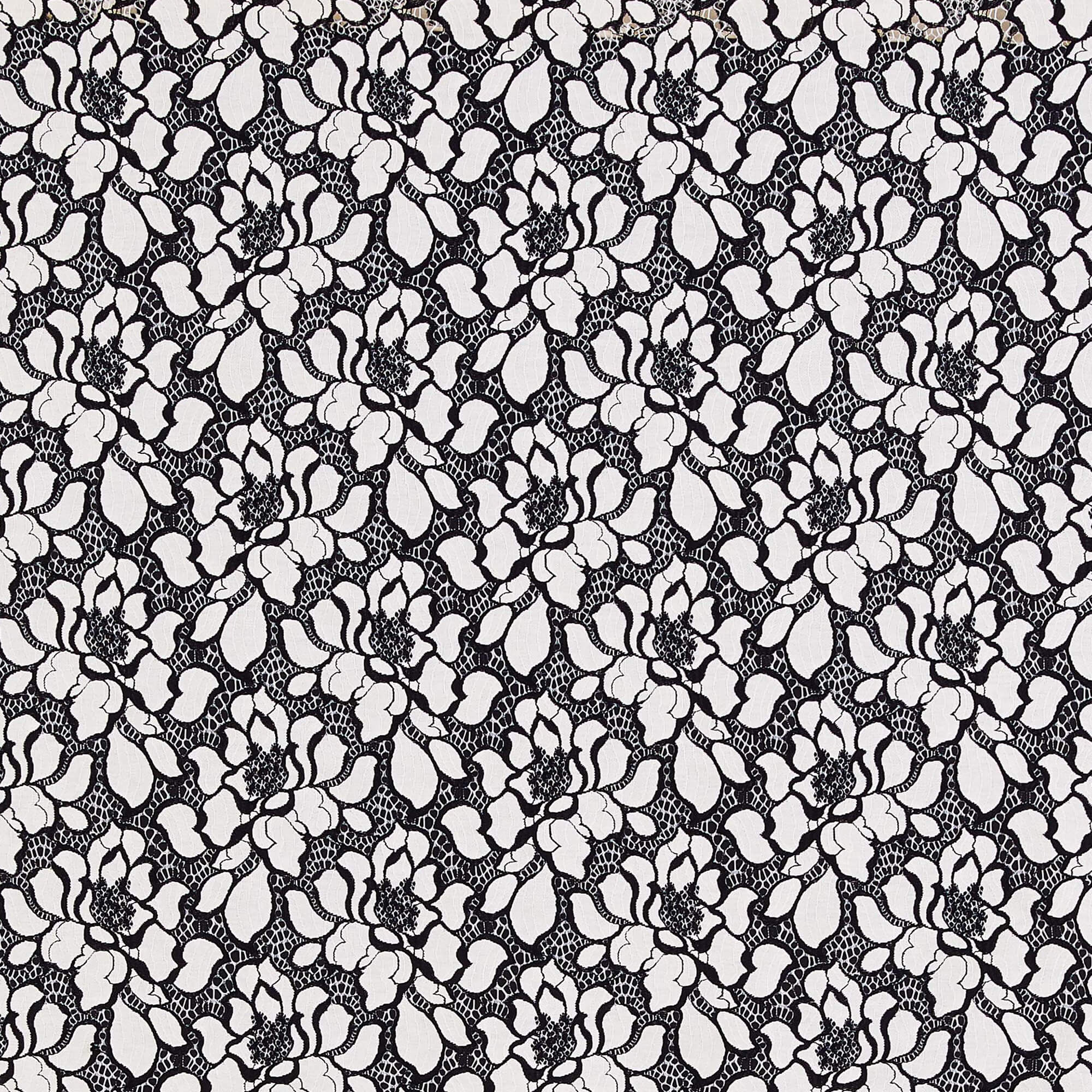

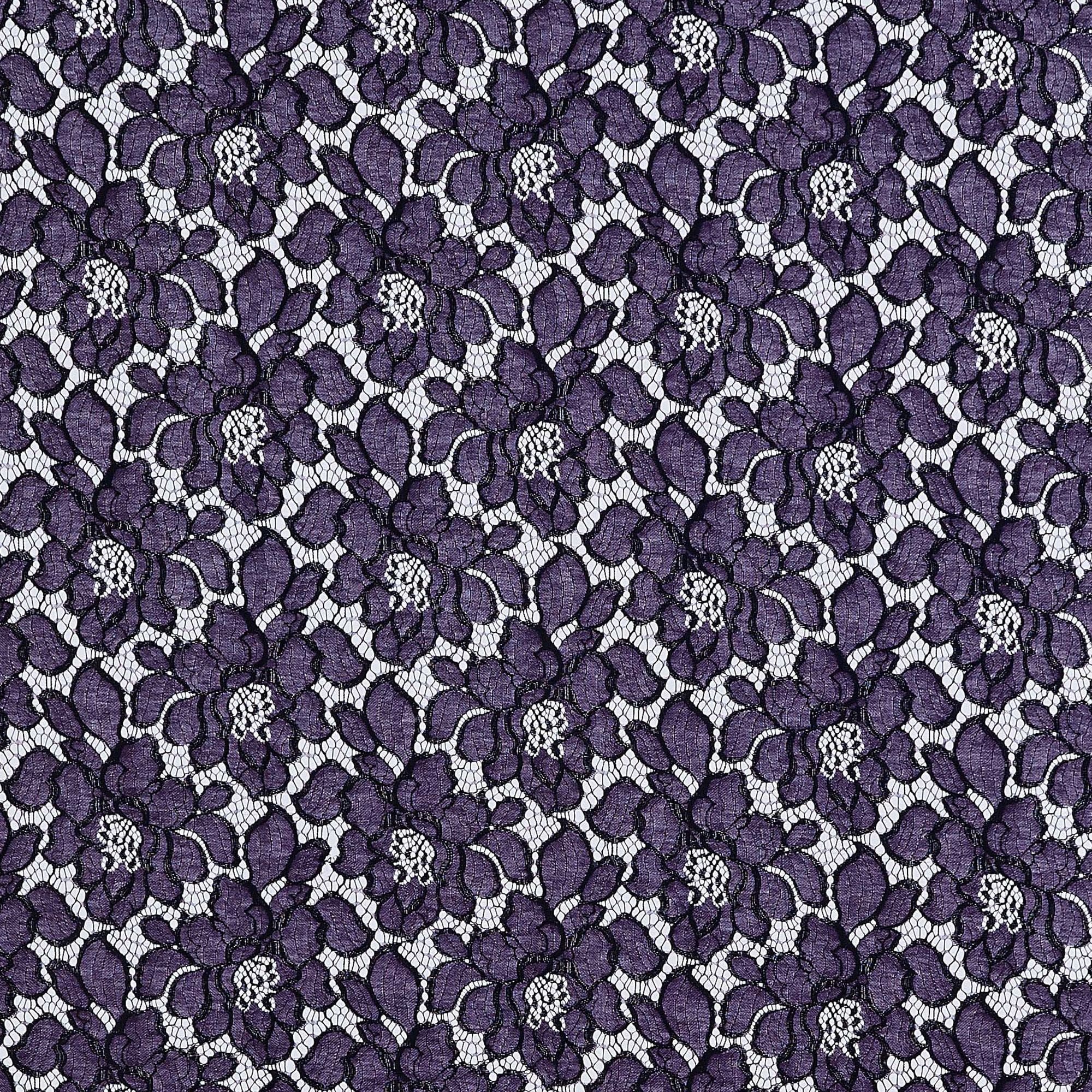


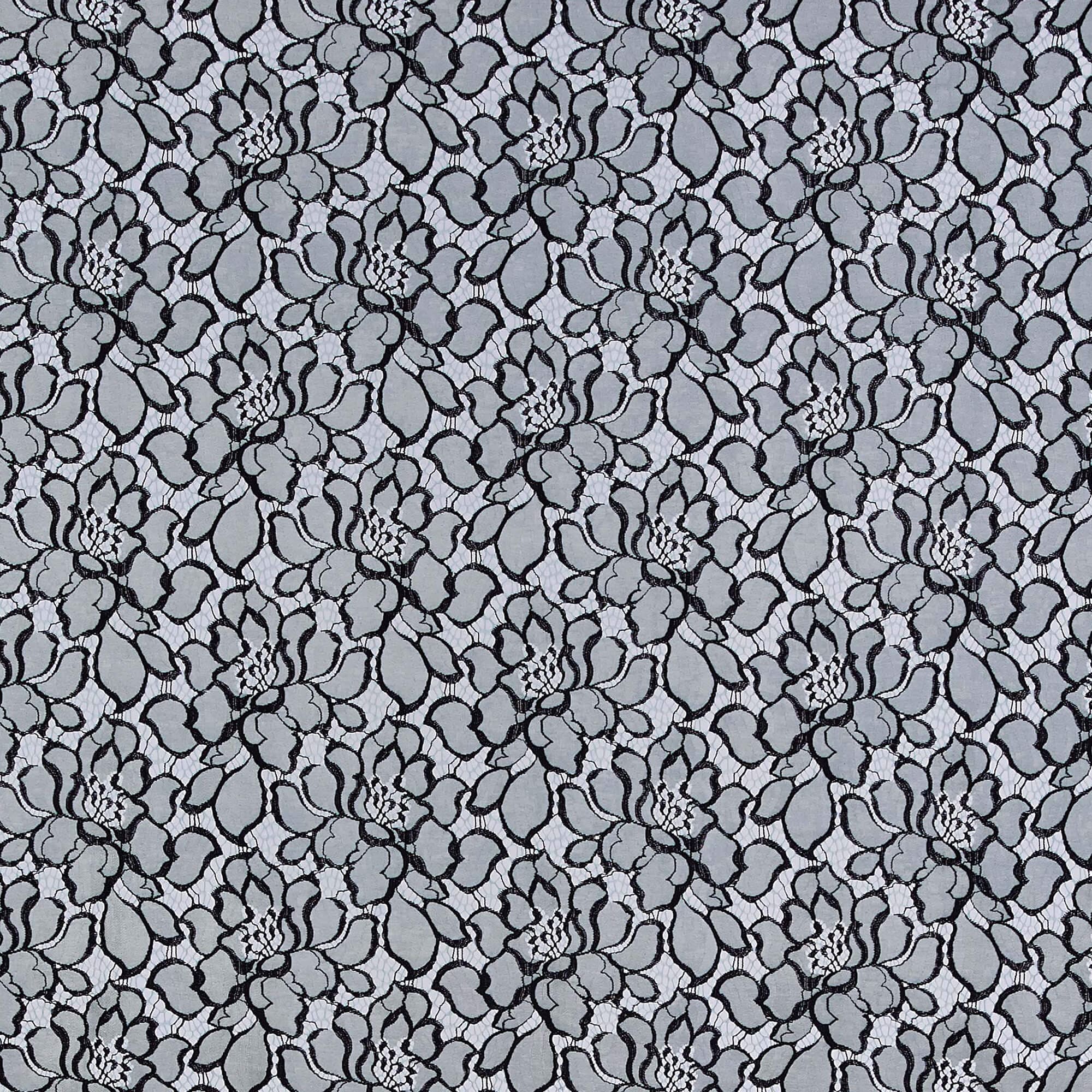
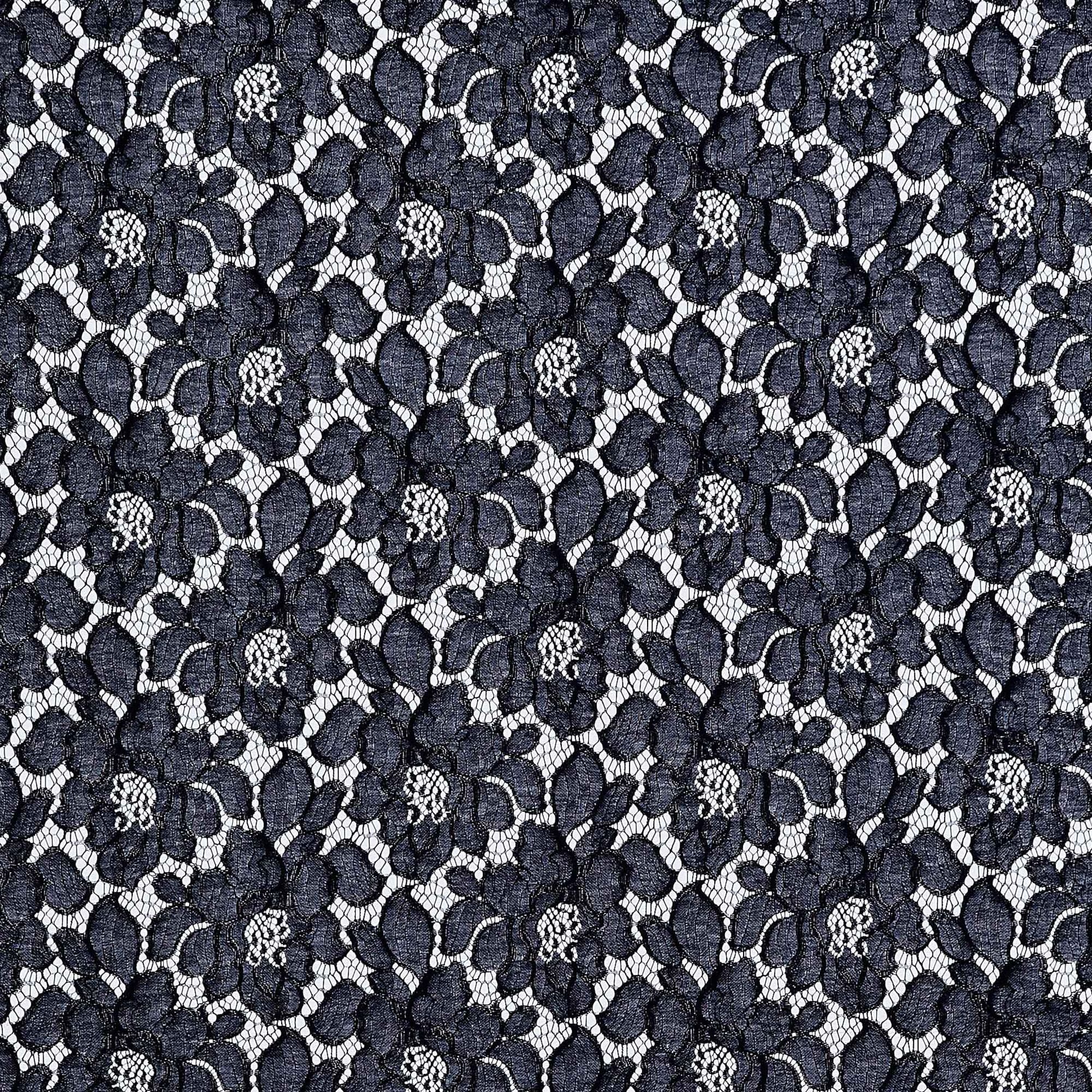
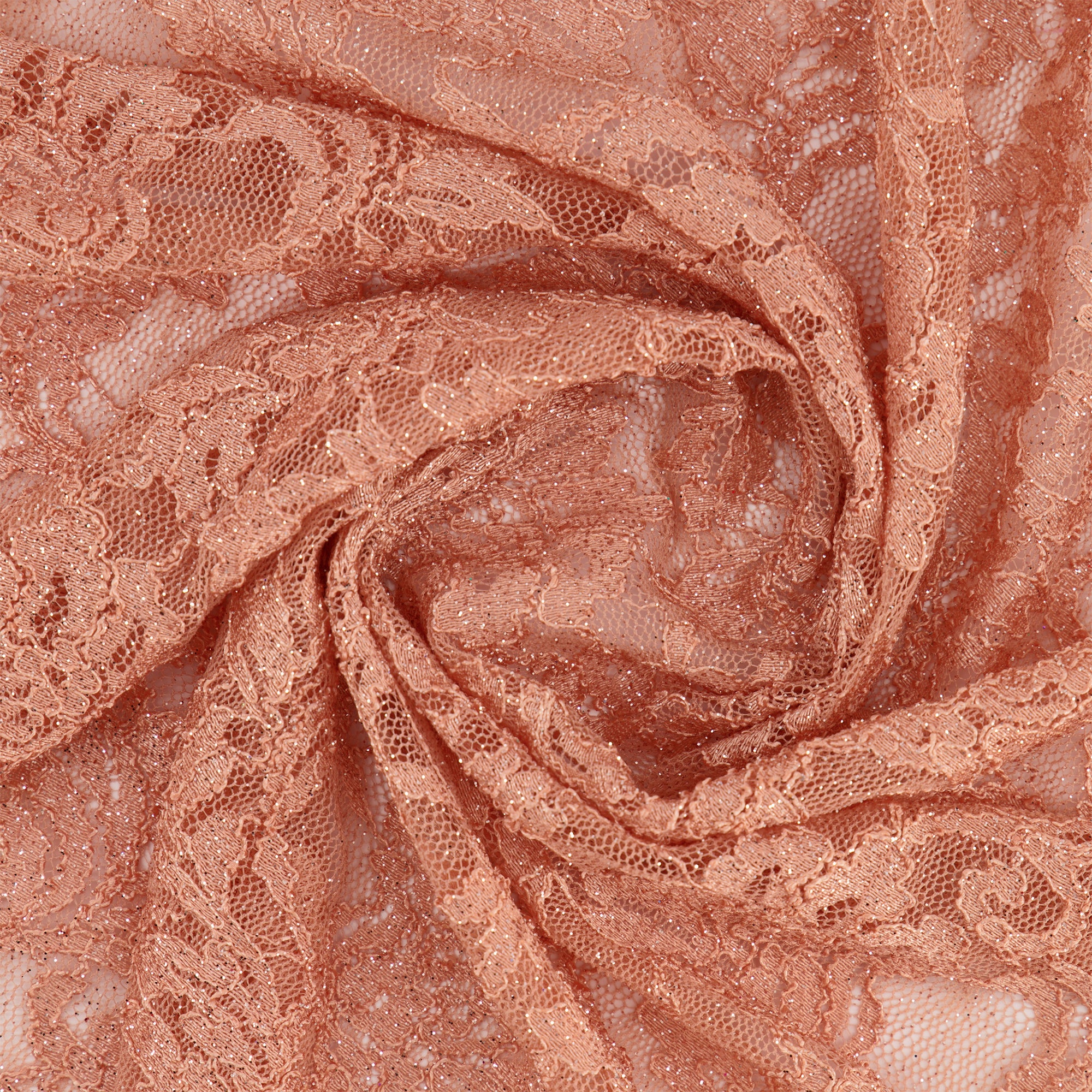
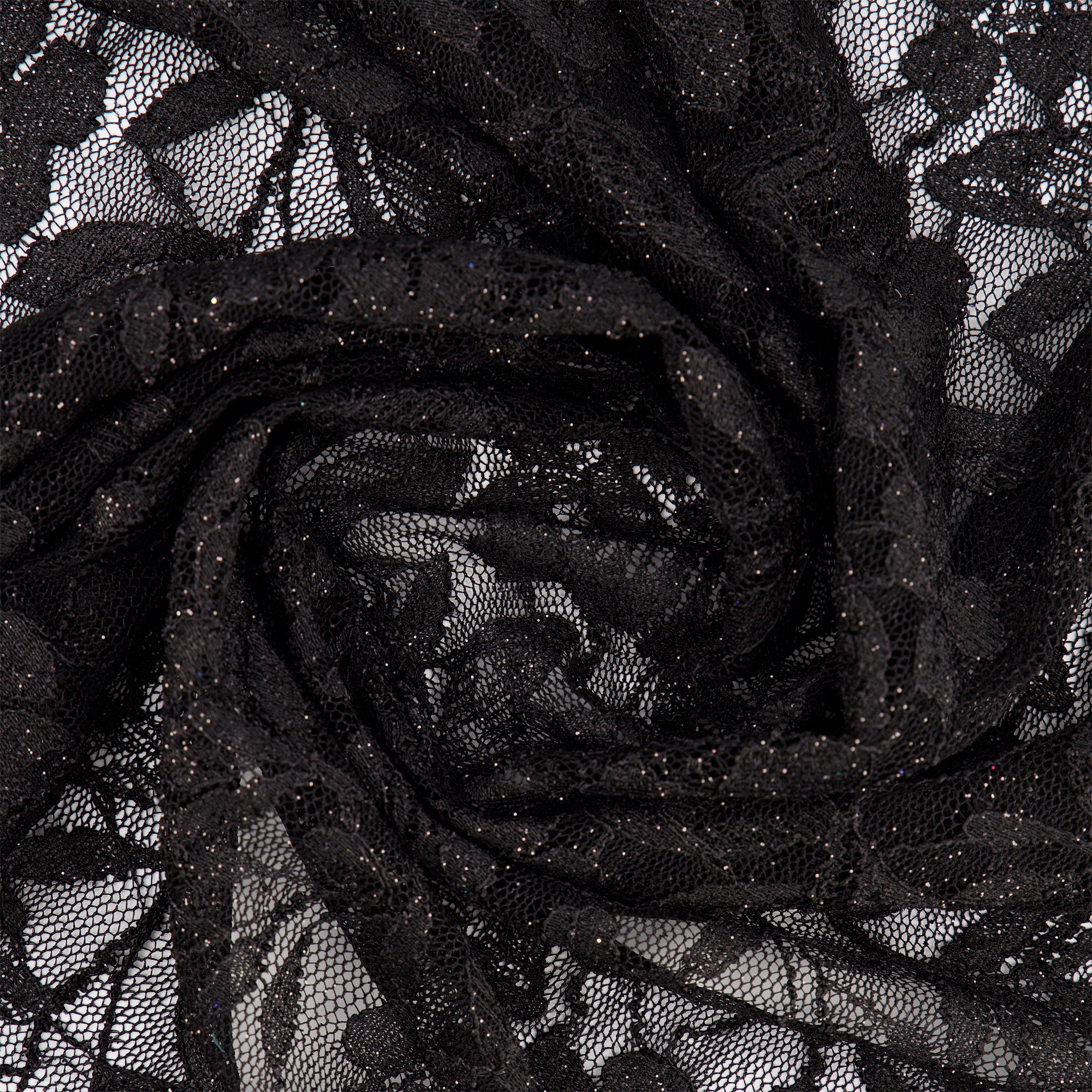
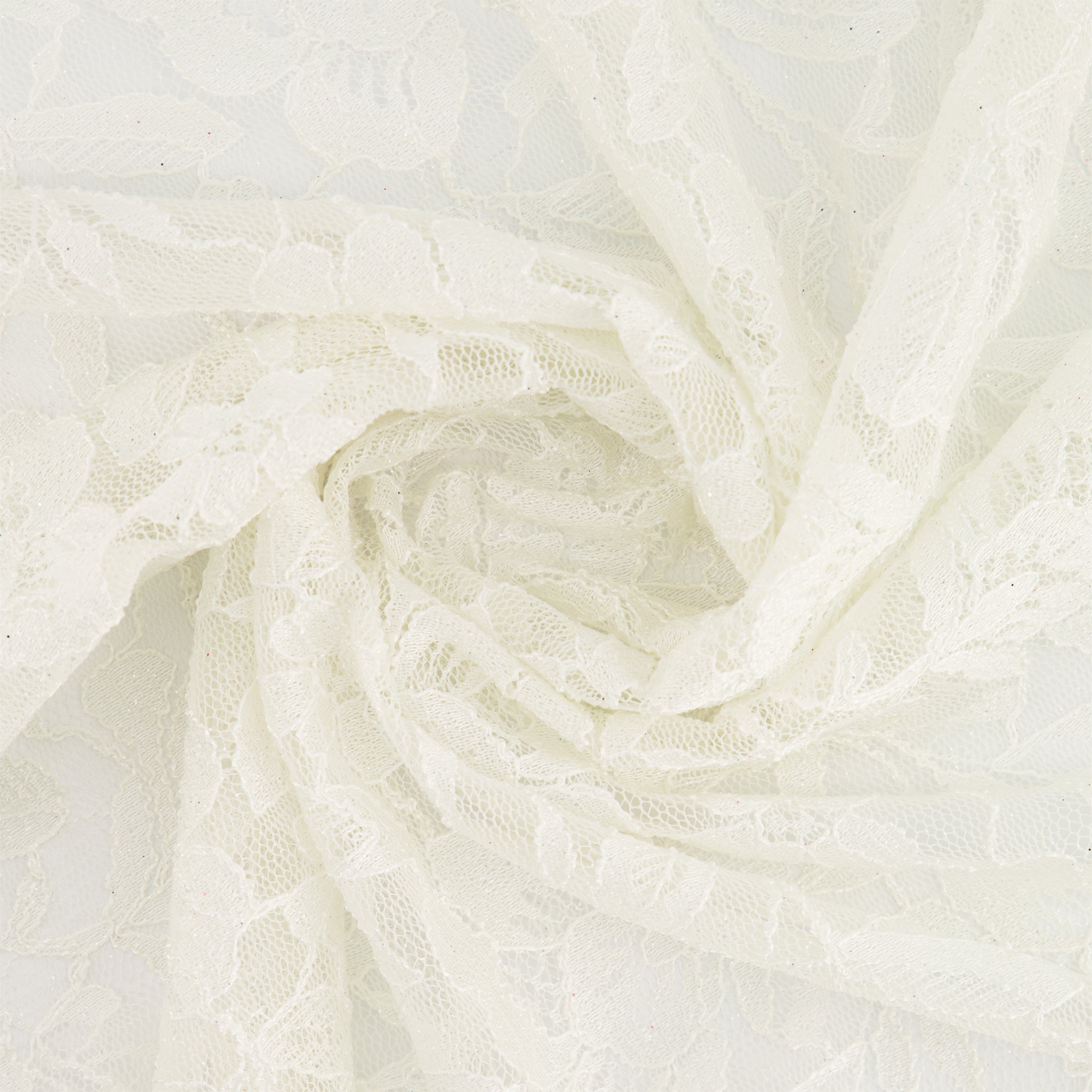
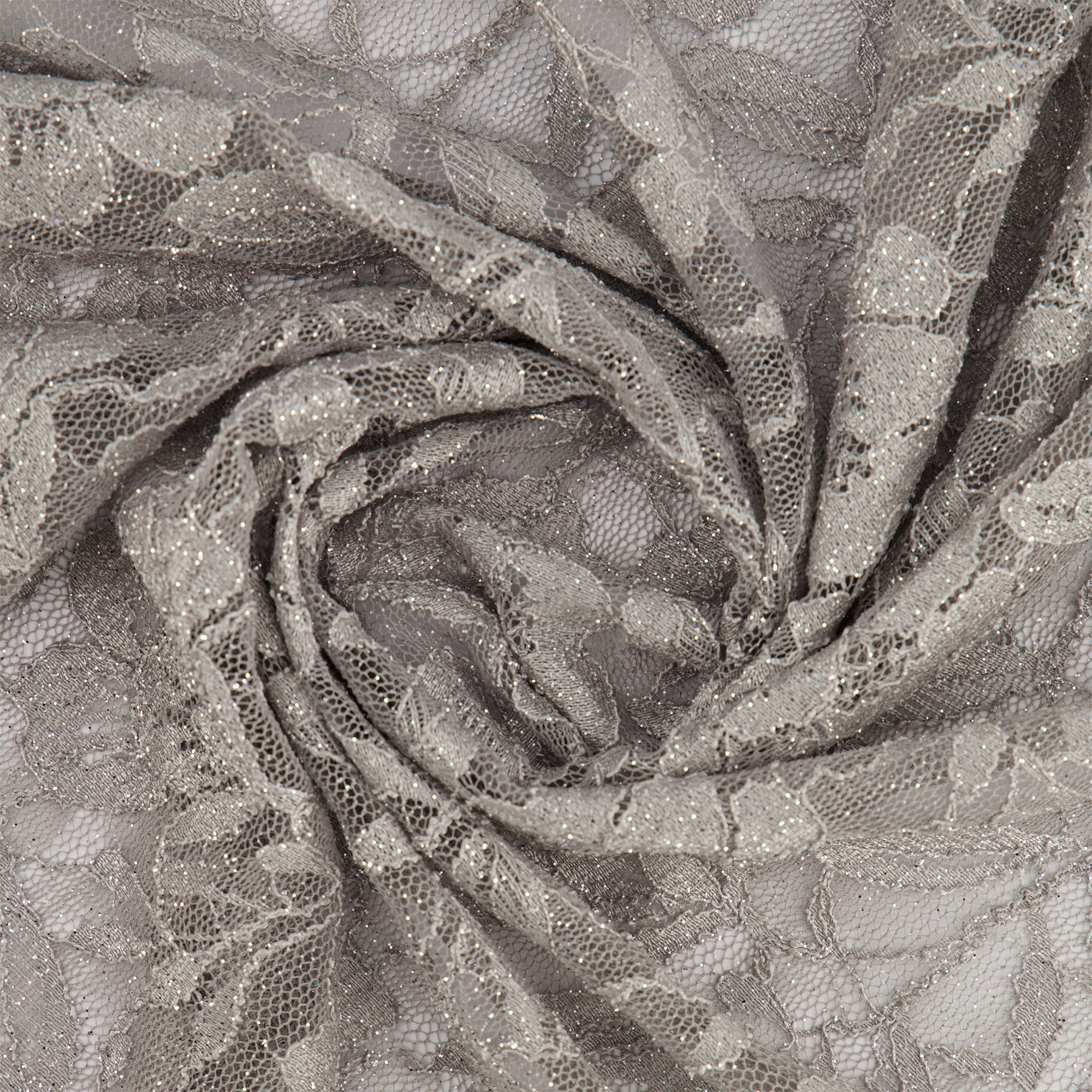
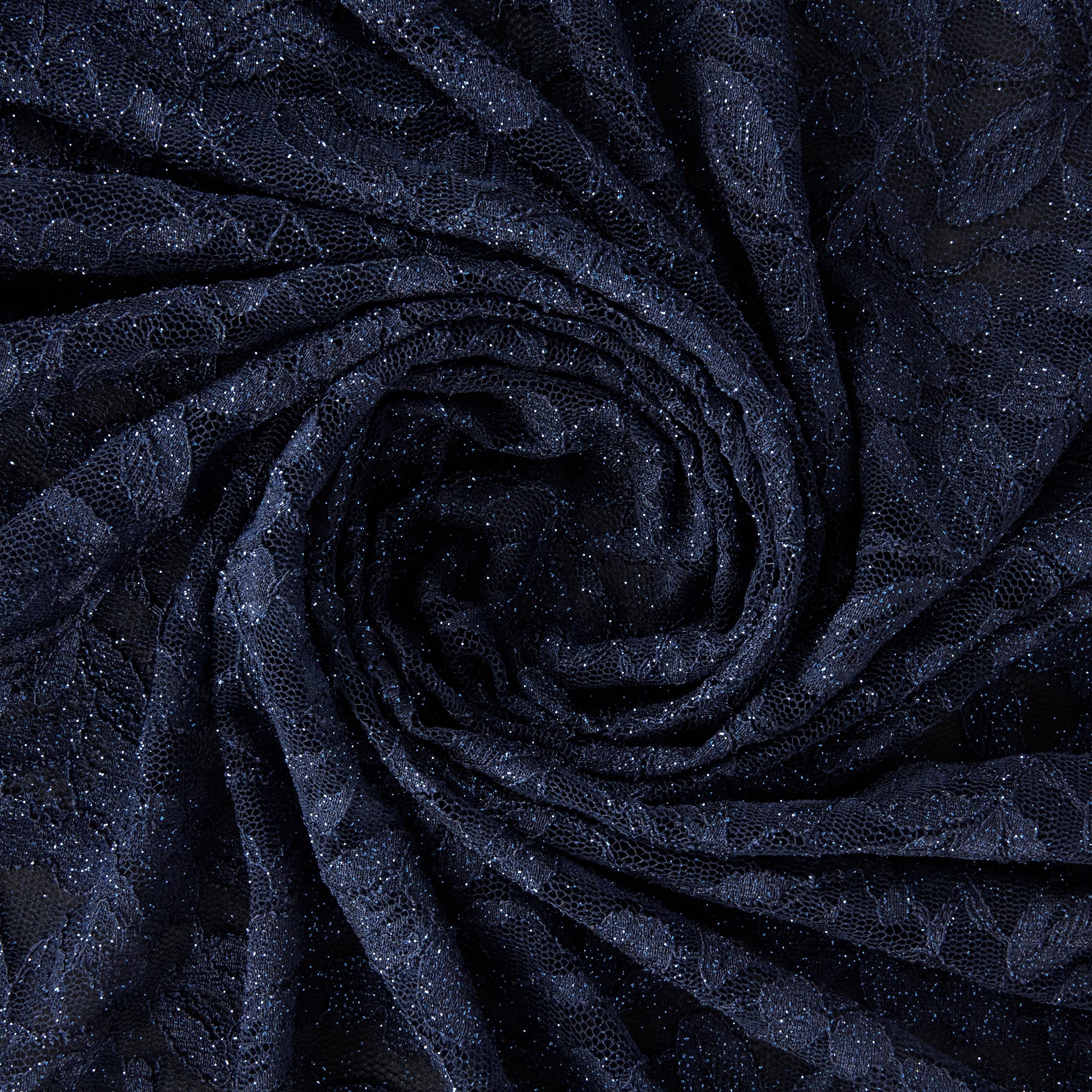
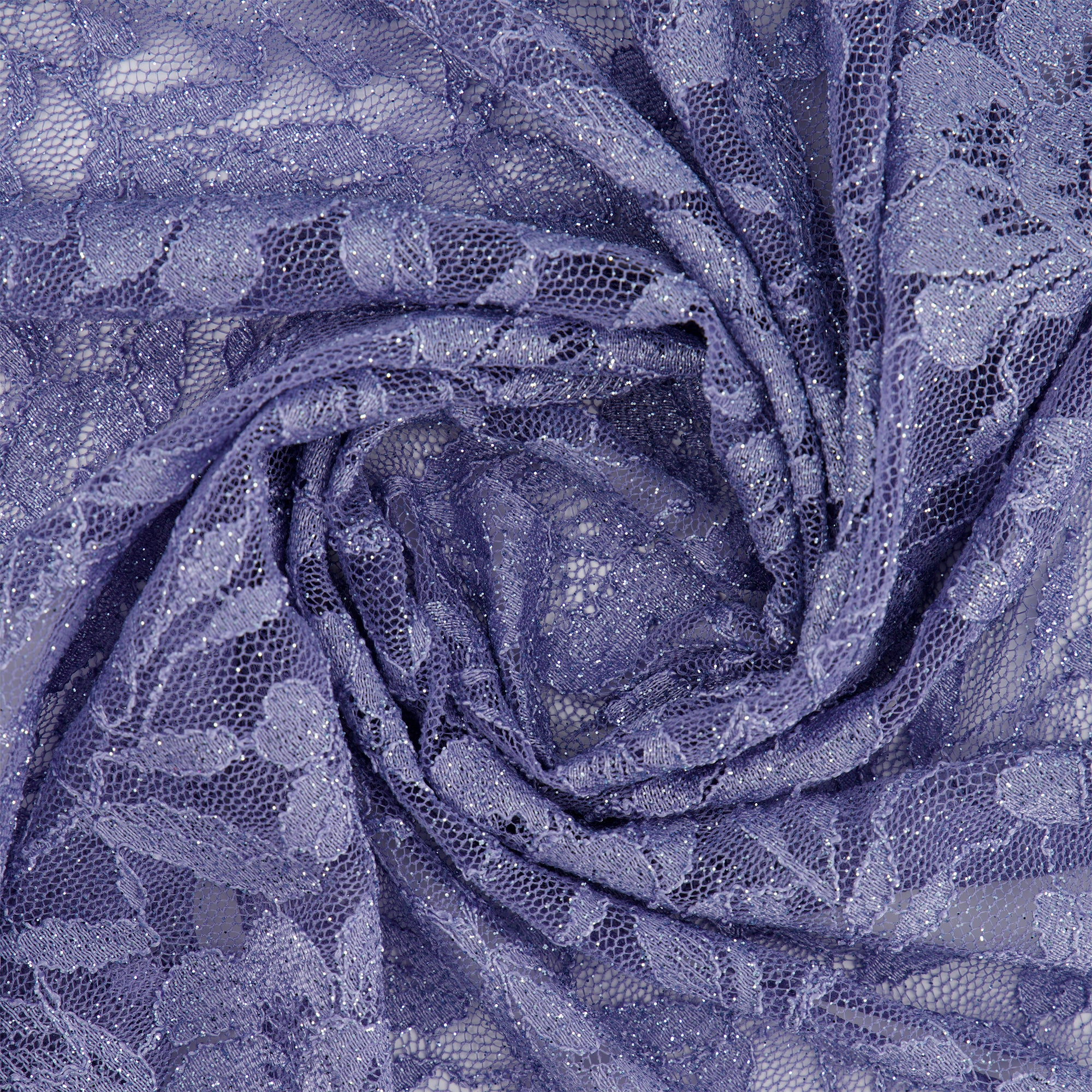
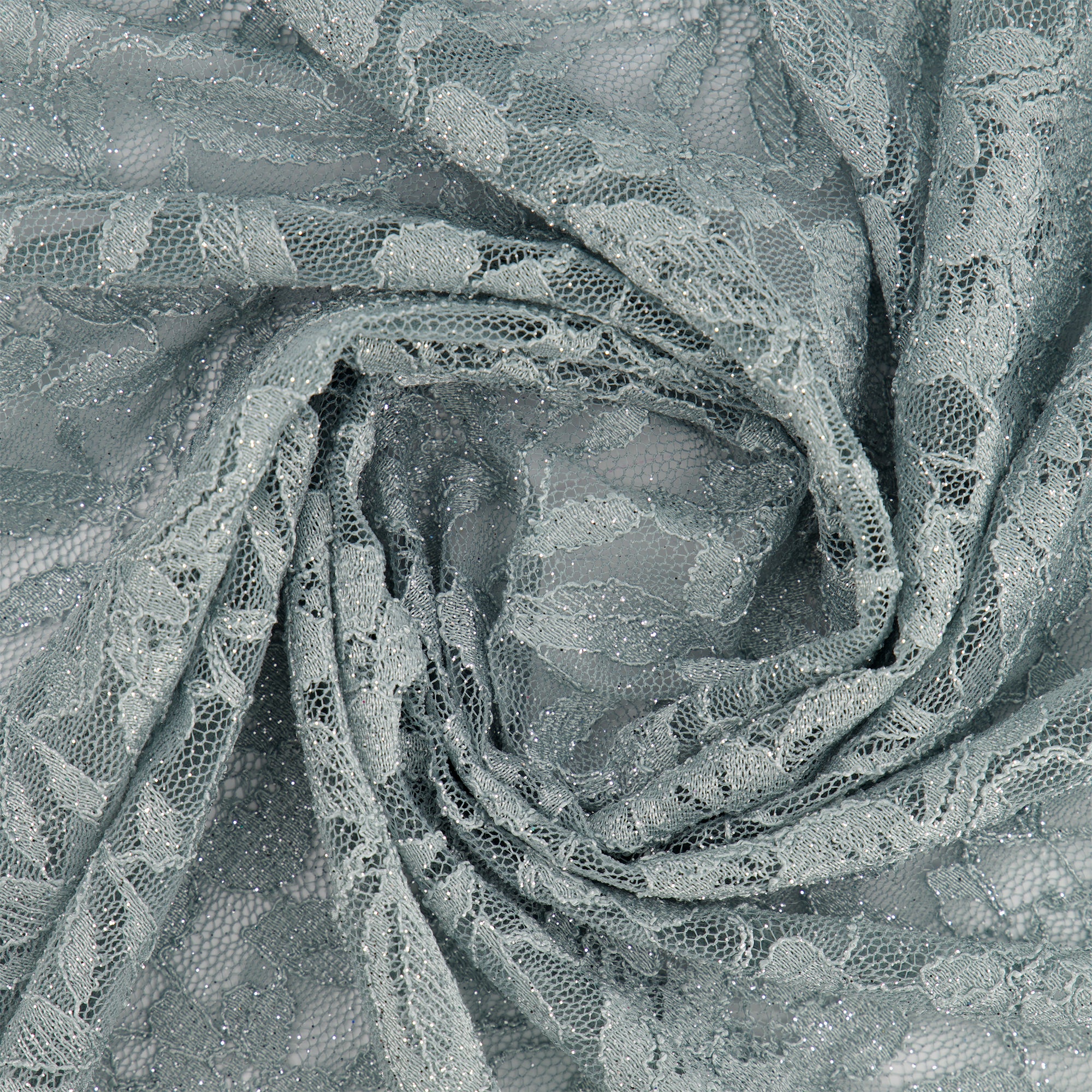
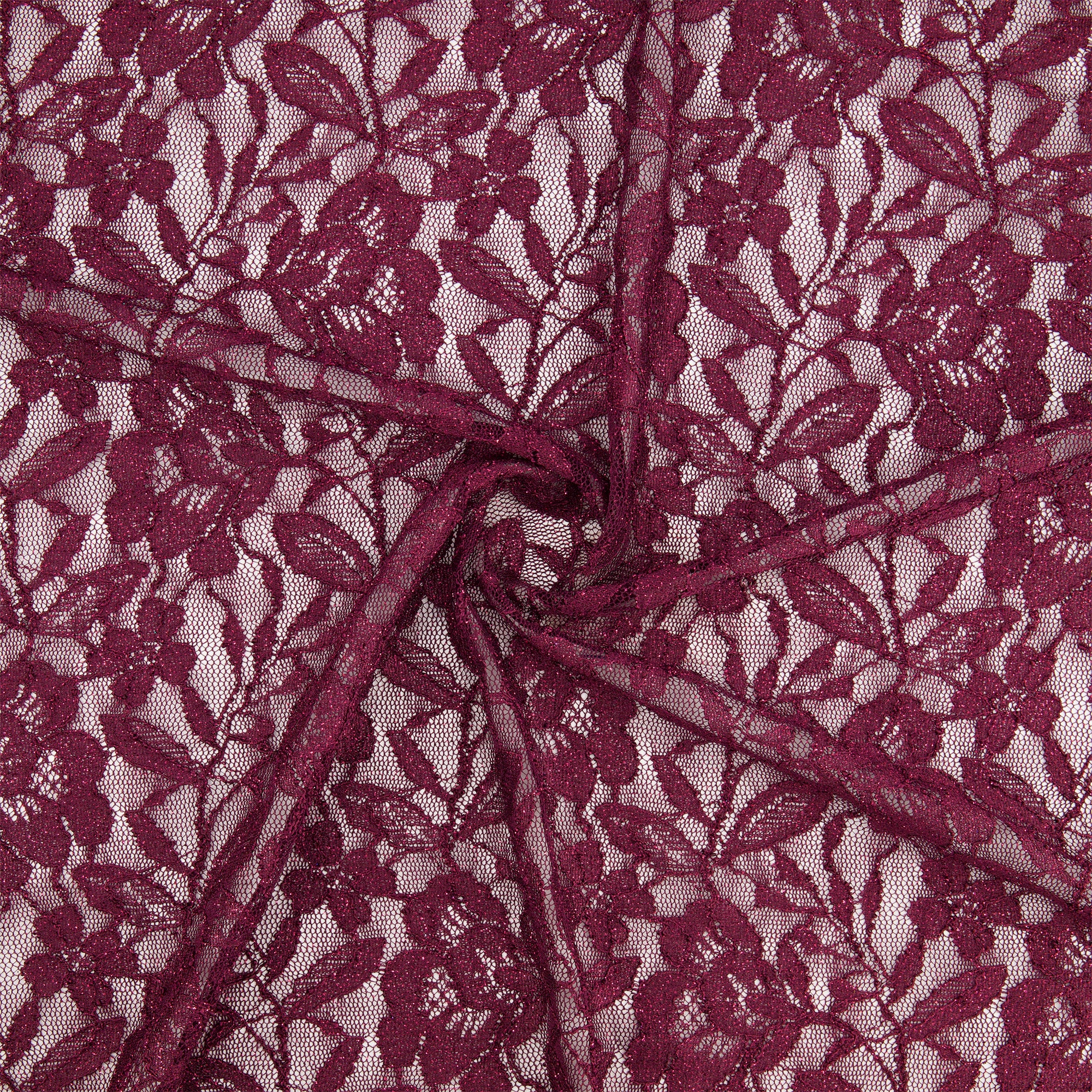
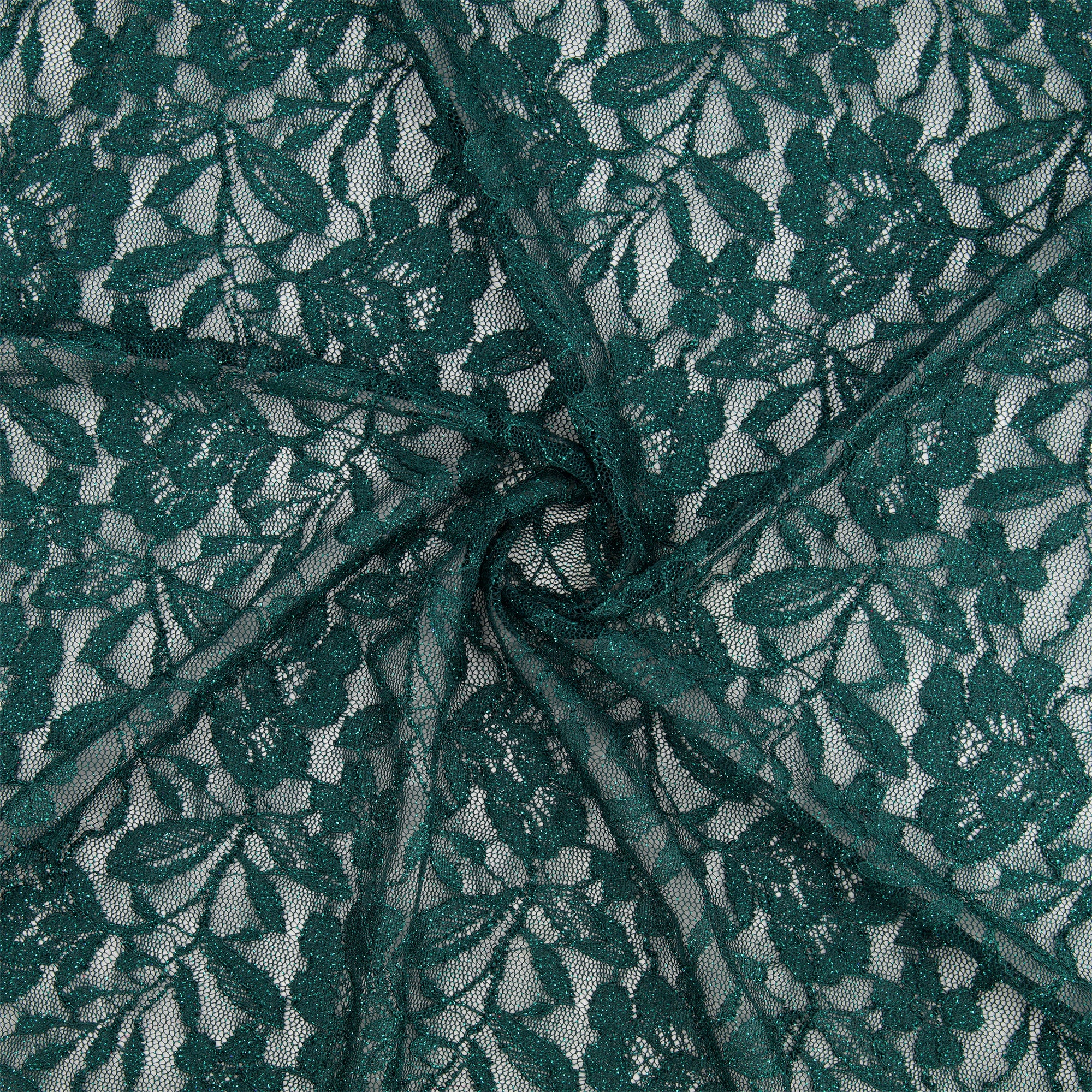
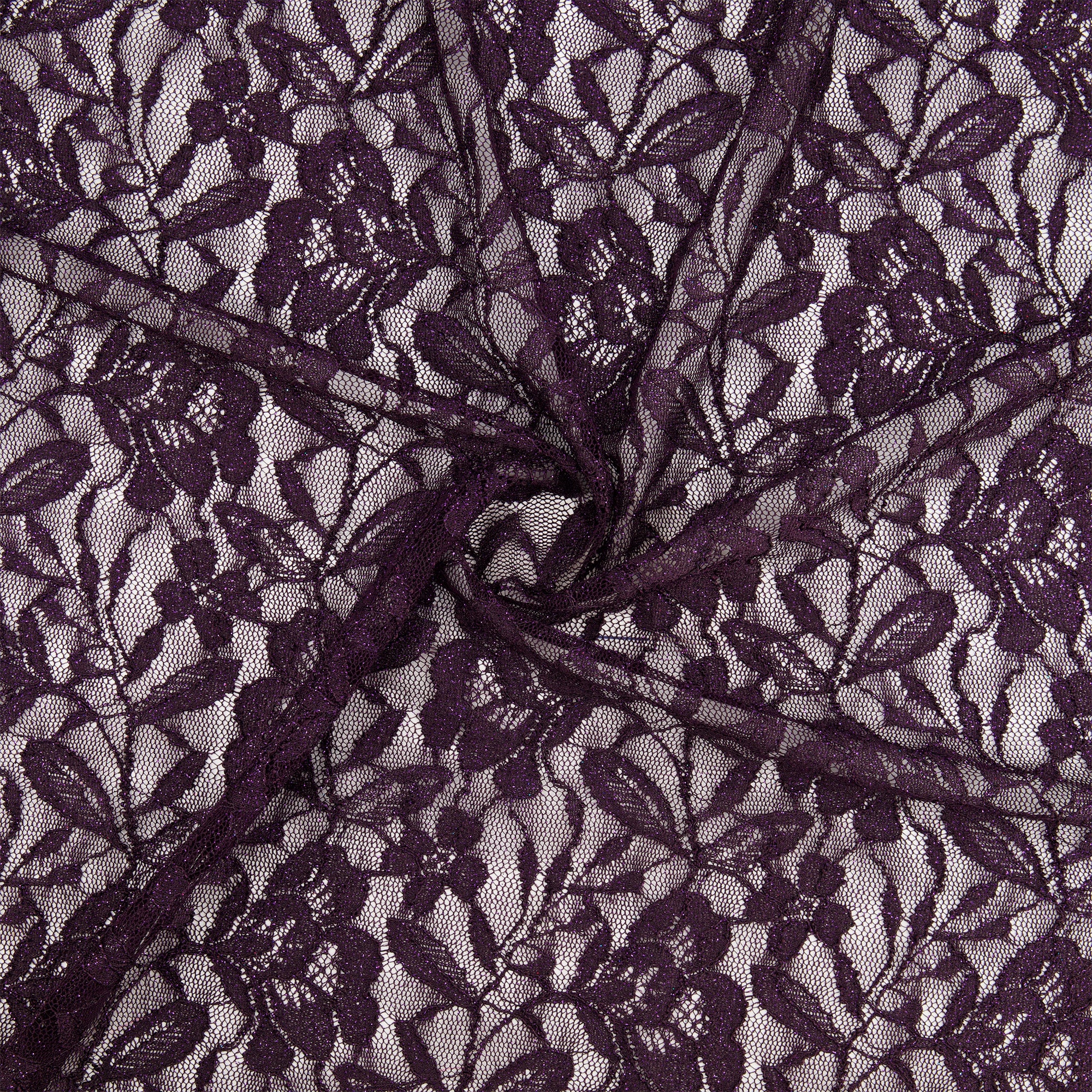
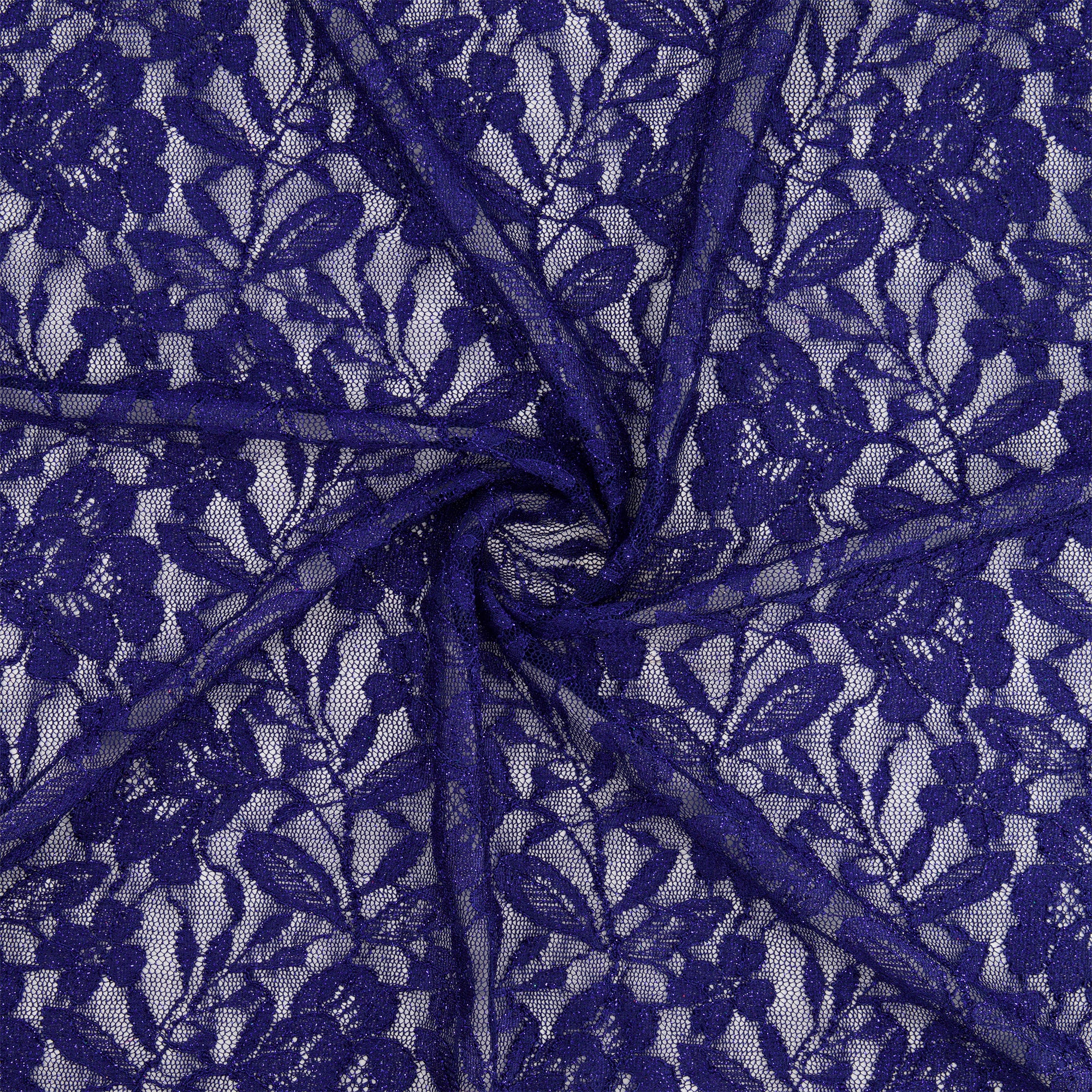
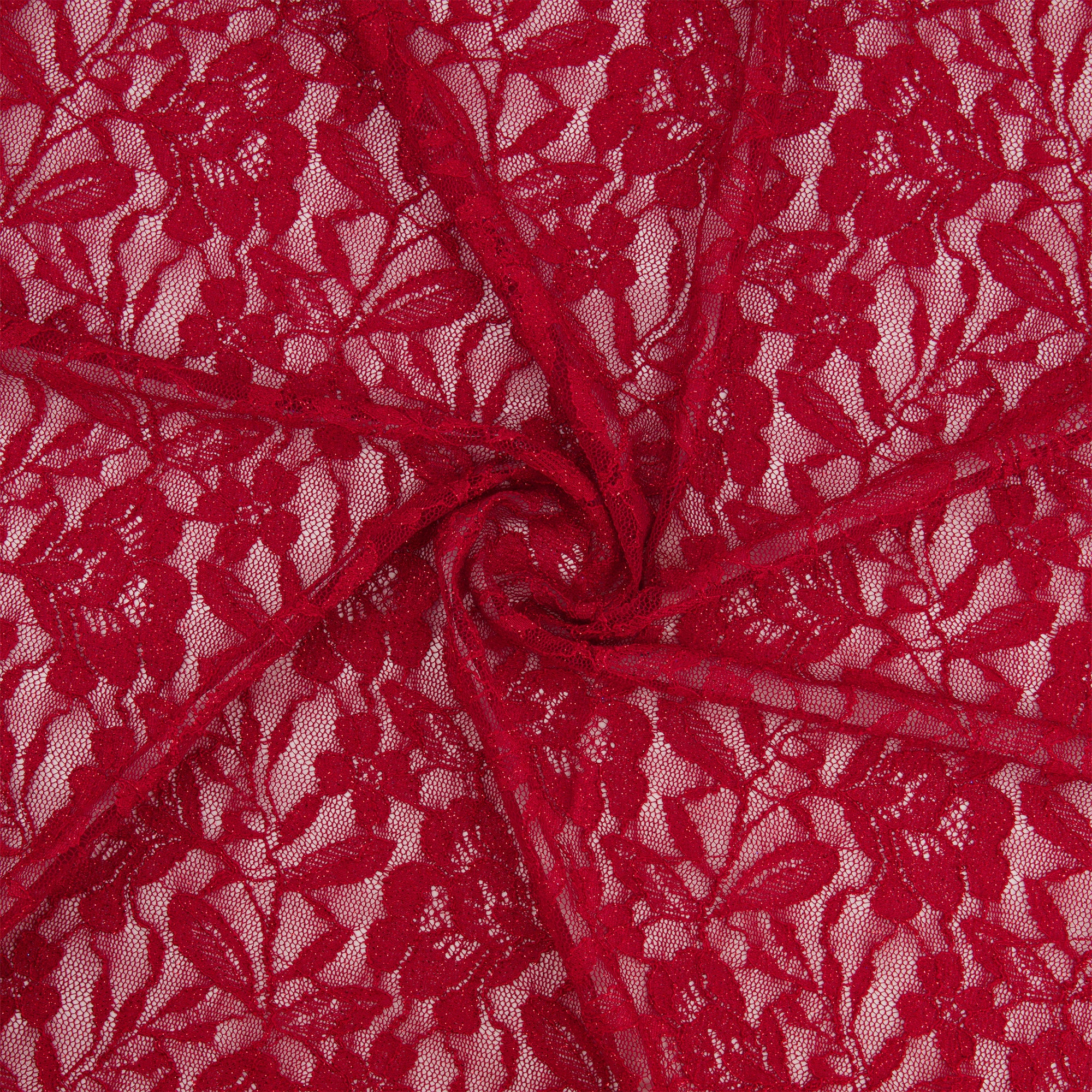
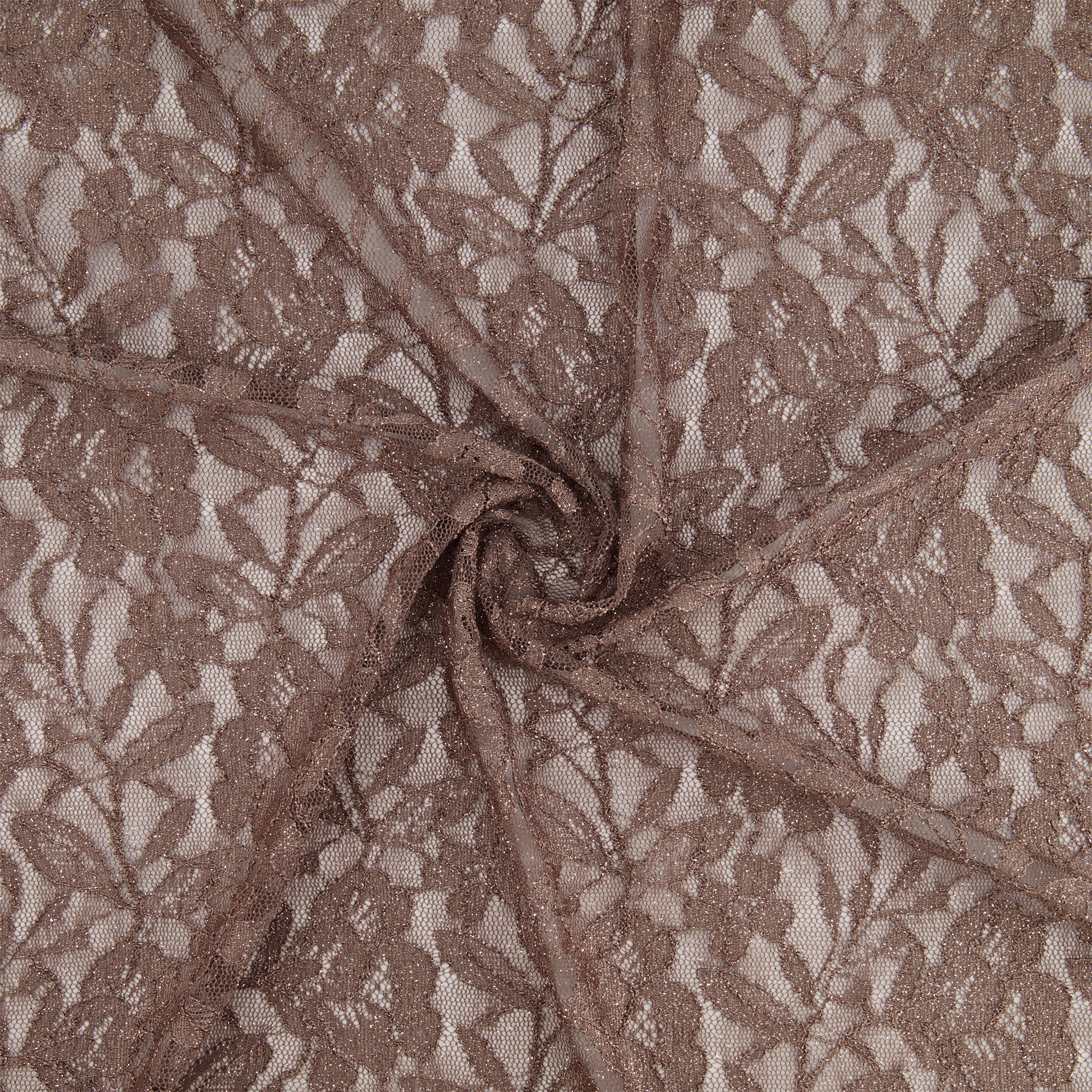
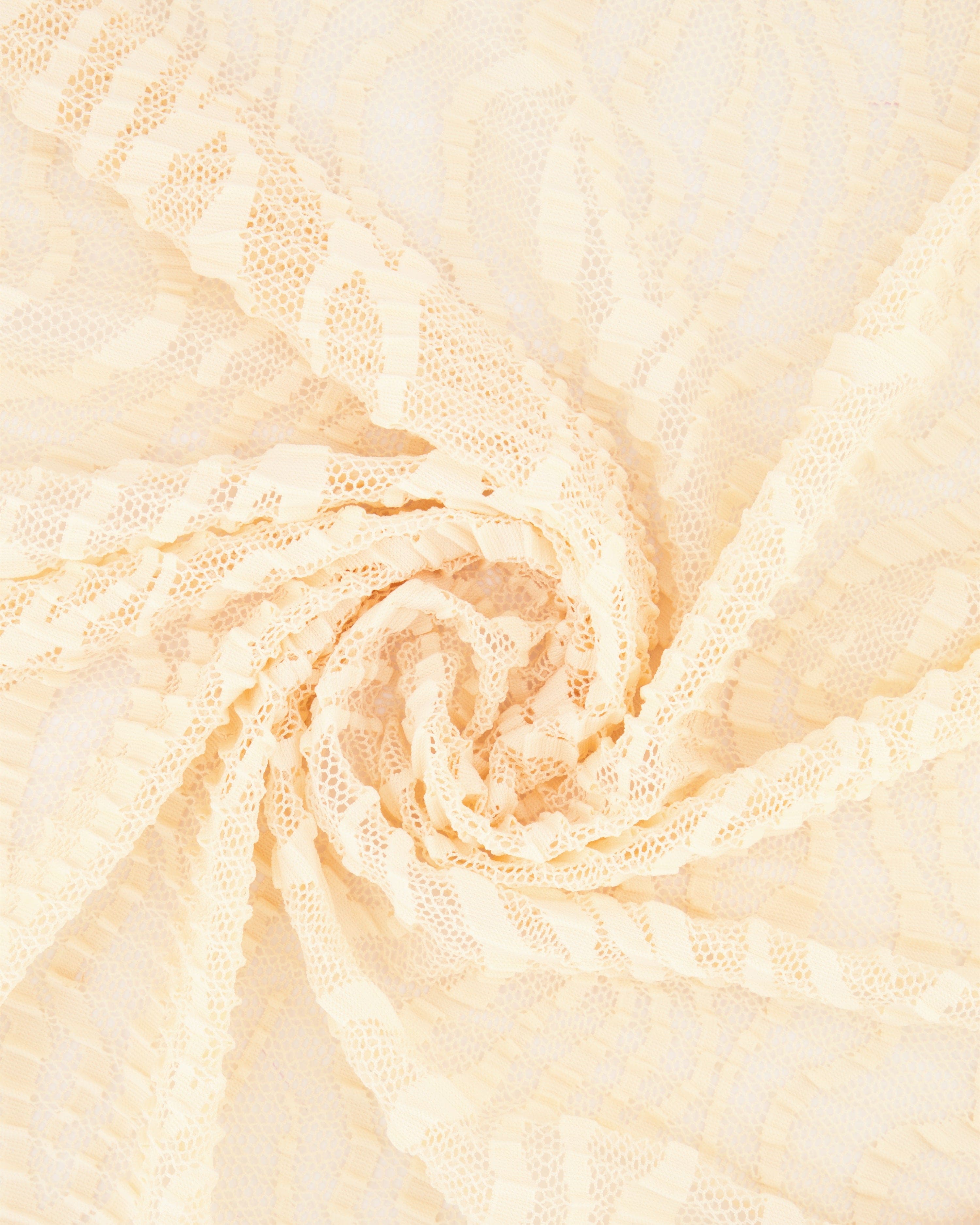
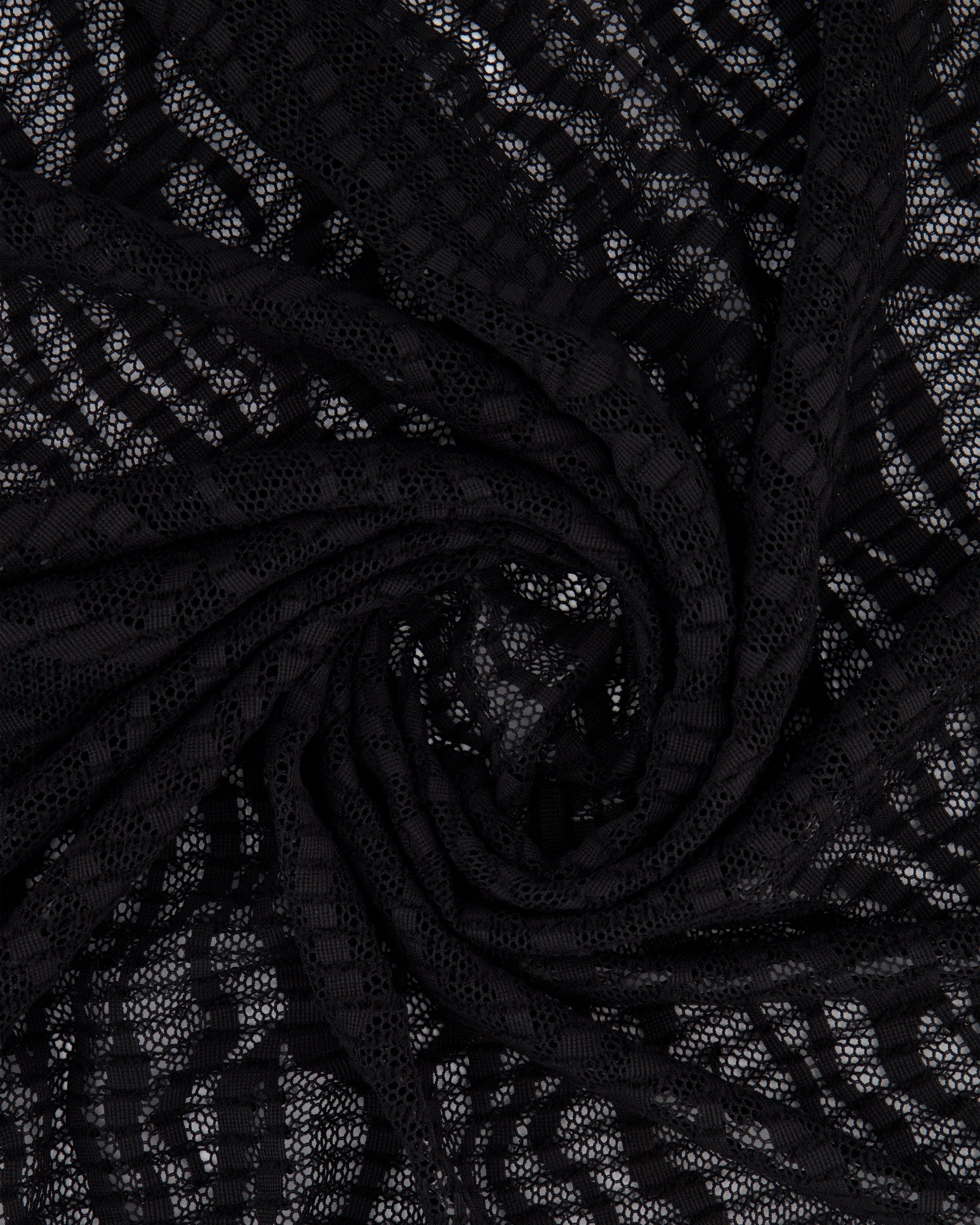

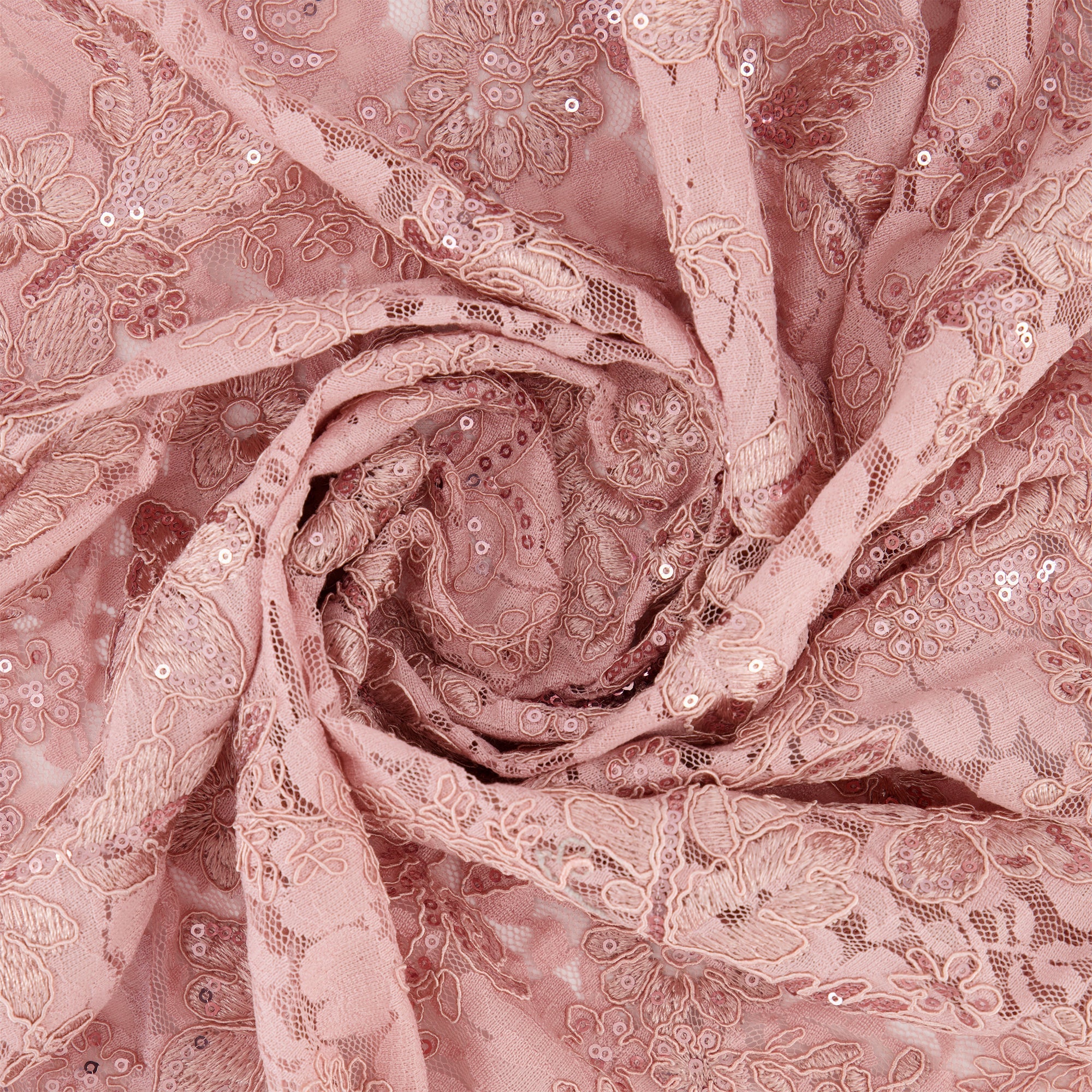
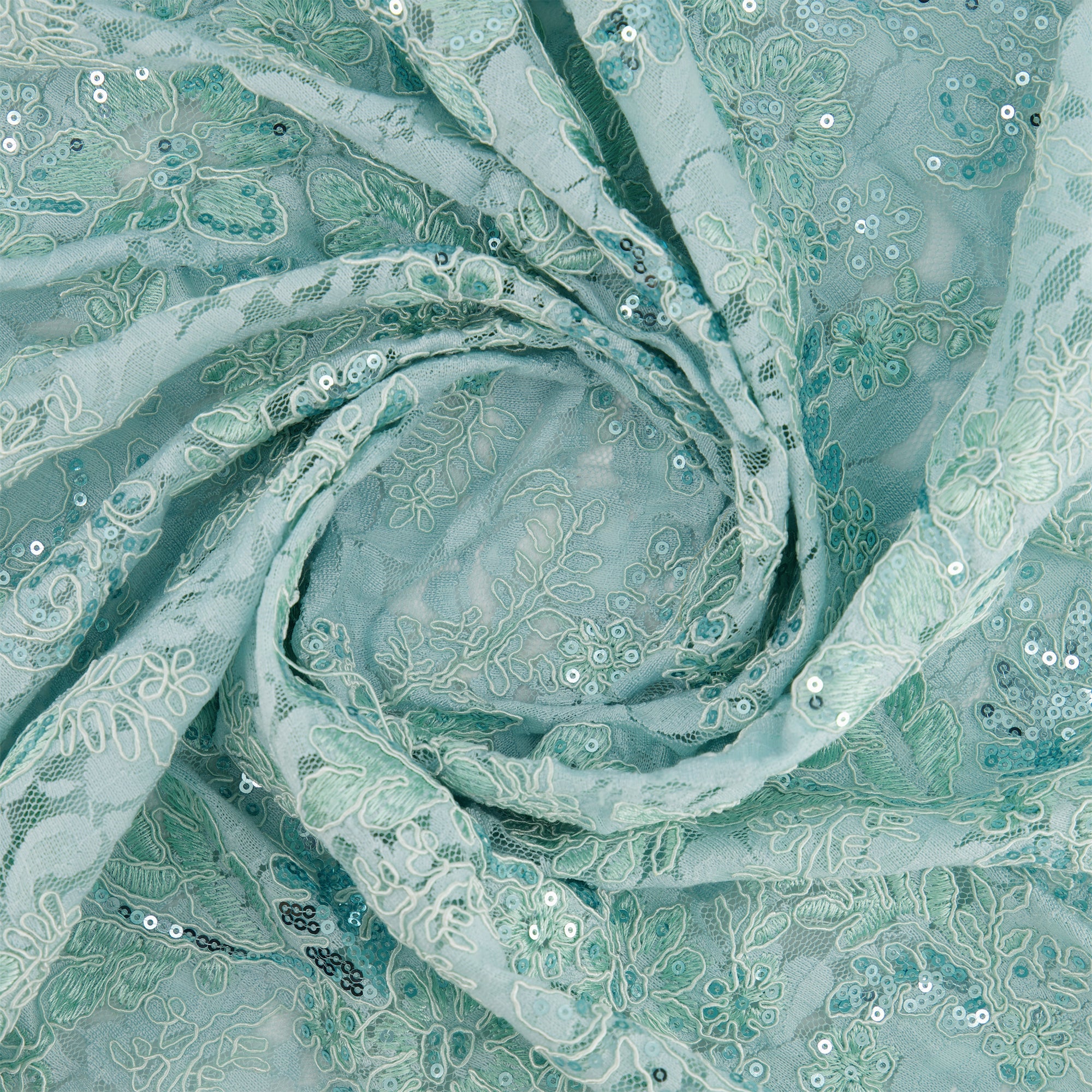
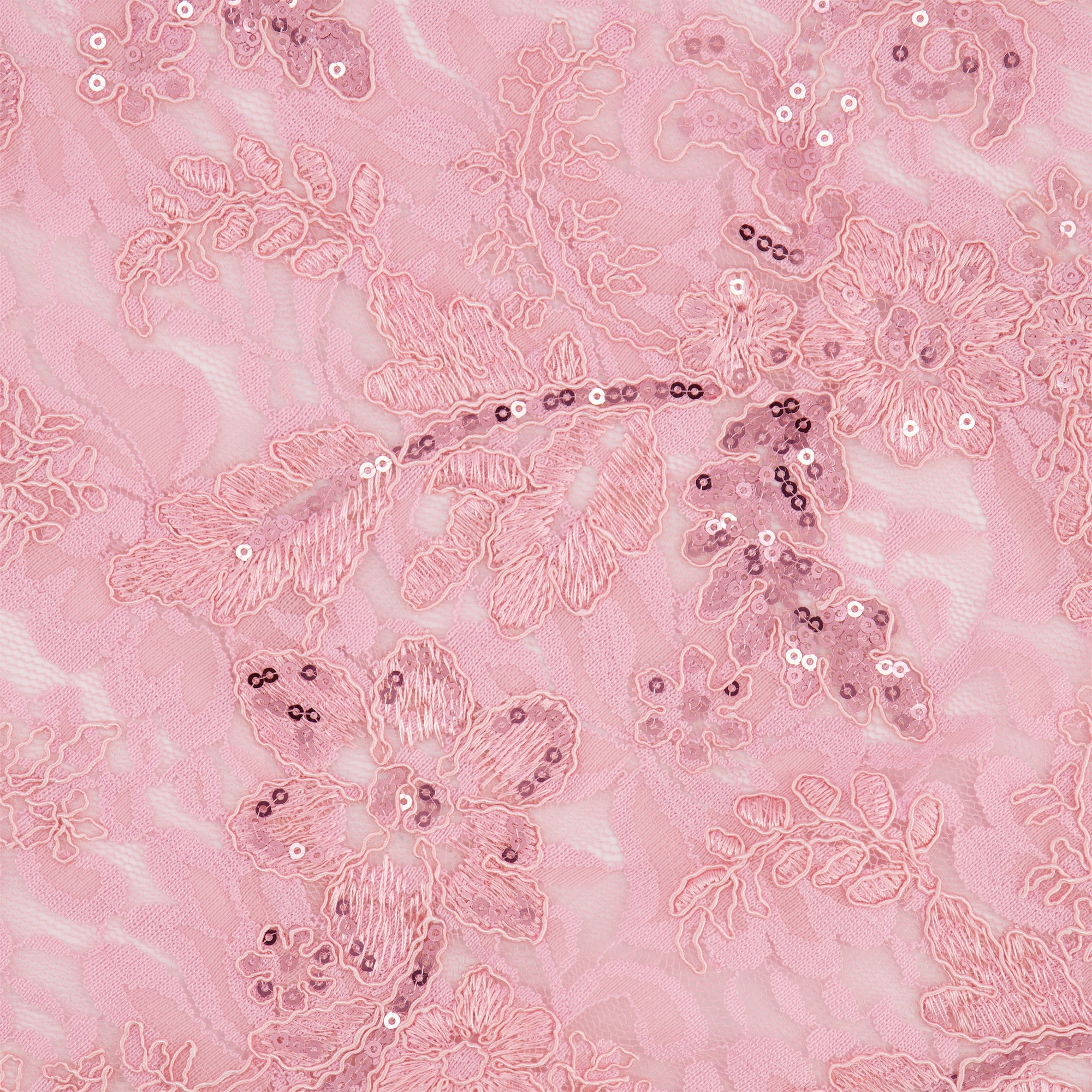
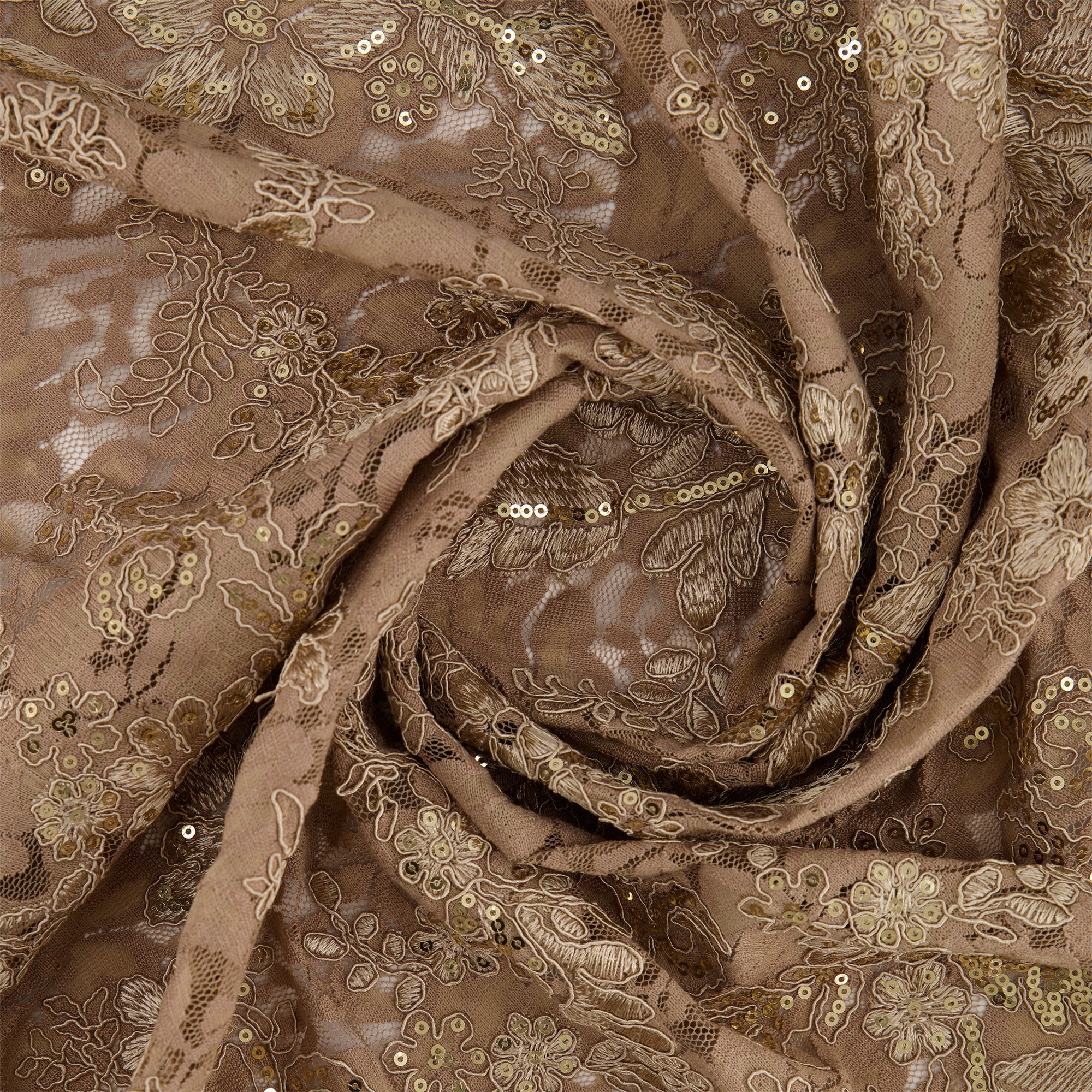
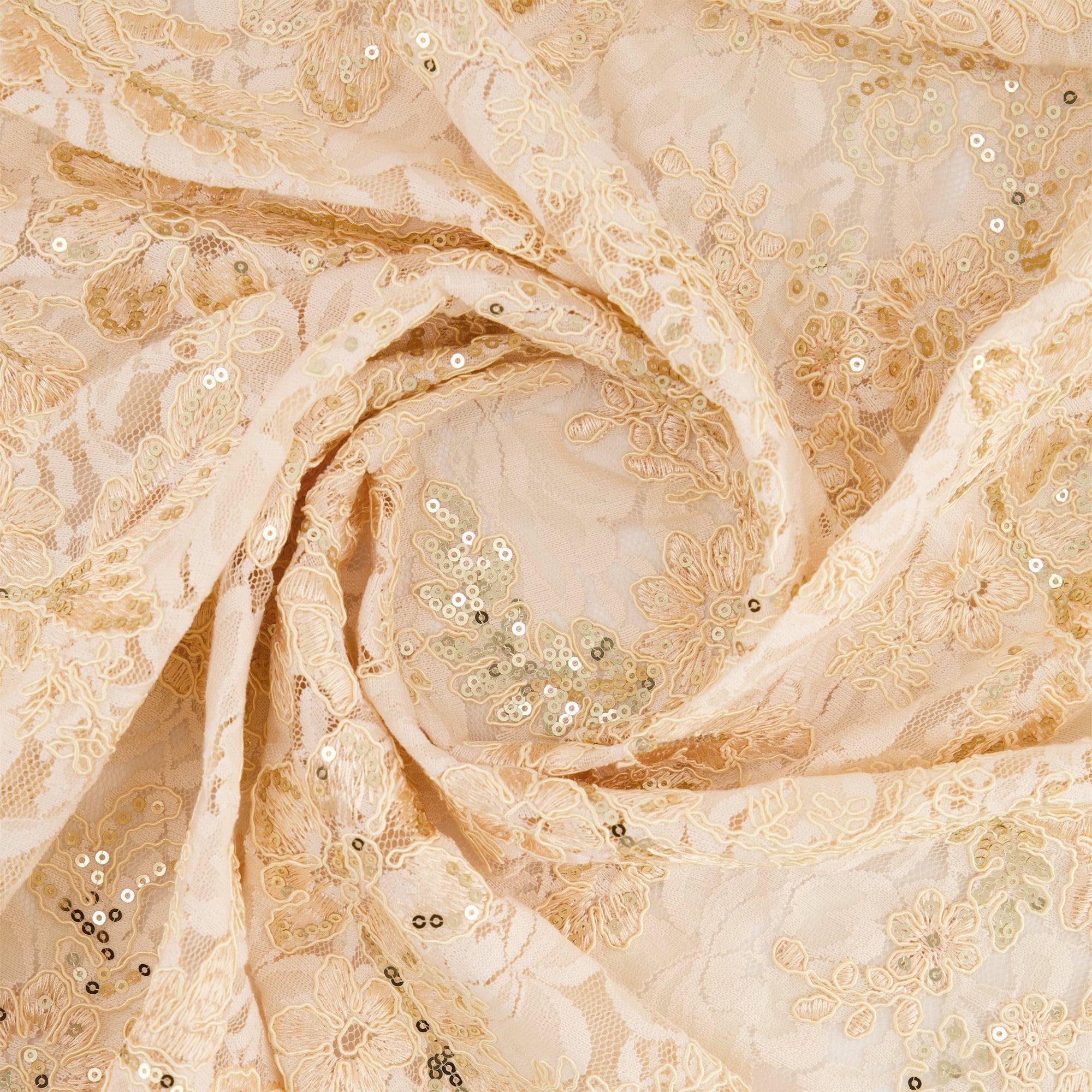
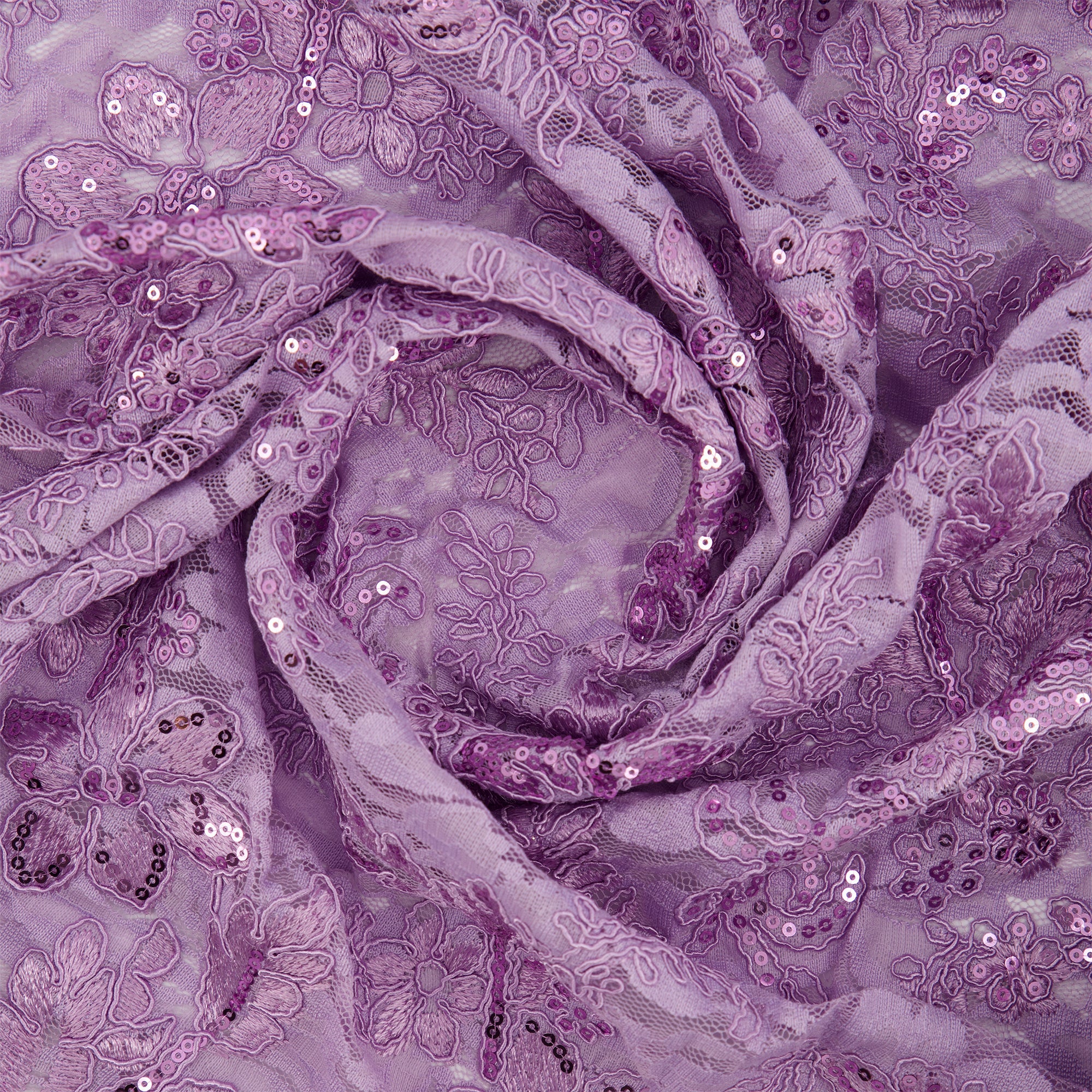

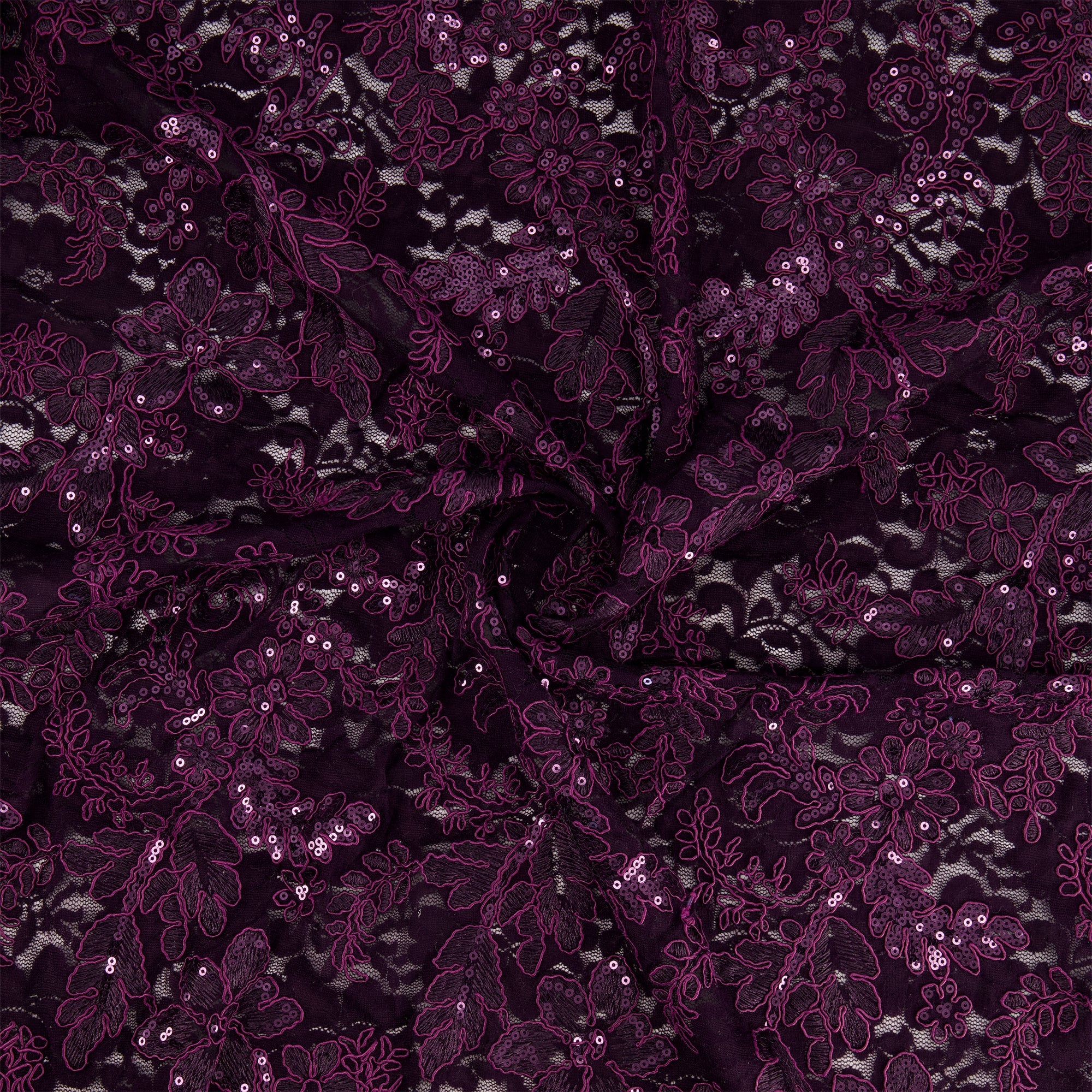

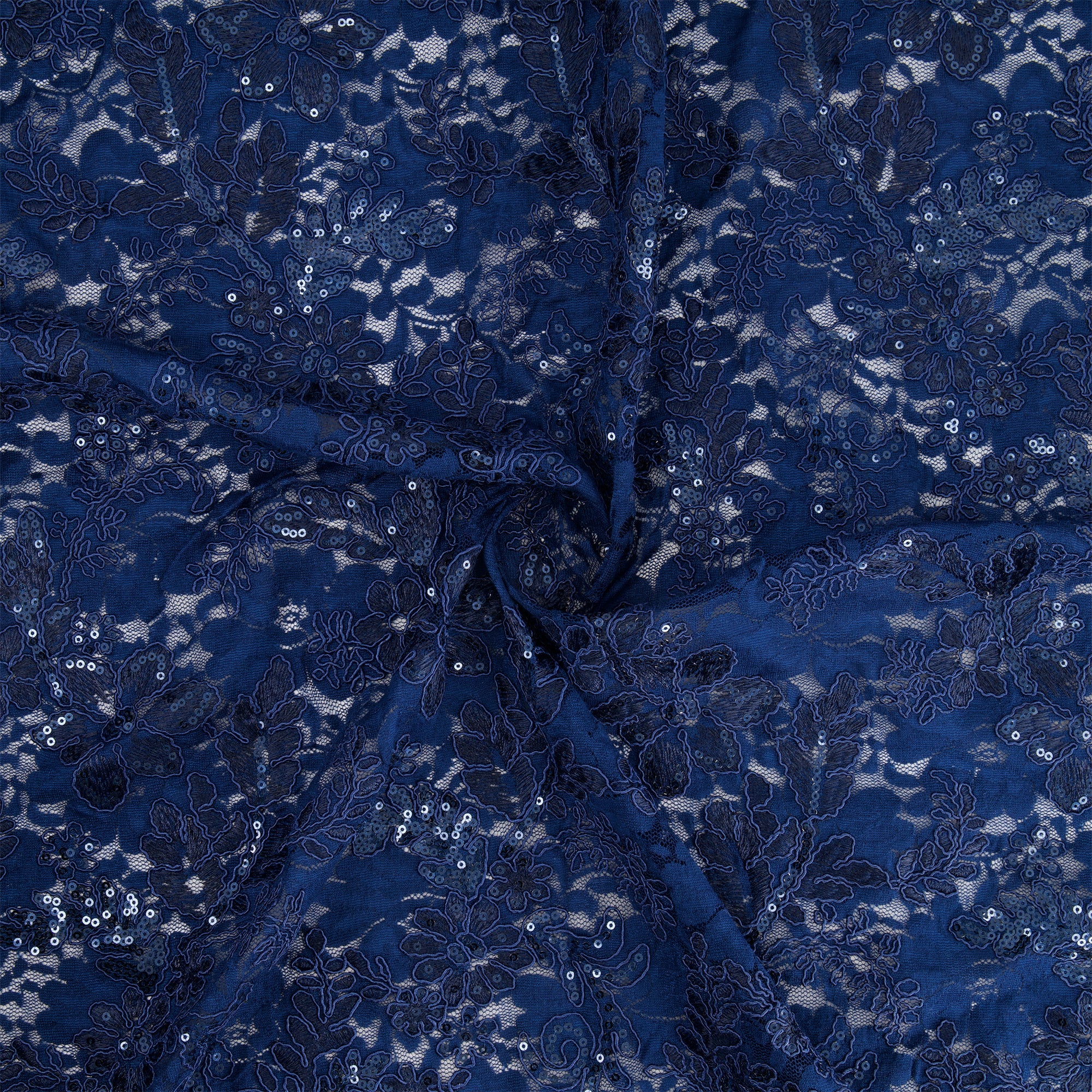
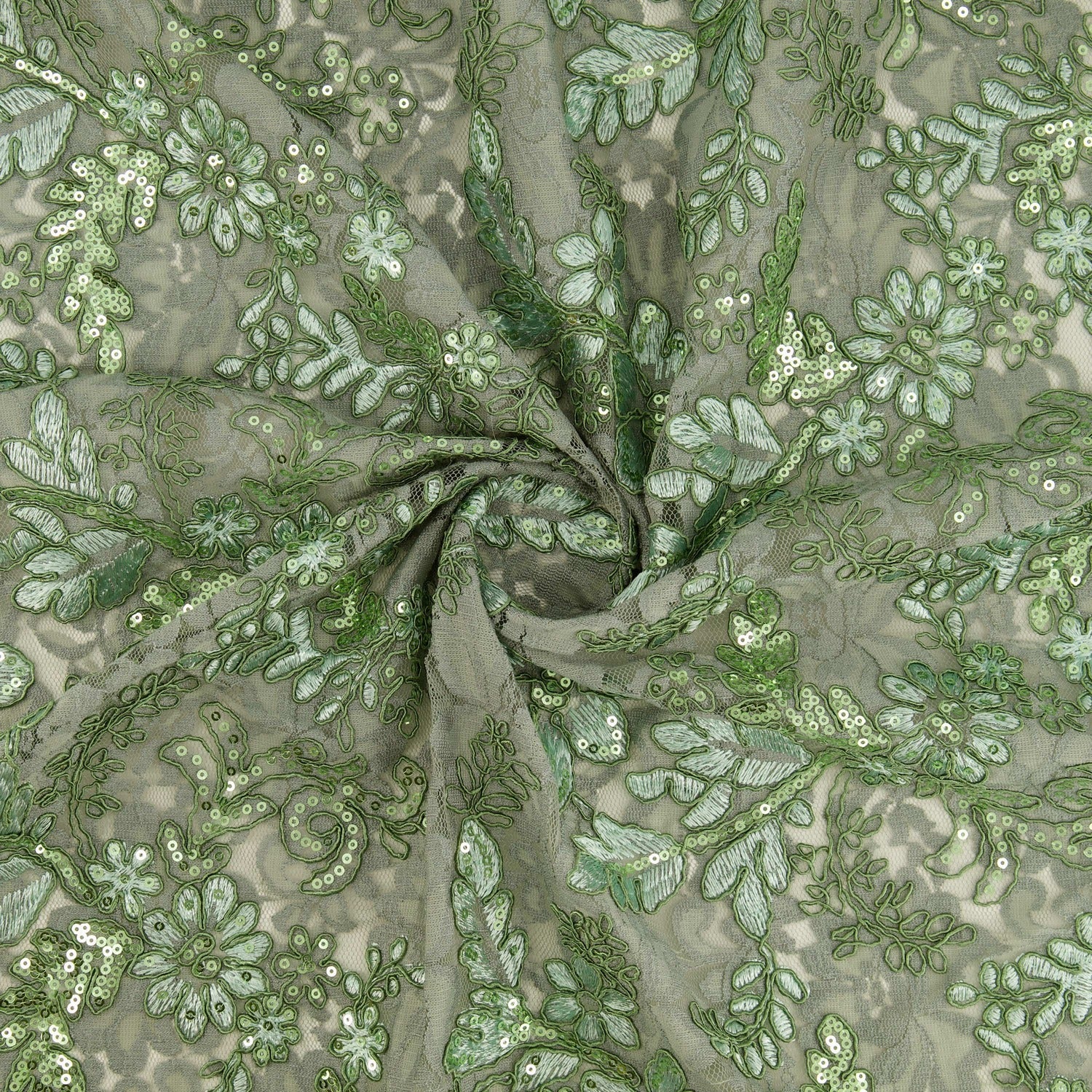
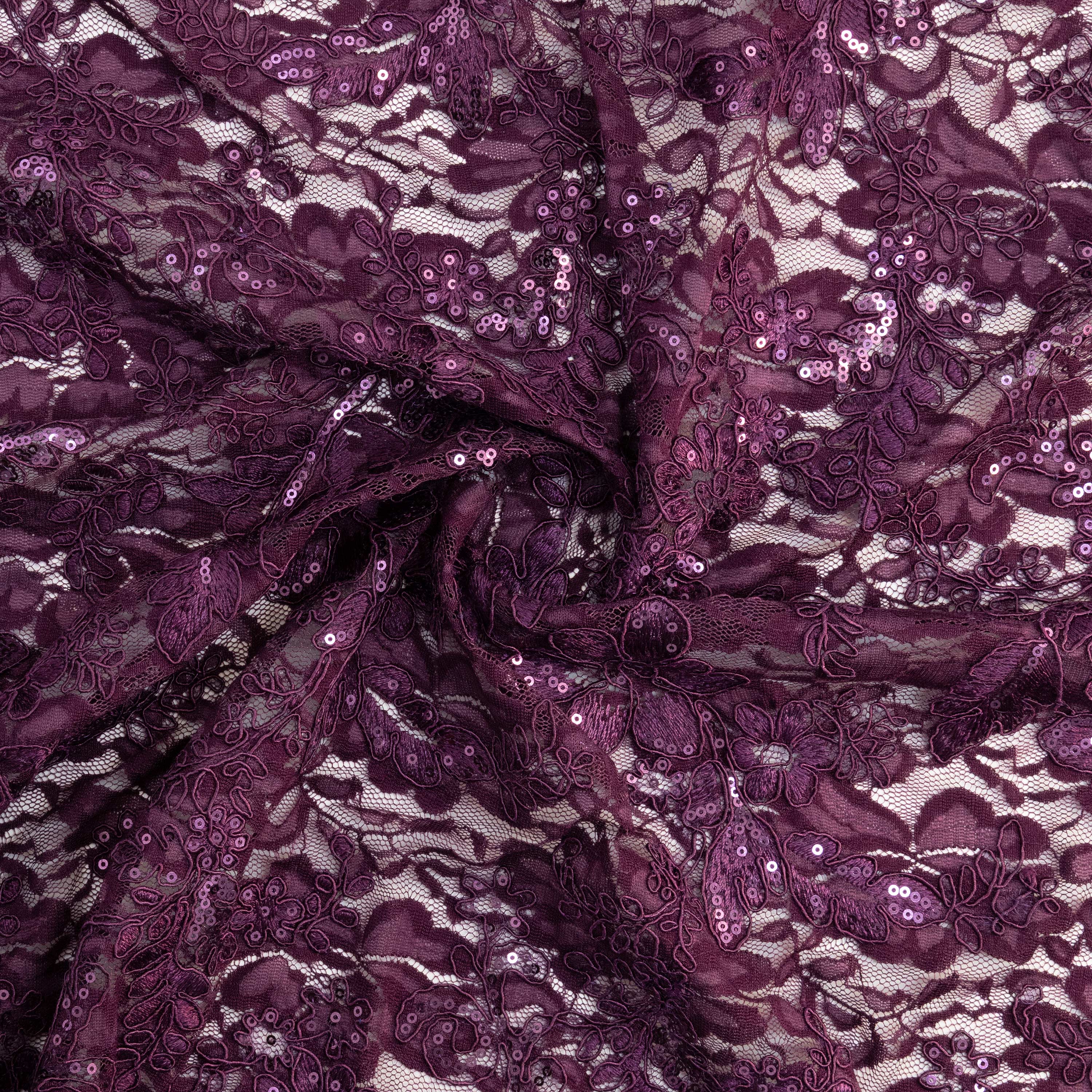
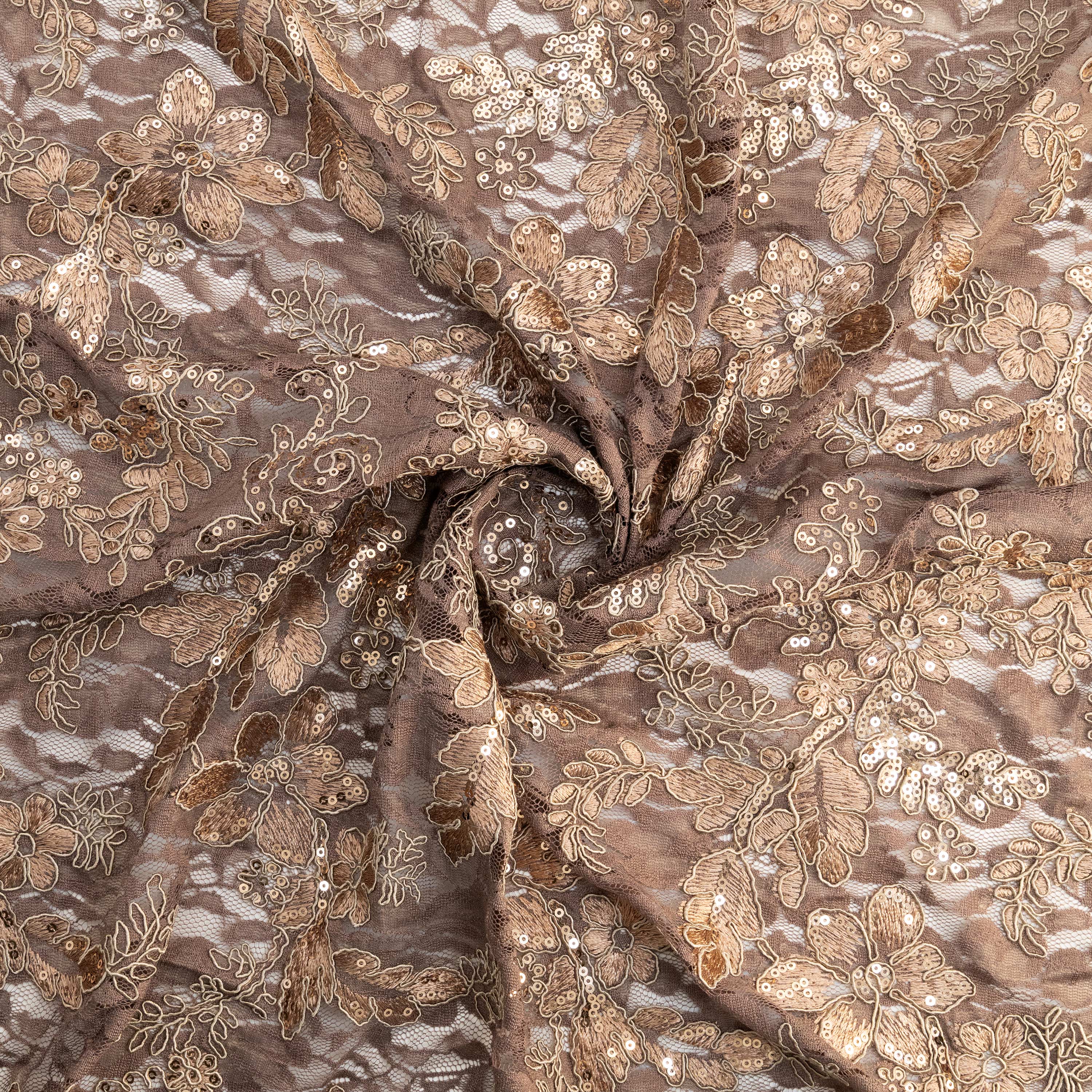
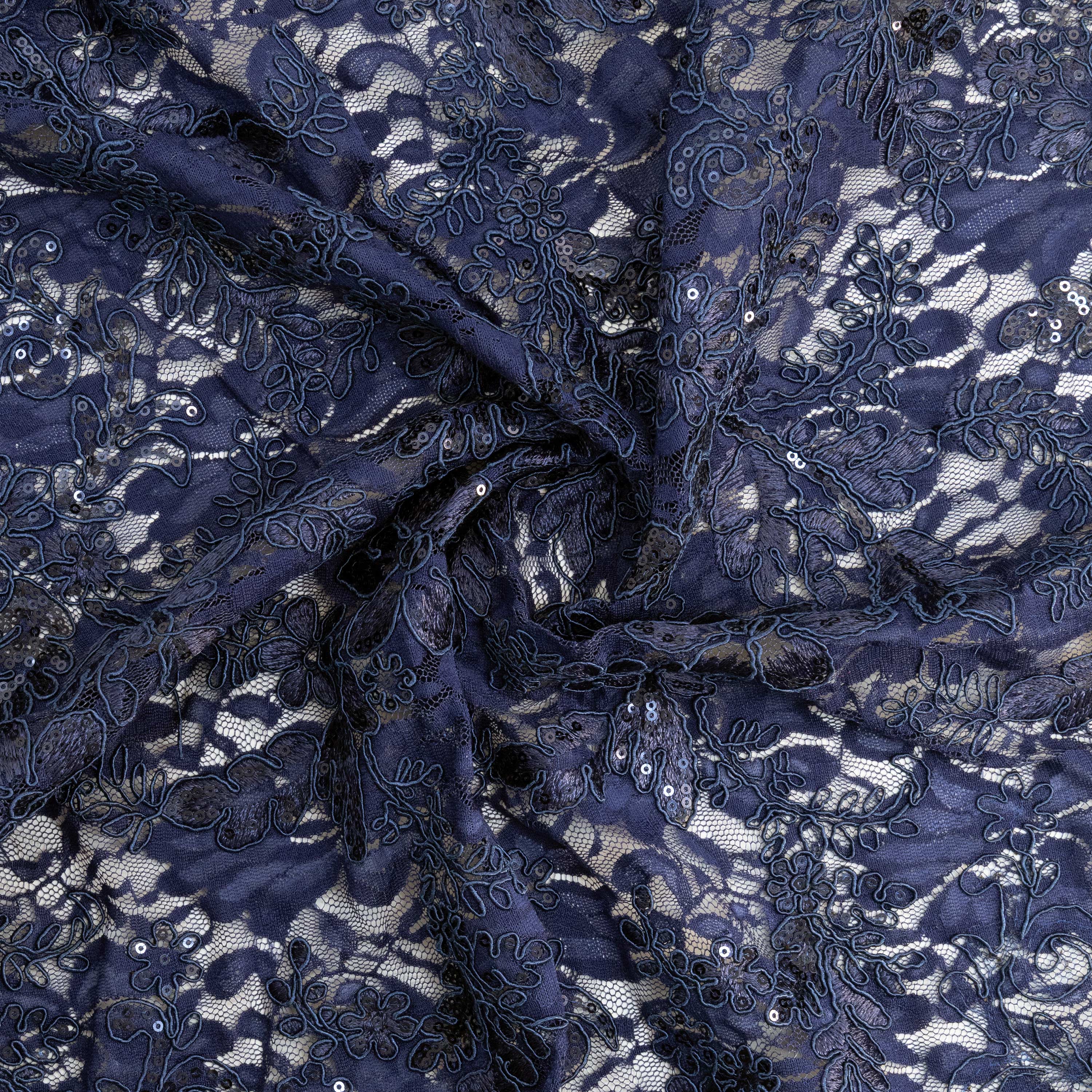
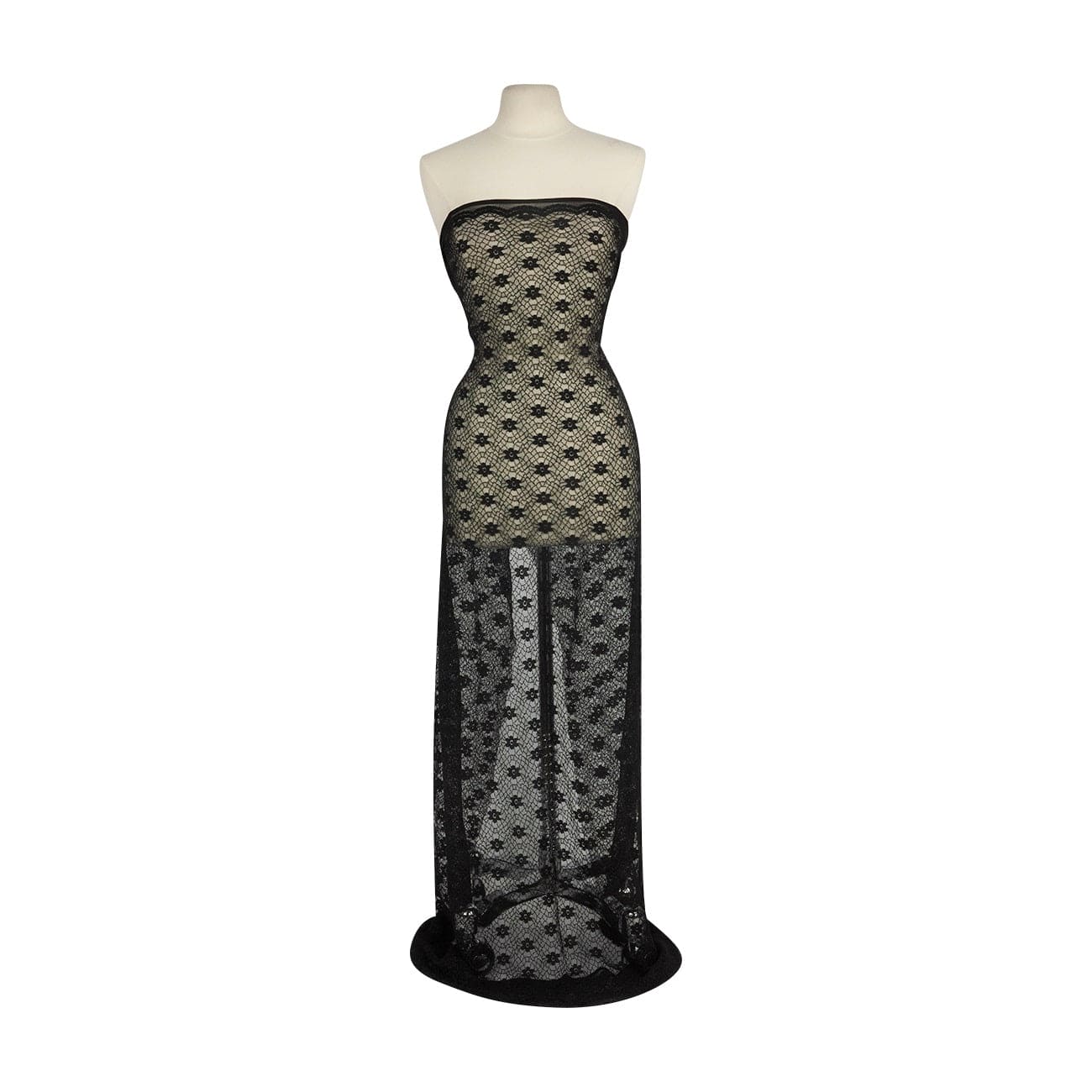
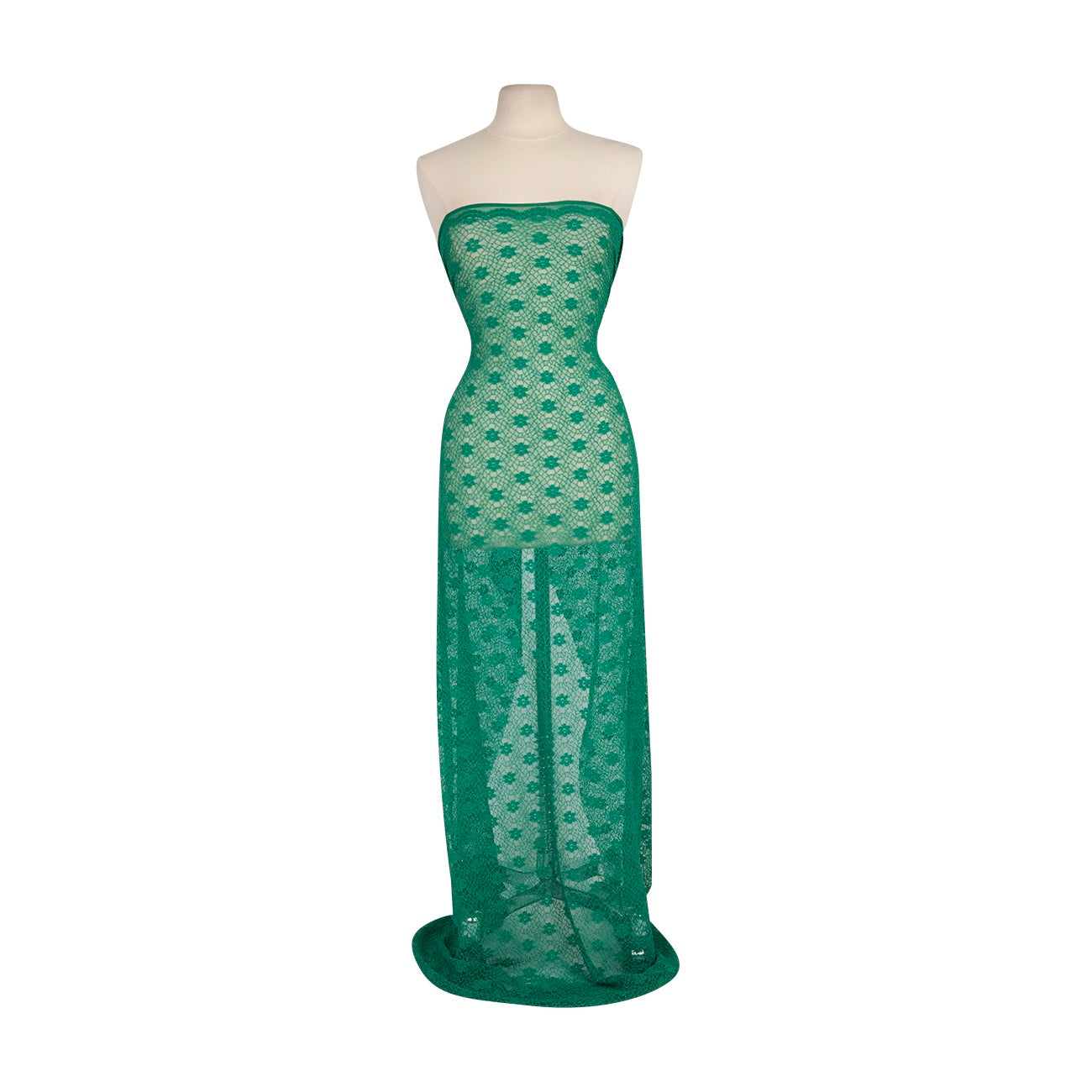
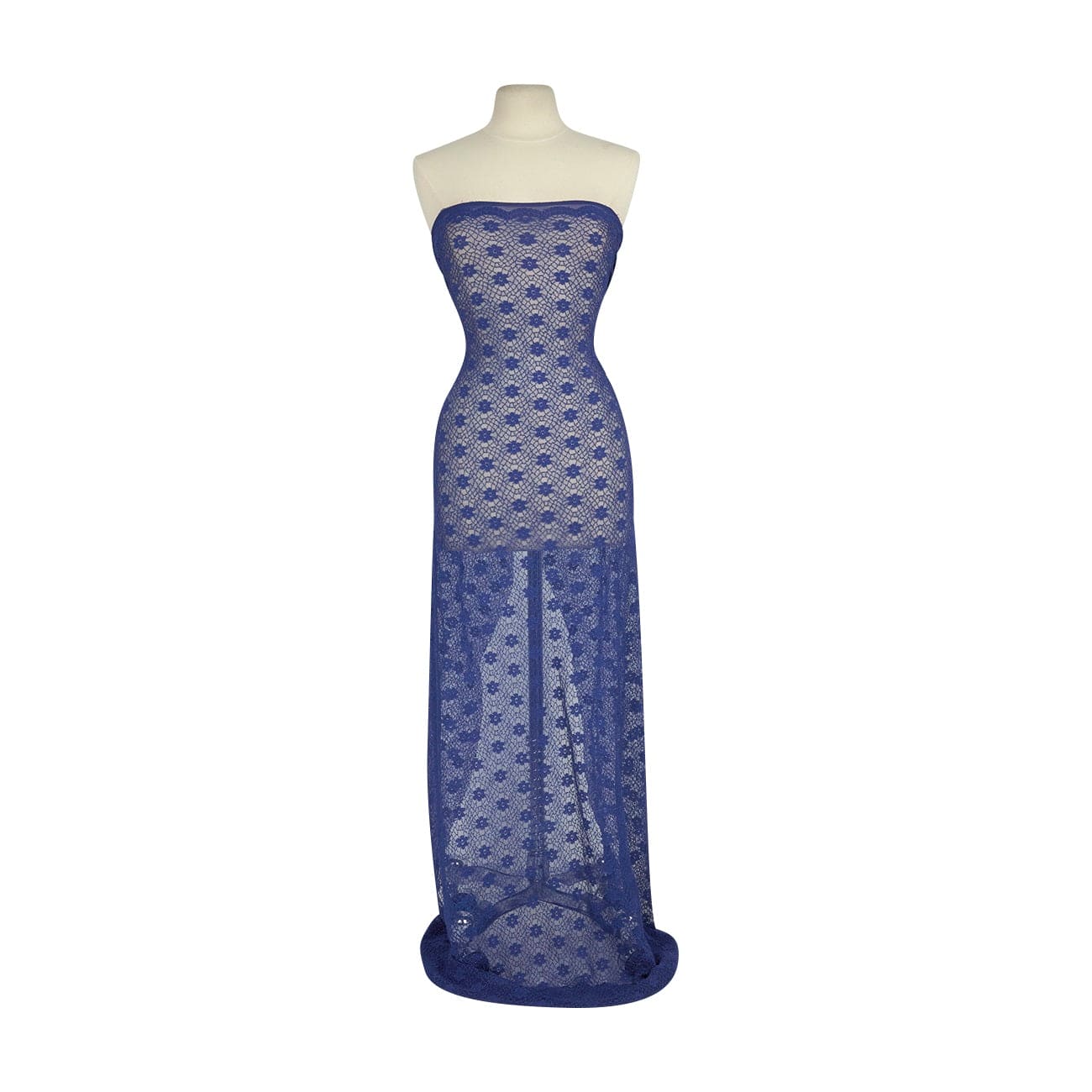
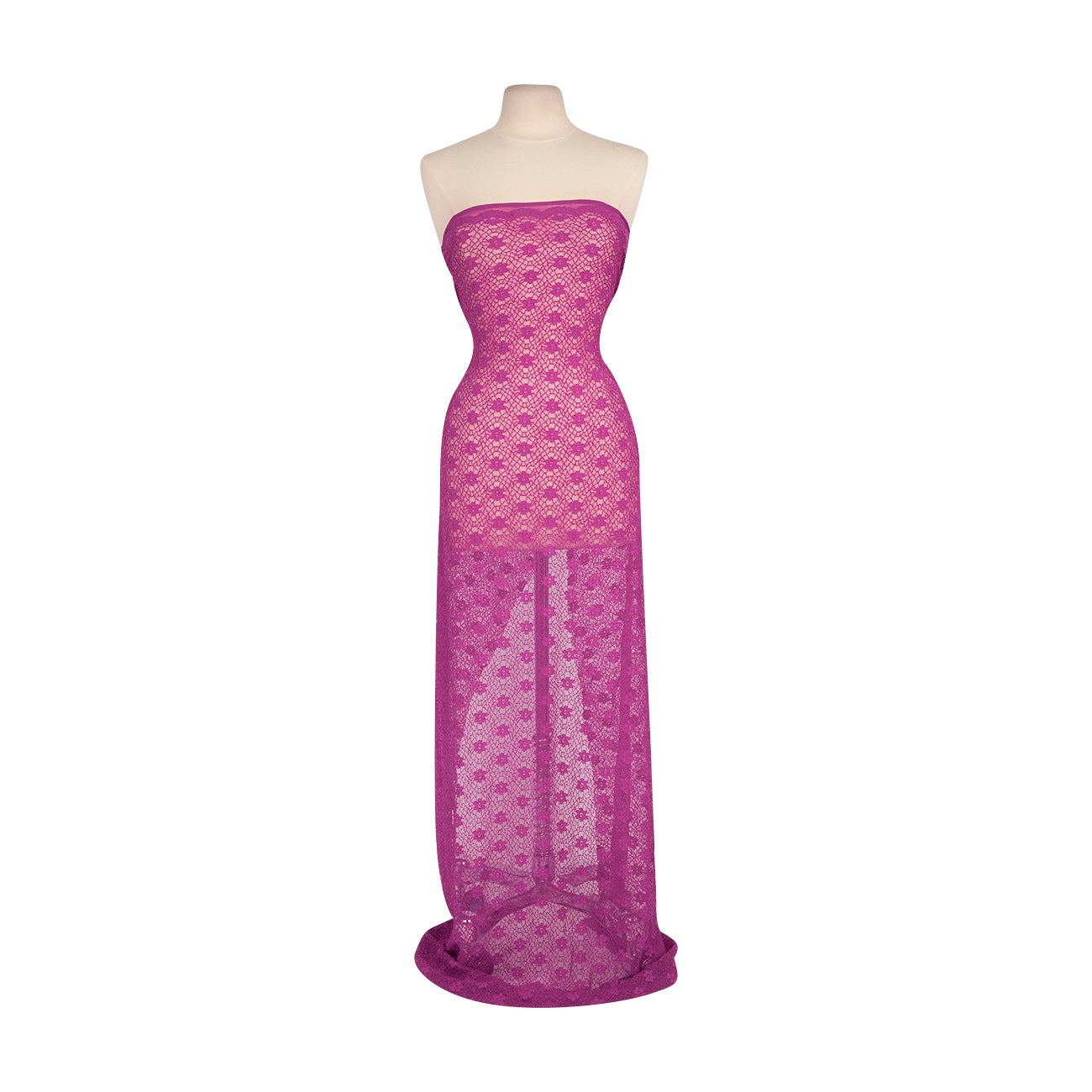
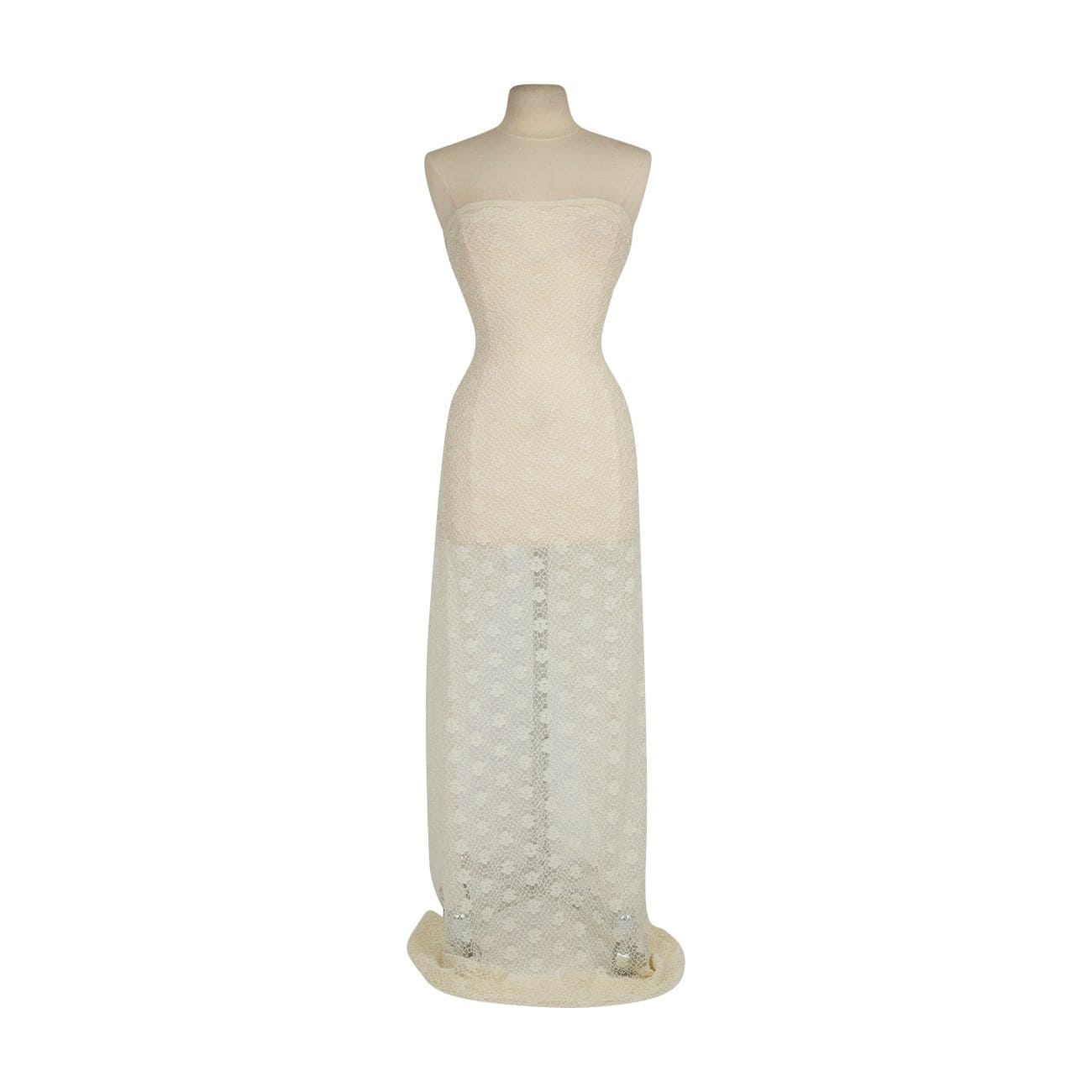
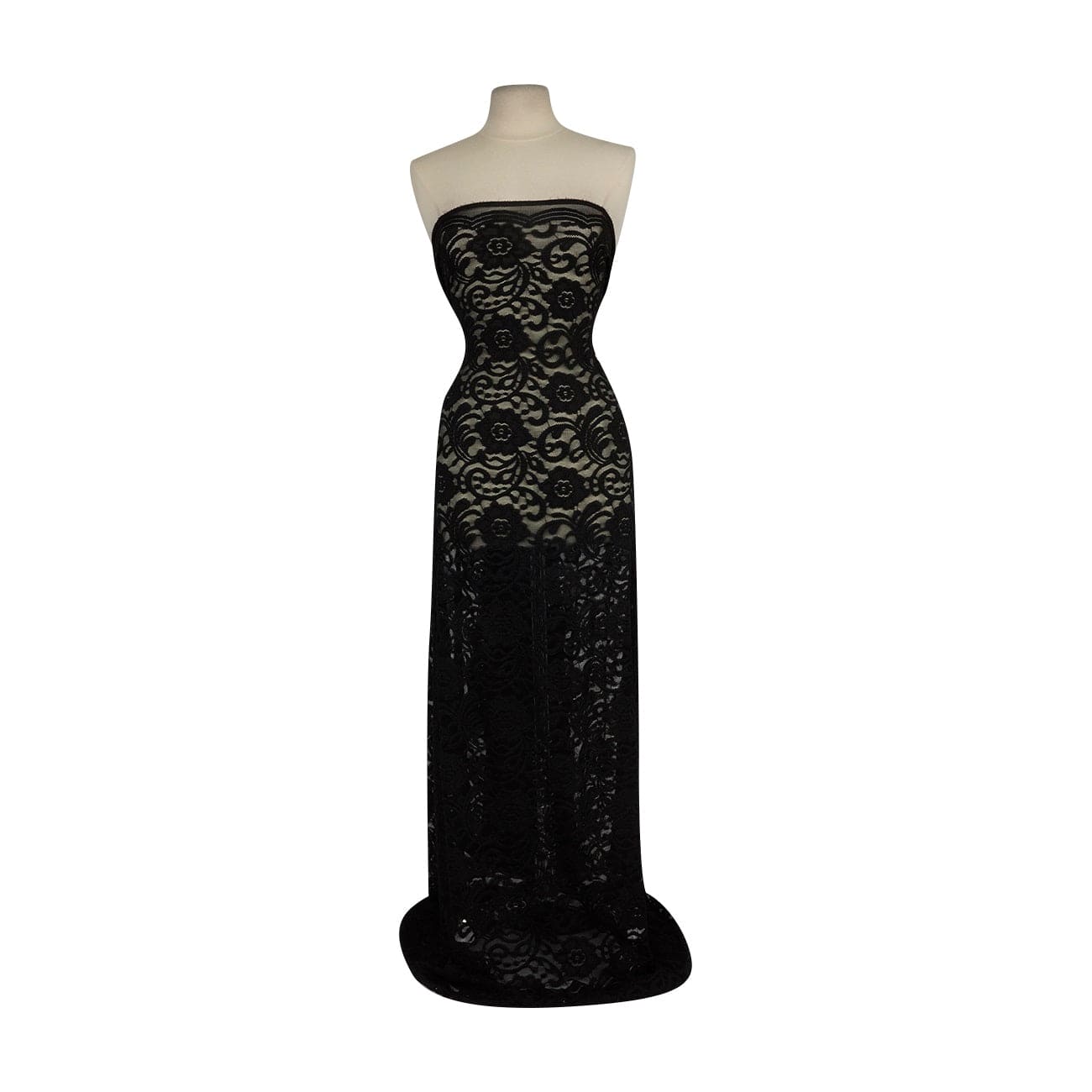
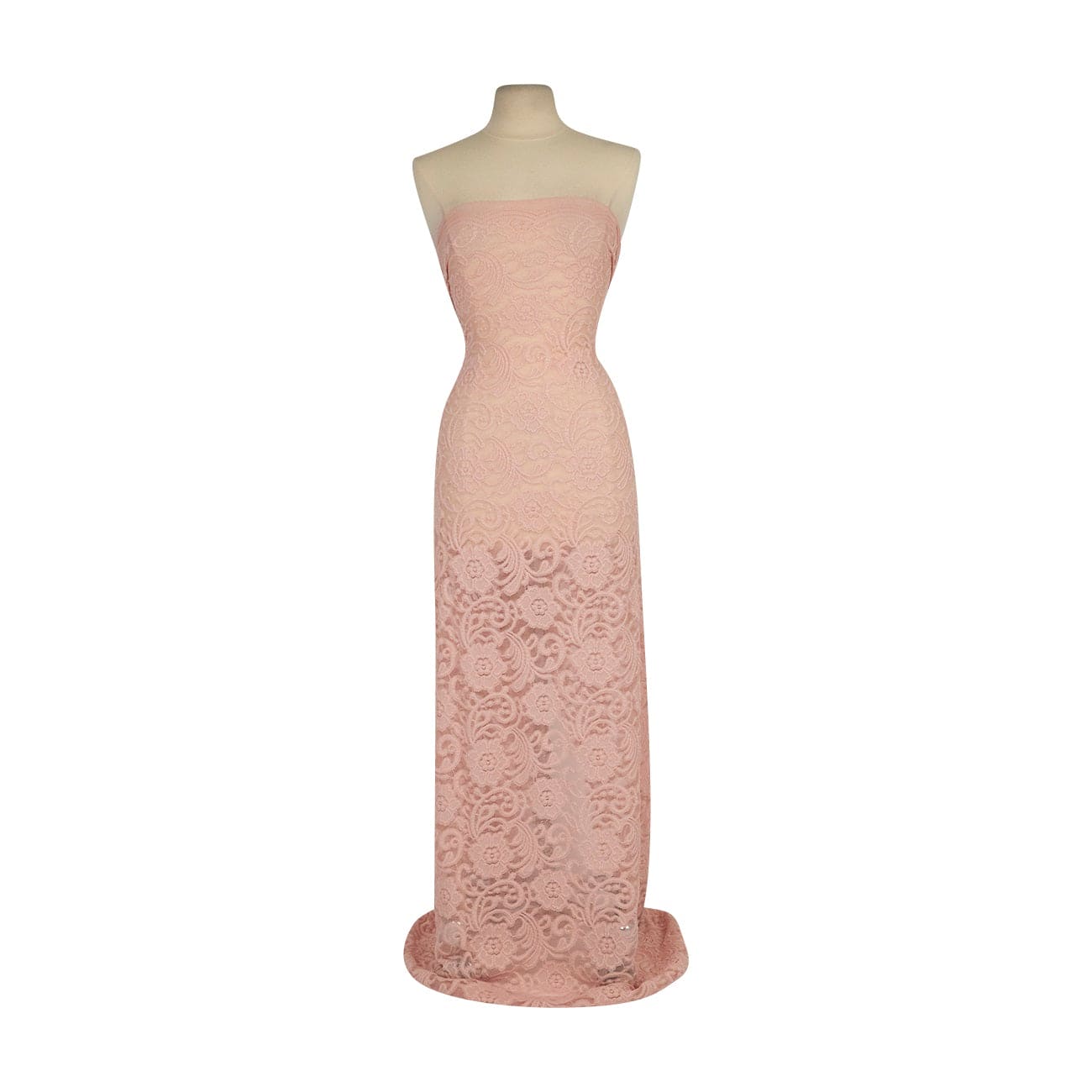
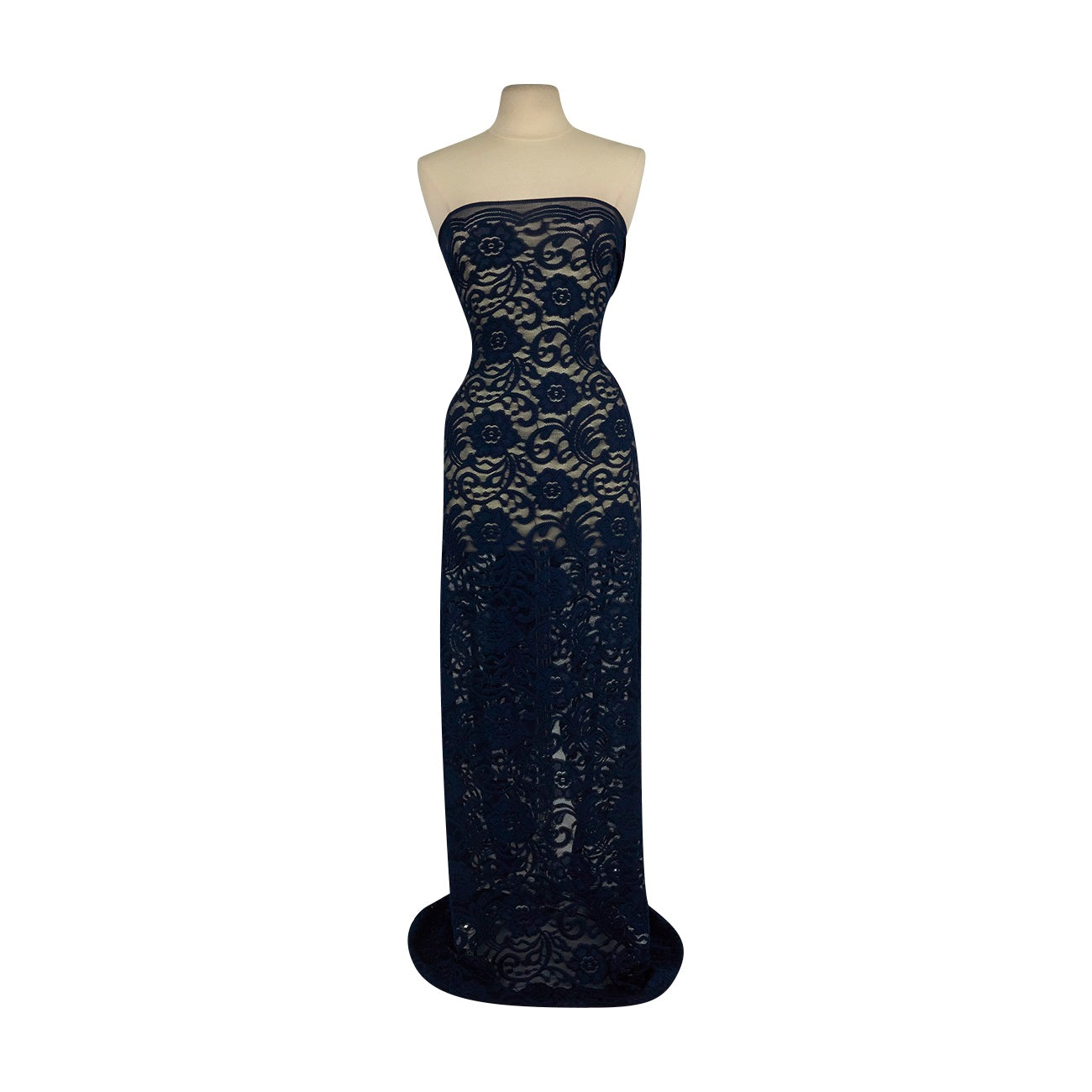
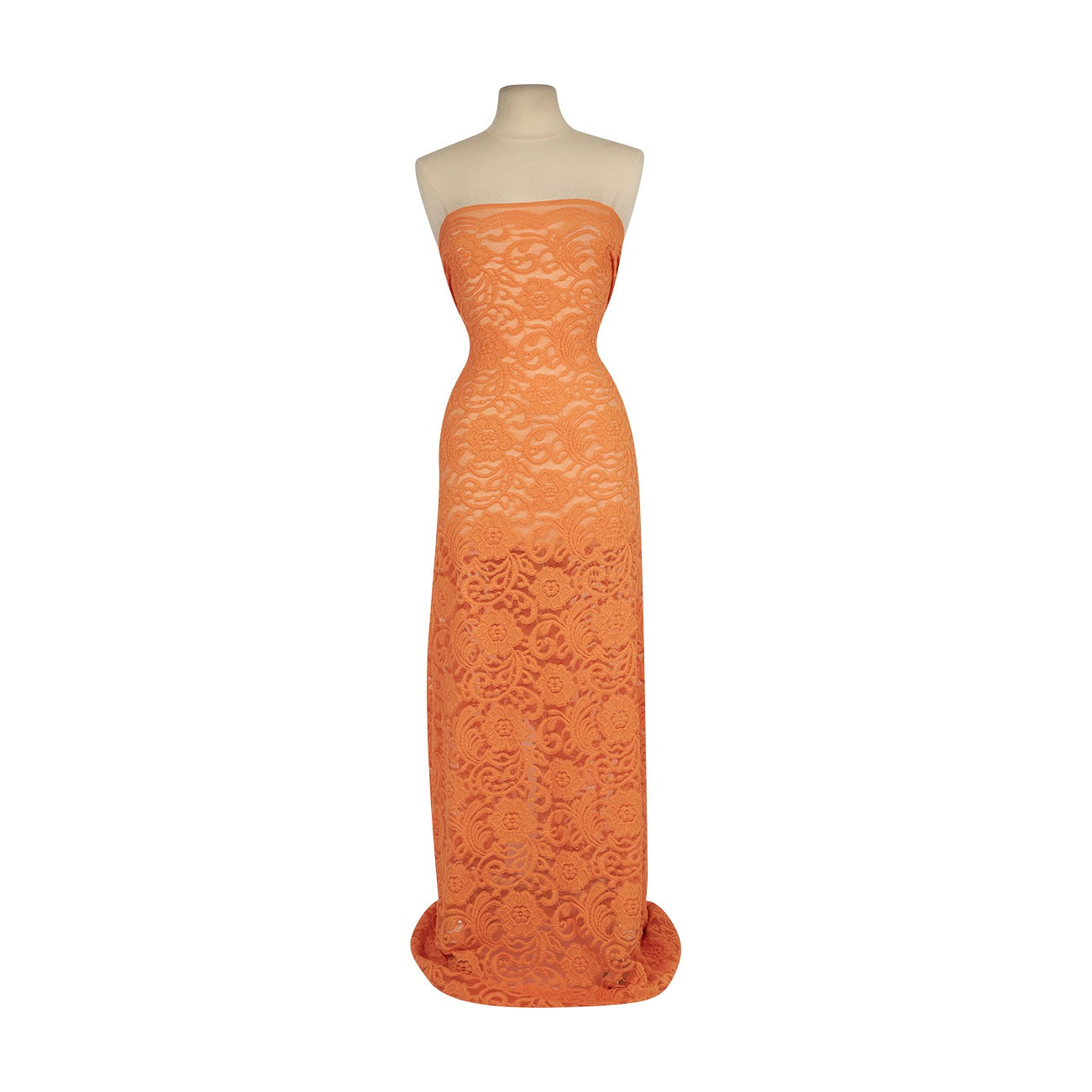
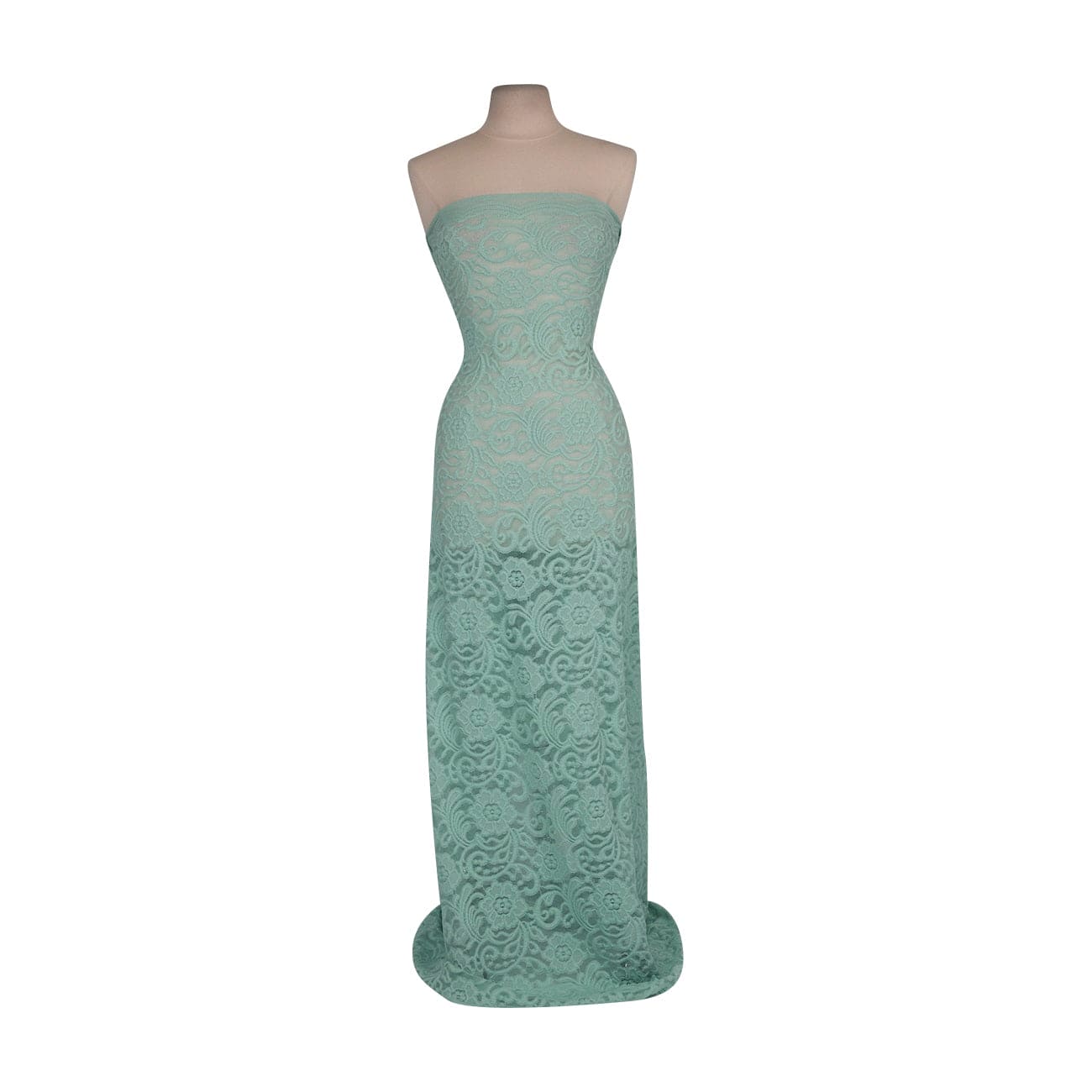
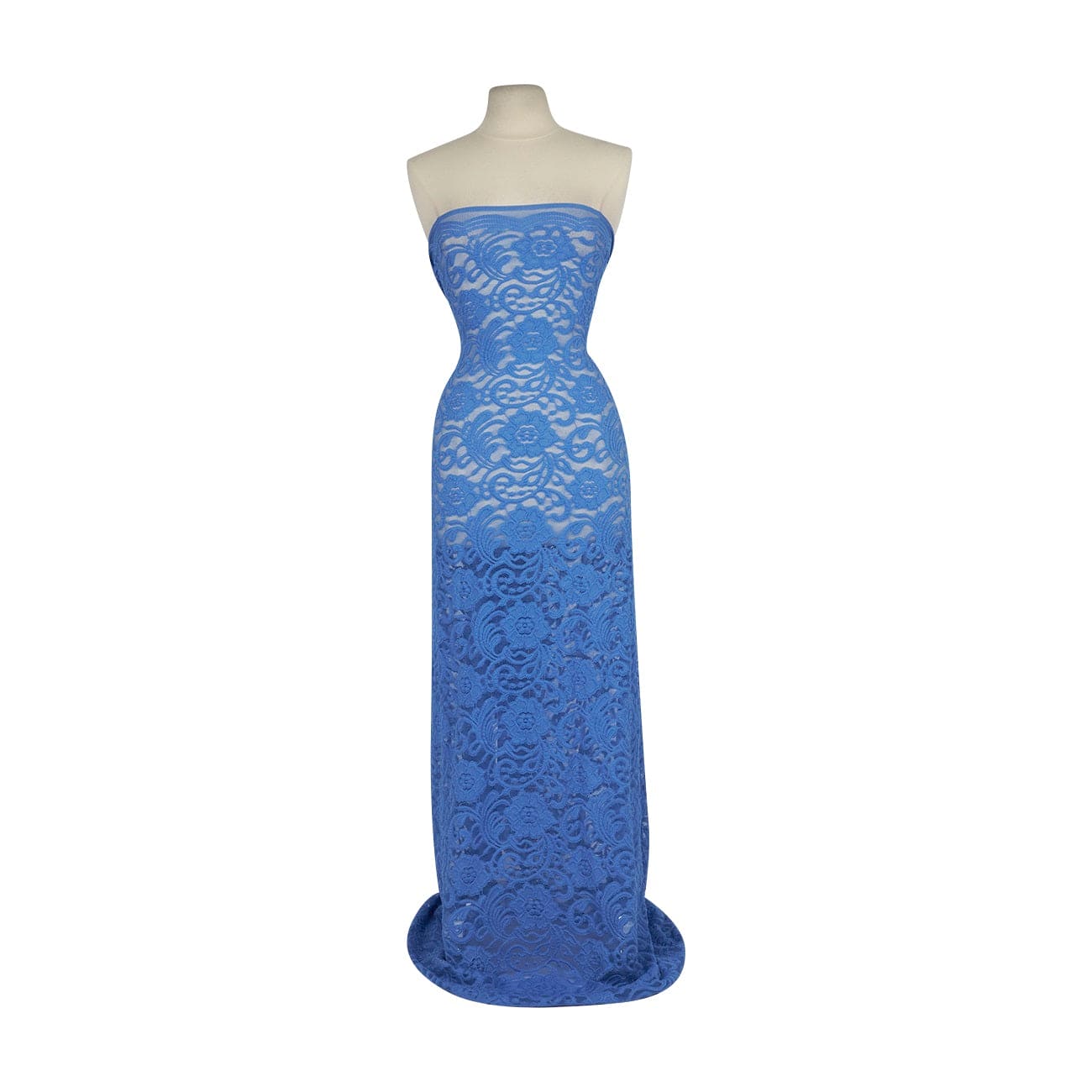
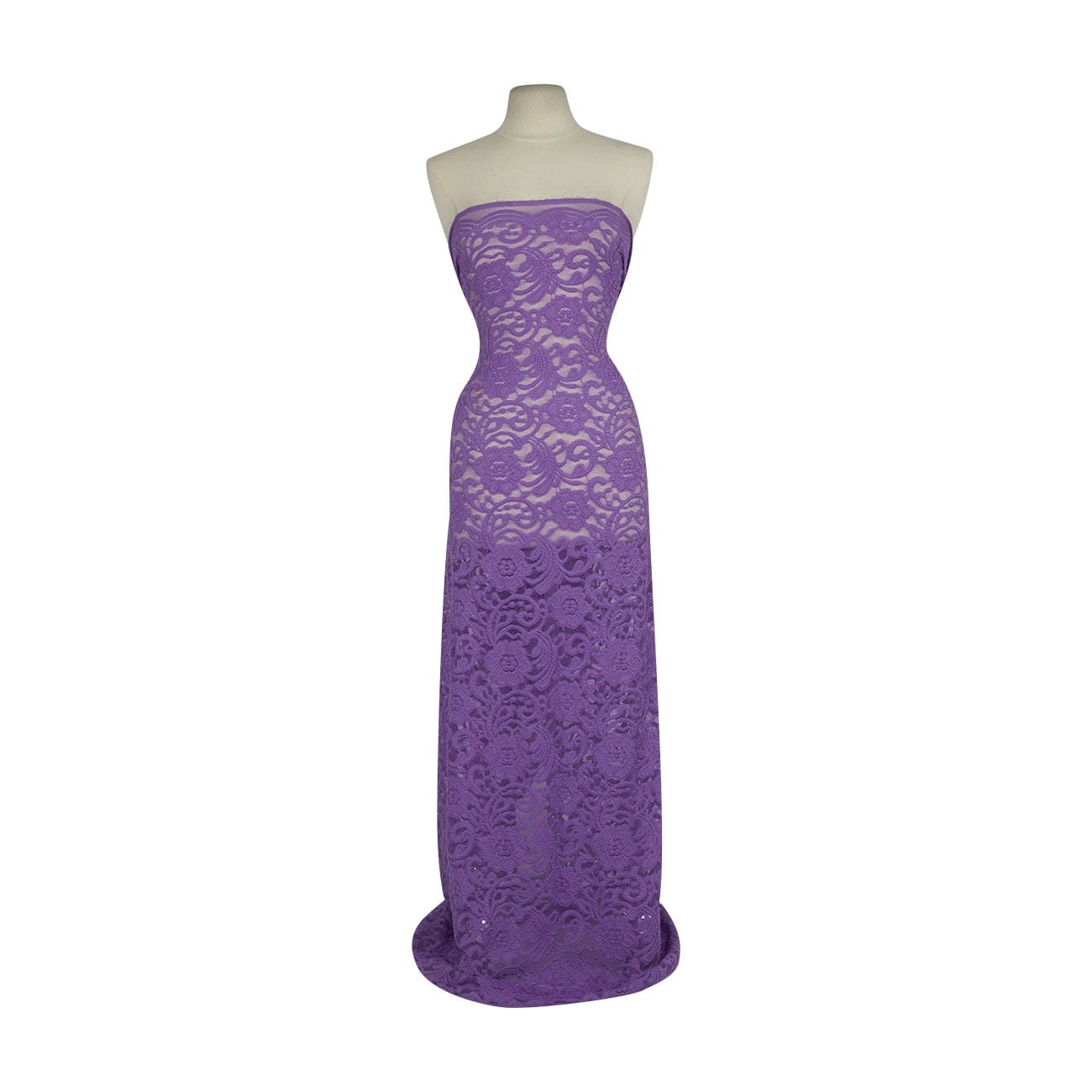
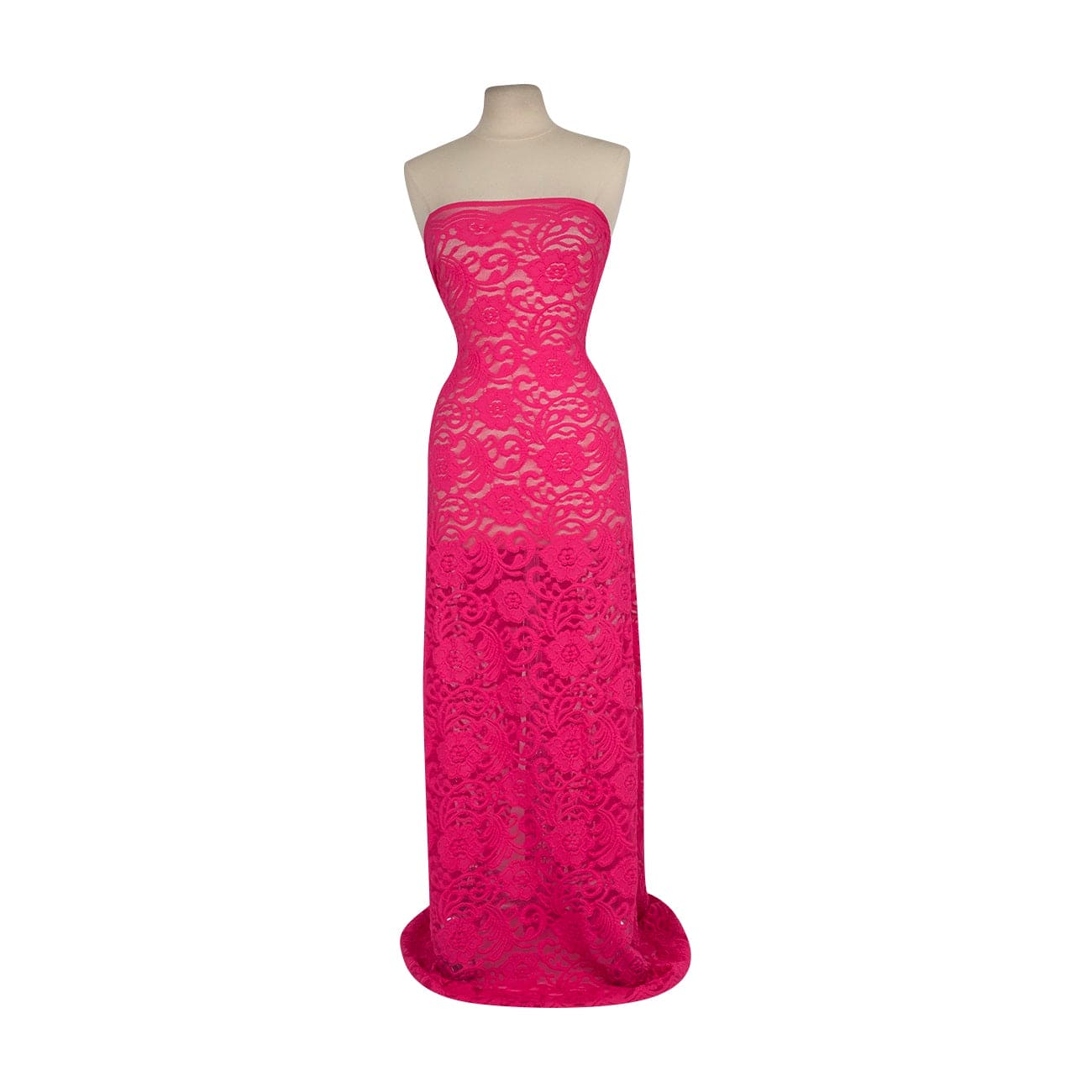
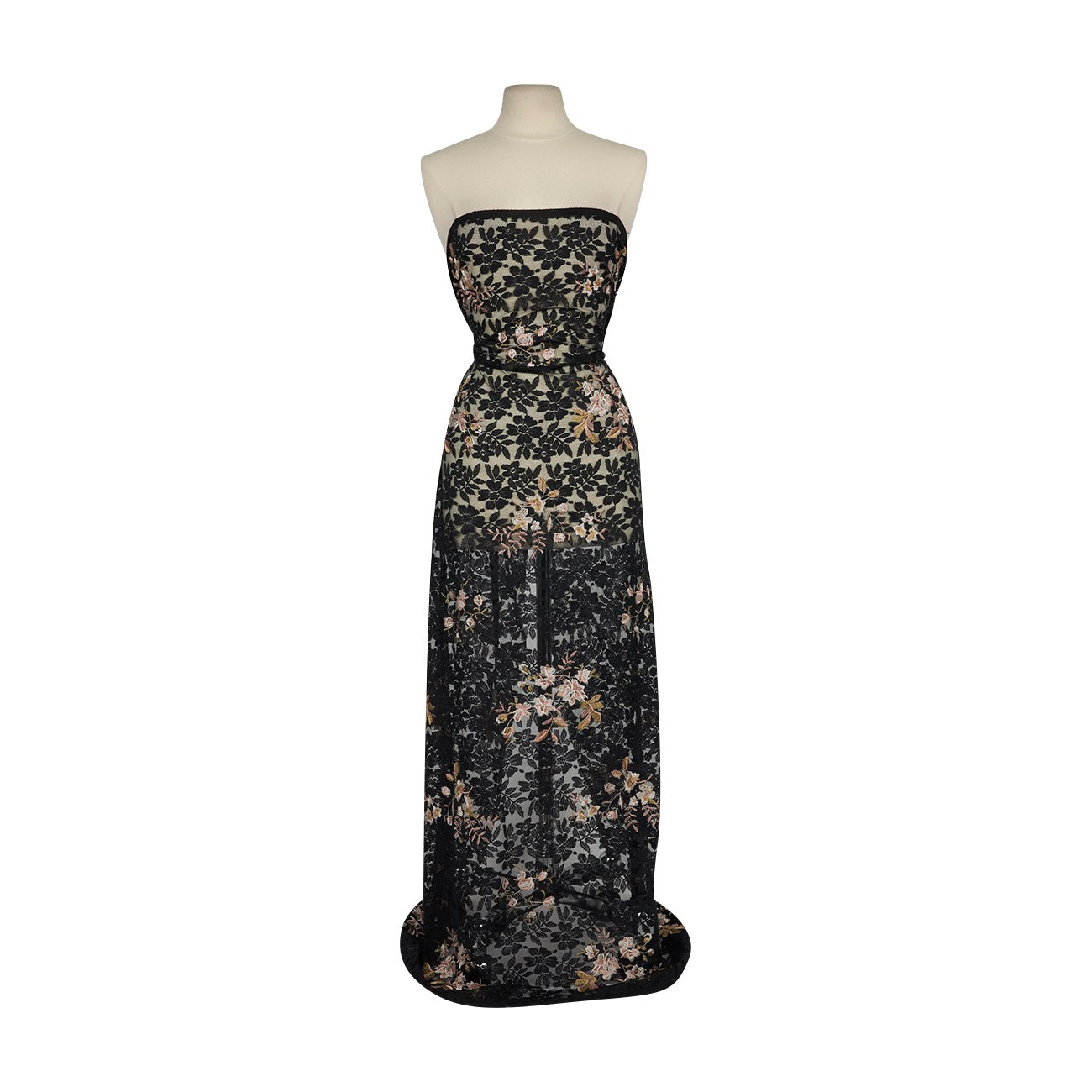
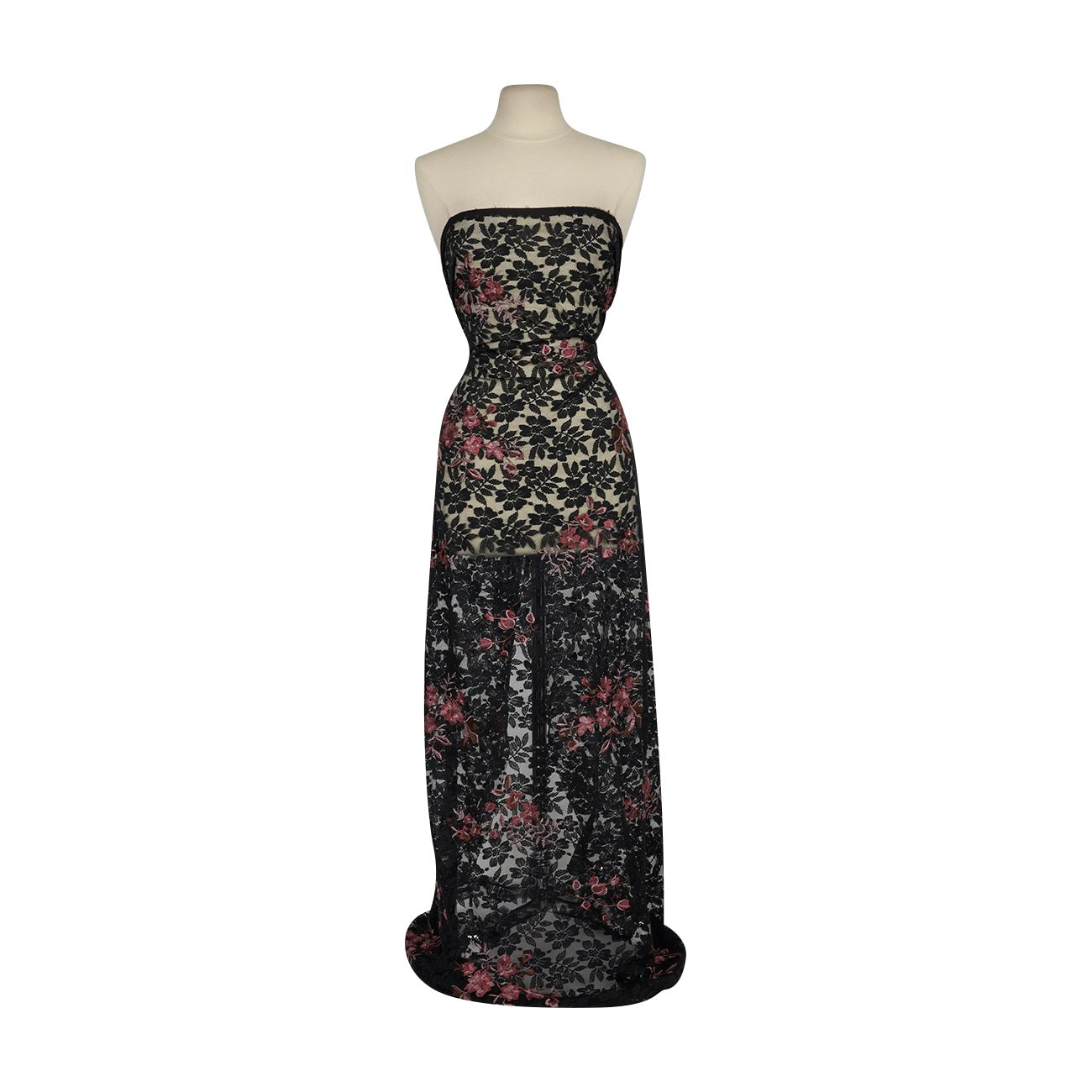
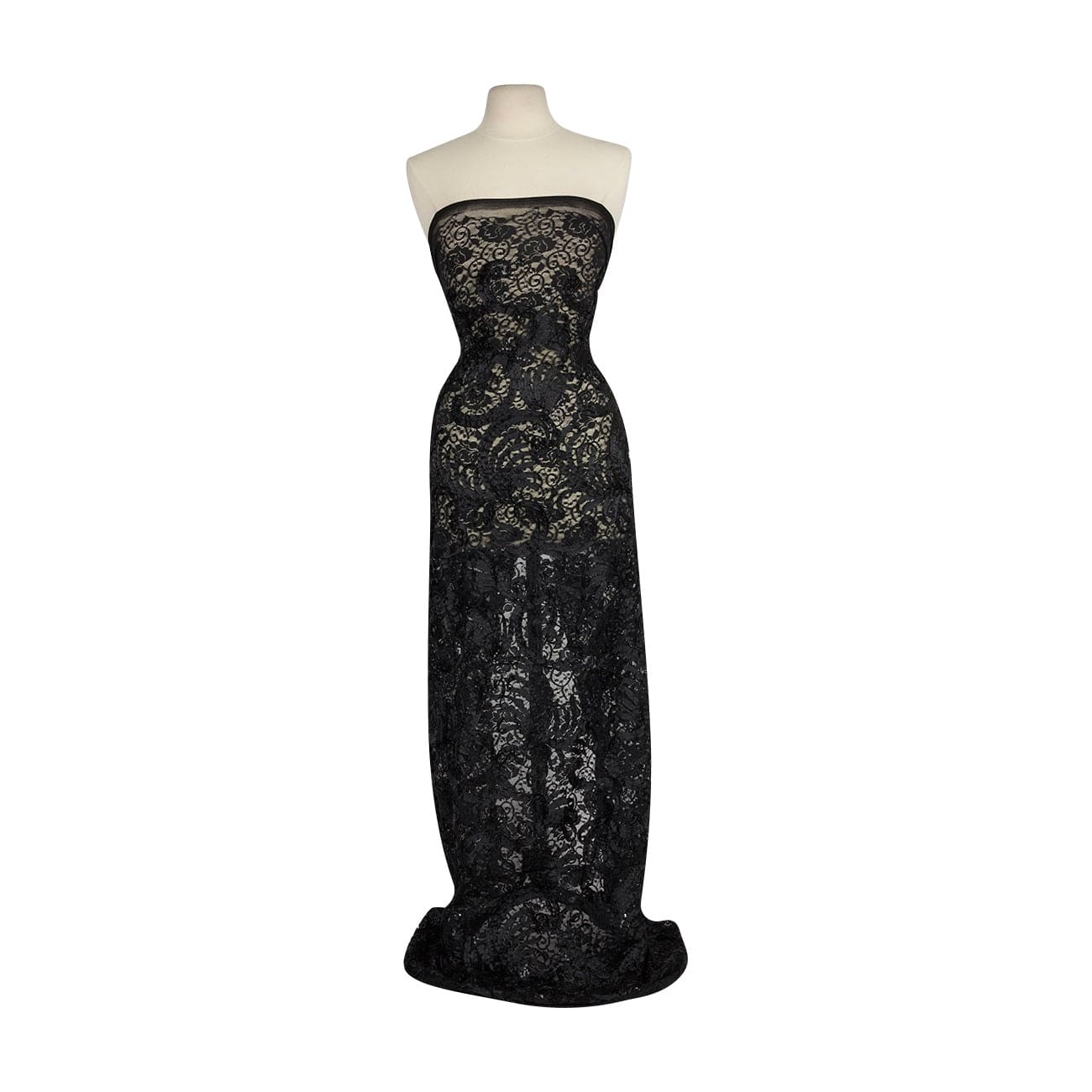
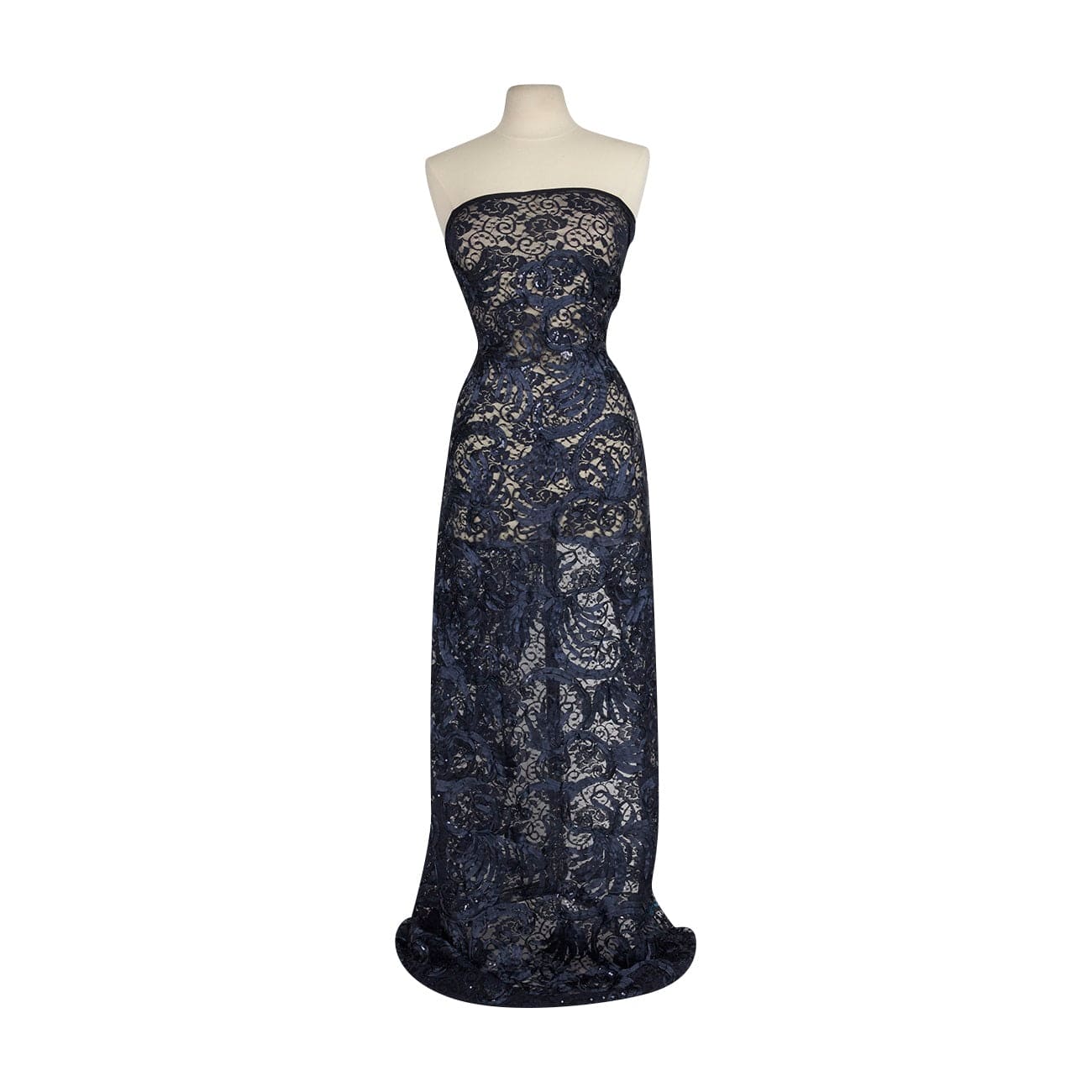
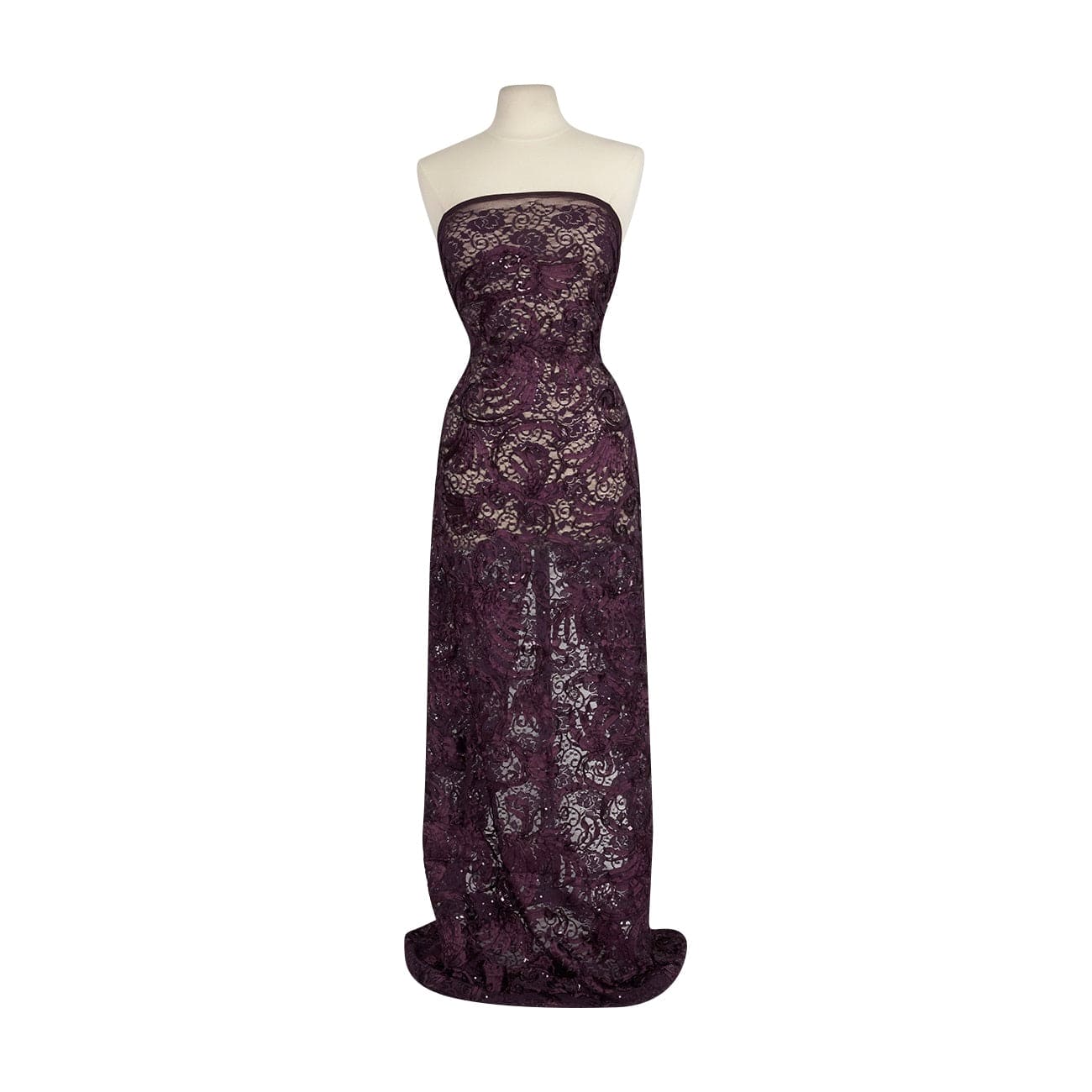
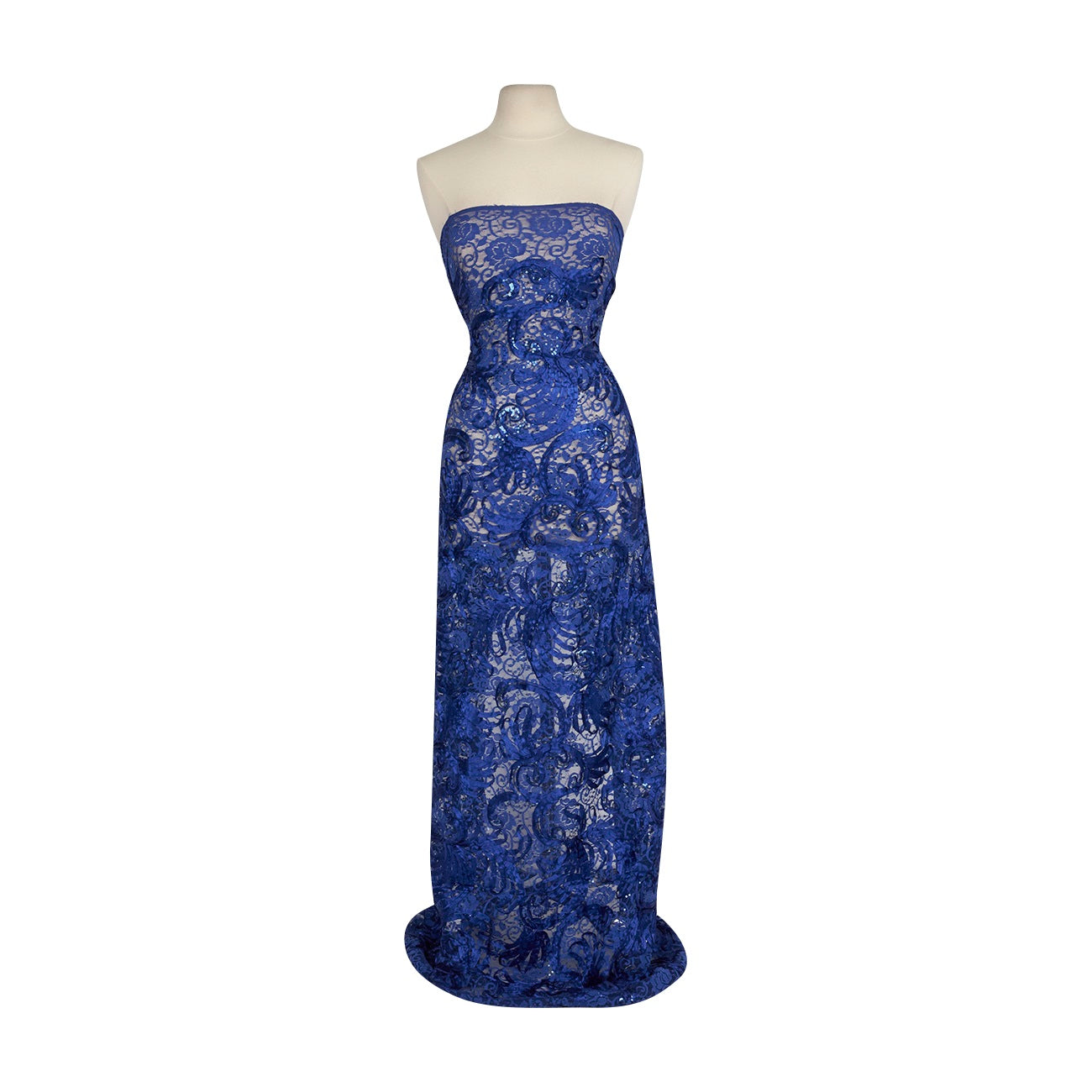
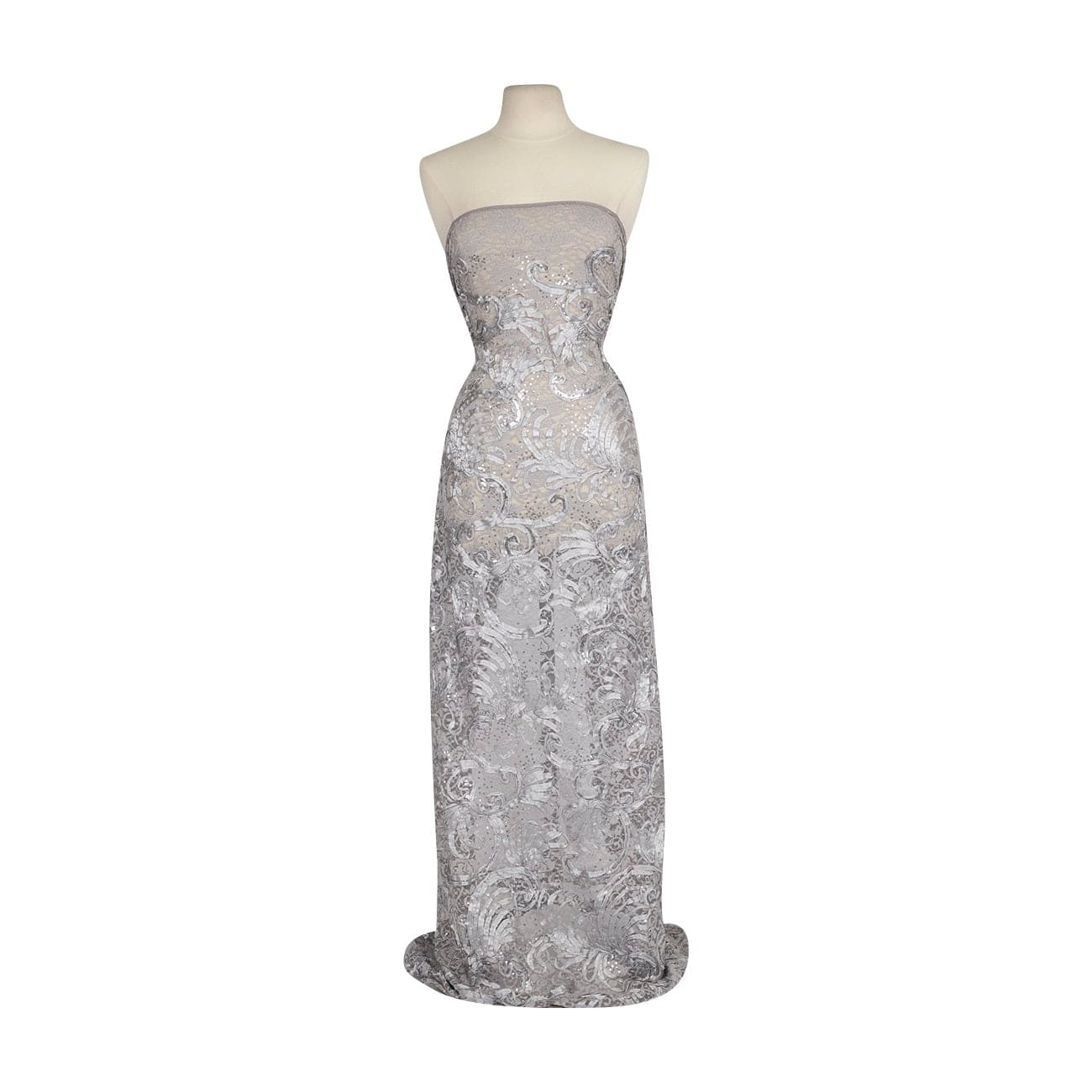
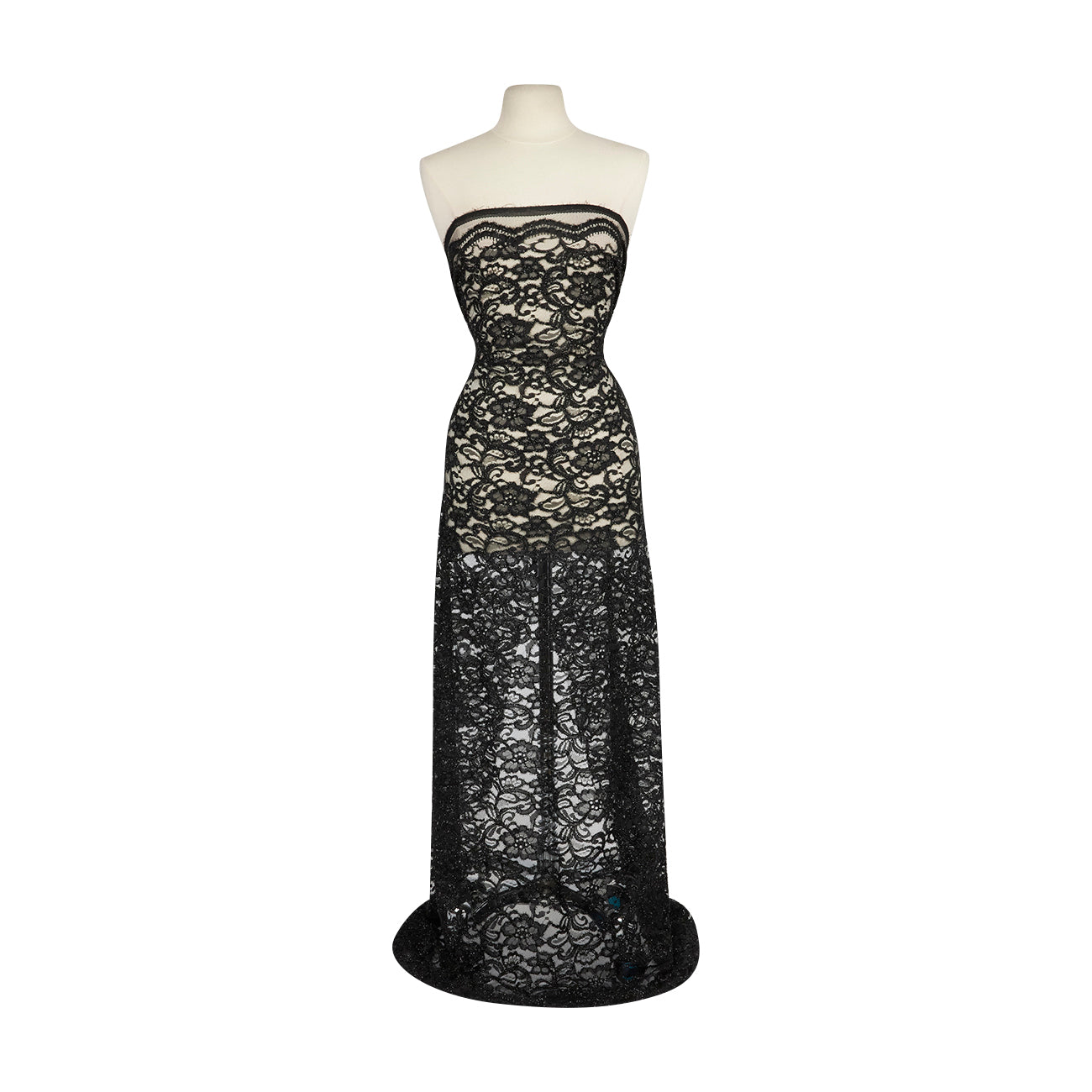
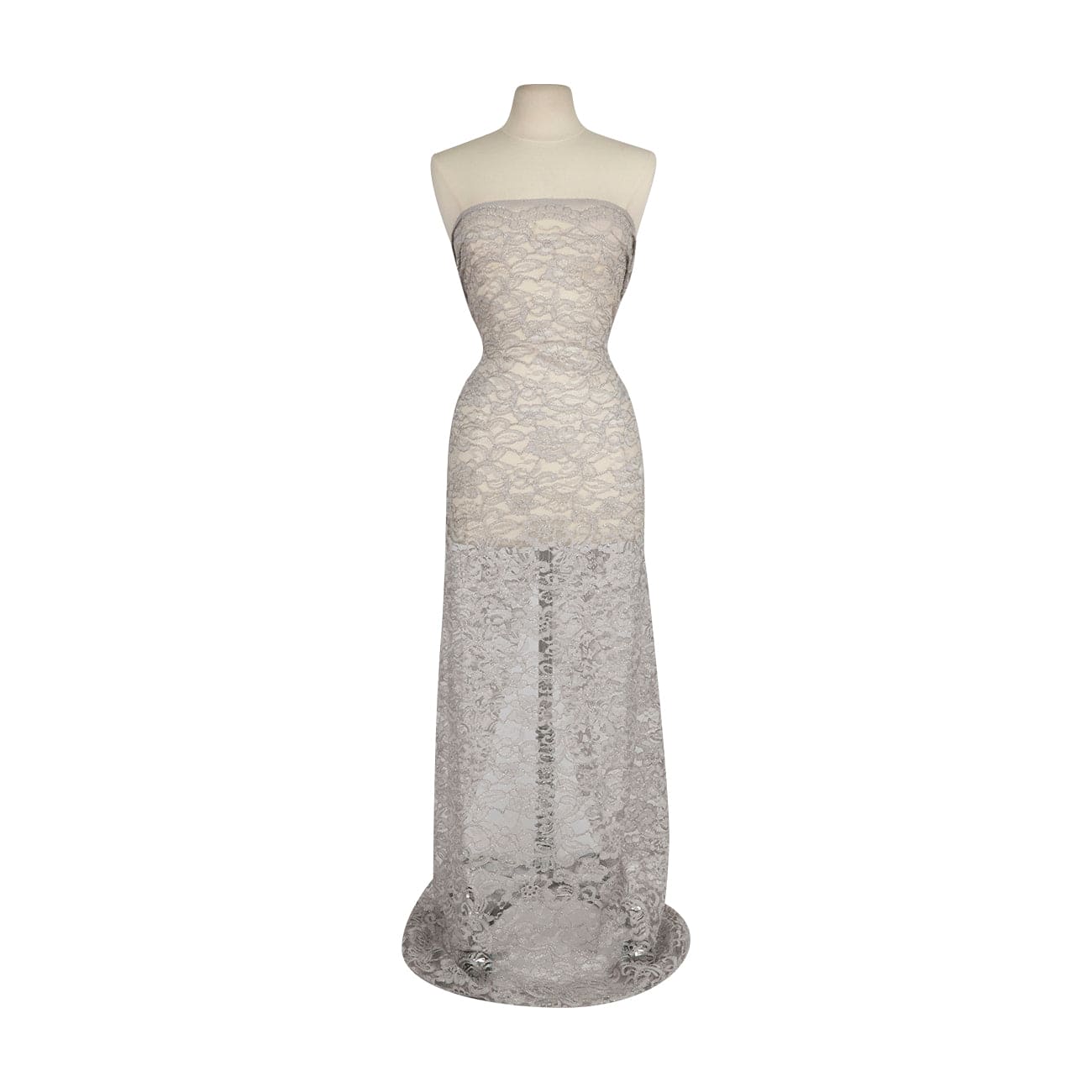
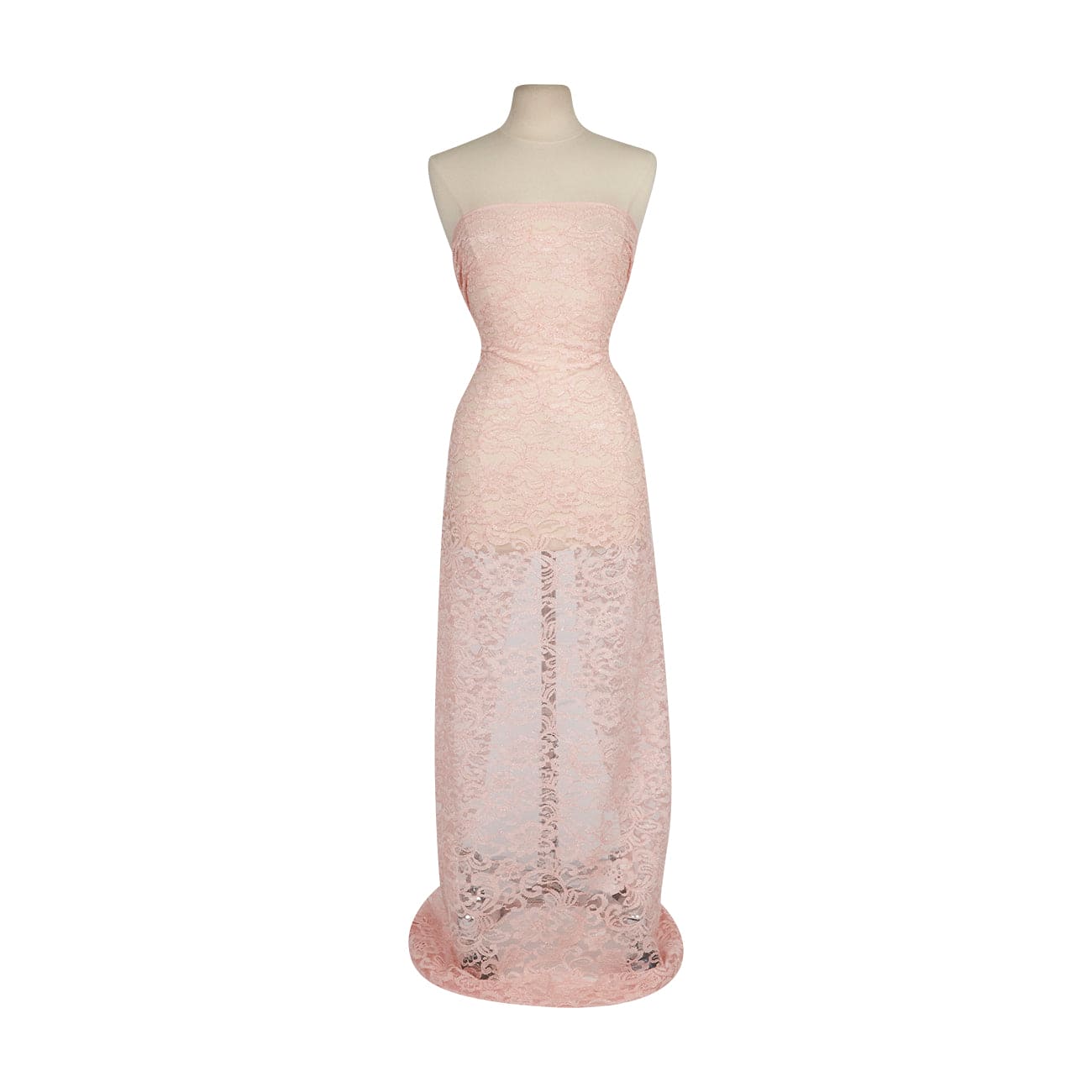
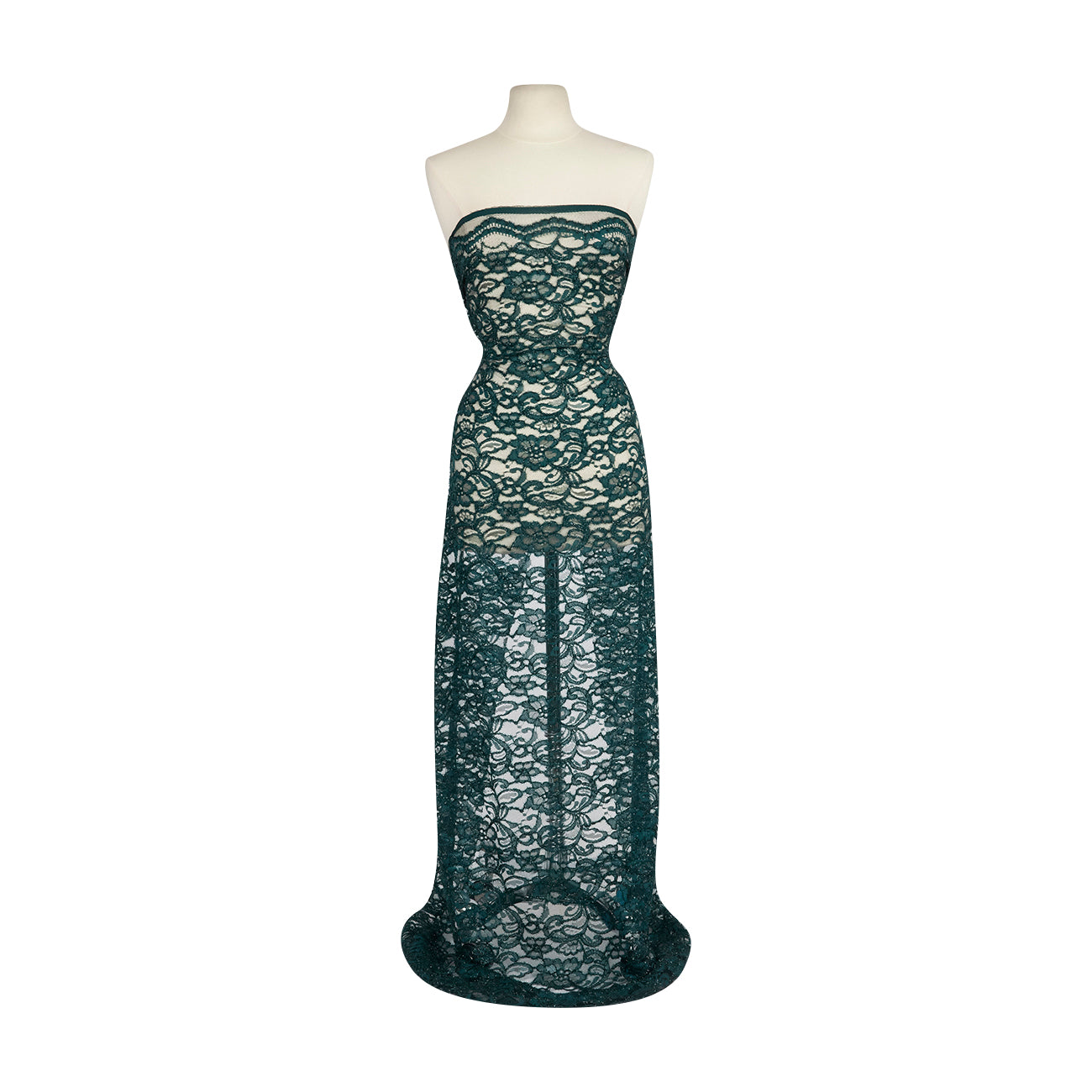
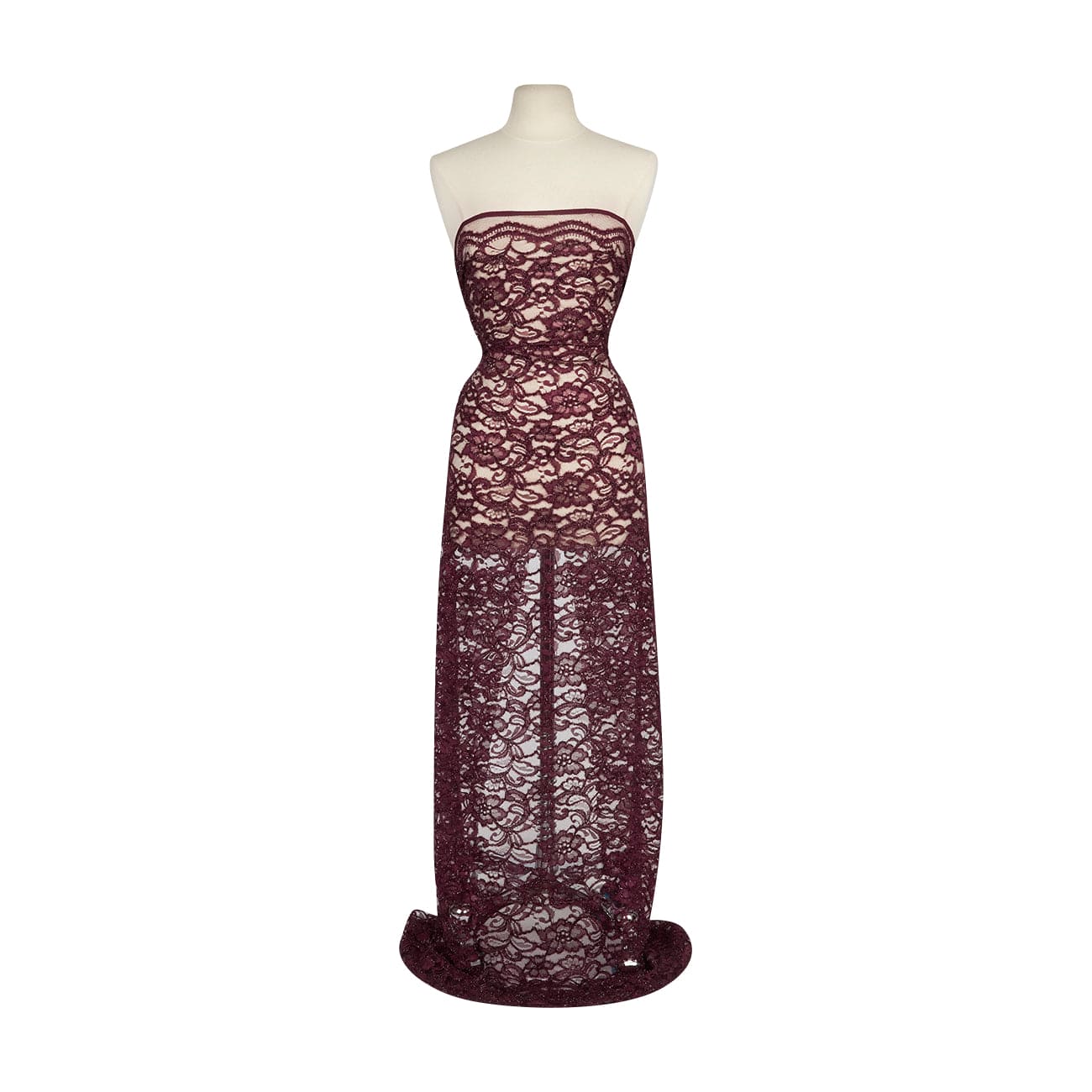
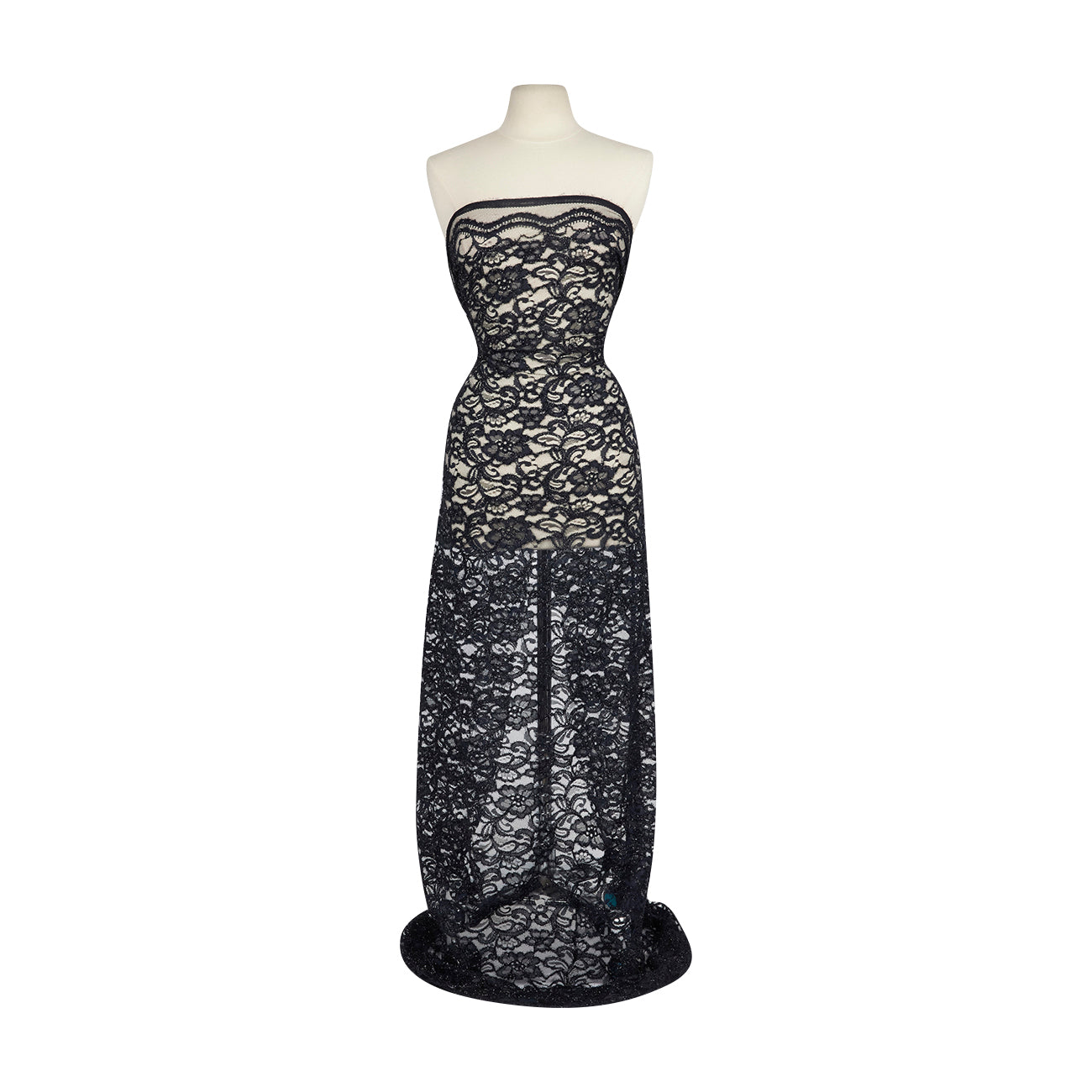


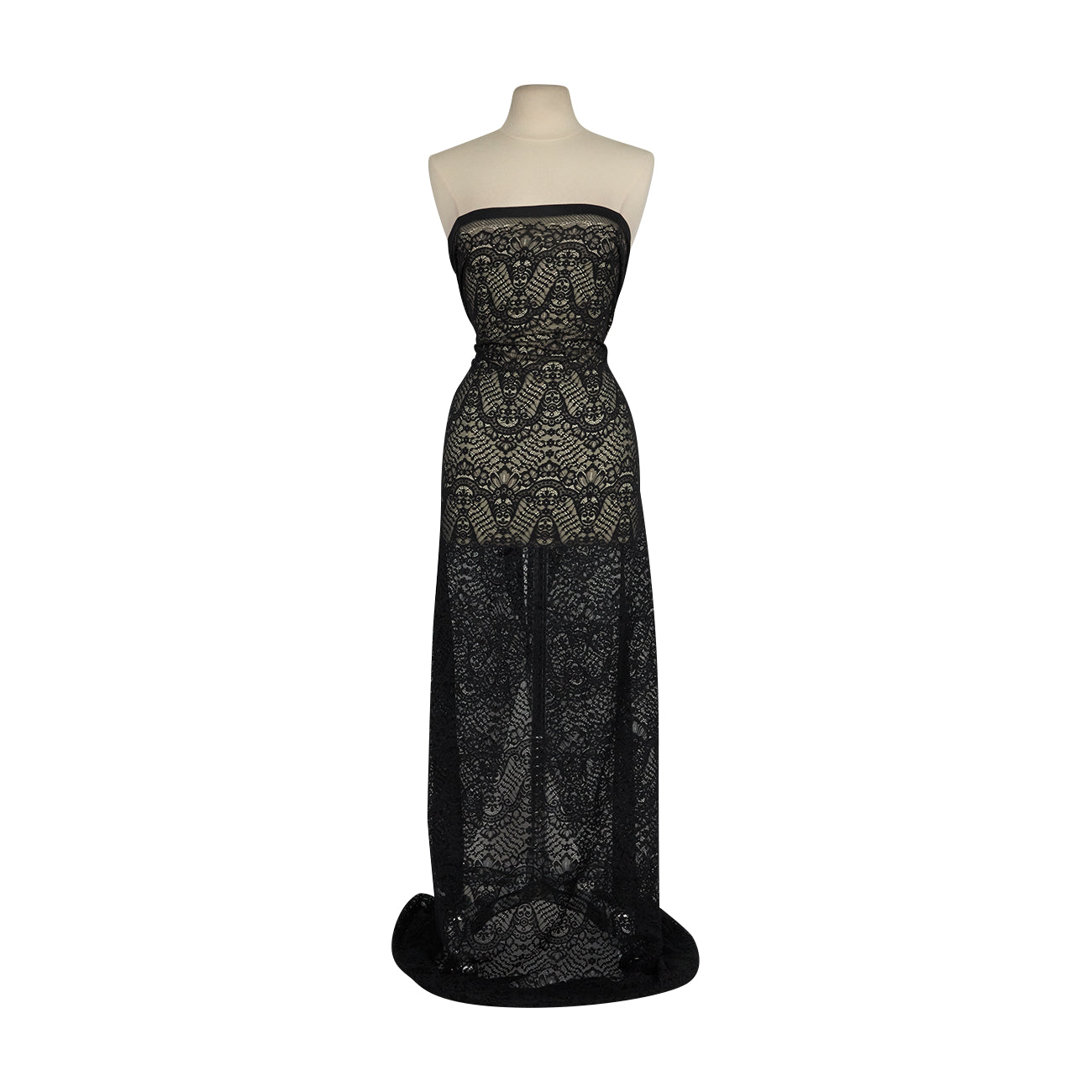
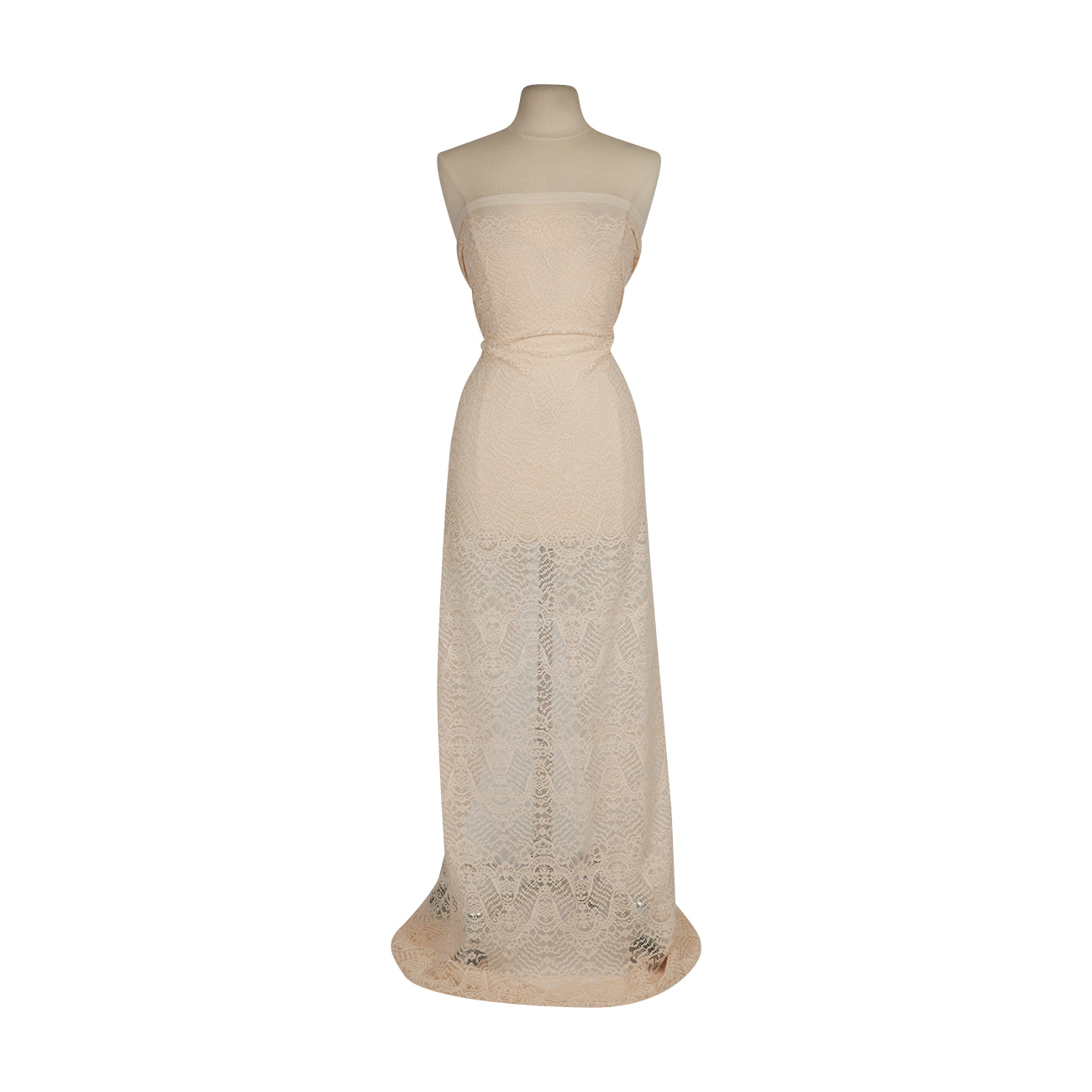
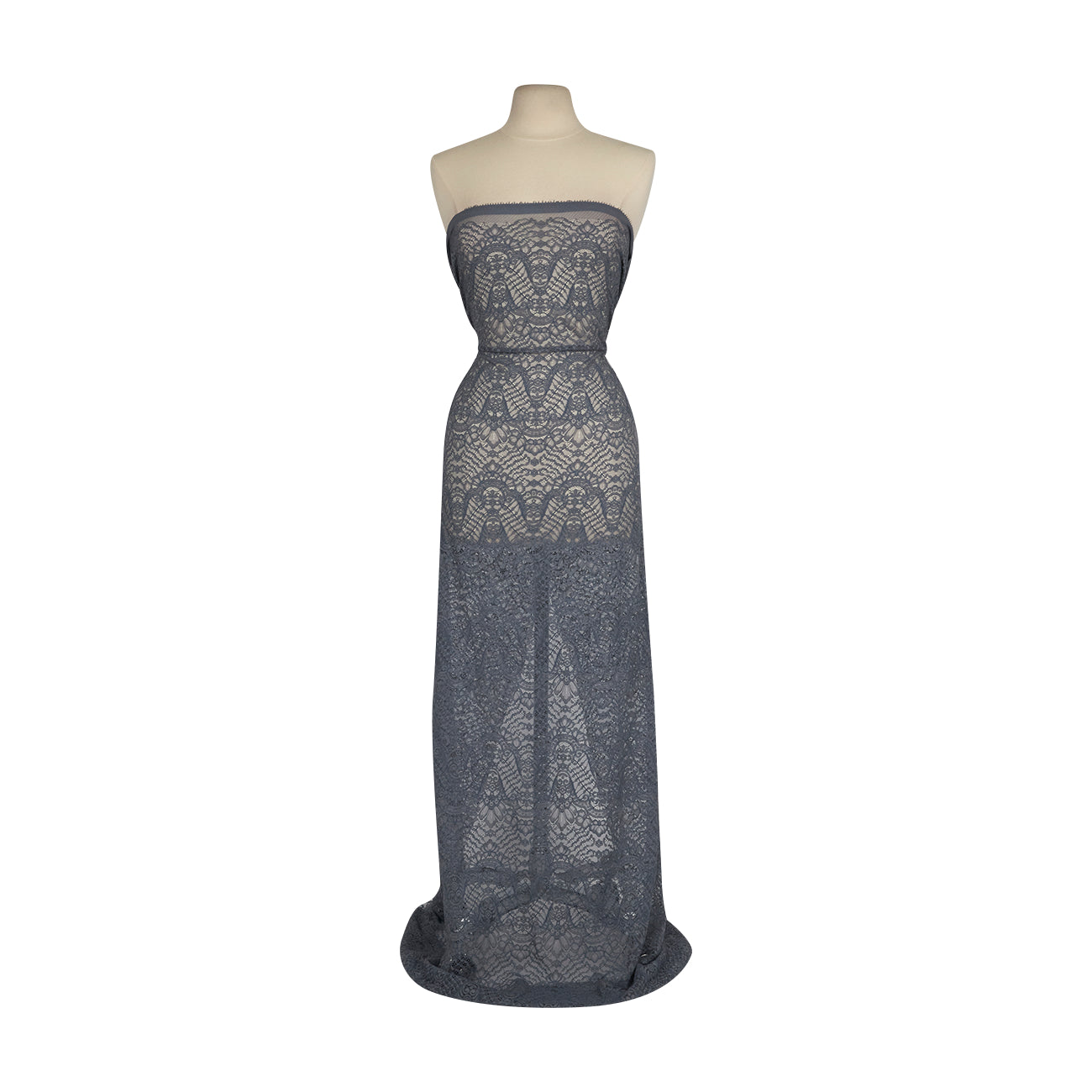
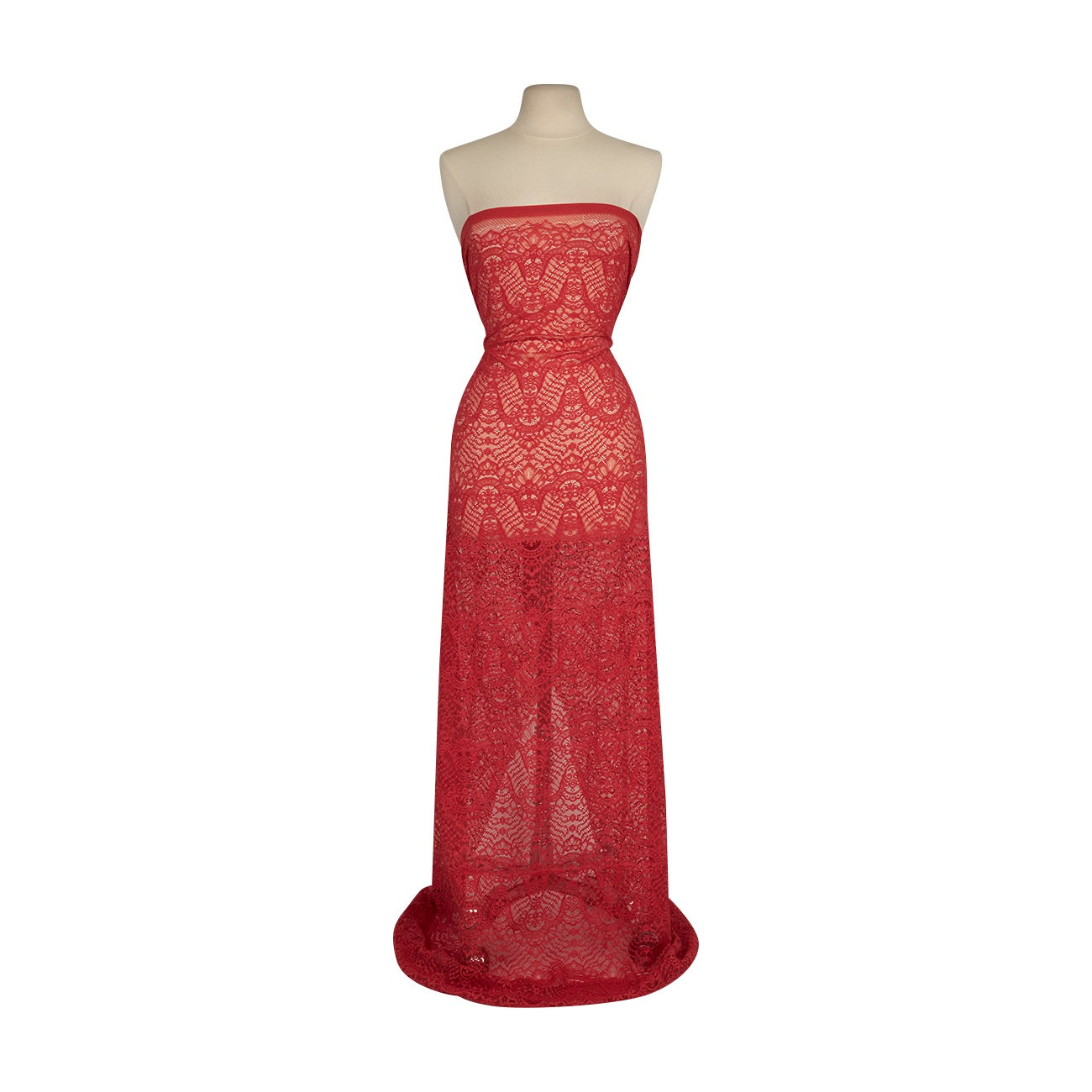
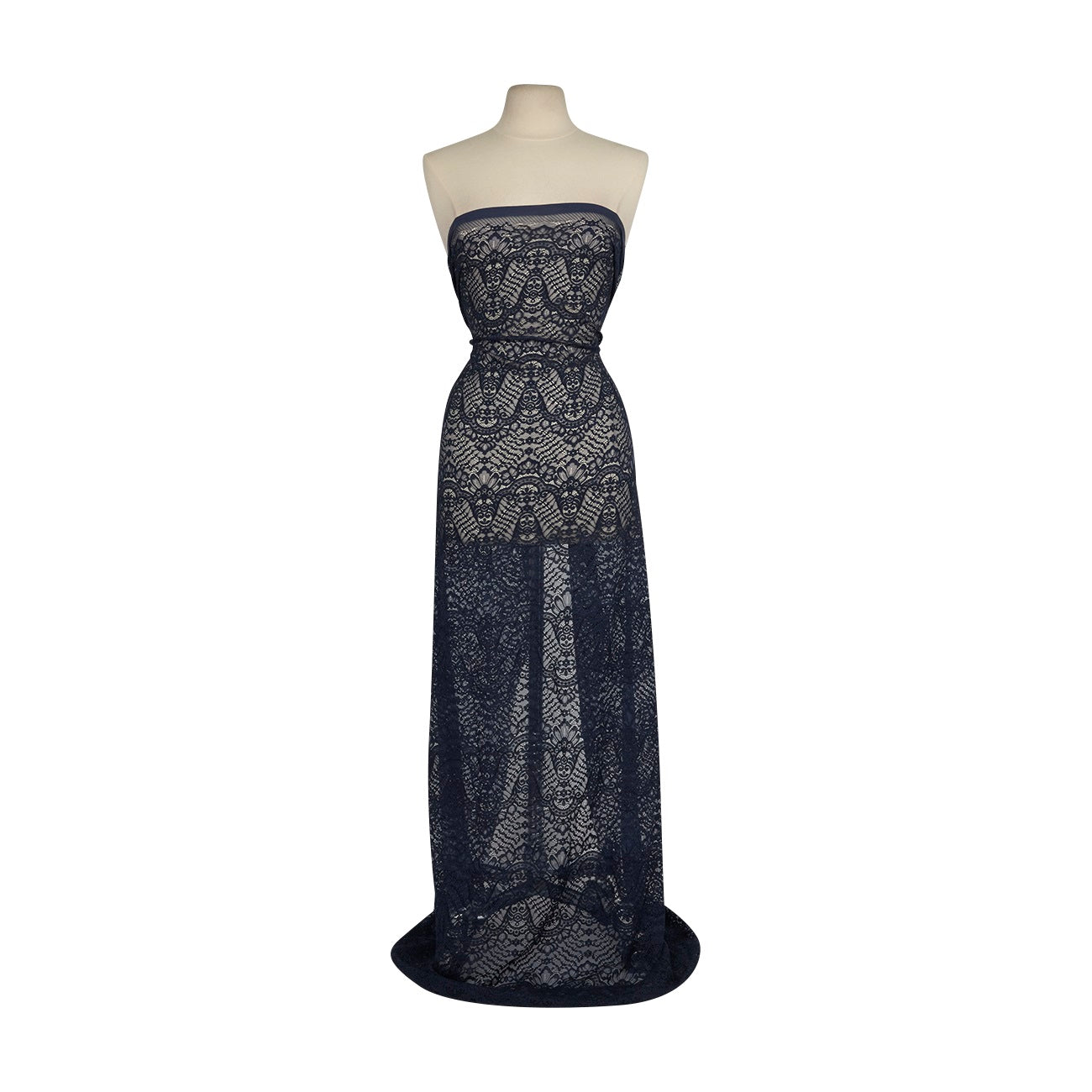
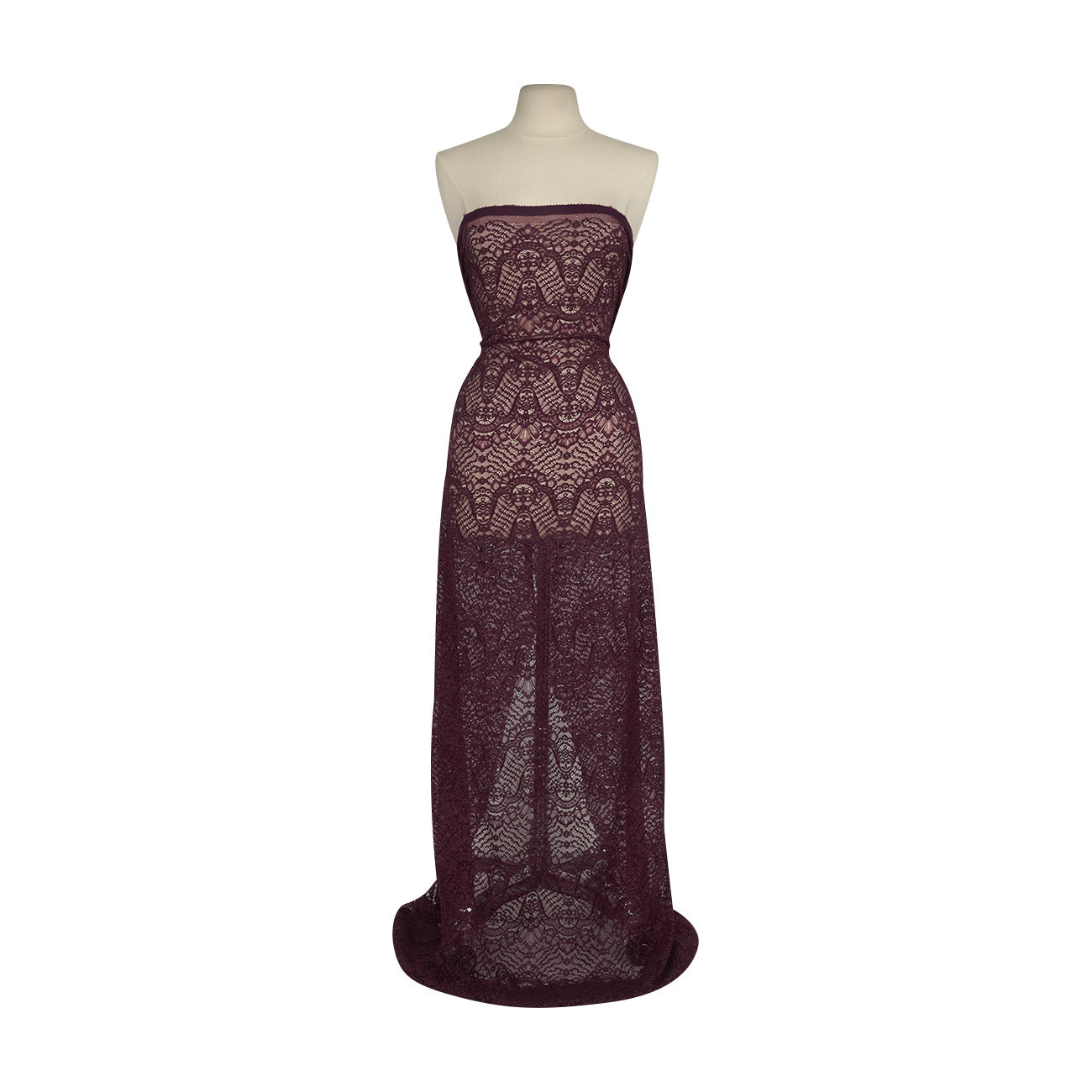
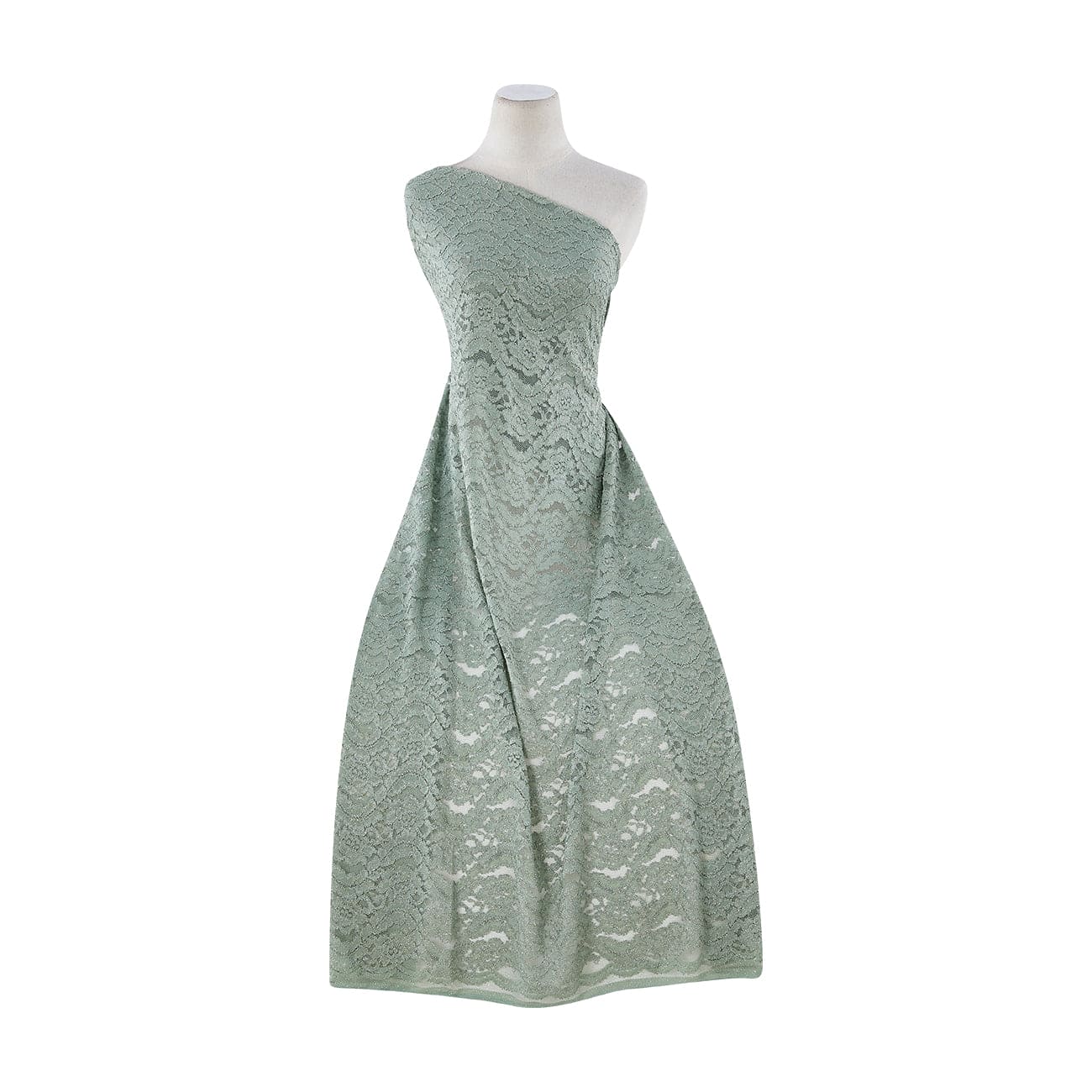
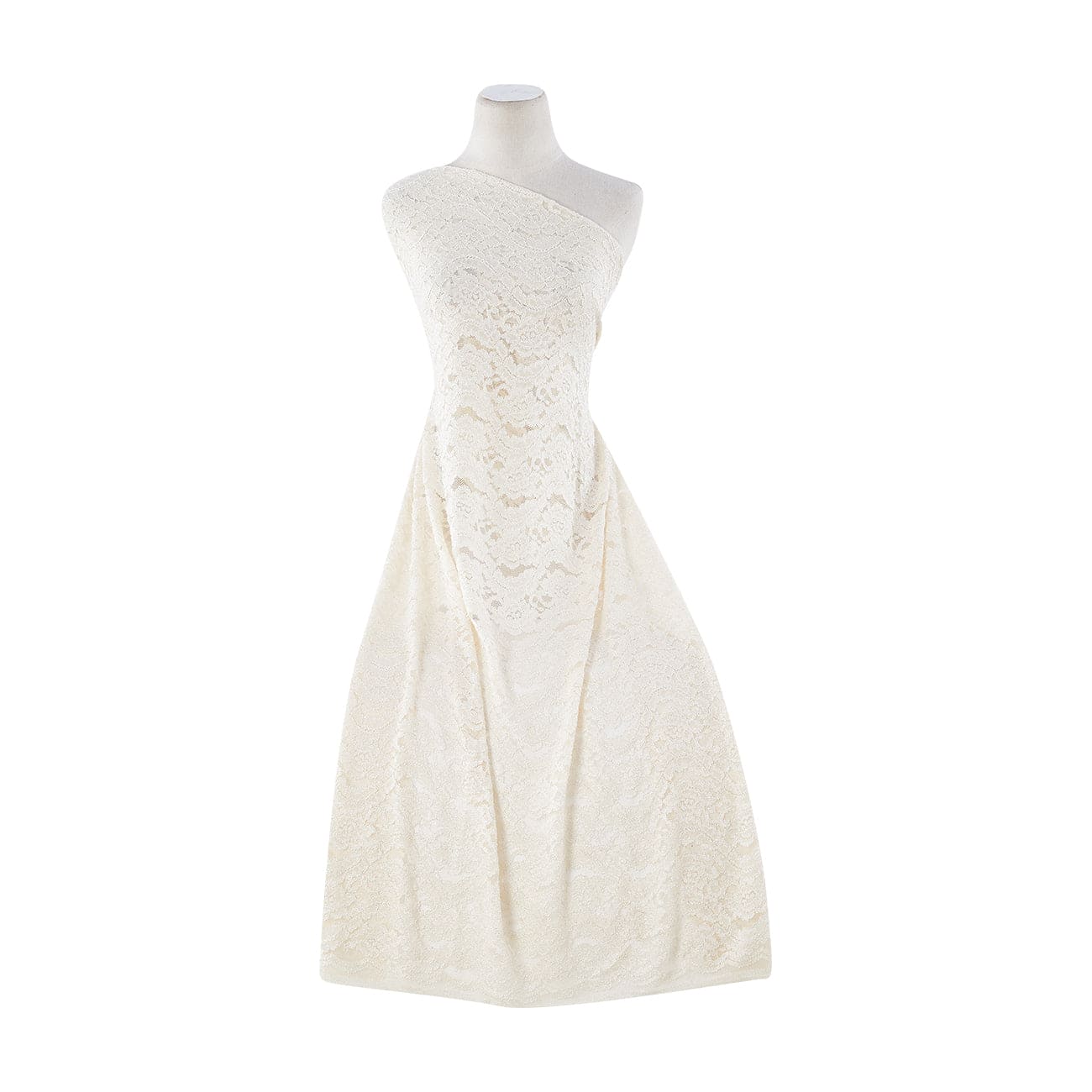
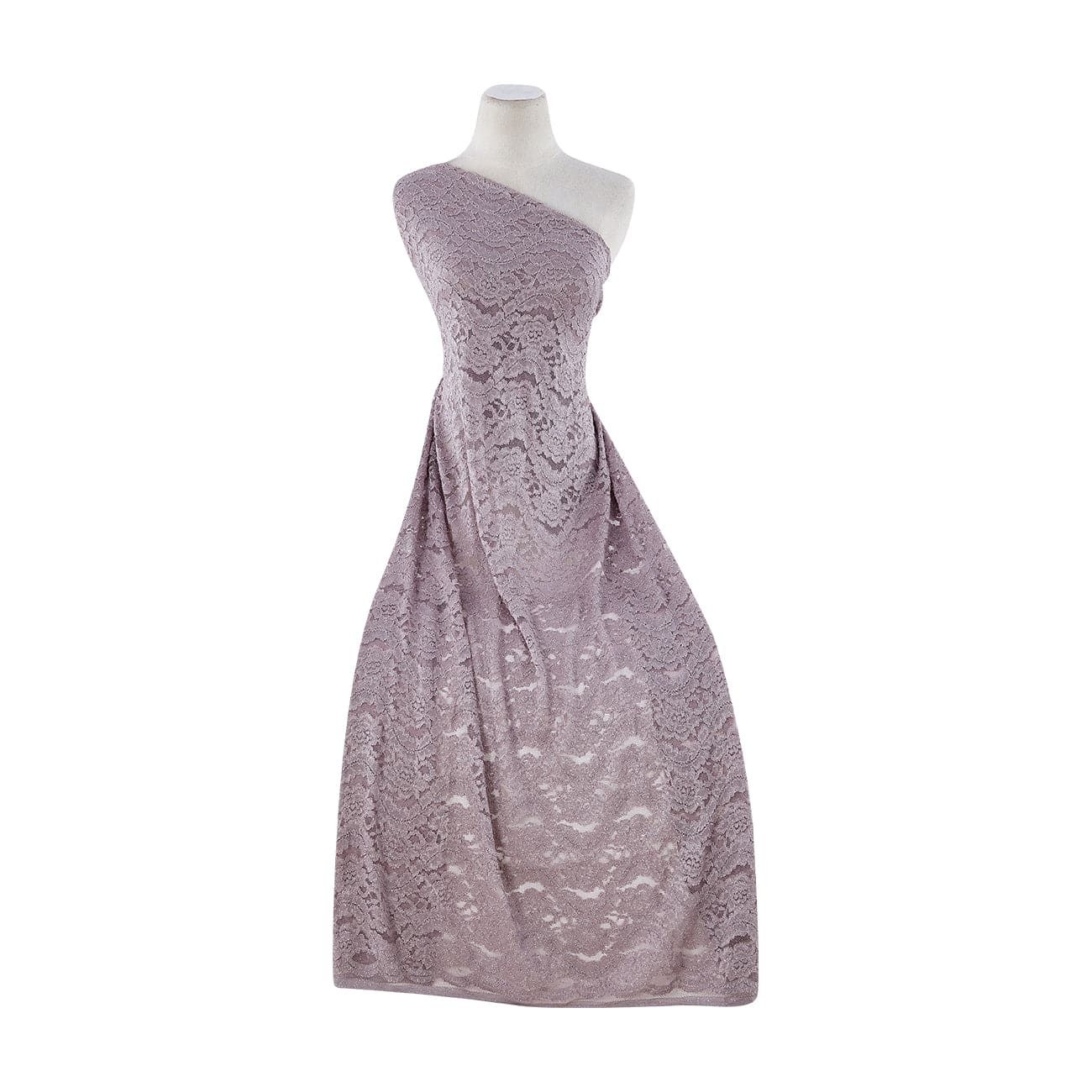
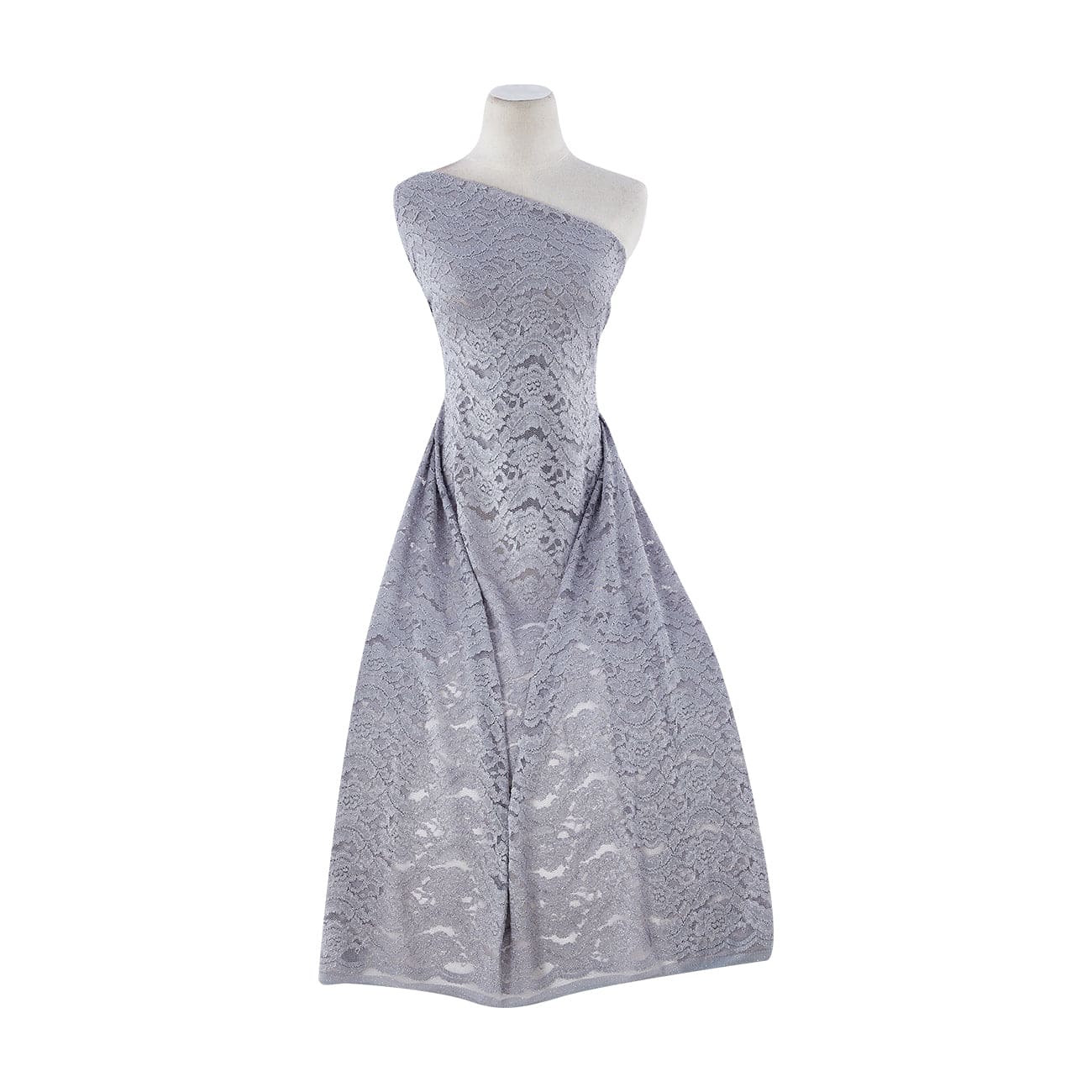
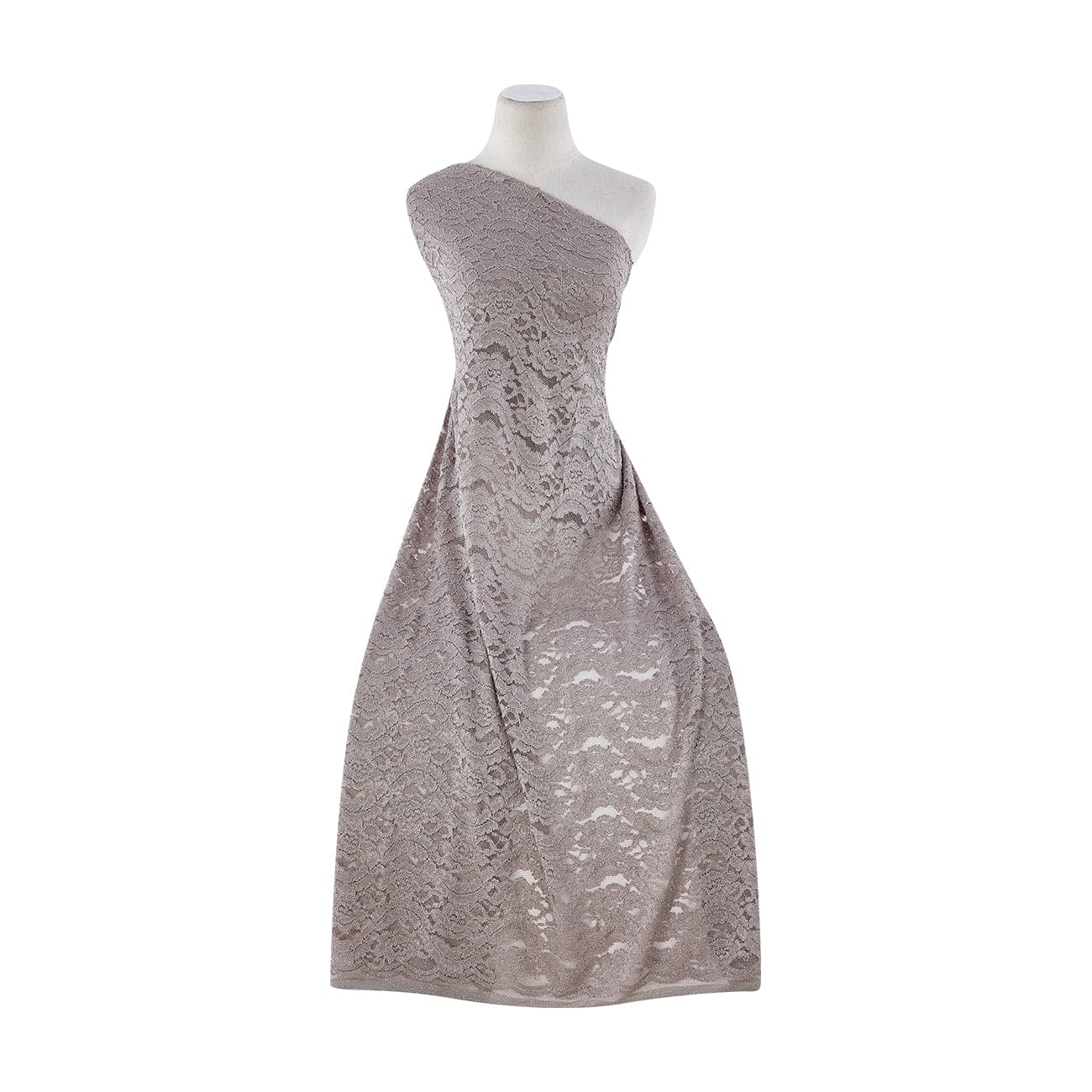
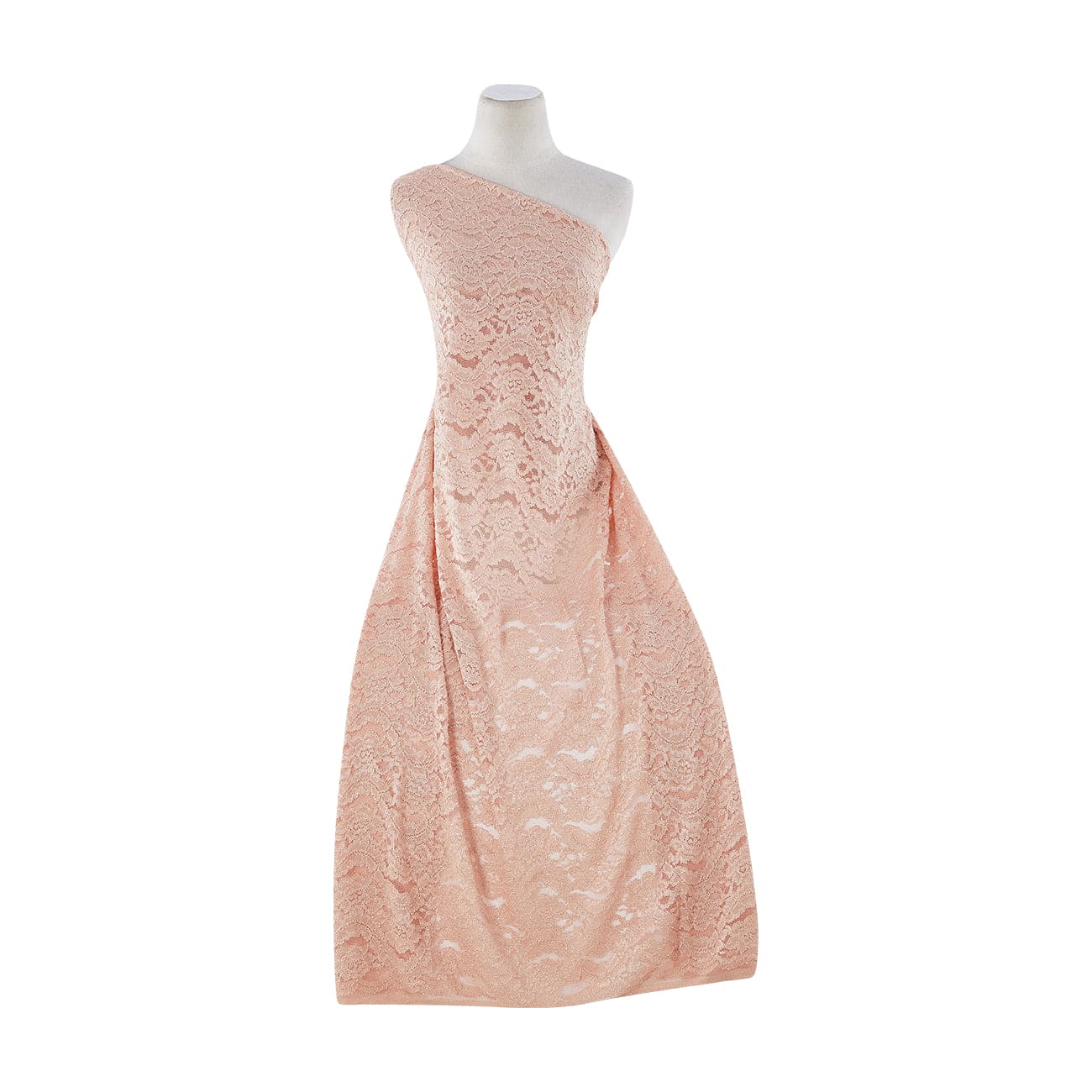
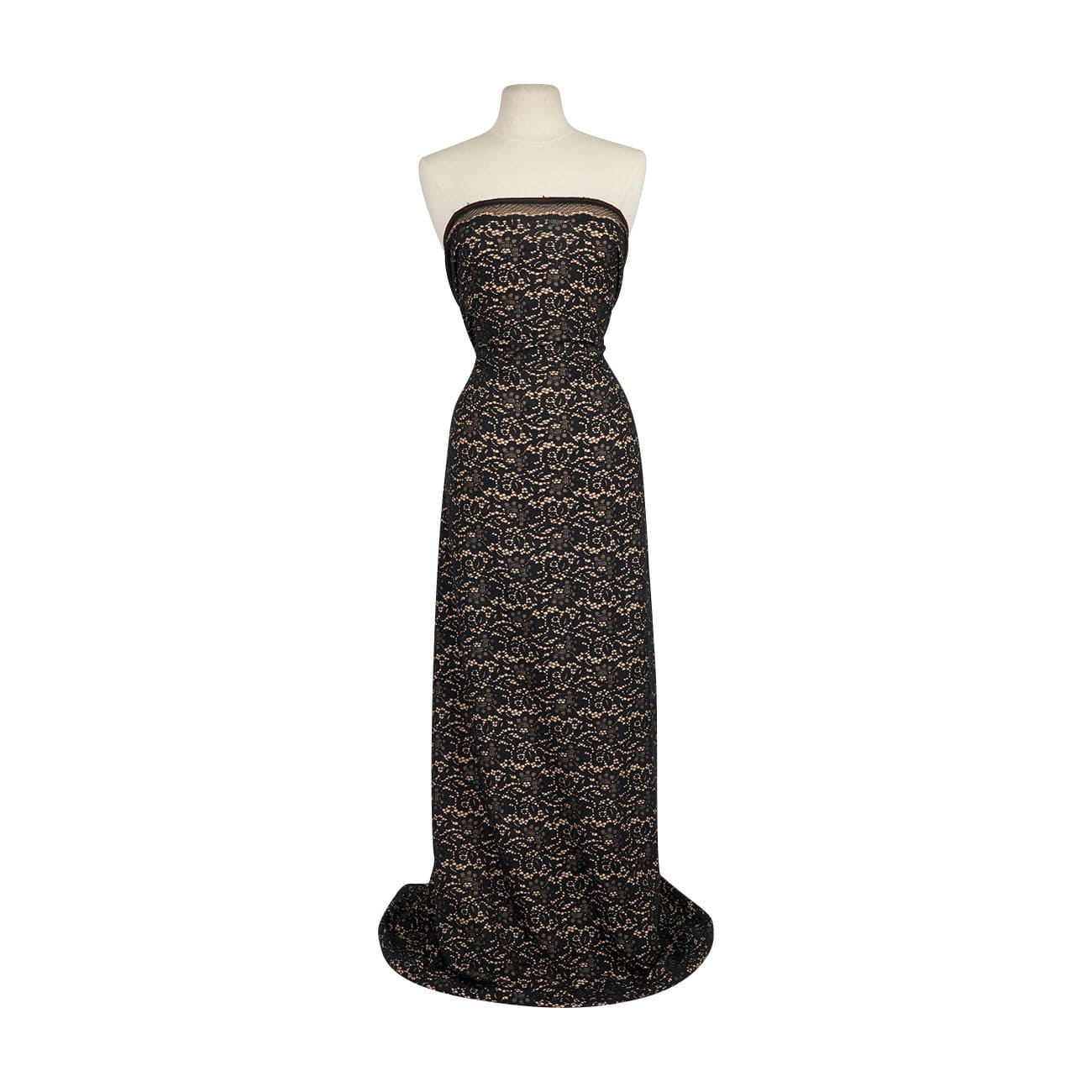
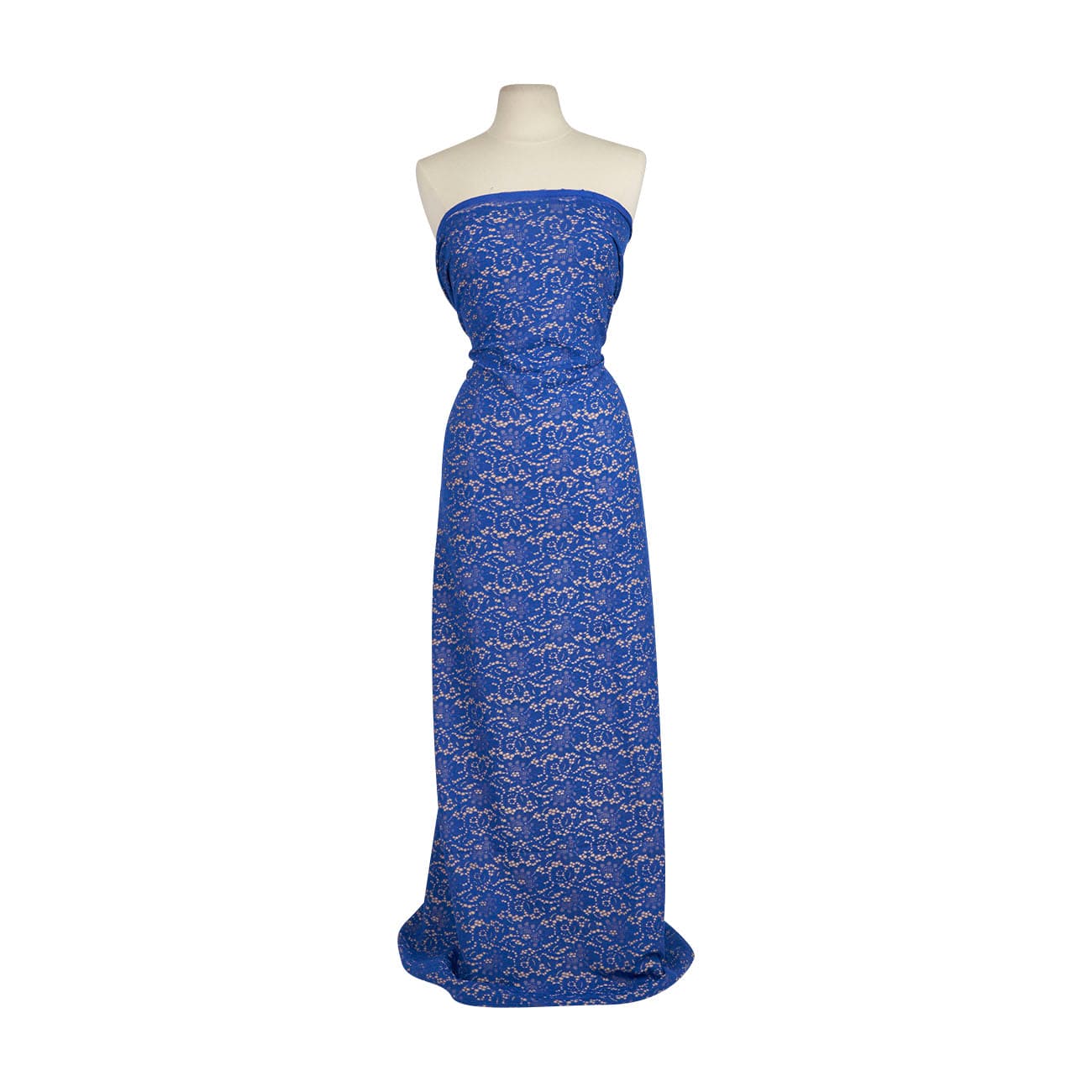
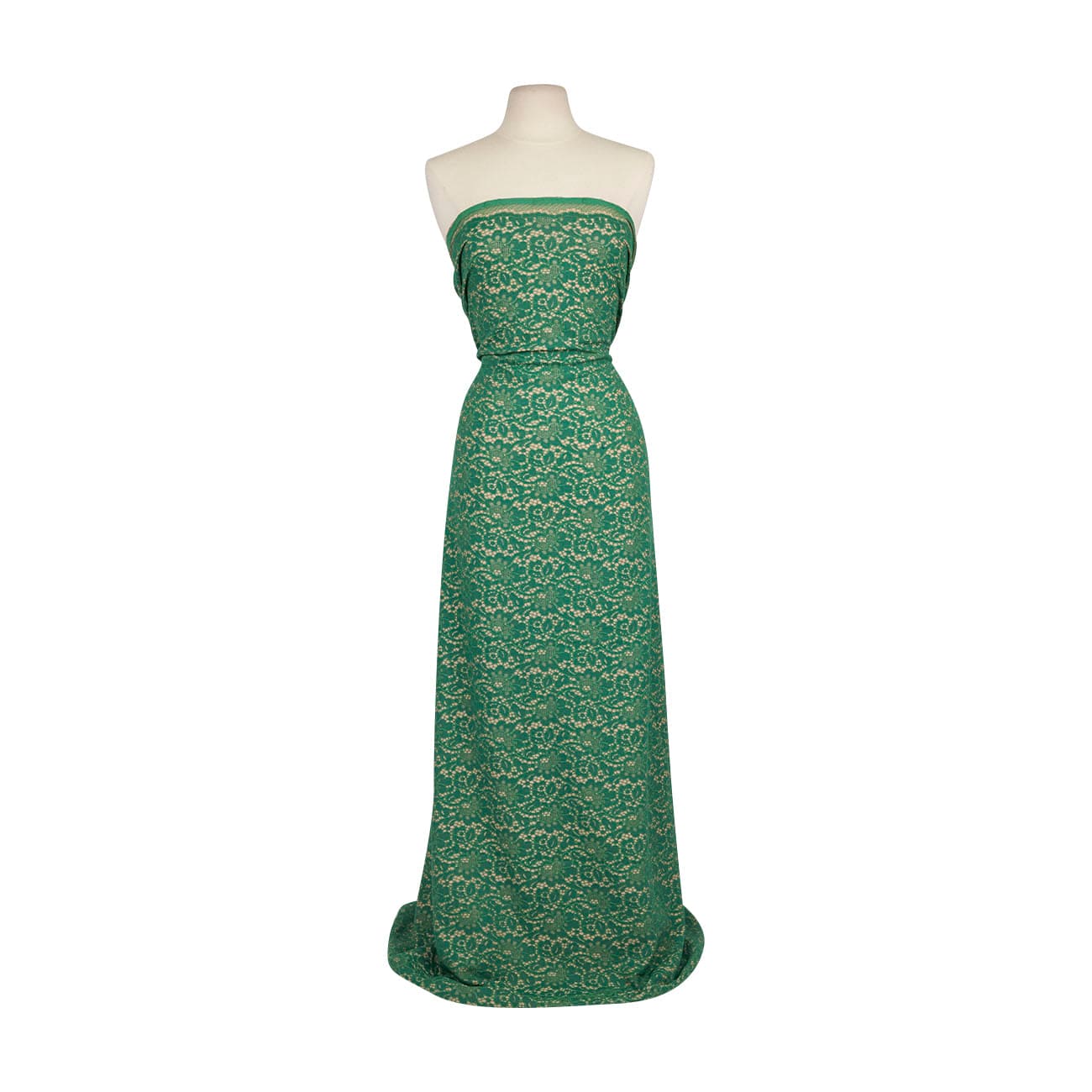
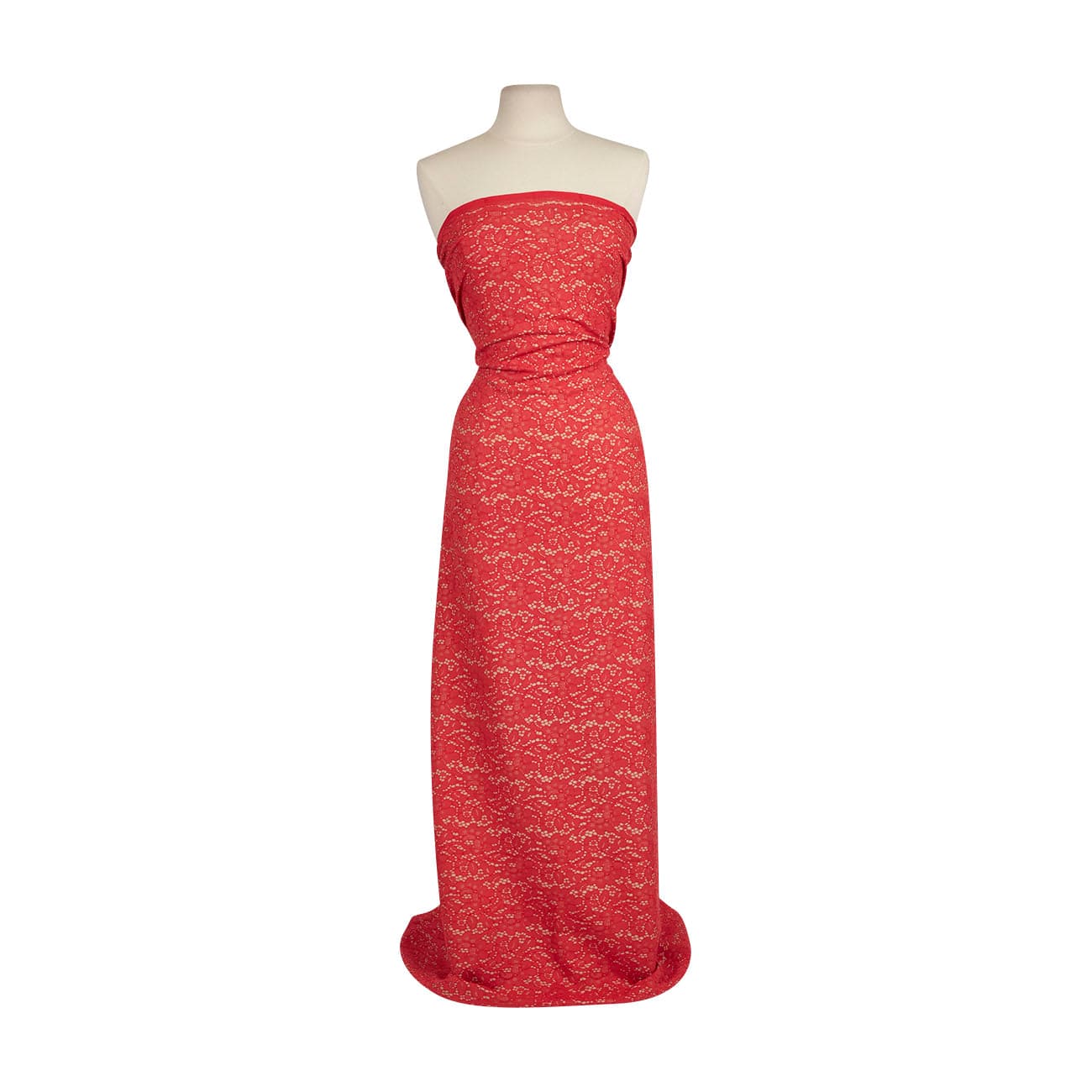
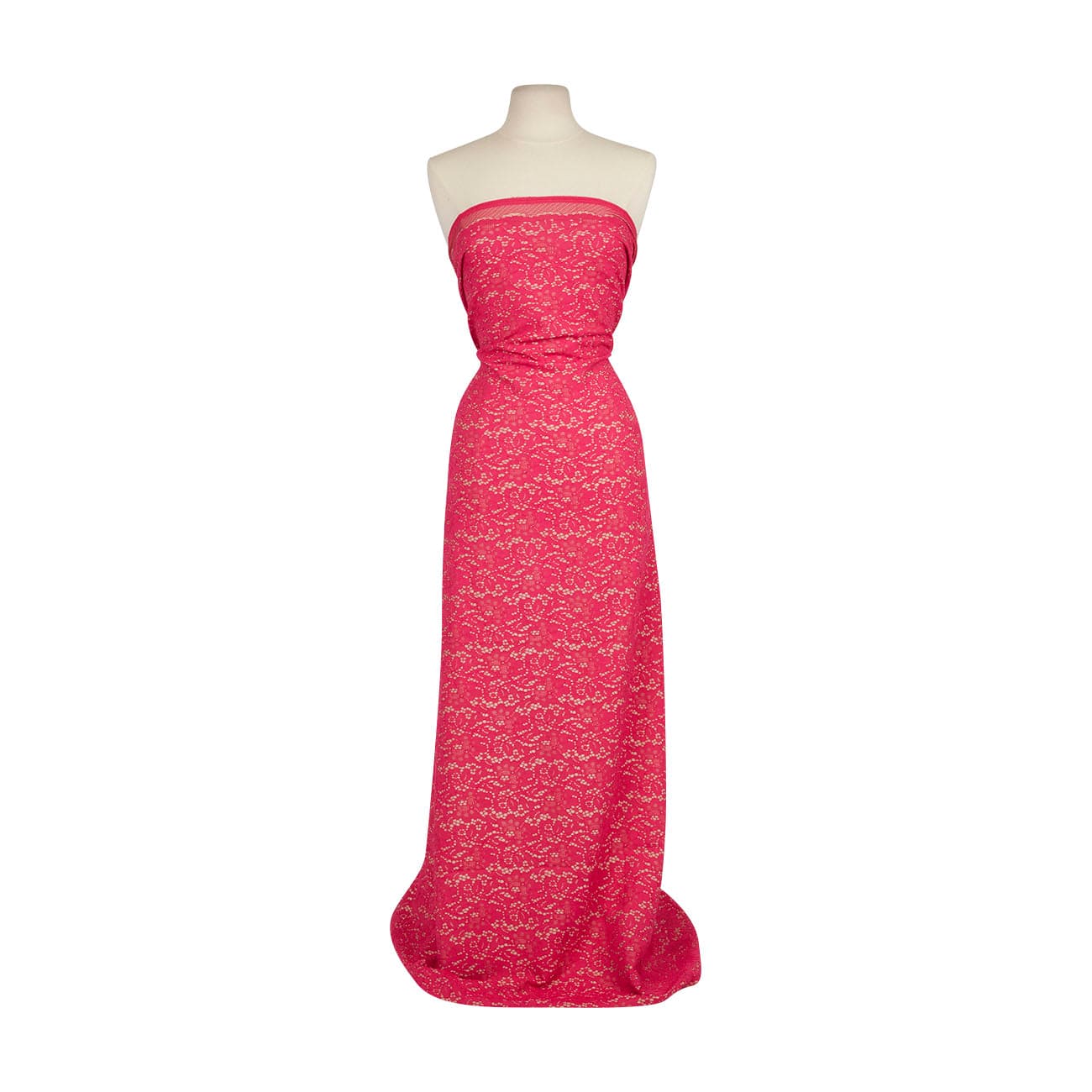
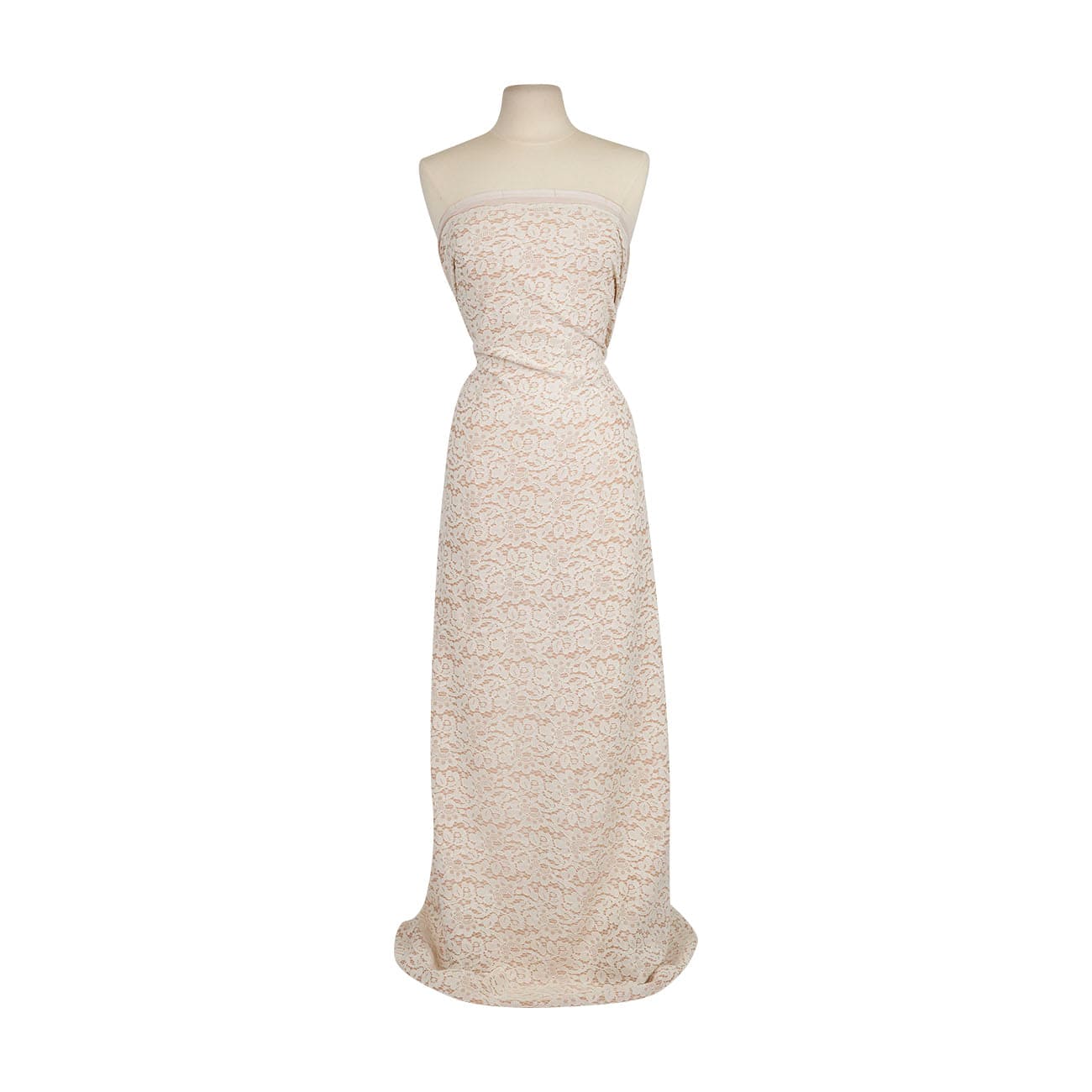
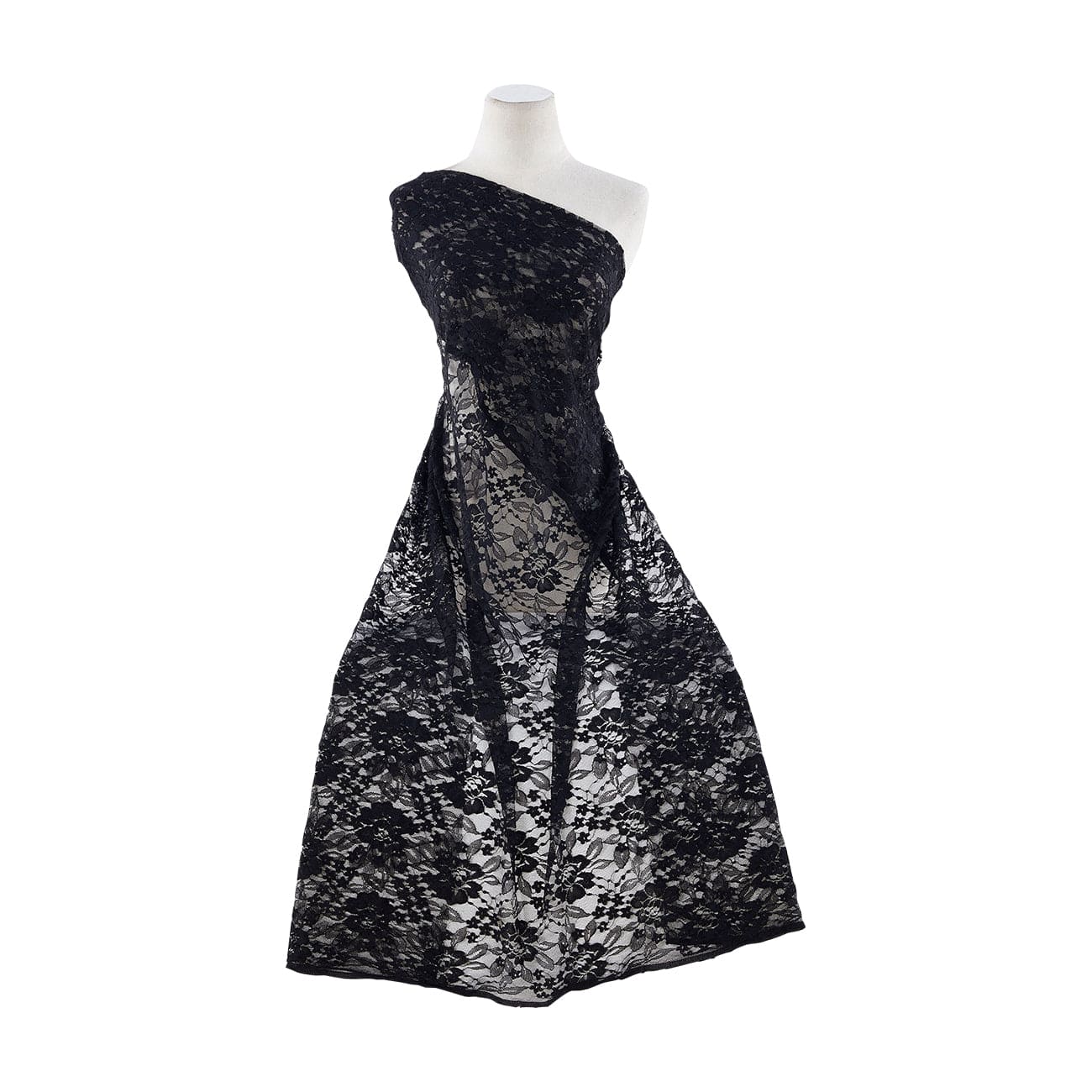
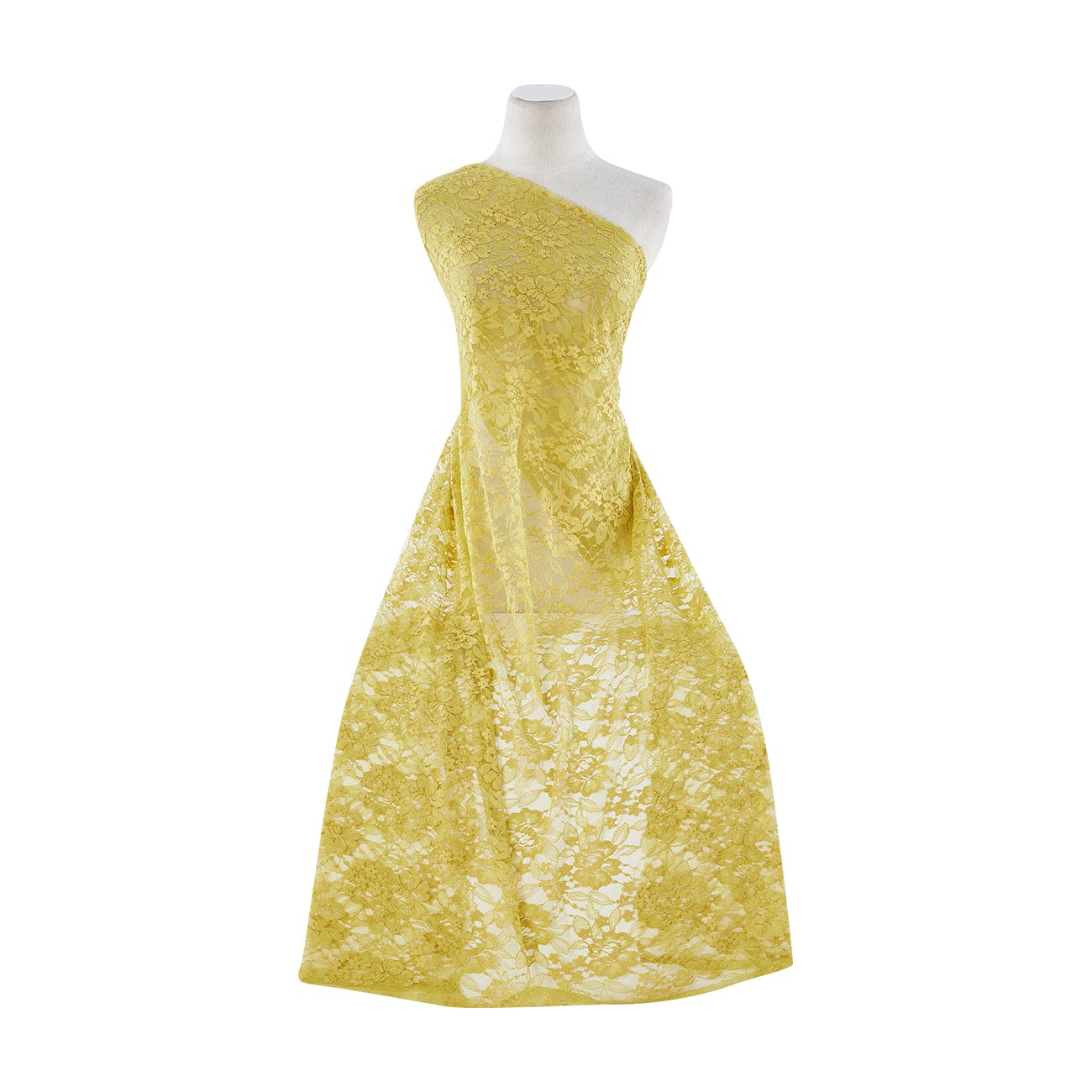
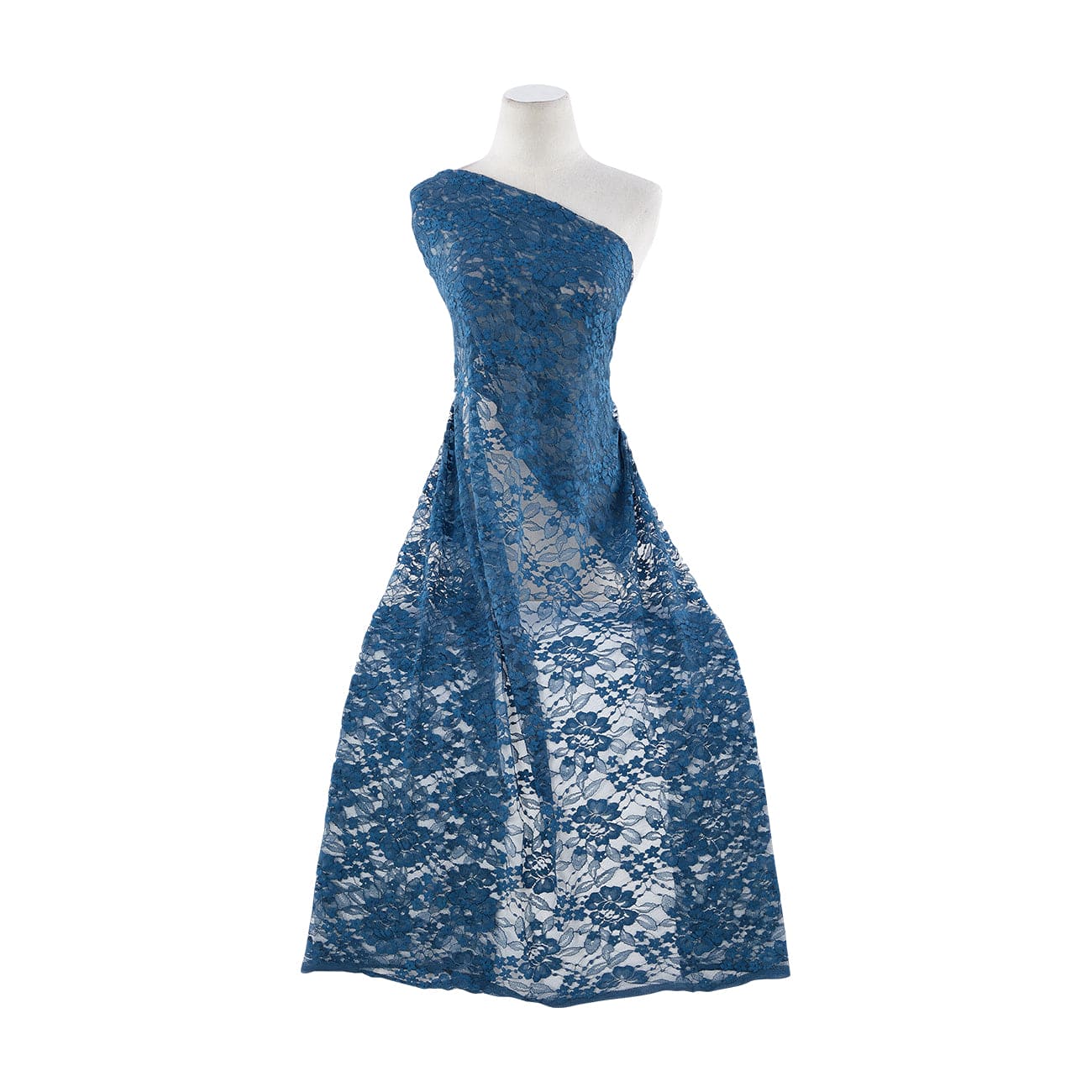
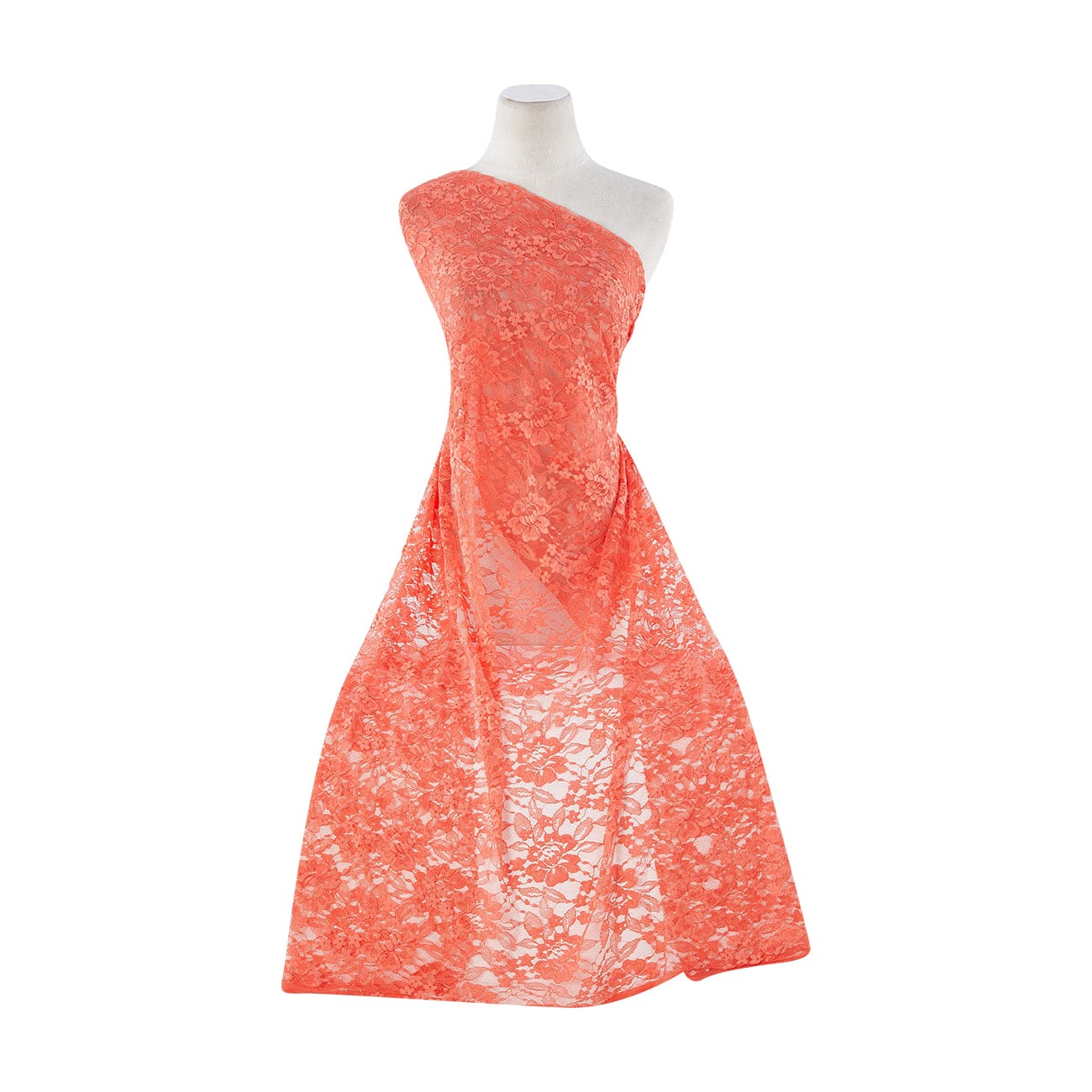
Types of Lace Fabric
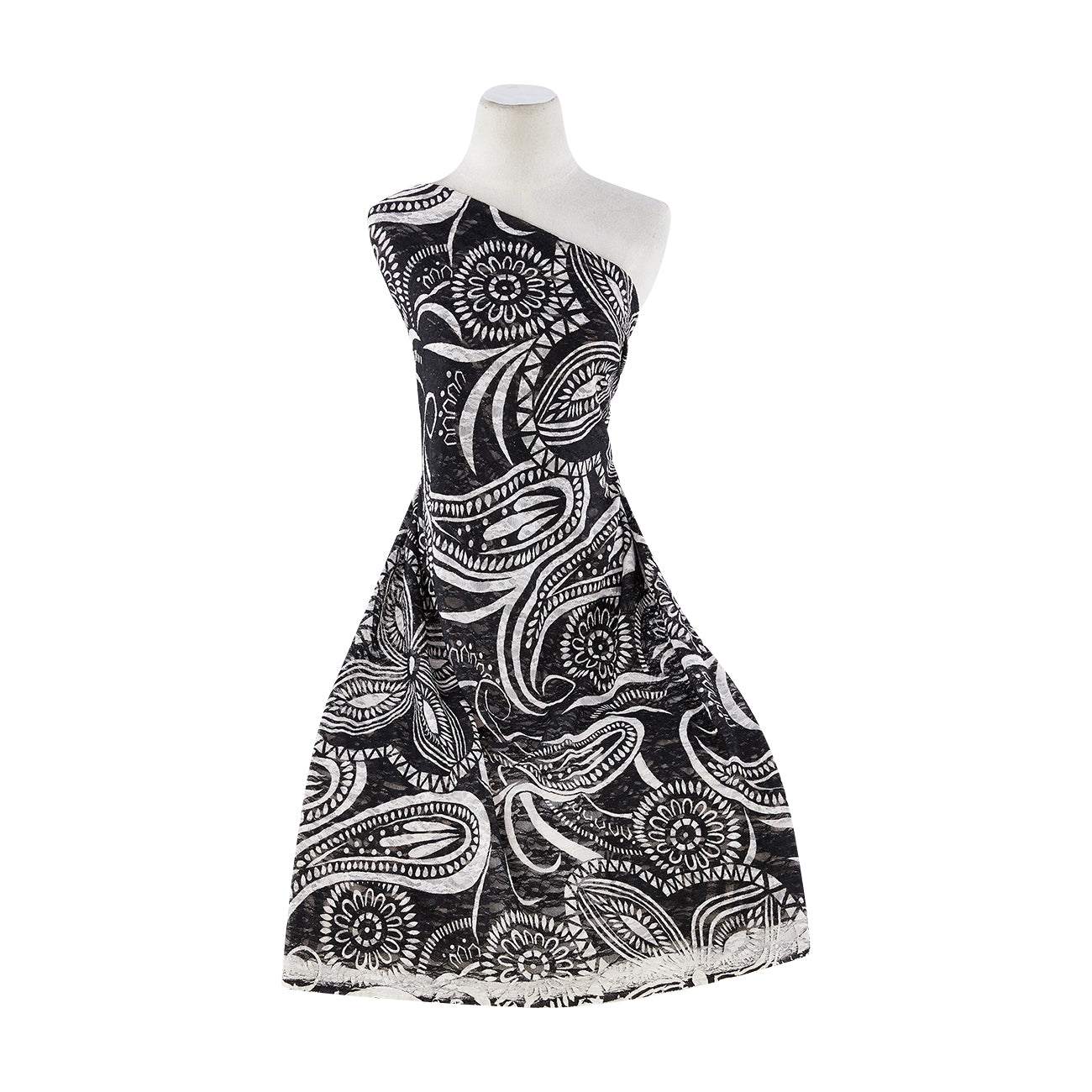
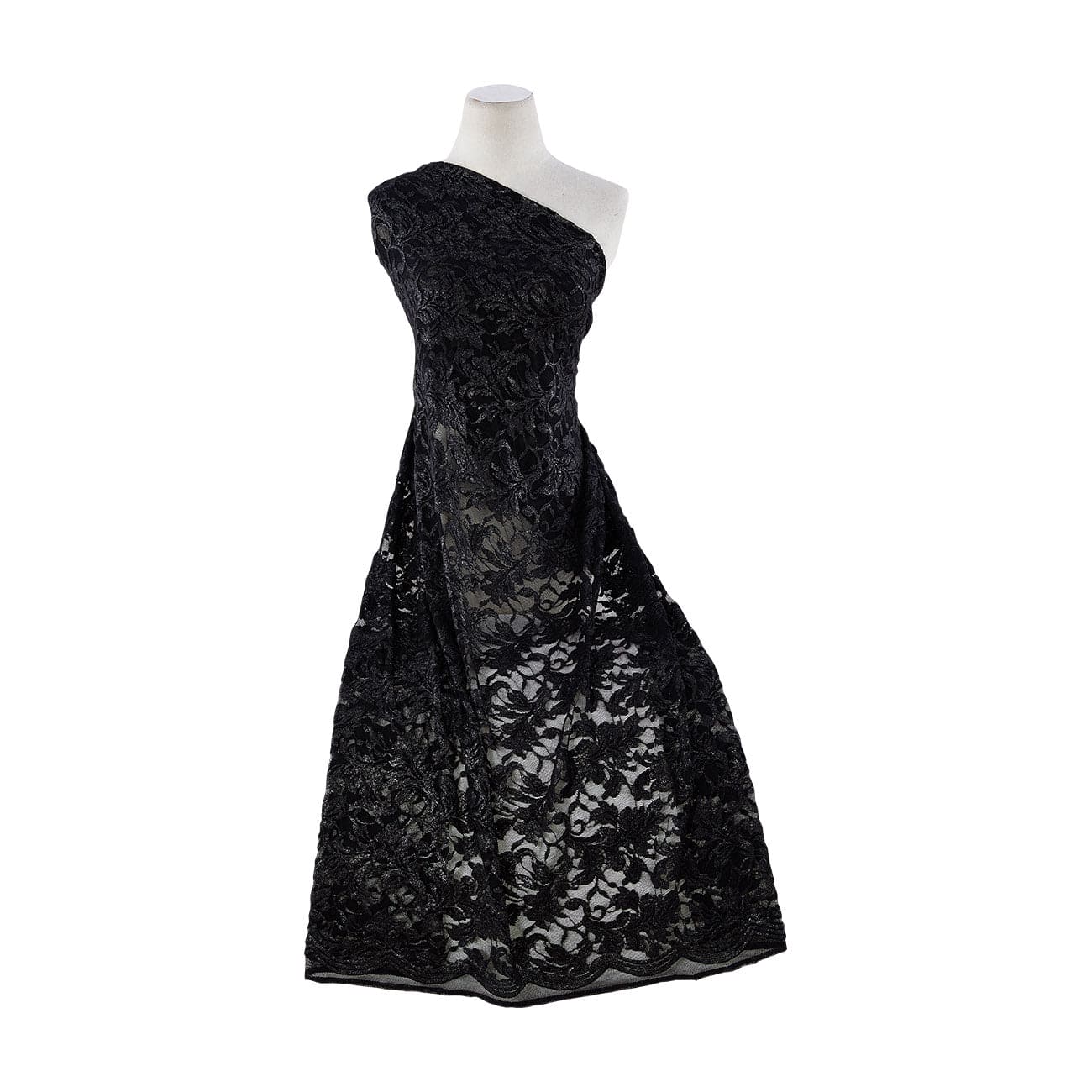
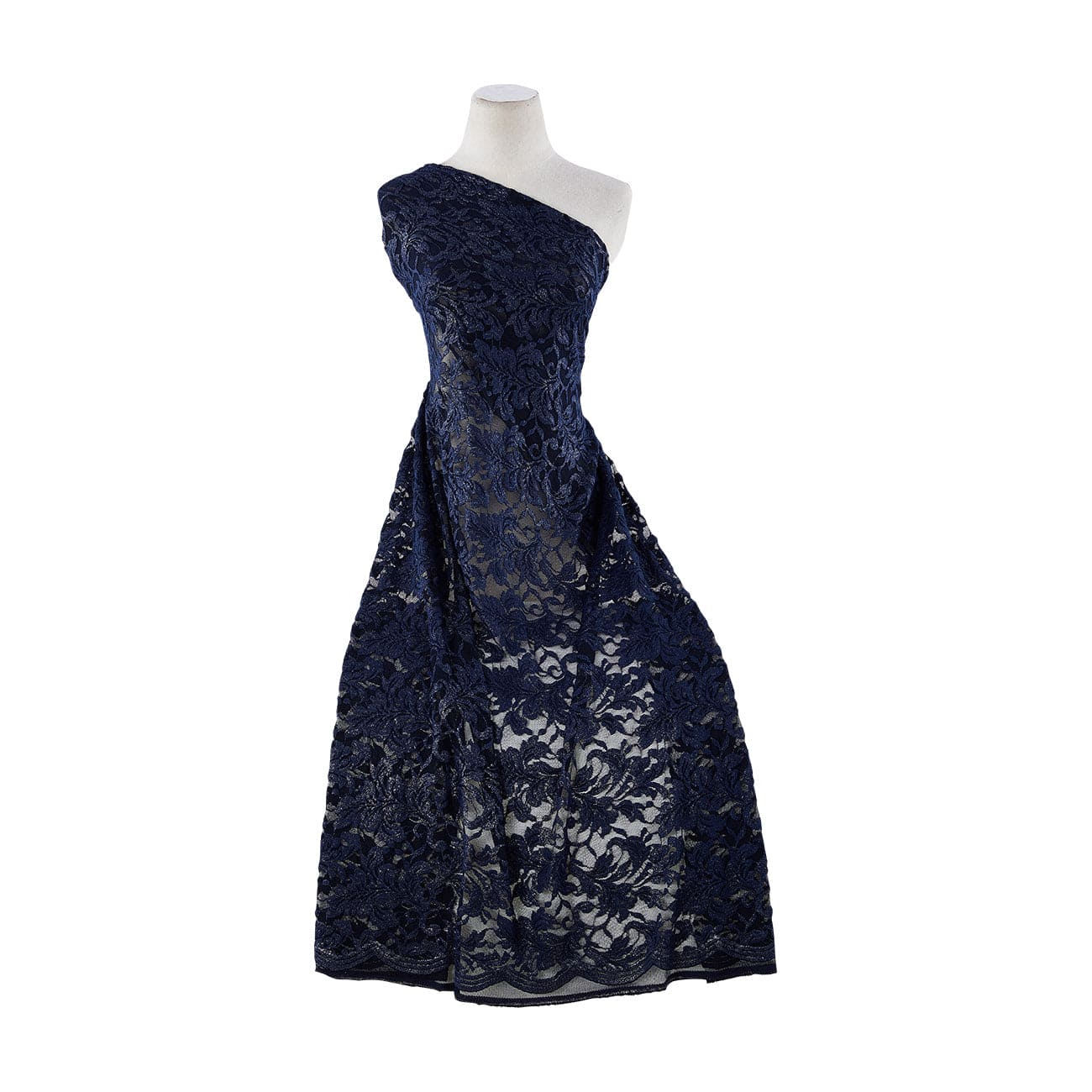
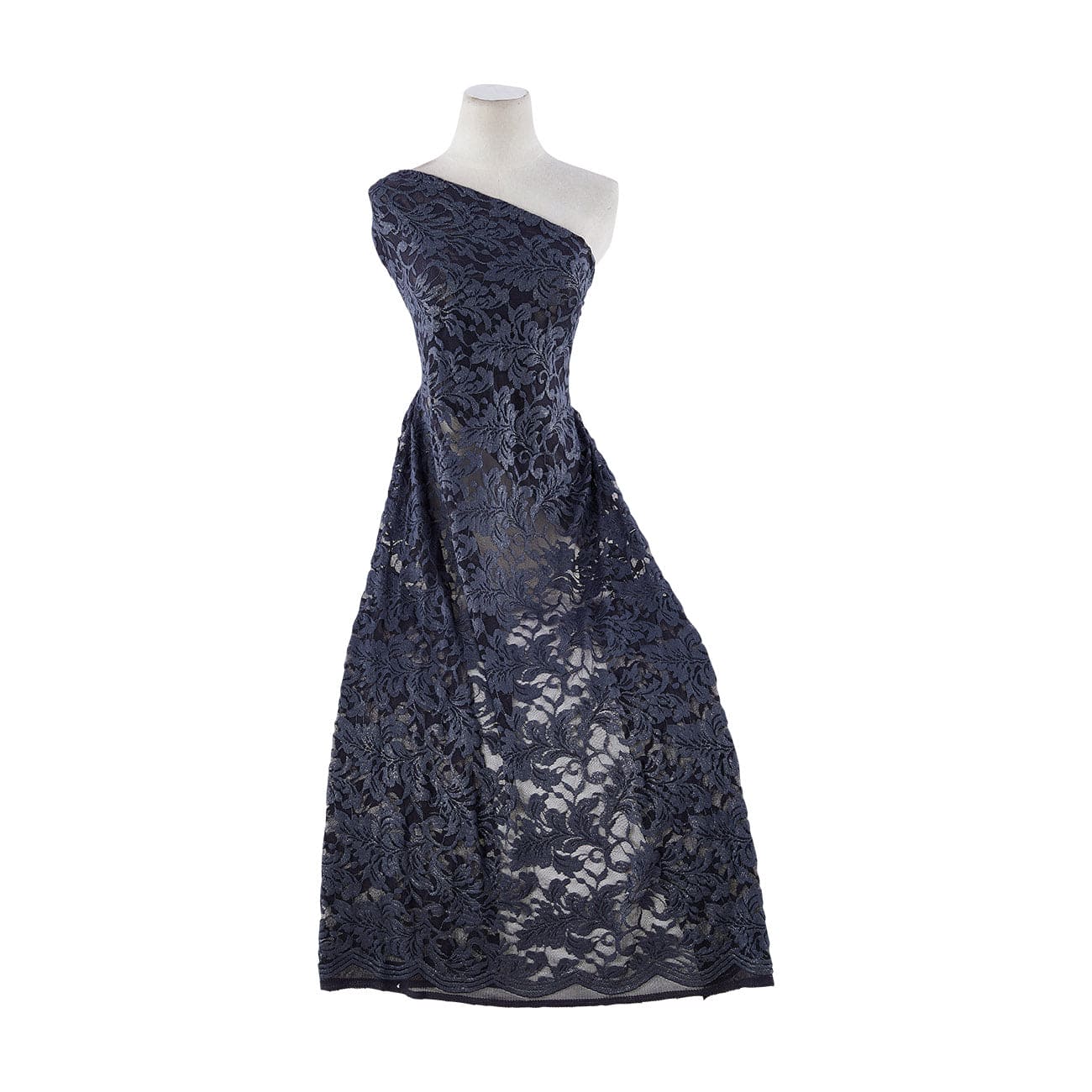
Each type of lace fabric has a distinct construction method, visual weight, and best-use application. Understanding the differences before you cut is the right call for avoiding costly mistakes, particularly on bridal and eveningwear projects where lace trim and overlay yardage adds up quickly.
Chantilly Lace
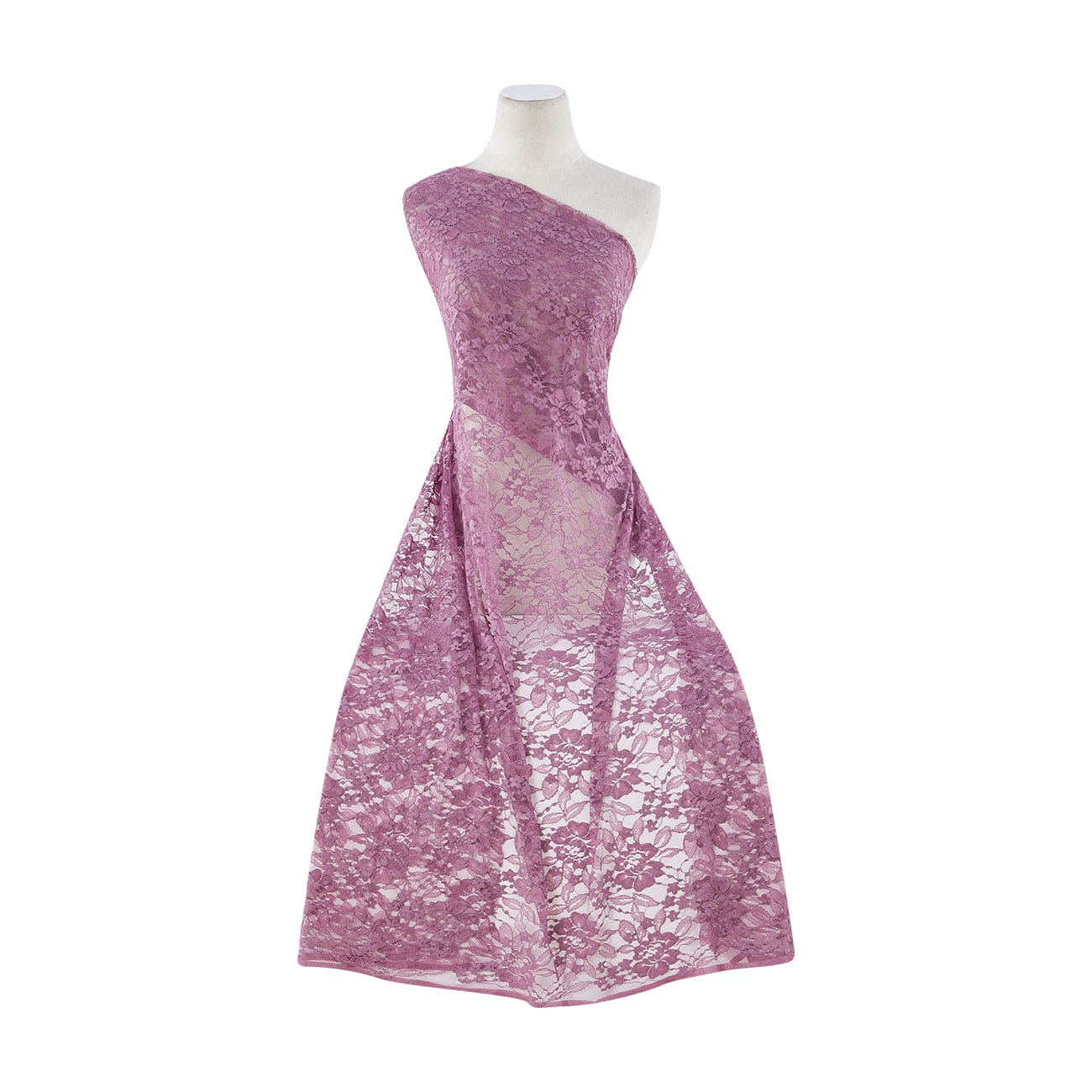
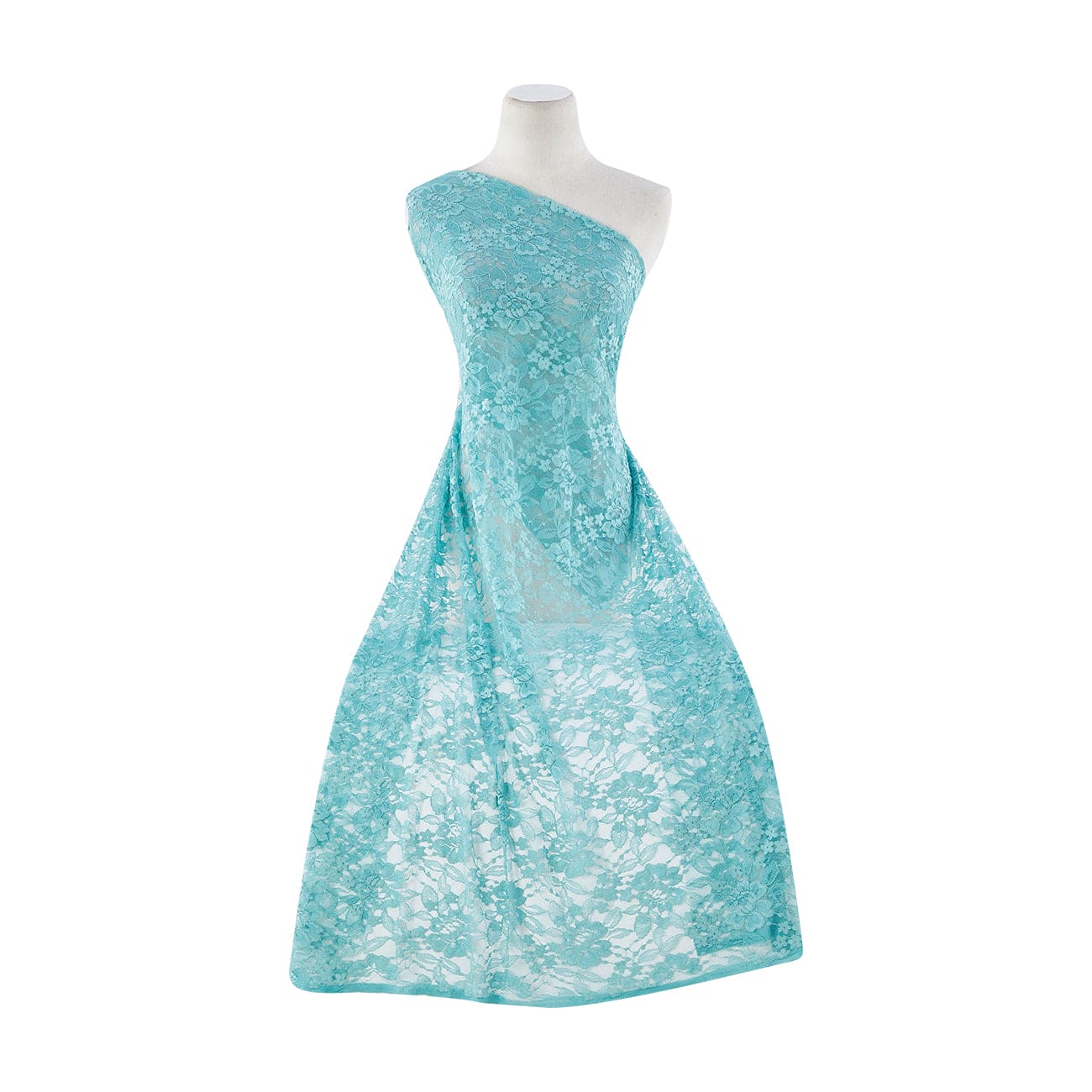
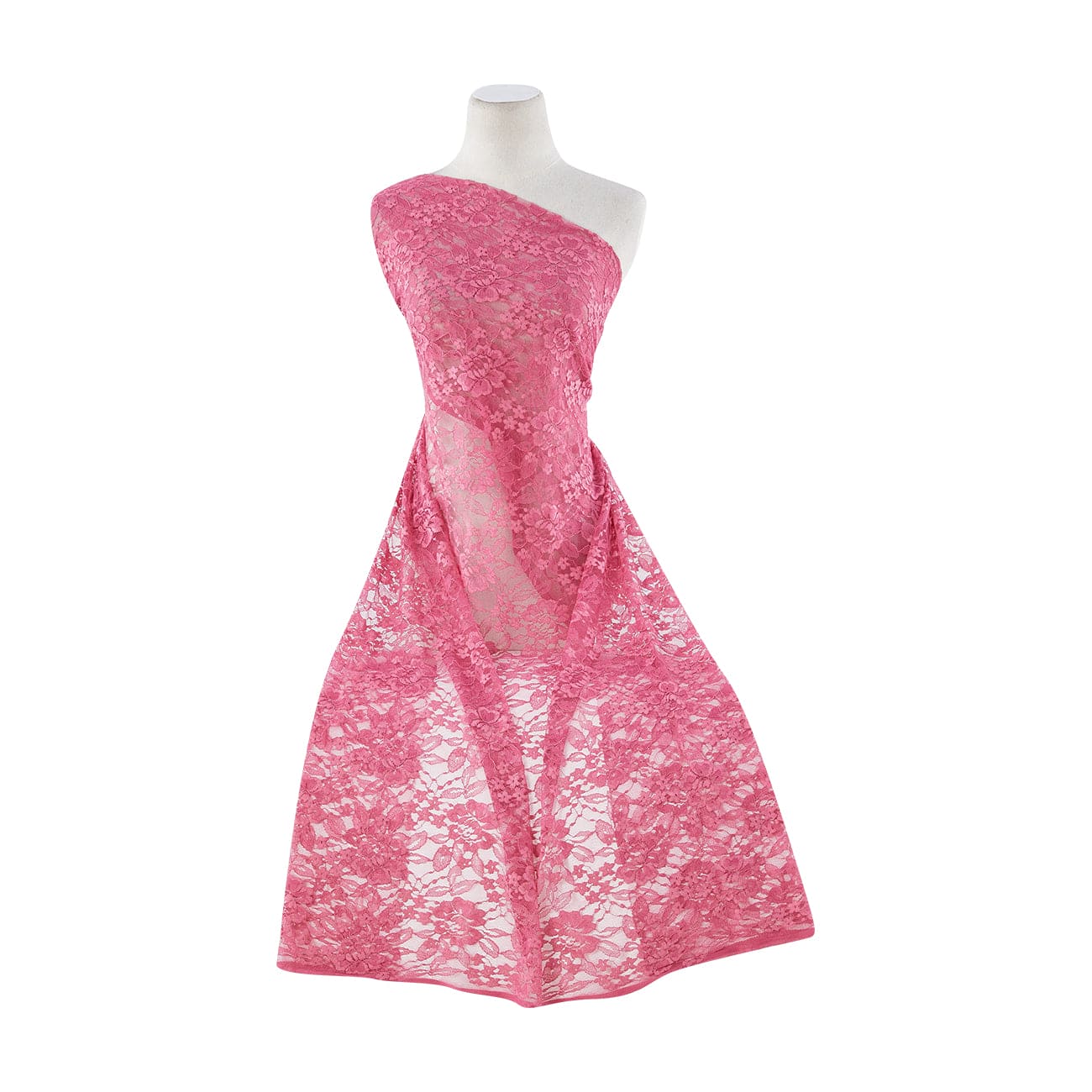
Chantilly lace is a fine bobbin lace built on a silk or nylon ground net, known for its delicate floral motifs and outlined design edges. The outlining thread, typically a heavier silk or nylon cord, traces each motif and gives Chantilly its characteristic definition without adding bulk. It is most associated with bridal veils, lingerie, and fine apparel where a sheer, lightweight hand is required.
Alençon Lace
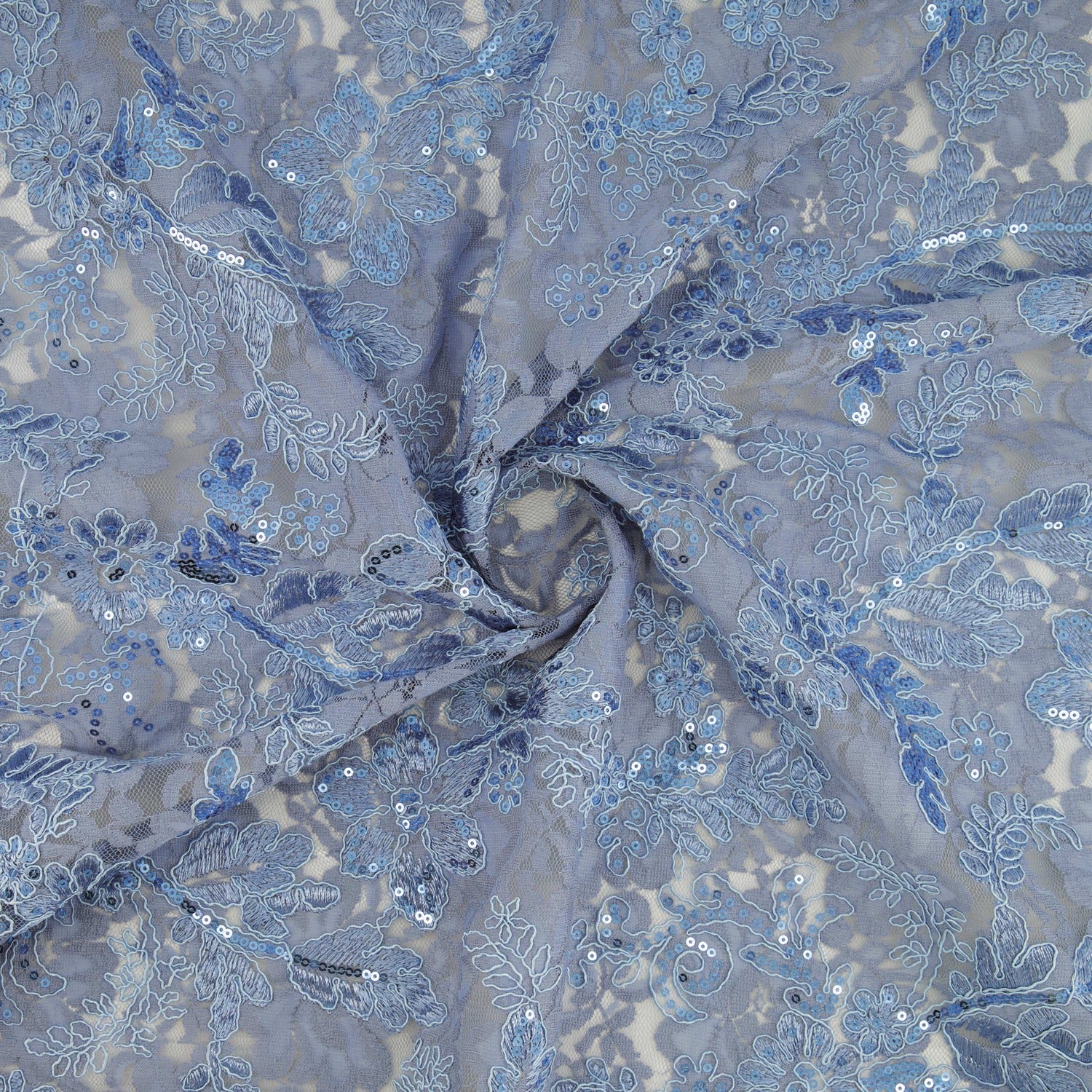
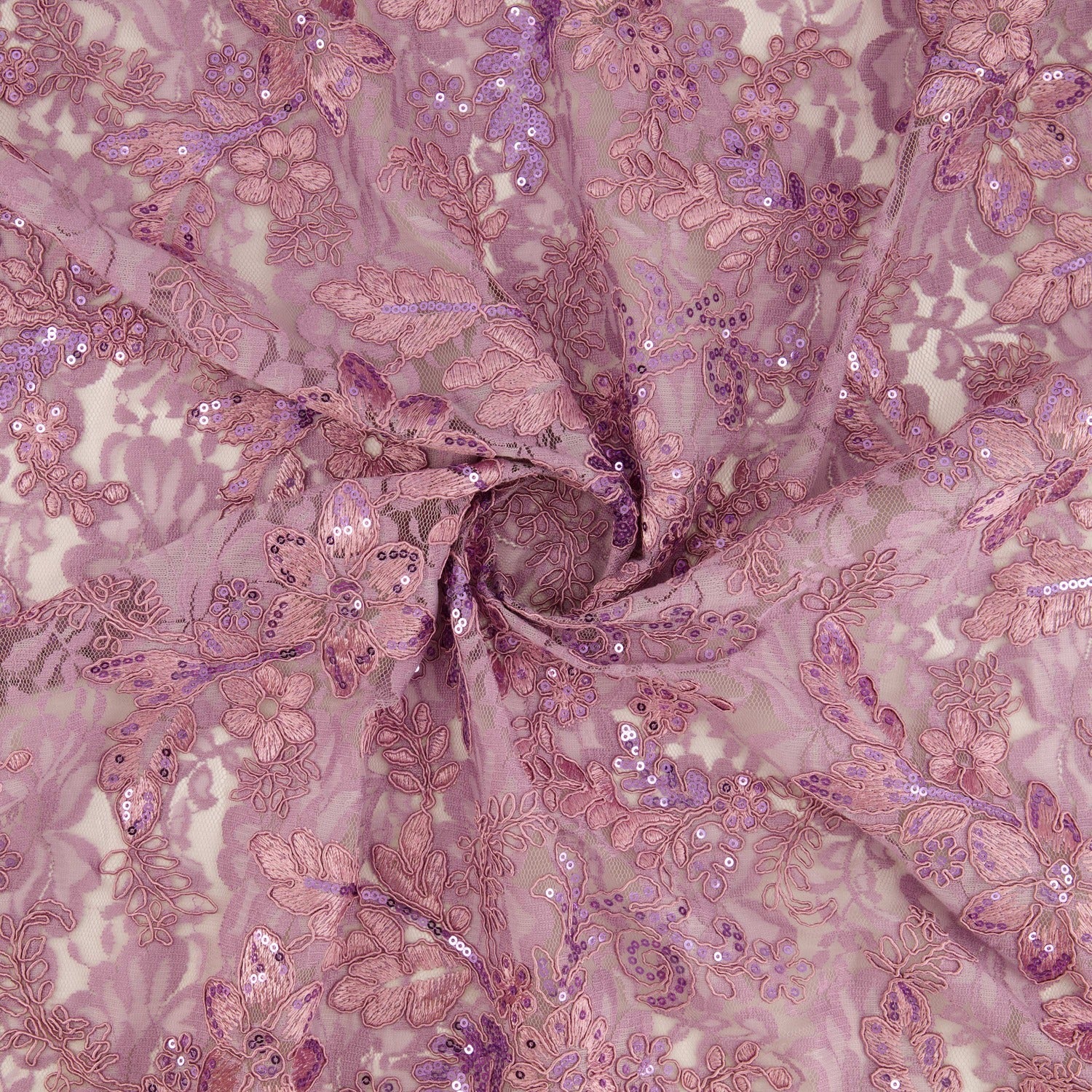
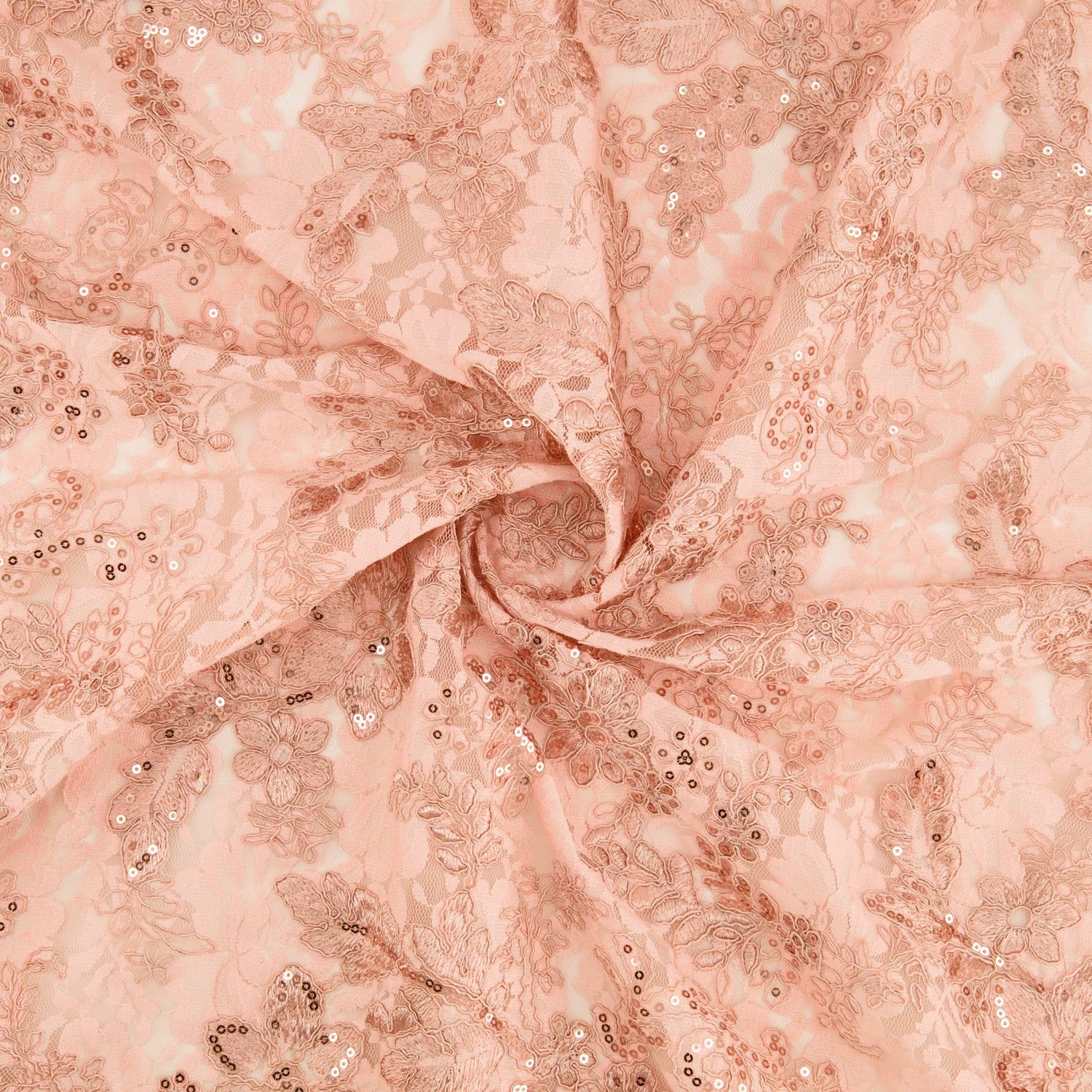
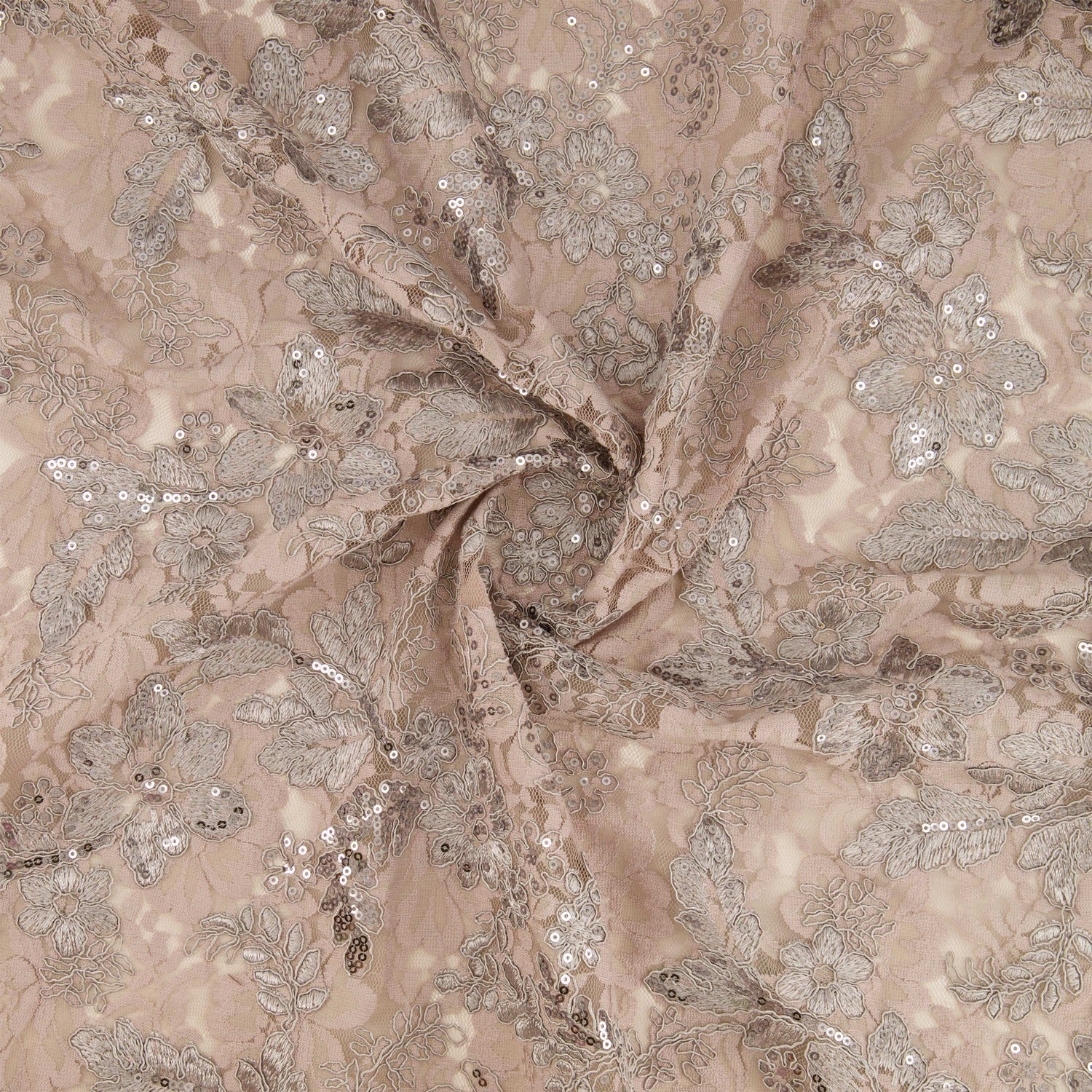
Alençon lace is a needle lace with a fine net ground and a raised cord that outlines each motif. Often called “the queen of lace,” it is more structured than Chantilly and carries a subtle dimensional quality from the corded outlining. Alençon is a common choice for couture bridal gowns where defined motifs and a refined hand are both priorities.
Guipure Lace
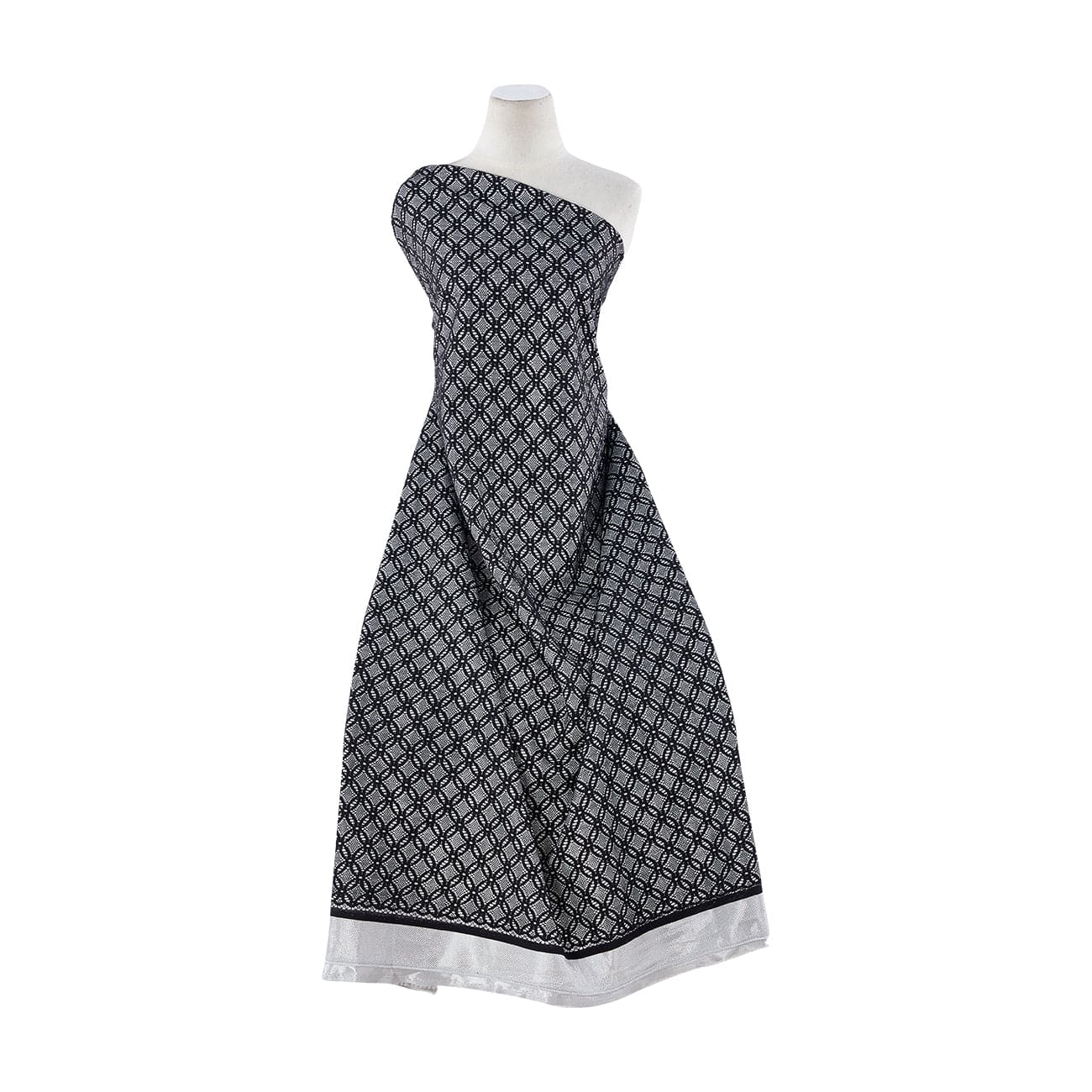
Guipure lace has no net ground. Instead, motifs are connected by bars called brides rather than a mesh background, which gives guipure a heavier, more structured character than most other lace types. It holds its shape well without underlining, making it a strong pick for overlay dresses, structured bodices, and any application where the lace needs to be self-supporting.
Venetian Lace
Venetian lace is needle-made with raised, three-dimensional floral or scroll motifs. Historically produced in Venice, it shares some visual weight with guipure but achieves its dimensionality through needle-worked relief rather than bar connections. It is used in formal and bridal applications where surface texture and visual depth are part of the design intent.
Stretch Lace
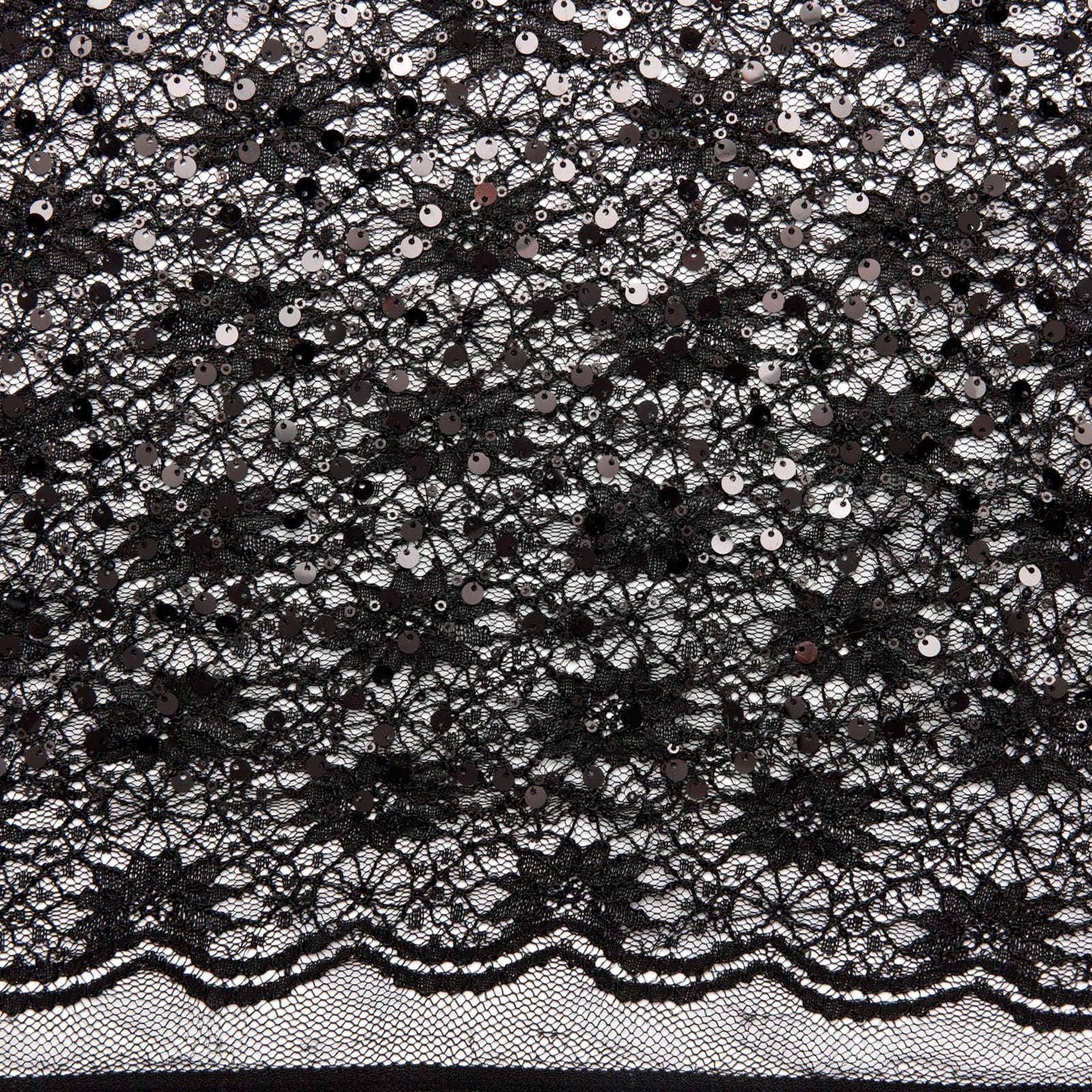
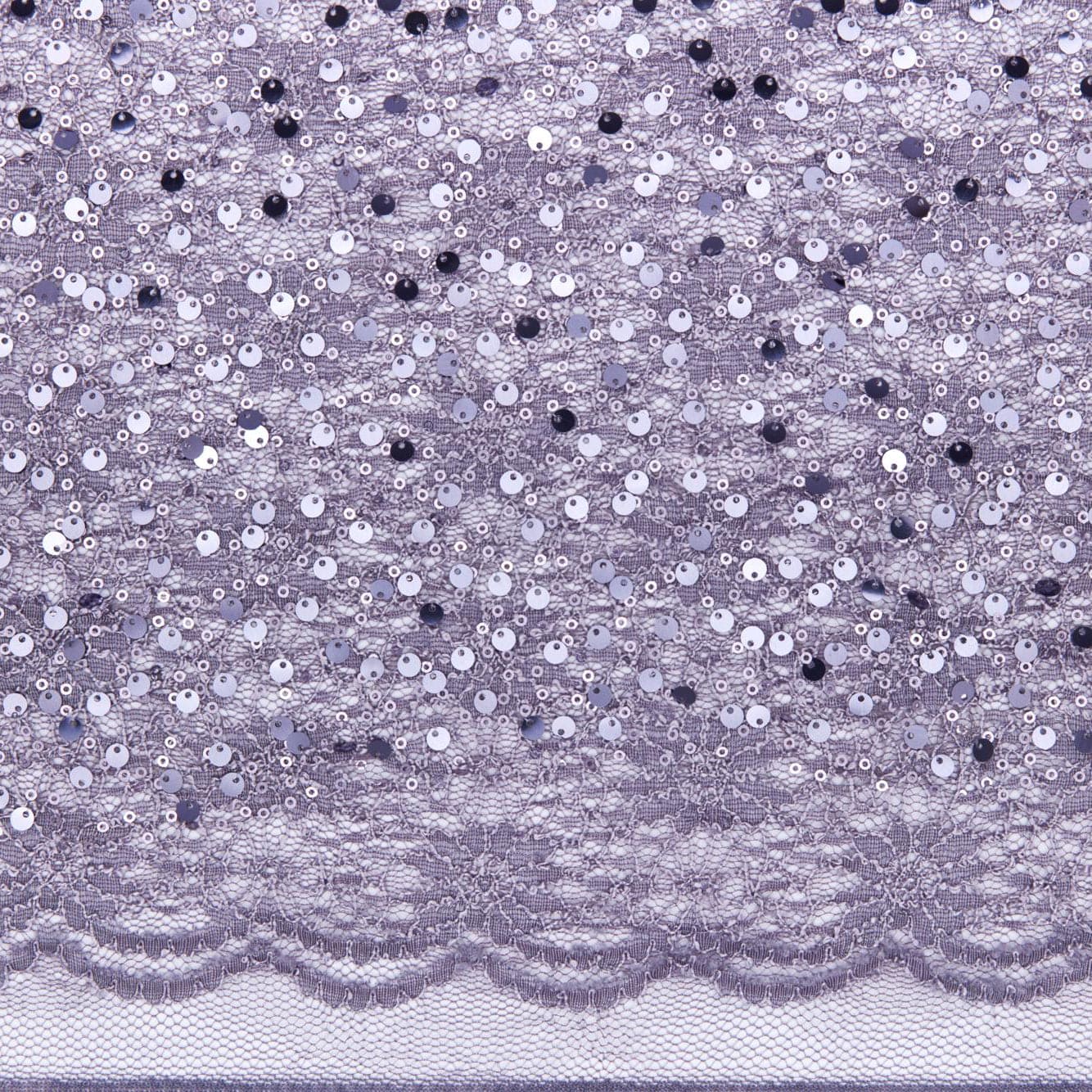
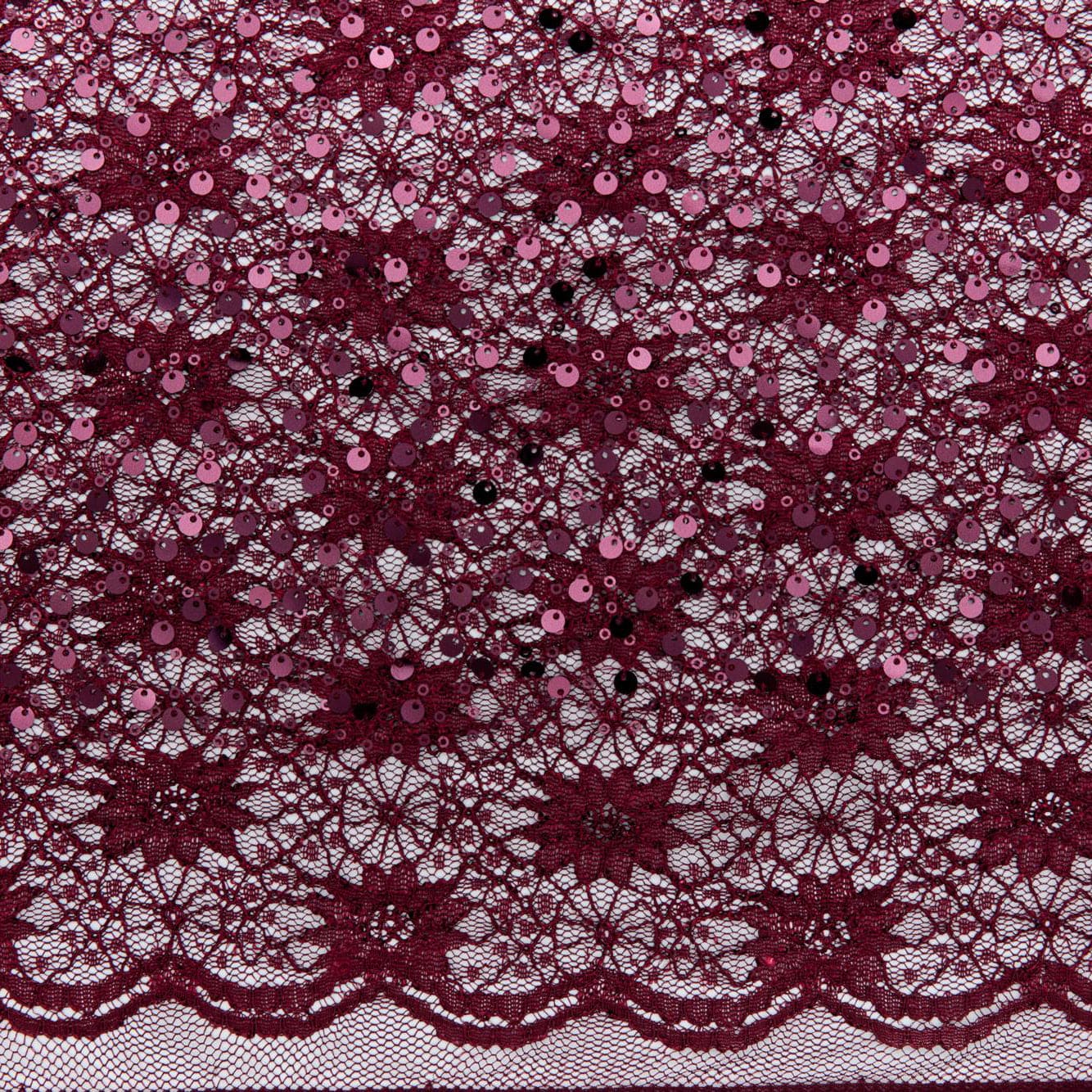
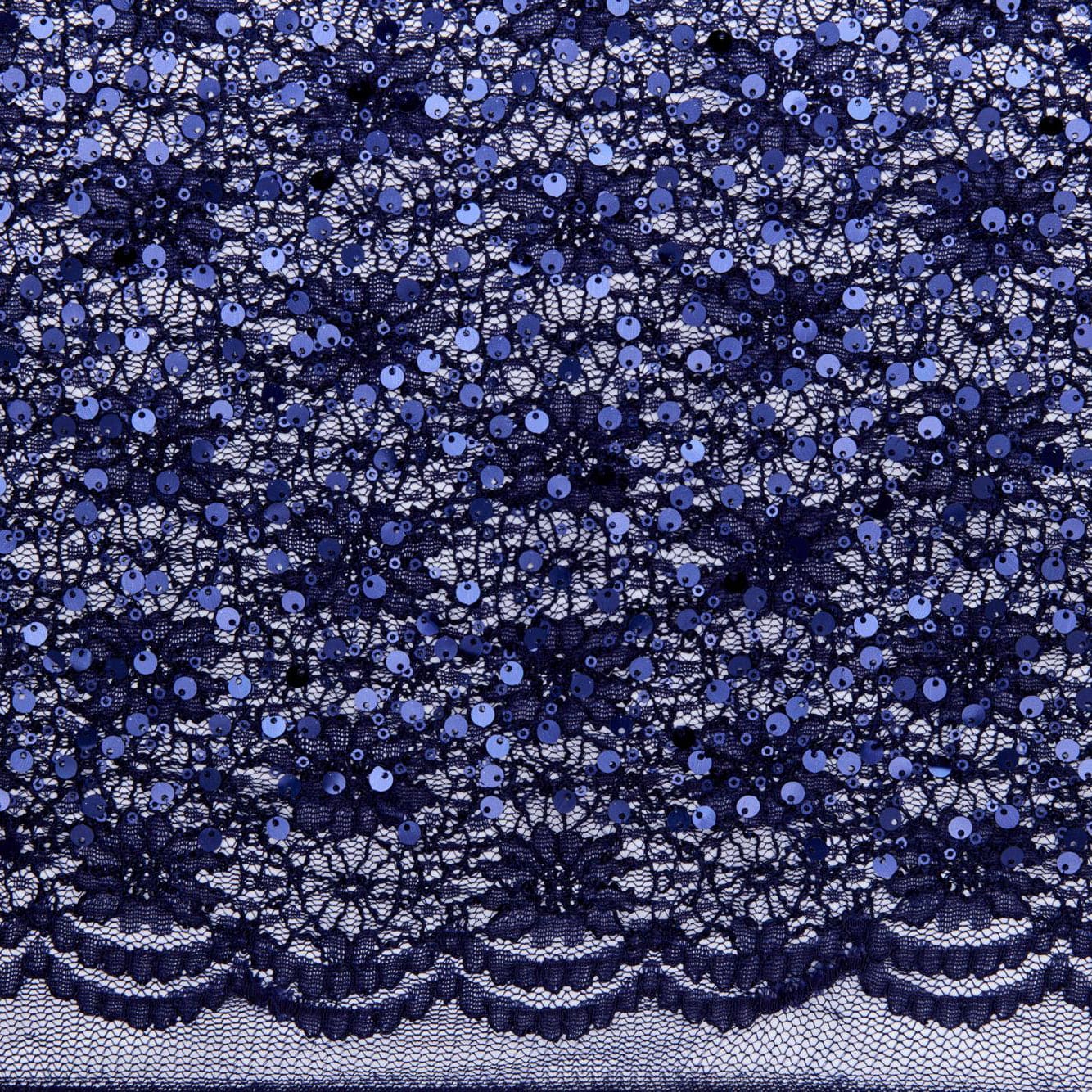
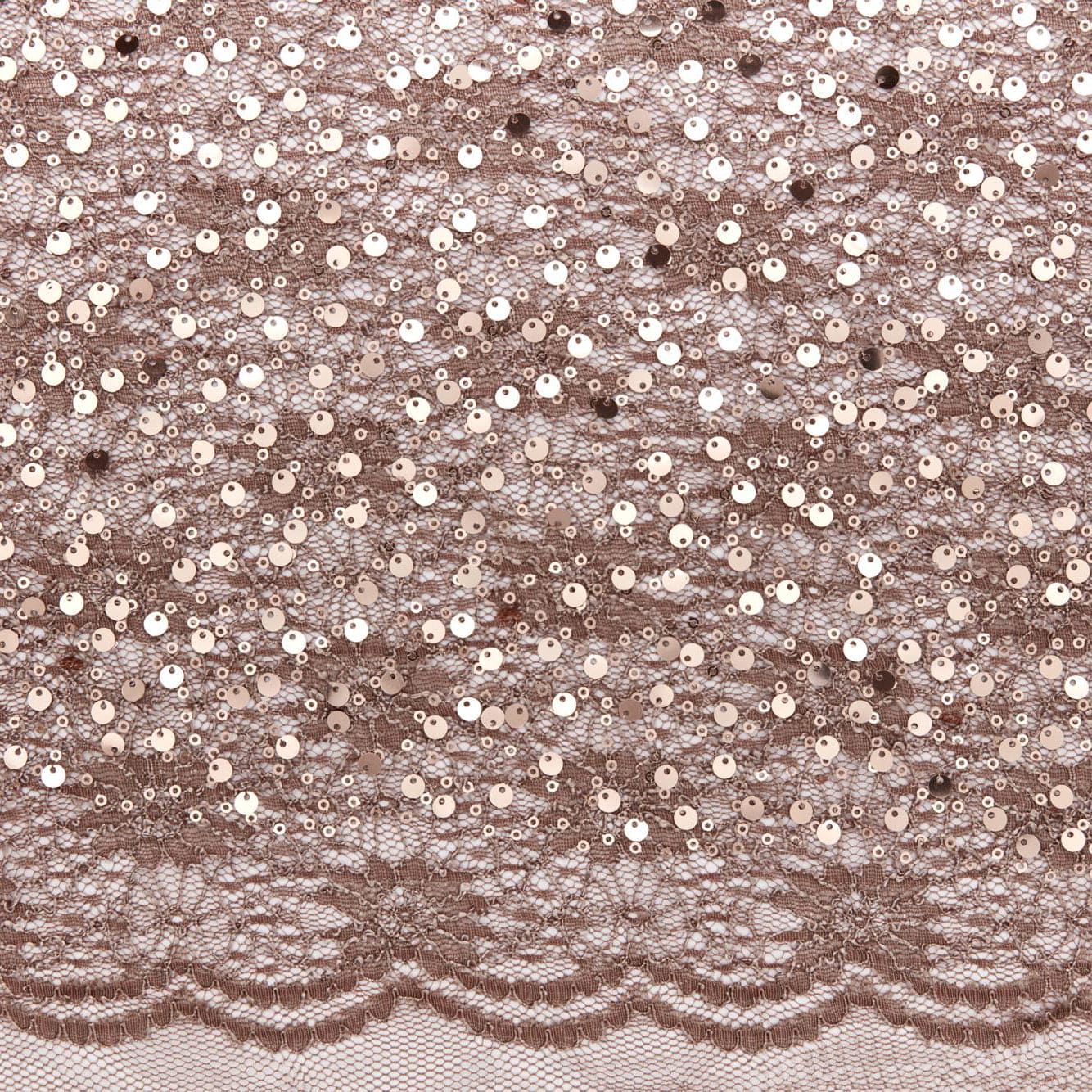
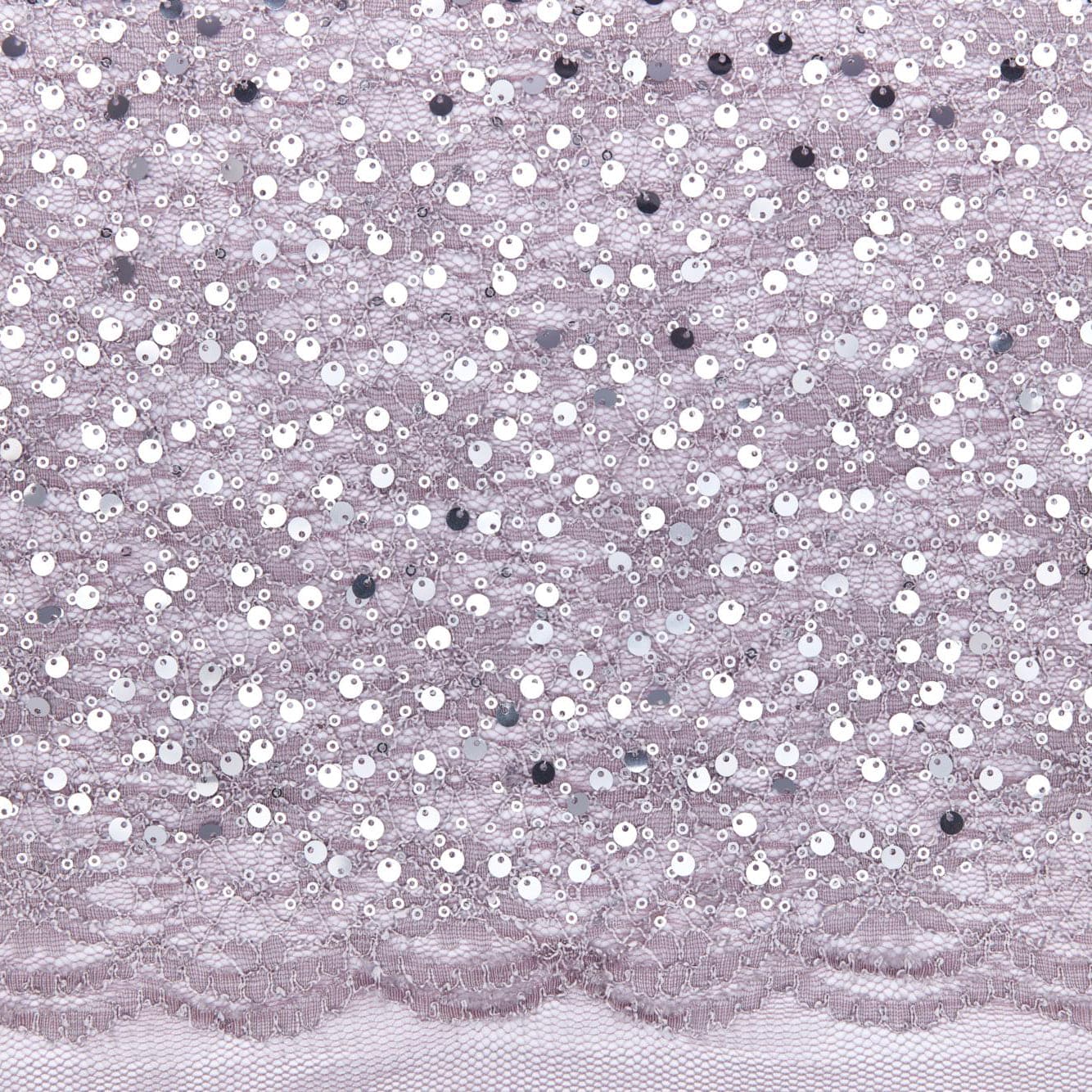
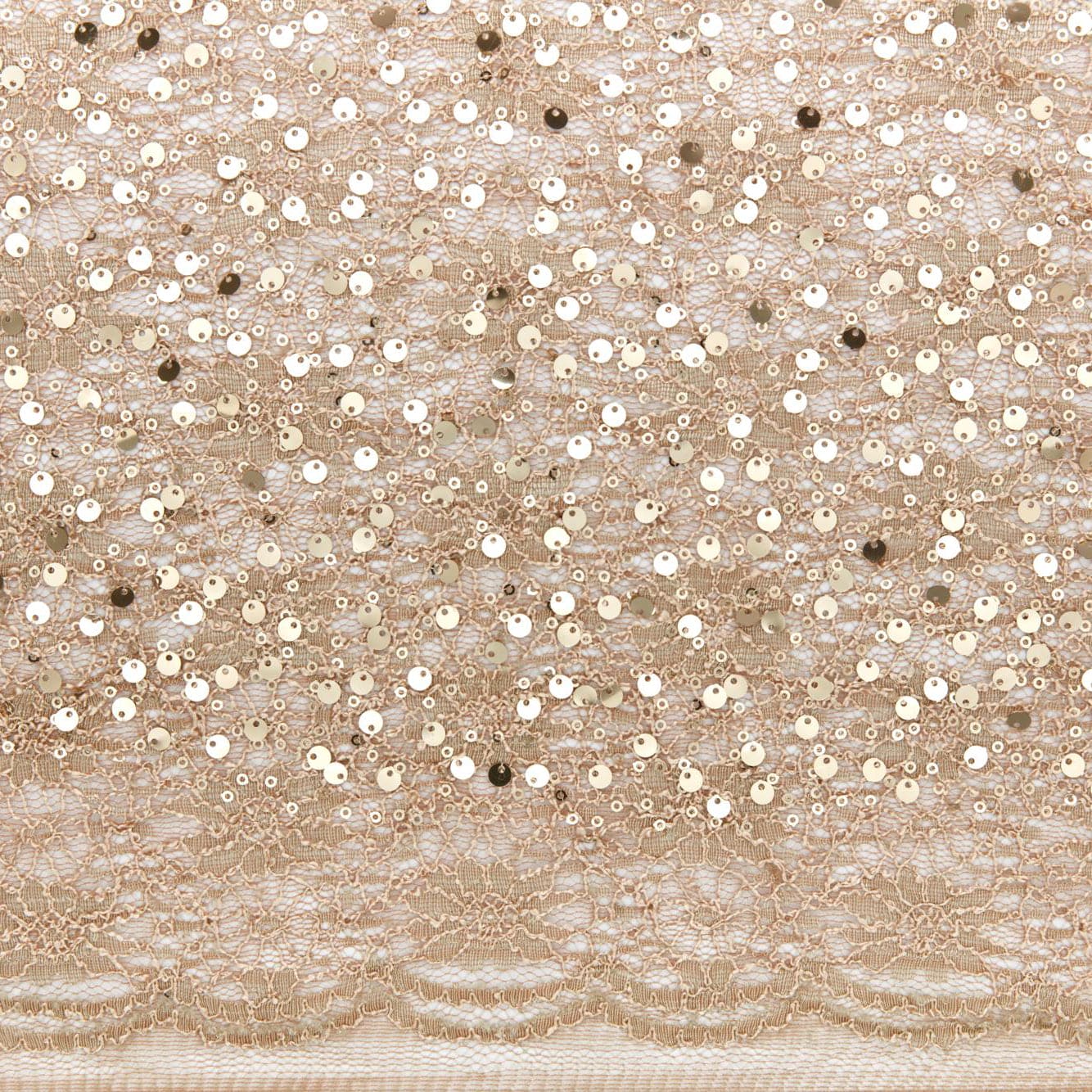
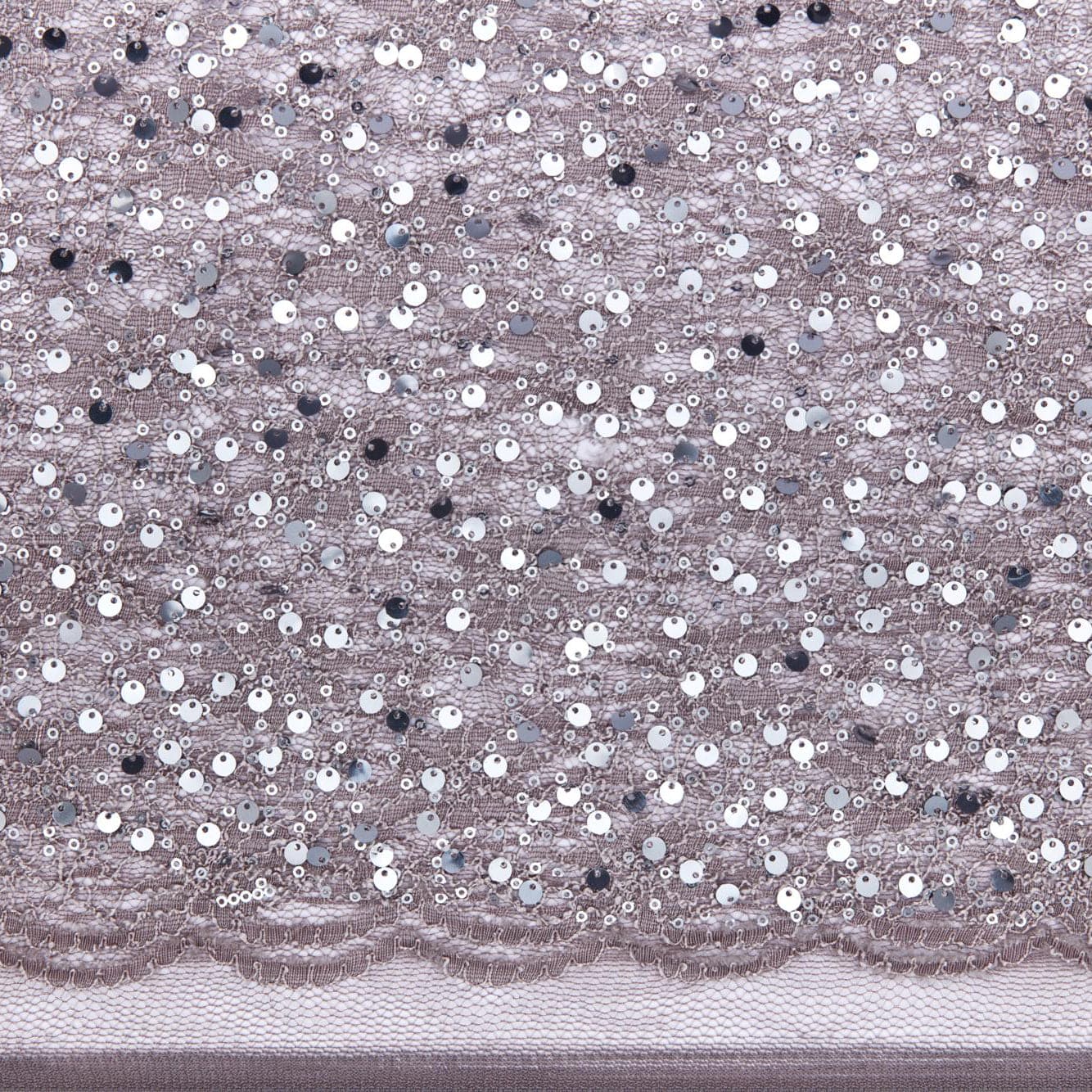
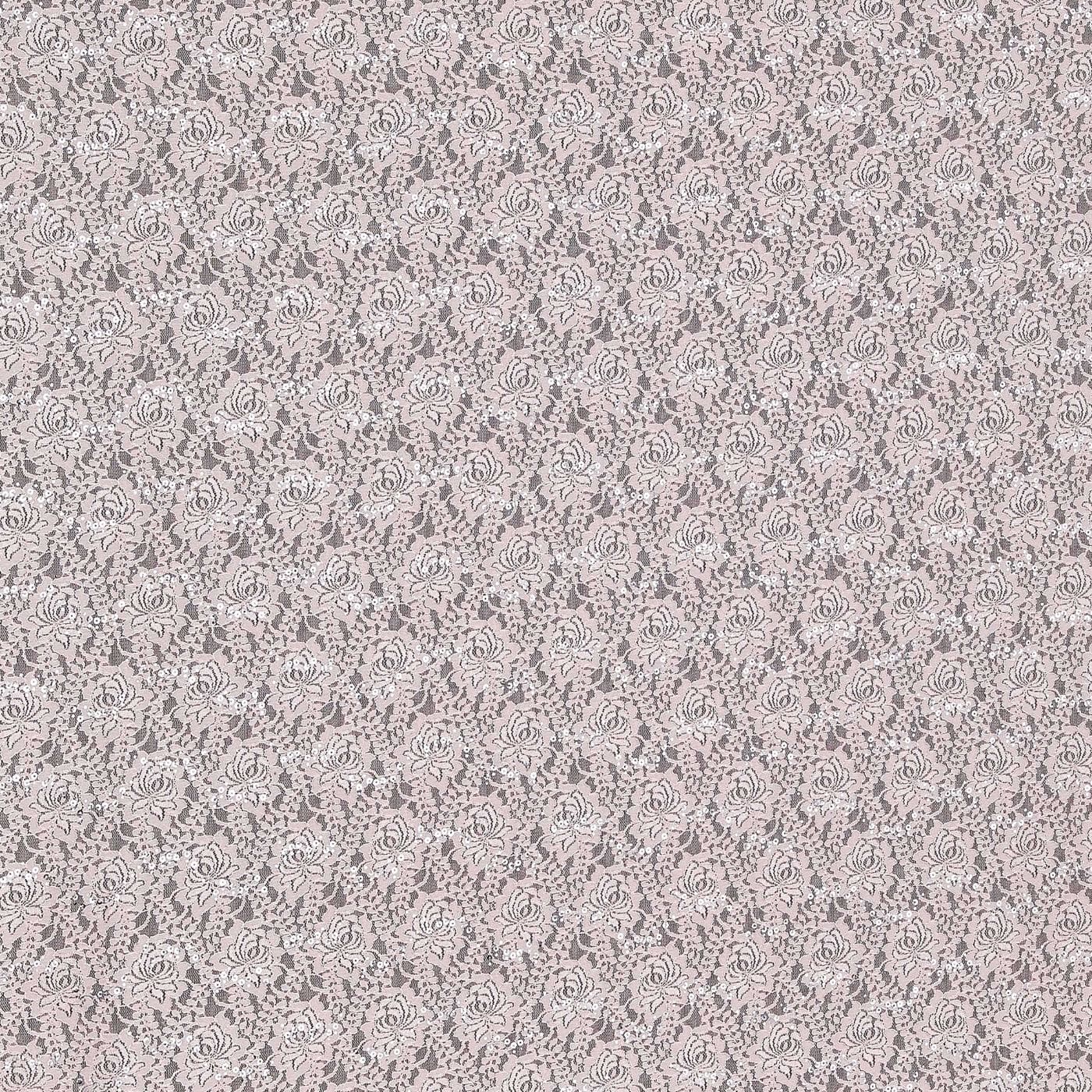
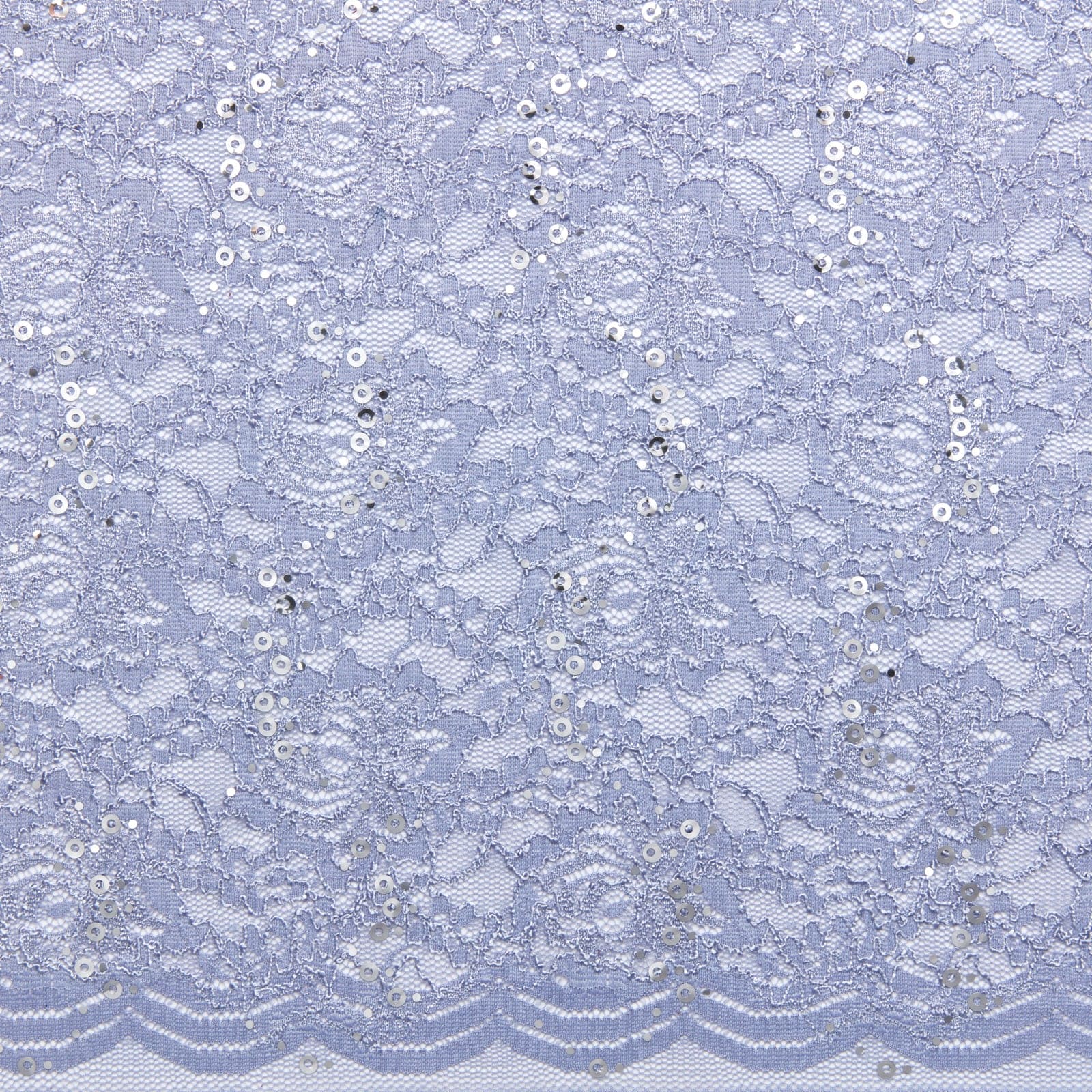
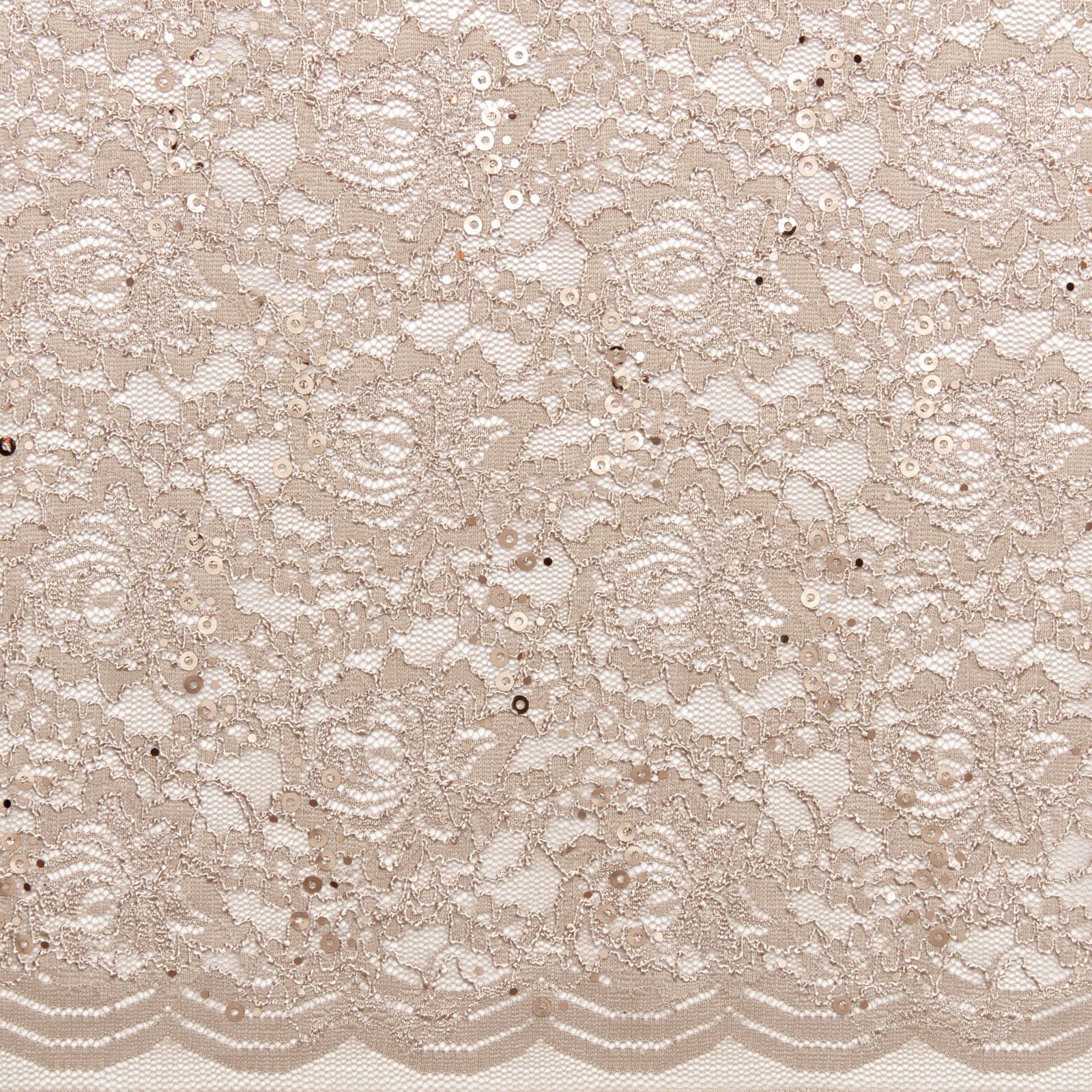
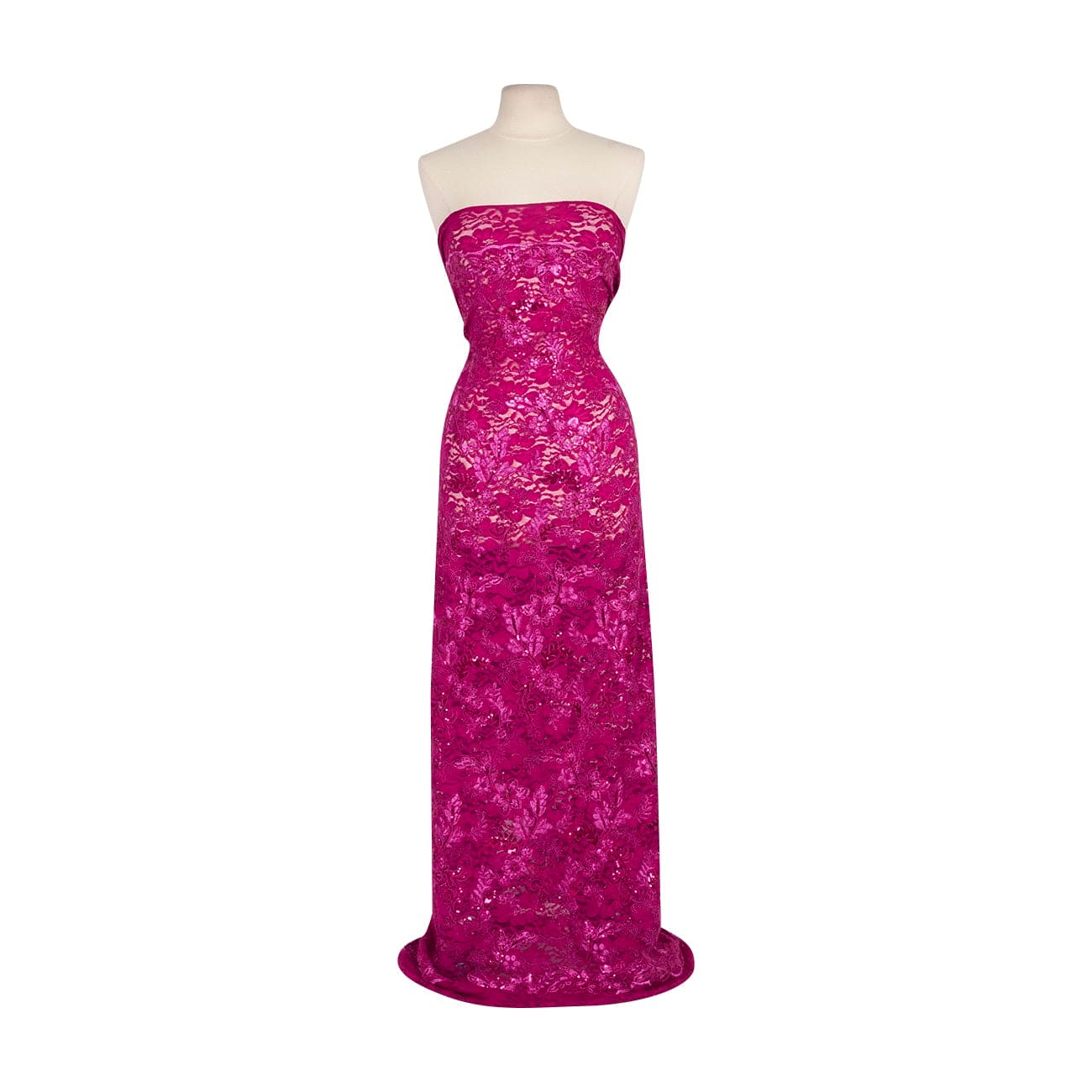
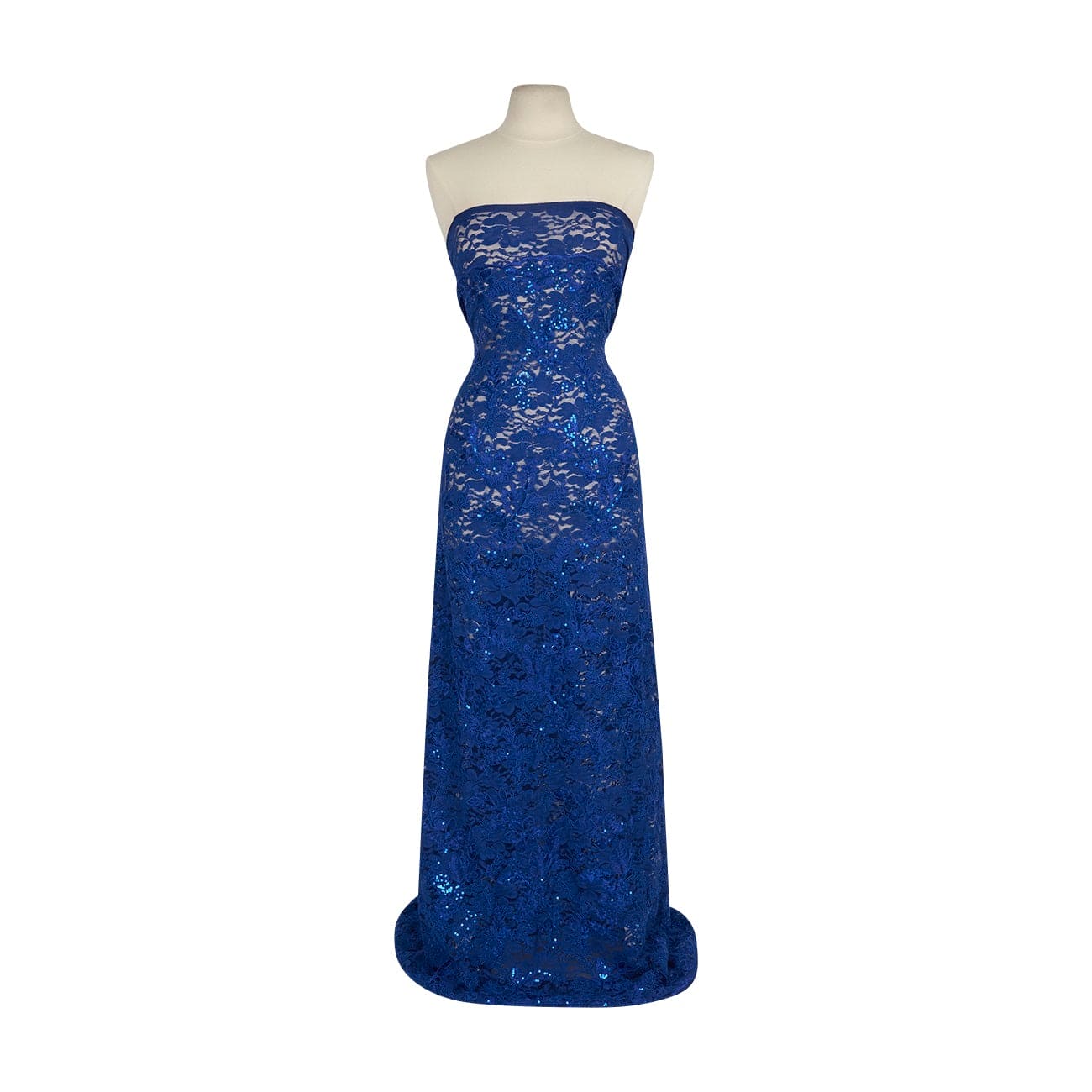
Stretch lace uses a knit construction with elastane or spandex content, typically ranging from 5 to 20% elastane, which gives it four-way stretch recovery and the ability to conform closely to the body. It is the right call for lingerie, bodysuits, dancewear, and any fitted garment that needs to move with the wearer. The TONAL STRETCH LACE and SEQUIN STRETCH LACE in this collection are good starting points for stretch applications.
Crochet Lace
Crochet lace is made by interlocking loops with a hook, producing an open, textured structure with a handmade aesthetic. It tends to be heavier than bobbin or needle lace and has a more relaxed, bohemian character. It is a common choice for summer dresses, coverups, and home décor. The SYDNEY CROCHET COTTON LACE is a useful reference point for this construction in cotton fiber.
Corded Lace
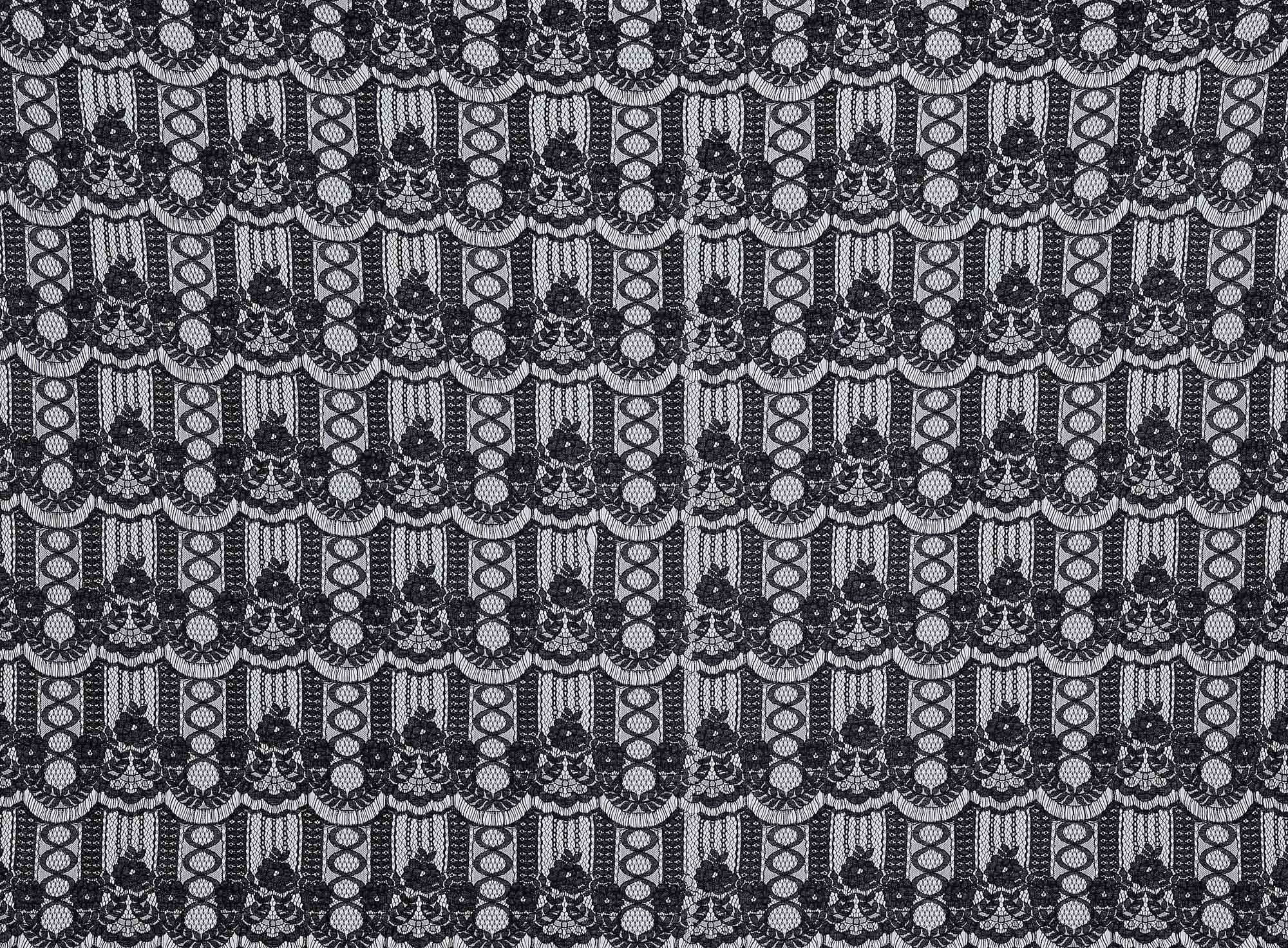
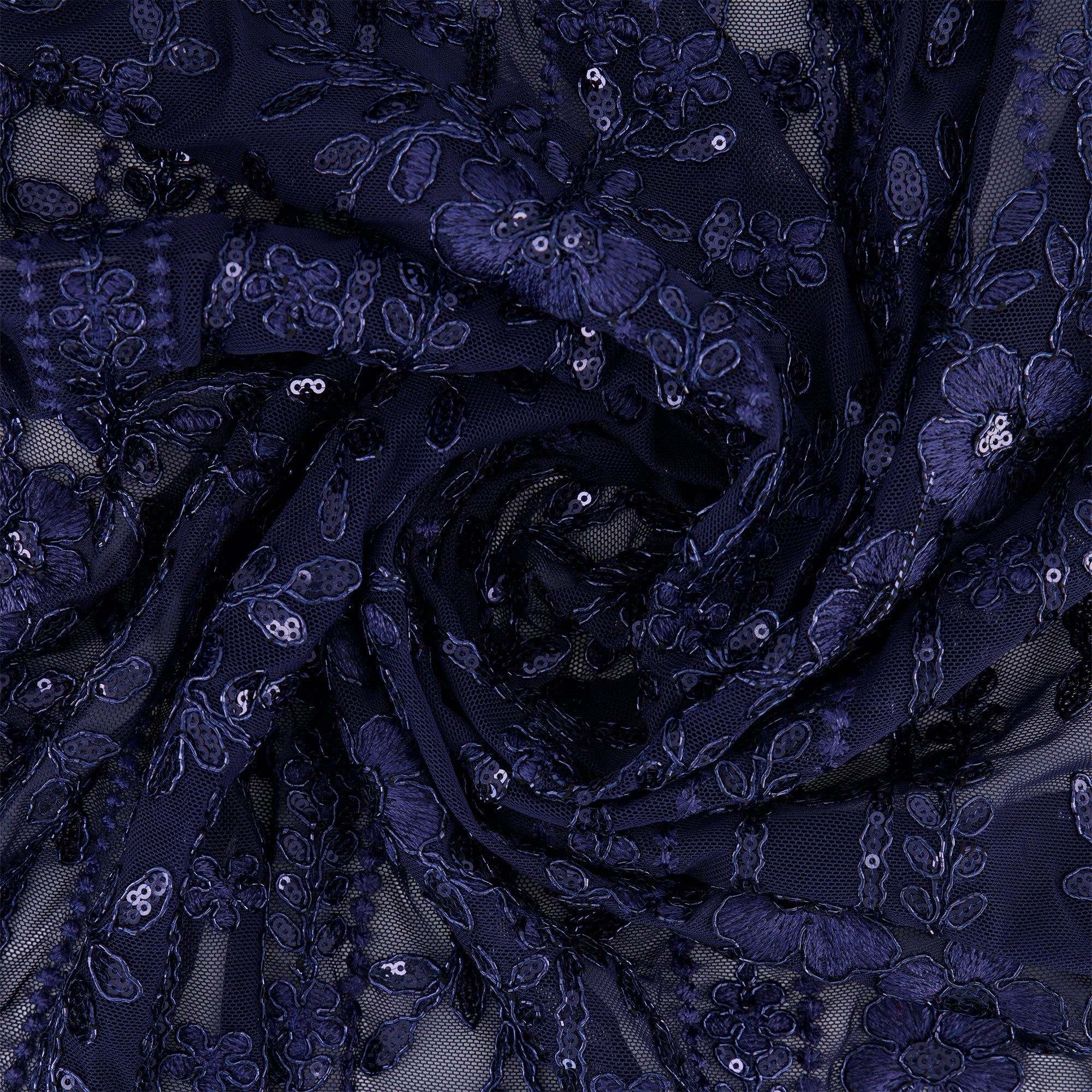
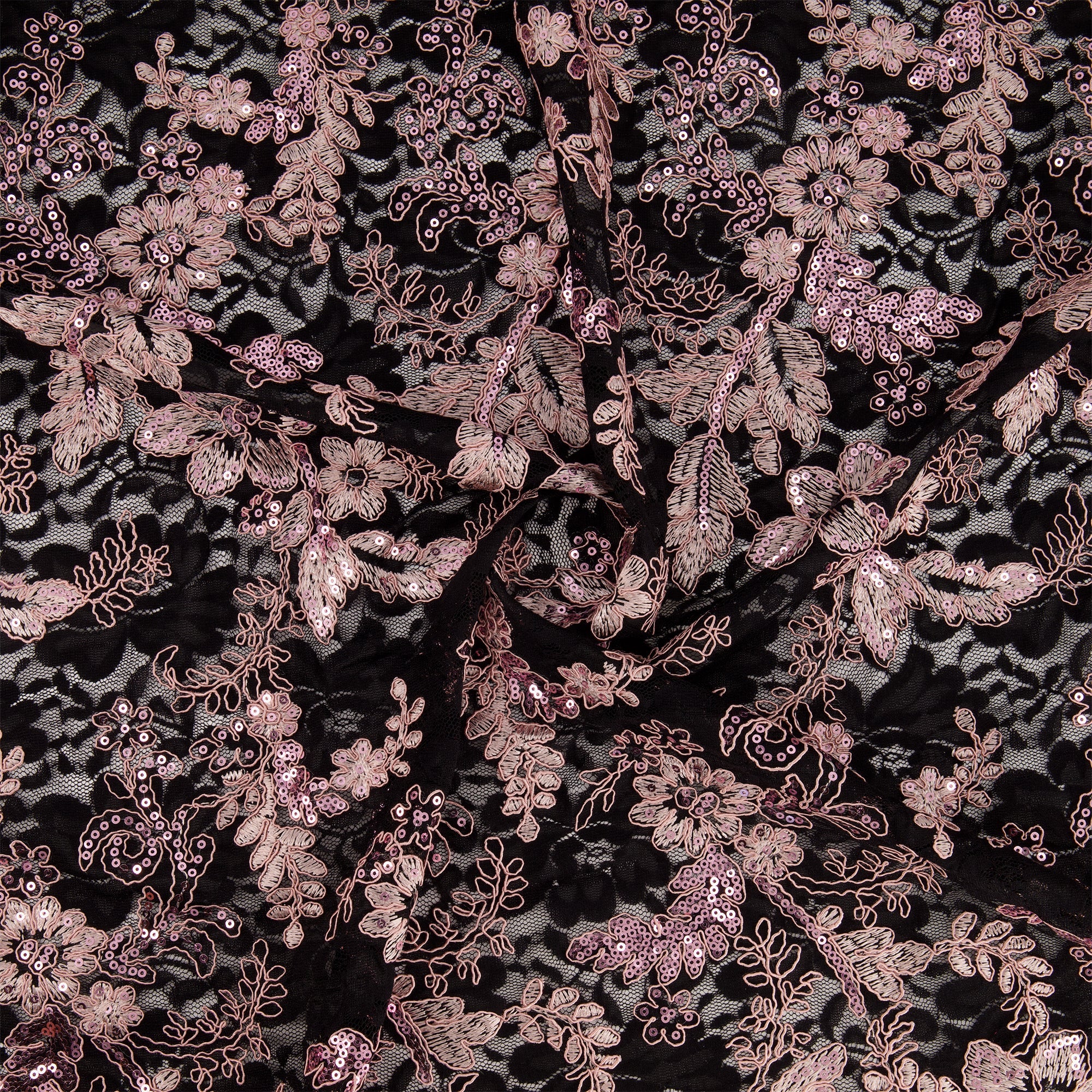
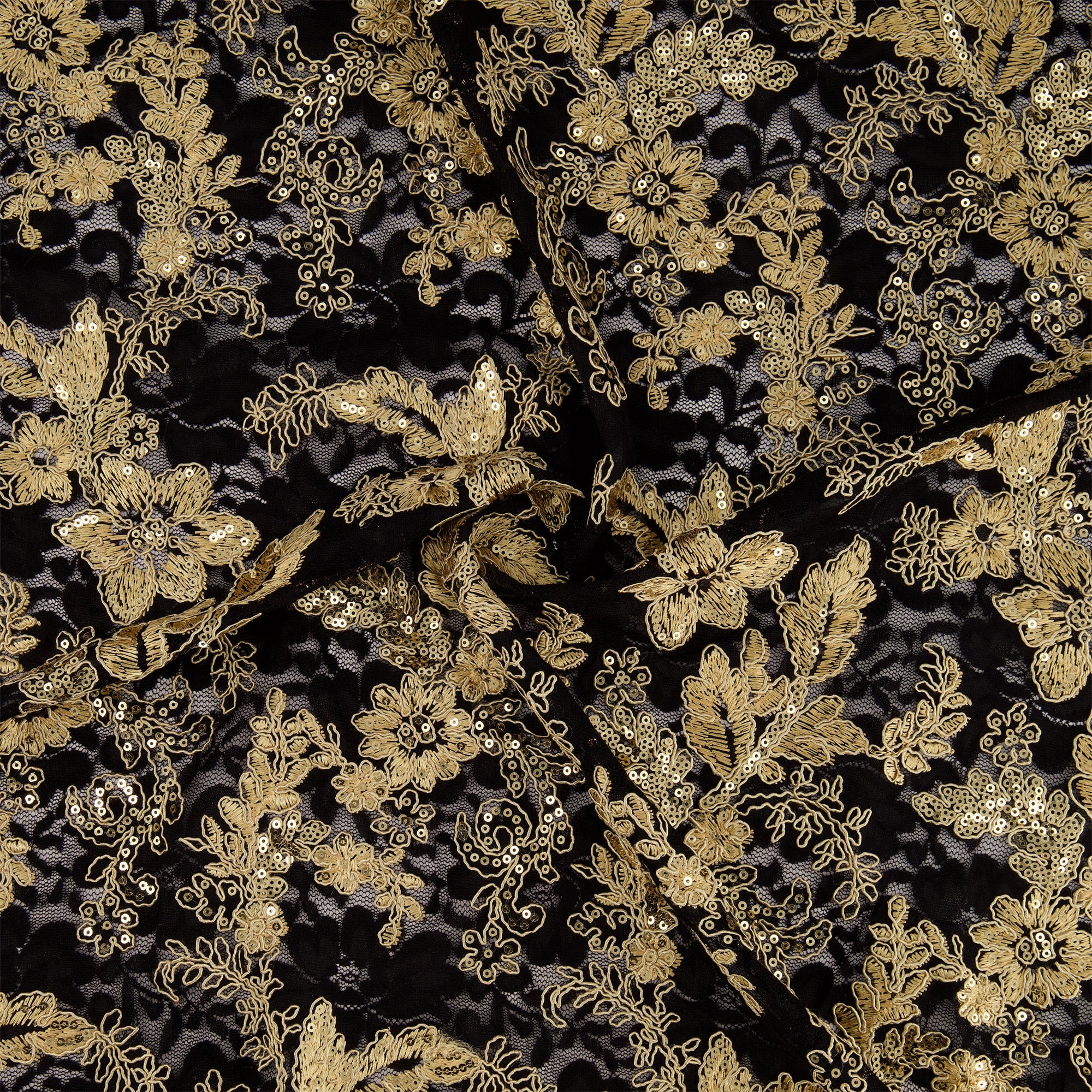
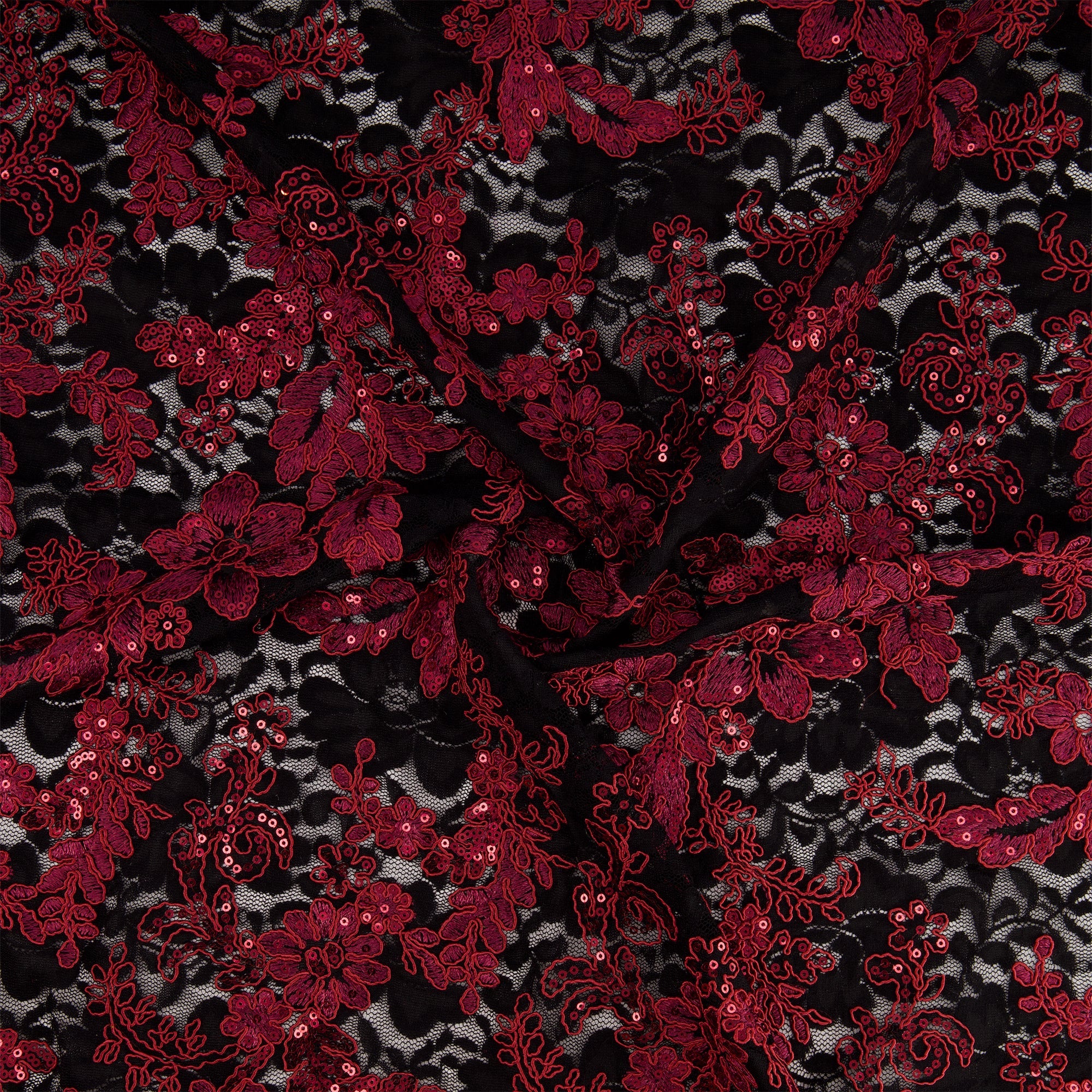
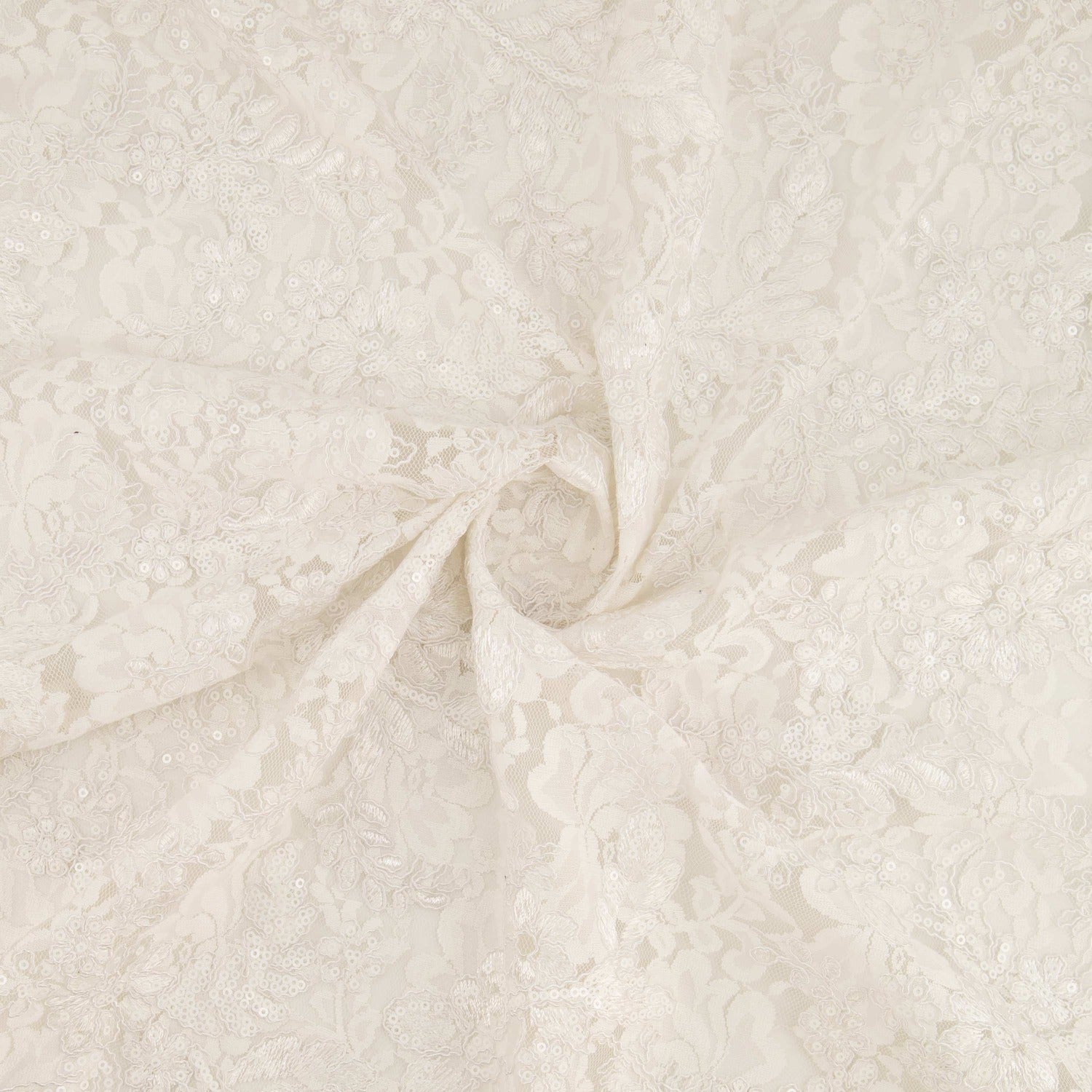
Corded lace features raised cord or soutache stitching that outlines motifs for a dimensional effect, adding visual weight without significantly increasing fabric weight. The JOANNA CORDED EMBROIDERY LACE MESH and EVERLY CORDED FLORAL LACE both demonstrate this construction well.
Eyelash Lace
Eyelash lace has a fringe or “lash” edge along one or both selvages, created by loose weft threads that extend beyond the fabric body. It is used primarily for lingerie trim and hem details where a soft, feathered edge is part of the design. The CAEN RIBBON SOUTACHE EYELASH LACE combines soutache ribbon detailing with the eyelash edge construction.
Lace on Mesh
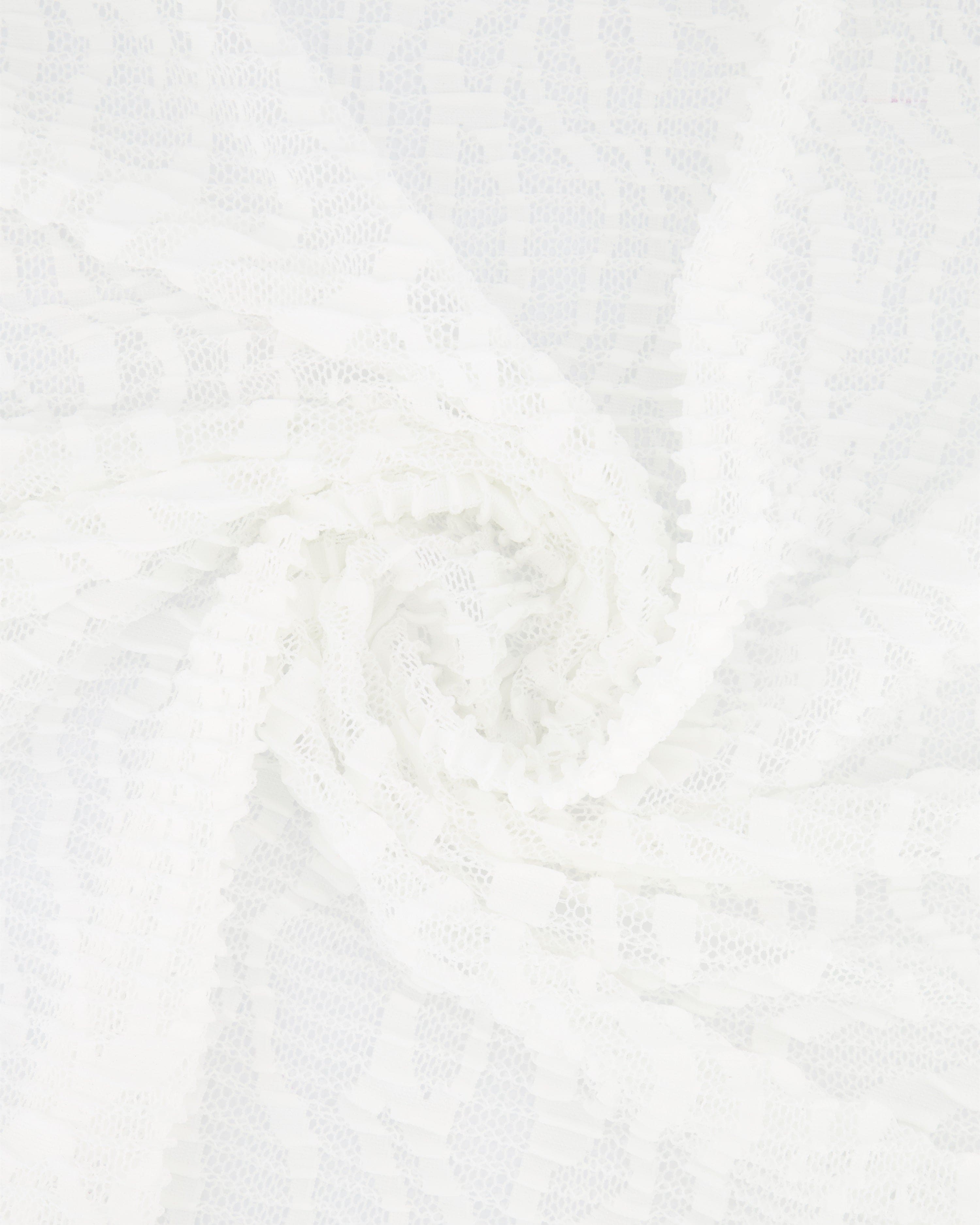
Lace on mesh places lace motifs onto or into a sheer mesh base, adding structure and coverage while maintaining transparency. This construction is a useful reference point when you need opacity control, the mesh ground gives the fabric a more defined hand than a net-ground lace.
Scallop Lace
Scallop lace features a decorative scalloped edge along one selvage, which eliminates the need for hem finishing when that edge is placed at a garment’s hem or neckline. It is a practical choice for lingerie, skirt hems, and neckline treatments. Several options in this collection carry the scallop construction, including the STRETCH LACE WITH SCALLOP.
Lace Fabric by Fiber Composition
The fiber content of a lace fabric determines its drape, durability, care requirements, and how it behaves under a needle. Choosing the wrong fiber for a project is one of the more common sources of frustration for sewists working with lace for the first time, particularly when a polyester lace that photographs beautifully turns out to require different handling than a cotton or silk version of a similar construction.
Cotton Lace
Cotton lace is breathable, washable, and crisp, with a hand that holds structure well. It tends to run heavier than synthetic lace at a comparable GSM range, which makes it a good starting point for heirloom sewing, children’s garments, and home décor applications where washability matters. The SYDNEY CROCHET COTTON LACE is the primary cotton option in this collection.
Silk Lace
Silk lace offers a luxurious drape and natural sheen that synthetic fibers approximate but do not replicate. It is the most expensive fiber option and is used in couture and high-end bridal applications. Silk lace requires dry cleaning or very gentle hand washing, check the product page for fiber-specific care guidance before laundering.
Polyester Lace
Polyester lace is the most widely available and accessible option in this collection. It is colorfast, wrinkle-resistant, and straightforward to care for, which is why it suits fashion, costume fancy fabrics, and event décor applications where durability and ease of maintenance are priorities. The POLYESTER FLORAL LACE and POLYESTER FLORAL LACE are representative examples.
Nylon Lace
Nylon lace is lightweight and strong, with a fine hand that makes it common in Chantilly-style constructions. It is used in lingerie and fine bridal applications where a delicate appearance needs to hold up to wear and repeated handling.
Stretch Lace (Elastane Blend)
Stretch lace blends contain 5 to 20% elastane or spandex alongside nylon or polyester. The elastane content is what gives these fabrics their four-way stretch recovery, without it, a knit lace construction would stretch but not return to its original dimensions. This fiber combination is essential for fitted garments, dancewear, and lingerie. Orders in Canadian dollar amounts are accepted through the site’s standard checkout for international buyers.
How to Choose the Right Lace for Your Project
Choosing the right lace comes down to four factors, the garment’s structure, the desired opacity, the stretch requirement, and the finishing method at the edges. The table below maps common project types to the lace constructions and fiber profiles that suit them best.
|
Project Type |
Recommended Lace |
Key Considerations |
|
Bridal gowns and veils |
Alençon, Chantilly, or corded floral lace |
Fine net ground, defined motifs; yardage depends on silhouette |
|
Lingerie and bodysuits |
Stretch lace with scallop edge |
4-way stretch, at least 10% elastane content |
|
Overlay dresses and skirts |
Guipure or floral lace over a lining |
Guipure is self-supporting; no underlining required |
|
Costumes and theatrical |
Glitter lace, sequin lace, or eyelash lace |
Visual impact under stage lighting; lace trim details add dimension |
|
Home décor (curtains, table runners) |
Cotton or polyester lace |
Washability is key; scallop-edged styles eliminate hemming |
For bridal and formal applications, Alençon and corded lace are the right call when defined motifs and dimensional surface texture are both priorities. For lingerie and fitted garments, stretch lace with a scallop edge eliminates the need for separate lace trim at hems. For costume fancy fabrics and theatrical work, glitter and sequin lace read well under stage lighting where subtler constructions disappear.
Order a swatch before committing to yardage, lace motif scale and opacity vary significantly between colorways, and what reads as a medium-scale floral on screen may be considerably larger or smaller in hand.
Sewing and Care Tips for Lace Fabric
Lace requires more care in cutting, sewing, and laundering than most woven fabrics, but the results are worth the extra attention. The steps below apply broadly across lace types; always check the product page for fiber-specific care guidance, as silk lace and stretch lace have different requirements than polyester or cotton constructions.
Cutting
Use sharp scissors or a rotary cutter on a flat surface. Pin the lace to tissue paper before cutting to prevent the open structure from stretching or distorting under the blade. Where possible, match motifs at seams, this is particularly important on guipure and corded lace where the motif scale is large enough to be visible at seam lines.
Needles
Use a size 70/10 or 80/12 sharp needle for woven and non-stretch lace. For stretch lace, switch to a ballpoint or stretch needle (75/11) to avoid snagging the knit loops. Using the wrong needle type is one of the more common causes of skipped stitches and pulled threads in lace.
Seams
French seams or narrow serged seams work best on sheer lace. Avoid wide seam allowances that show through the open structure. On guipure lace, seam tape is a practical alternative to traditional seam allowances, it keeps the join flat and invisible from the right side.
Pressing
Use a low-heat setting and always press with a pressing cloth between the iron and the lace. Direct iron contact, especially on synthetic lace, can melt or distort the fiber. Test on a scrap before pressing the full piece.
Washing
Hand wash delicate lace in cool water with a gentle detergent, or machine wash on a delicate cycle inside a mesh laundry bag. Lay flat to dry rather than hanging, which can distort the open structure. Dry clean silk lace. Check the product page for fiber-specific care instructions before laundering any lace fabric.
Storage
Roll lace rather than folding it to prevent permanent crease lines in the motifs. This is especially important for guipure and Venetian lace where the raised motifs can be flattened or cracked by a sharp fold.
Frequently Asked Questions About Lace Fabric
What is the difference between guipure lace and Chantilly lace?
Guipure lace has no net ground. Its motifs are connected by bars called brides, which gives it a heavier, more structured hand. Chantilly lace has a fine net ground with outlined floral motifs and a delicate, sheer character. Guipure is the right call for structured overlays and self-supporting applications; Chantilly suits bridal veils, lingerie, and fine apparel where a lightweight hand is required.
How many yards of lace do I need for a dress?
A simple overlay dress typically requires 3 to 5 yards of lace fabric. A full ballgown with a lace overlay may require 8 to 12 yards depending on the silhouette and motif matching requirements. Always add 10 to 15% to your calculated yardage to account for motif matching and cutting errors. Order a swatch before committing to yardage if motif scale is a factor in your design.
Can lace fabric be washed in a washing machine?
Polyester lace and cotton lace can generally be machine washed on a delicate cycle inside a mesh laundry bag. Silk lace should be dry cleaned. Stretch lace can be hand washed in cool water and laid flat to dry. Always check the product page for fiber-specific care instructions before washing any lace fabric.
What is stretch lace used for?
Stretch lace is used for lingerie, bodysuits, dancewear, and any fitted garment that needs to conform to the body. Its elastane or spandex content gives it four-way stretch recovery, which is why it is the standard construction for form-fitting apparel.
Do you sell lace fabric by the yard wholesale?
Yes. Zelouf Fabrics is a third-generation wholesale fabric supplier serving fashion designers, clothing manufacturers, dressmakers, and home sewists. The minimum order value is $20, with free shipping on orders over $99. Gift certificates are available for purchase through the site and can be applied toward any lace fabric by the yard order.