
Shop Muslin Fabric by the Yard for Garments, Quilting and Backdrops
Muslin is one of the most versatile cotton fabrics on the market: a finely woven, plain-weave cloth that's been used in everything from couture pattern-making to bookbinding for centuries. The name traces to Mosul (modern Iraq), the historical textile-trading hub, while the fabric itself was perfected in Dhaka, in present-day Bangladesh. You may also see it spelled mousseline (French) or musselin (German). It's pronounced MUZ-lin. Our muslin fabric collection delivers the unbleached natural cotton base most makers want, in continuous yardage. For other lightweight cotton options, explore our cotton fabric, poplin, and voile collections.
Common Applications
Sewing Toiles & Pattern-Making:
Pattern-makers and dressmakers cut "muslins" before cutting expensive fashion fabric. The drape is faithful enough that you can refine fit and silhouette without committing to your final yardage. It's the workhorse of every couture studio.
Quilting & Quilt Backing:
Soft hand, easy to needle, and a clean canvas for dye or paint. Muslin is a staple backing for hand-quilted and machine-quilted projects where you want a breathable, natural cotton reverse.
Photography & Theatrical Backdrops:
Paintable, dye-friendly, and easy to drape. Muslin backdrops have anchored portrait studios and stage sets for decades. Our backdrop and draping collection covers the wider category if you need more options.
Baby Items & Swaddles:
Naturally breathable and gentle against skin, muslin is the reason muslin swaddles, burp cloths, and bibs dominate baby registries. Pre-wash before sewing to account for shrinkage.
Natural Dyeing & Tie-Dye:
Unbleached muslin accepts plant-based dyes, reactive dyes, and indigo readily. The loose plain weave lets pigment penetrate evenly.
Kitchen & Food:
Straining stocks, making cheese, wrapping butter (called "butter muslin"), and brewing kombucha or beer. The same breathable weave that suits garments makes muslin the kitchen's strainer of choice.
Skincare & Reusable Cloths:
Soft enough on skin for cleansing and exfoliating. Muslin face cloths are a long-standing skincare staple.
Types of Muslin Fabric
"Muslin" is a category, not a single product. Common types you'll encounter:
Unbleached Muslin:
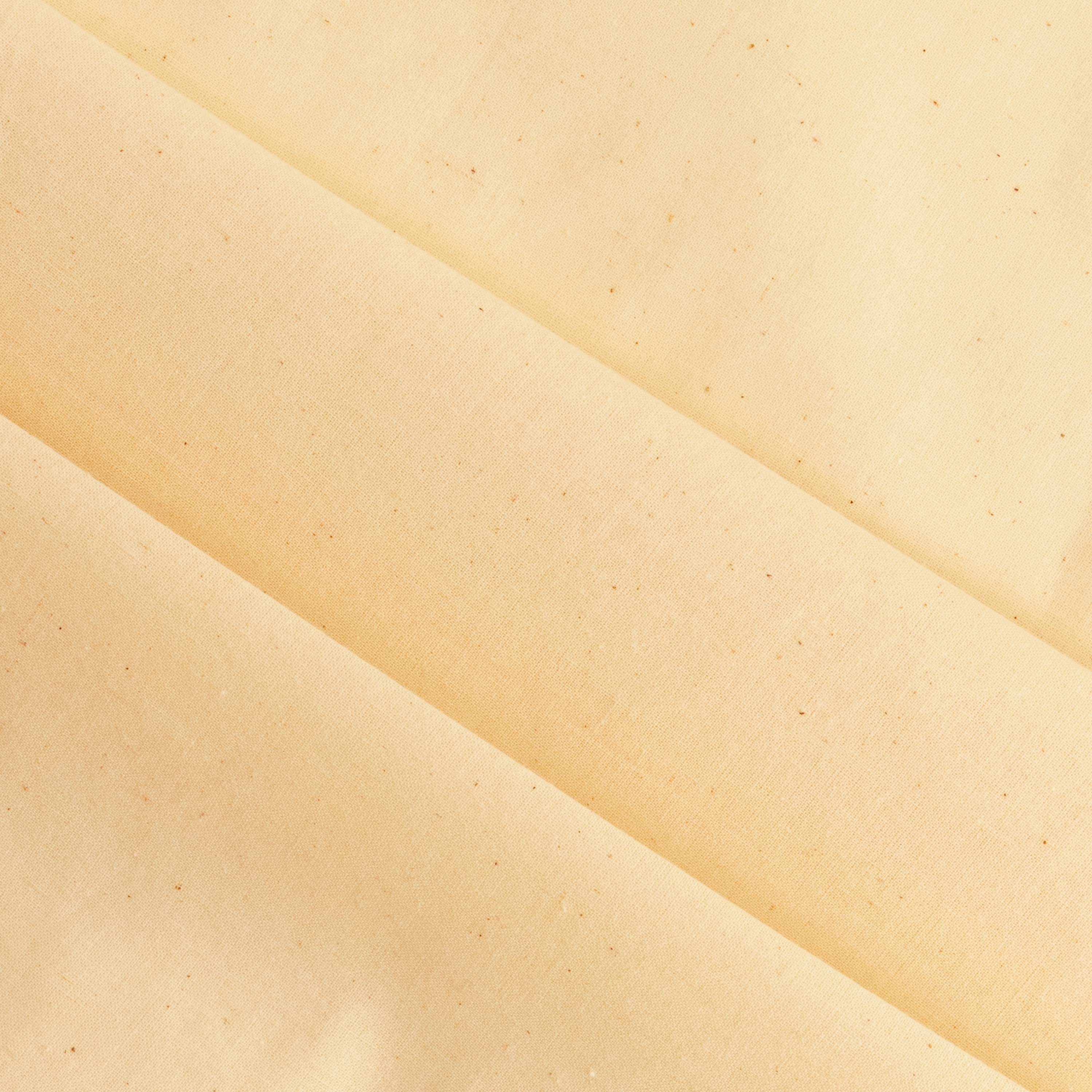
Natural cream or off-white. What we sell. The most versatile base for dyeing, painting, or any project where you want a raw, natural look.
Bleached / White Muslin Fabric:
Pure white, ready for stark white applications without further treatment.
Gauze Muslin (Single & Double Gauze):
Loose, airy weave. Single gauze is the lightest; double gauze, with two layers bonded by light stitching, is what most baby muslin swaddles are made of.
Organic Muslin:
Woven from cotton grown without synthetic pesticides; often GOTS-certified.
Printed Muslin:
Base muslin with printed patterns for apparel and crafts.
Black Muslin Fabric:
Dyed black, often used for backdrops and stage draping.
Dhaka Muslin:
Historically the finest muslin in the world, with thread counts so fine that yards could pass through a wedding ring. Mostly a museum reference today; the original technique was nearly lost.
Muslin vs Cotton, Linen, Gauze and Cheesecloth
Muslin vs Cotton:
Muslin is cotton. "Cotton" describes the fiber; "muslin" describes a particular plain-weave fabric made from that fiber. Other cottons (poplin, sateen, twill) use the same fiber with different weave structures.
Muslin vs Linen:
Different fibers. Muslin is cotton; linen is woven from flax. Linen is stiffer, stronger, and more textured. Muslin is softer, lighter, and more affordable.
Muslin vs Gauze:
Gauze is a type of muslin with a looser, more open weave. Standard muslin is denser.
Muslin vs Cheesecloth:
Cheesecloth is the loosest, gauziest form of muslin: great for straining liquids, not for garments.
Key Considerations
Fiber Content:
Our muslin is 100% cotton, naturally breathable, dyeable, and biodegradable.
Weight and Width:
Lightweight, 47" wide, plain-weave construction. Drape-faithful enough for toiles and apparel, with enough body for quilt backing and backdrops.
Pre-Shrinking:
Cotton muslin shrinks roughly 3 to 5% on the first wash. Always pre-wash and dry before cutting any final garment, quilt, or backdrop.
Continuous Yardage and Bulk:
Most orders ship as uninterrupted cuts. We can also quote bolt or wholesale quantities for production runs. Contact us for bulk muslin fabric pricing.
How to Order Your Muslin
Order the exact yardage you need for your project. We cut continuous lengths to minimize seam interruptions on larger pieces like backdrops or quilt backs. Most US orders ship from New York within 1 to 2 business days, with free shipping over $99 and a $20 minimum order.
Pro Tip: Always wash, dry, and press your muslin before cutting. Pre-shrunk muslin behaves predictably; raw muslin will shift dimensions on you mid-project.
Frequently Asked Questions
What is muslin fabric made of?
Authentic muslin is made of 100% cotton fibers woven in a plain weave. Some modern variants blend cotton with poly or rayon, but traditional muslin, including ours, is pure cotton.
Is muslin cotton?
Yes. Muslin is a type of cotton fabric, distinguished by its lightweight, plain-weave construction. All authentic muslin is cotton.
What does "muslin" mean and how do you pronounce it?
The word derives from Mosul (modern Iraq), historically a hub of textile trade; the fabric itself was perfected in Dhaka, in present-day Bangladesh. Muslin is pronounced "MUZ-lin" with two syllables and a soft "s."
Is muslin breathable?
Very. The loose, open plain weave lets air pass through easily, which is why muslin is a go-to for baby swaddles, summer garments, and warm-weather curtains.
Is muslin soft?
Yes, and it gets softer with every wash. New muslin can feel slightly crisp; a wash and tumble dry breaks it in.
Does muslin shrink?
Yes. Expect roughly 3 to 5% shrinkage on the first wash. Always pre-wash and dry muslin before cutting any final garment, quilt, or backdrop.
How do I wash muslin fabric?
Machine wash cold on a gentle cycle. Tumble dry low or hang to dry. Iron on medium with steam if needed. Avoid bleach on unbleached muslin, which can yellow the fibers.
Is muslin good for babies?
Yes. Muslin's breathability reduces overheating during sleep, the soft hand is gentle on skin, and the loose weave is easy to wash and dries quickly. That's why muslin swaddles dominate baby registries.
Is muslin the same as cheesecloth?
They're related, not identical. Cheesecloth is a very loosely woven, gauzy form of muslin. Standard muslin (like ours) has a tighter weave and more body, better for garments, backdrops, and quilting; cheesecloth is better for straining liquids.
Is muslin the same as linen?
No. Muslin is cotton; linen is woven from flax. Linen is stiffer, stronger, and more textured. Muslin is softer, lighter, more affordable, and easier to sew.
What is butter muslin?
Butter muslin is a slightly finer-woven version of cheesecloth, used to wrap butter or strain dairy. Loose enough to let whey drain, tight enough to hold solids.
What is muslin gauze fabric?
Muslin gauze is muslin woven with an extra-open, airy structure. Single gauze is the lightest; double gauze, with two layers bonded together, is what most muslin swaddles are made of.
Is unbleached muslin organic?
Unbleached muslin is undyed and unbleached, but "unbleached" doesn't automatically mean organic. Organic muslin is specifically grown without synthetic pesticides and is usually GOTS-certified. Our muslin is unbleached natural cotton.
Can I buy muslin fabric by the bolt or in bulk?
Yes. We sell continuous yardage for small projects and can quote bolt or wholesale quantities for larger orders. Contact us for bulk muslin fabric pricing.
Where can I buy muslin fabric?
Right here. Zelouf Fabrics ships muslin by the continuous yard across the US, with free shipping on orders over $99 and a $20 minimum order. Most orders ship from New York within 1 to 2 business days.