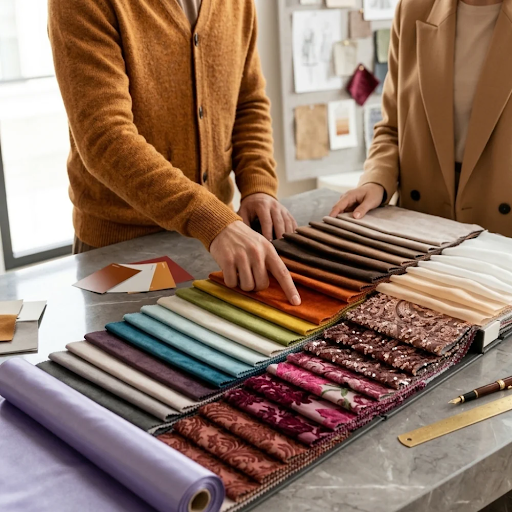
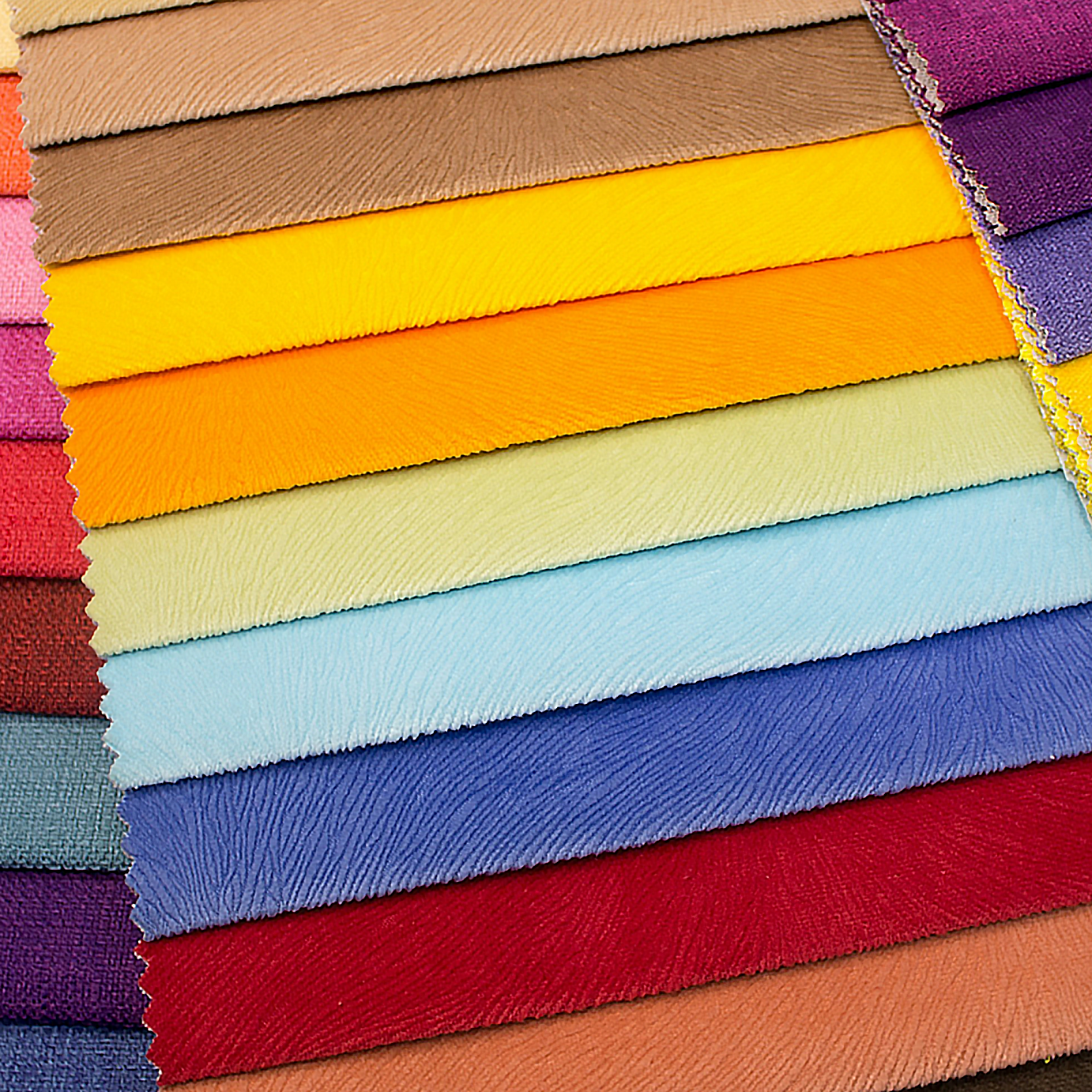

A fabric direction can dominate feeds, forecasts, and show imagery, then fail the real test the moment budget is on the line. The question in 2026 is not whether something looks current. It is whether it will drape well, photograph well, sew well, and still feel relevant after the first run of dresses, the first event install, or the first round of customer orders.
From where we sit, 2026 looks less like a year of endless novelty and more like a year of edited confidence. The strongest fabric trends are built around fluidity, polished luster, soft structure, tactile stretch, and selective statement texture. In other words, the smartest buys are not the loudest ones. They are the fabric families that give makers, designers, and decorators enough visual relevance to feel current, while still earning their place through performance, versatility, and reorder logic.
Source with confidence
Explore fabrics that balance trend appeal with real-world performance
From airy sheers and polished satins to dependable cotton basics and stretch mesh, Zelouf offers practical fabric options for fashion, décor, costumes, and production runs.
Browse Fabric CollectionsThe most important change is that trend language is moving closer to fabric behavior. We are seeing more emphasis on longevity, craftsmanship, and material presence, which means buyers are asking better questions. Instead of chasing a vague mood, they want to know whether a fabric has body or flow, whether the shine reads rich or harsh, whether the opacity works under light, and whether the hand supports one beautiful sample or a whole season of practical use.
That shift creates a few clear pillars. First, fluid transparency is staying important, especially in layered dressing, bridal styling, event décor, and costume work. Second, polished occasion surfaces are getting sharper and more intentional, with satins and formal dress fabrics chosen for clean impact rather than excess. Third, soft structure matters more than stiff drama, which is why practical cotton-based staples and controlled body fabrics remain so useful. Fourth, stretch and movement continue to matter across performancewear, fitted fashion, dance, and sheer layering. Finally, statement texture is still in the picture, but in a more disciplined way — used to punctuate a collection or project, not carry every yard of it.
That is good news for anyone buying online. It means we can separate fabrics that are genuinely worth stocking from fabrics that are better treated as samples, accents, or limited-run experiments.
What Trend Talk Means Once You Actually Have To Buy
A trend is only as useful as the yardage decision it leads to. When we evaluate a 2026 direction, we come back to a small set of questions: How does it drape? How much light passes through it? Does the sheen flatter the project or overpower it? Is the stretch supportive or unstable? Will it wrinkle immediately? Can we picture it working for more than one use?
That is especially important for readers comparing wholesale fabric suppliers online. A smart trend buy is not just about the fashion story. It is about sourcing confidence. The safest online choices are fabrics whose behavior is well described, whose use cases are broad, and whose visual payoff does not depend on one highly specific styling trick. For 2026, that leads us toward a mix of workhorse staples and selective trend fabrics rather than all-in commitment to one dramatic look.
Fluid Sheers And Airy Overlays
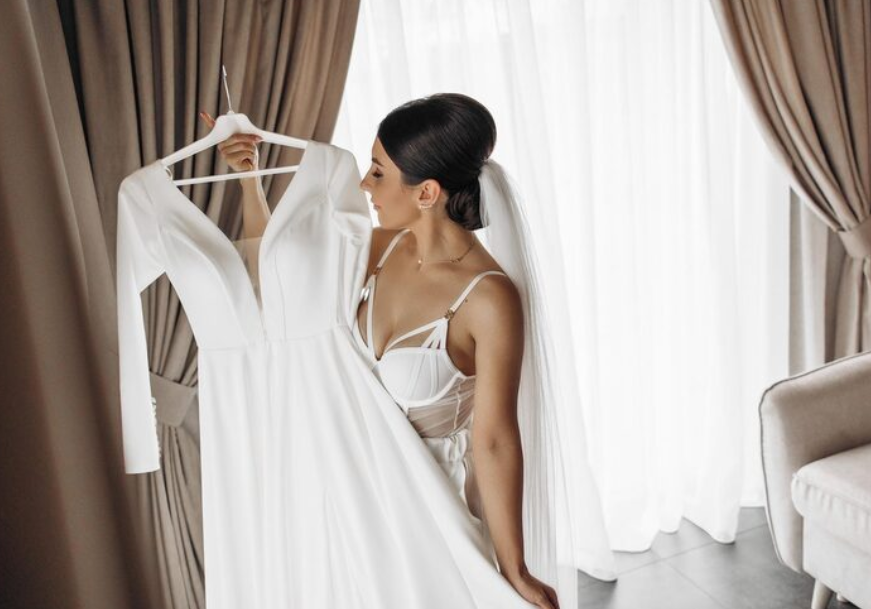
What is driving this trend? 2026 continues to favor softness, movement, and layered depth over flat surfaces. Sheer fabrics answer that beautifully. Chiffon, soft organza, mesh overlays, and other airy dress fabrics create dimension without visual heaviness, which is exactly why they keep showing up in occasionwear, bridal details, dance costumes, sleeves, veils, backdrops, soft table accents, and lightweight decorative installations.
This category has real crossover value. A good sheer can move from flutter sleeves to bridal wraps, from layered skirts to stage drapes, from bows and sashes to café curtains, photo backdrops, and craft details. That kind of range matters. For designers, it supports capsule dressing and layered styling. For event pros, it offers volume without too much weight. For home sewists and costumers, it creates drama with relatively low yardage commitment.
The risk is predictably online: opacity and body can vary more than shoppers expect. One chiffon may skim and float. Another may feel flatter or more transparent than the project allows. This is a category we usually place in the sample-first group unless the fabric is already familiar. Buy sheers with a specific use in mind, and pay close attention to whether the project needs drape, puff, softness, or sculptural hold.
When the application is broad and repeatable, though, fluid sheers are worth keeping in rotation. They are especially useful for bridal overlays, blouses, costume layers, scarf details, sleeve volume, backdrop softness, table swags, baby items, gift wrapping accents, and lightweight decorative crafts. In 2026, they are not a fringe trend. They are a practical way to add motion and lightness.
Couture Satins And Polished Occasion Surfaces
If sheers bring air, satins bring focus. One of the strongest 2026 directions is polished luster — not random shine, but controlled surface interest that reads intentional in person and in photos. That is why satin families, charmeuse, bridal satins, and structured formal surfaces keep earning attention. They immediately signal occasion, and they do it without needing heavy embellishment.
This is where project fit really matters. A liquid satin or charmeuse can be stunning for bias-cut dresses, blouses, slips, linings, draped skirts, robes, scarves, and formal costume pieces. A more substantial bridal satin or stretch Mikado-style surface works better when the design needs cleaner architecture: gowns, corseted bodices, overskirts, structured cocktail dresses, jackets, bows, formal décor panels, and event accents that need presence. For many readers, this is the family that feels the most trend-right while still being commercially sensible.
But polished occasion fabrics are not all equally low-risk. The payoff is strong, yet fit sensitivity is real. Shine can emphasize every seam choice. A fabric that looks luxurious in a product photo may read too slick, too stiff, or too crease-prone for the job if the buyer skips the behavior questions. That is why we treat this as a split category: familiar satin bases can be stocked as dependable formal staples, while newer or more specialized lusters should be sampled first.
For brands, costumers, and advanced home sewists, this is a smart place to invest because the uses are broad: eveningwear, bridesmaid dresses, prom looks, dance costumes, fashion tops, dramatic skirts, ring pillows, decorative sashes, event tablescapes, and statement bows all live comfortably here. The visual return is high, and in 2026 that kind of polish still feels current.
Soft Utility Cottons And Workhorse Structured Basics
Not every trend-worthy fabric has to look precious. In fact, one of the clearest 2026 realities is that practical, craftsmanship-oriented projects are gaining value. That makes soft utility cottons and structured cotton blends more important, not less. These are the staples that support actual workrooms, and they continue to be the workhorse of the textile world.
Muslin, poplin, and similar cotton-based basics align with the year’s longevity mindset because they do so many jobs well. They help designers test shape before cutting expensive fashion fabric. They help small-batch makers build clean shirts, dresses, linings, aprons, uniforms, and children’s wear. They help decorators with simple panels, table covers, café curtains, and soft home accents. They help crafters with quilt backing, dye projects, painted backdrops, baby items, tote bags, and countless prototypes. This is the muslin to keep stocked, and this is the kind of staple that keeps a workroom moving.
The trend value here is subtle but important. In 2026, authenticity and material honesty matter. A crisp cotton or dependable poplin can ground trend-forward design by giving structure beneath sheers, balance beneath shine, and reliability beneath experimentation. That makes these fabrics less glamorous on paper, but often more profitable and more reusable in practice.
We would classify this family as stock now. If you are building a low-risk fabric mix, these basics carry too much practical value to leave out. For professionals and advanced hobbyists alike, they are the stable layer beneath trend buying.
Stretch Meshes And Performance Sheers
Stretch mesh sits at an interesting point in the 2026 landscape because it bridges softness and function. It supports the continuing appetite for transparency, but it does so with movement, body awareness, and versatility. In fitted fashion, dancewear, costuming, bridal inserts, sleeves, overlays, and stage garments, that combination is hard to replace.
Power mesh and related stretch sheers are especially valuable because they solve problems, not just style stories. They can smooth, support, layer, reveal, or conceal depending on how they are used. They work for illusion necklines, ruched dresses, performance costumes, bodysuits, panel inserts, sleeve treatments, soft headpieces, decorative draping, and creative craft applications. For readers balancing aesthetics with wearability, this category earns its place quickly.
The online risk is mostly technical. Stretch direction, recovery, and opacity matter more here than they do in many woven categories. A mesh that is ideal for one body-skimming project may be too open or too soft for another. That means project discipline is important. If the fabric is doing structural work, sample first. If it is a familiar support fabric that already serves your sewing practice, it can absolutely function as a staple support buy.
For 2026, we see stretch sheers less as a novelty and more as a practical trend carrier. They let readers participate in transparency and layering without giving up movement, fit, or stage visibility.
Faux Leather And Controlled Statement Texture
Some trends are best approached with restraint, and faux leather is a perfect example. It still delivers strong impact in 2026, especially when the broader mood calls for tactile contrast and selective edge. But this is not the category to buy in bulk just because it looks striking in a trend roundup.
Used well, faux leather can transform a project. It works for trim, corset panels, skirts, jackets, bags, belts, costume armor details, event signage accents, table runners, banquette-style décor moments, and bold craft applications. It brings clean contrast when paired with sheers, cottons, satins, or mesh, which is part of why it remains relevant. A little can go a long way.
The reason we place this in the accent category is simple: the visual payoff is high, but the use range is narrower than many buyers expect. Hand, thickness, flexibility, and sewing tolerance all matter. This is a statement surface, not an all-purpose base. For brands and makers, that makes it smarter as a controlled buy — enough to create punctuation, not so much that the whole fabric plan depends on one rigid idea.
In 2026, faux leather succeeds when it sharpens a collection or project. It becomes less convincing when it tries to do everything.
Fluid Dress Fabrics With Cellulosic-Look Movement
One of the most commercially useful directions for 2026 is the return to easy movement in everyday dress fabrics. Readers may see this trend described in different ways — fluid tailoring, softened femininity, relaxed polish — but the yardage version is straightforward. We want fabrics that move cleanly, wear comfortably, and work across more than one season or occasion.
That is why fluid dress goods with a cellulosic look or feel deserve attention. Whether the exact fiber blend varies, the goal is the same: soft drape, wearable movement, enough opacity for practical use, and a finish that can read dressed up or pared down. These are excellent for dresses, blouses, skirts, wide-leg pants, scarves, dance looks, layering pieces, capsule collections, resort-adjacent styles, and elegant home-sewing projects that need repeat wear rather than one-photo drama.
This family is especially attractive for small brands and advanced sewists because it often crosses the line between trend and staple. The silhouettes can change while the fabric remains useful. A fluid blouse fabric today can support a slip dress, wrap skirt, robe, soft jumpsuit, or scarf detail later. That kind of reuse is exactly what makes a 2026 trend worth buying into.
We place many of these fabrics in the stock-now or sample-then-stock category depending on finish and opacity. They give enough modern relevance to feel timely, but enough practicality to support real production and repeat sewing.
How We Would Buy These Trends In 2026
- Stock now: soft utility cottons, dependable poplins, familiar formal satins, and versatile fluid dress fabrics with broad use across apparel, décor, and prototyping.
- Sample first: airy sheers, specialty polished surfaces, and stretch meshes when opacity, recovery, or body will make or break the project.
- Use as an accent: faux leather and other strong statement textures that deliver high visual impact but narrower crossover value.
If we were building a sensible 2026 fabric mix, we would start with the workhorse layer first: cotton staples, useful dress fabrics, and formal bases that can support repeat use. Then we would add selective trend accents — a fluid sheer for lightness, a polished satin for occasionwear, a stretch mesh for movement, and a statement texture only where the design truly benefits from it. That approach serves designers, manufacturers, costumers, decorators, and advanced home sewists far better than buying trend language in bulk and hoping it behaves once it arrives.
That is also why a broad, practical source matters. The best trend buy is not simply the fabric that looks exciting today. It is the one you can understand clearly, order with confidence, and put to work across real projects. For 2026, the strongest plan is a balanced one: staple bases, selective shine, useful transparency, controlled stretch, and statement texture in measured doses — the kind of mix Zelouf is especially well positioned to support.
Frequently Asked Questions
Which 2026 fabric trend is the safest to buy in larger quantities?
Soft utility cottons, poplins, and versatile fluid dress fabrics are usually the safest larger-quantity buys because they cross over so easily between fashion, mockups, décor, and craft applications. They offer the best blend of trend relevance, practicality, and reorder logic.
Which trend fabrics are most important to sample first?
We would sample airy sheers, specialty satins, and stretch meshes first when the project depends heavily on exact opacity, sheen, or recovery. Those details can change how the fabric performs on the body, under lights, or in photos.
Are shiny fabrics still in for 2026?
Yes, but the direction is more polished than flashy. Controlled luster — especially in satin, charmeuse, bridal satin, and structured formal surfaces — feels stronger than overly harsh or novelty shine.
How do I keep a 2026 trend buy from becoming a one-project mistake?
Choose fabrics with crossover use. Ask whether the same fabric could work for dresses, overlays, décor accents, costumes, soft separates, or future seasonal updates. The more specific the effect, the more likely it belongs in the sample-first or accent category.
What care language should I expect for dependable basics?
For many practical staples, clear care guidance builds trust and helps with planning: Machine Wash, Cold; Gentle Detergent, No Bleach. Tumble Dry, Low Heat. Do not wring.
Ready to buy smarter for 2026?
Shop the fabric bases and trend accents worth keeping in rotation
Build a low-risk fabric mix with workhorse cottons, formal satins, fluid dress fabrics, sheers, mesh, and statement textures backed by clear product details and flexible ordering.
Shop Fabrics Now