
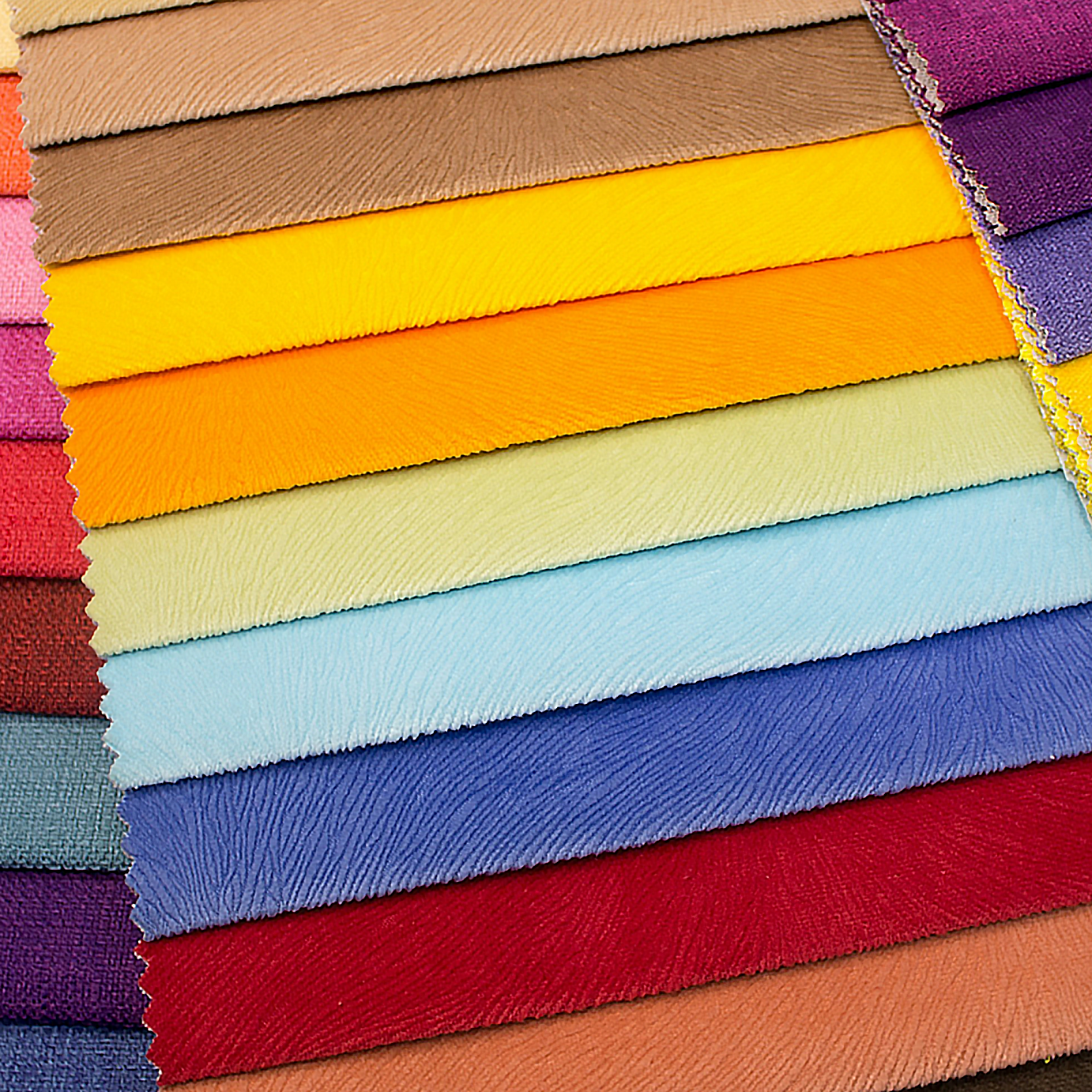

The production order is due today. Artwork for the concert’s scenic panel is approved, and a fabric swatch looks promising, but nobody has printed on it, mounted it, packed it, or asked the venue to review it. What, exactly, does that swatch prove about the piece the crew must deliver? We would hold the yardage order until the choice has passed two gates: a finished sample that survives the intended handling and confirmation of what the venue requires for the completed assembly.
A painted flat needs a surface that takes the intended paint evenly and stays controlled when attached to its frame. A printed convention graphic needs to work with a particular printer and process; its color, sharpness, and opacity must hold up under booth lighting. A covering on a frequently touched prop has another priority: the show-facing finish cannot rub off or pull loose at corners after load-in and repeated use.
Those jobs may lead to different fabrics or different backing and attachment methods. We would not specify one material across an entire set merely because its raw color matches. First decide which surfaces carry detailed artwork, which will be seen against light, and which hands and cases will touch most often.
Use this matrix to brief your painter, printer, or fabricator before requesting test yardage. It identifies questions to check, not fabric categories that are automatically suitable.
| Scenic use | Surface and finish | Light response | Edges and handling | Width and attachment |
|---|---|---|---|---|
| Painted flat | Check whether the weave and planned preparation give the paint the desired coverage and detail. | Test for unwanted show-through under actual front and back lighting. | Inspect painted folds and tension points for cracking or rub-off. | Plan seams around artwork; test the actual frame attachment and tension. |
| Printed graphic panel | Have the printer test the exact fabric and process for sharpness, color, and finish adhesion. | Check opacity, glare, and color under booth or stage lights. | Test print near hems and attachment points after handling. | Confirm usable print width, seam placement, and the planned hanging or mounting method. |
| Handled prop covering | Favor the intended look without overlooking how its finish behaves under contact. | Check shine or transparency from audience sightlines. | Stress-test corners, joins, and places crew members grip. | Allow for wrapping, fastening, and any pieces needed to cover curves or edges. |
Usable width matters more than nominal width when a hem, seam allowance, or printer margin consumes part of the cloth. If a seam crosses a face or a logo, revise the panel layout while the artwork can still move.
We make fiber content, weight, intended uses, and care information useful starting points in Zelouf product descriptions. They can help an art team narrow a by-the-yard shortlist, but they do not establish that a specific fabric accepts a chosen paint, ink, transfer process, or coating. Ask the painter or printer to test the exact candidate with the process and preparation planned for production.
Where available, a small test-yardage order keeps that experiment manageable. Before treating a successful sample as a production specification, confirm that enough continuous yardage of the same fabric is available for the cut plan, including seams, test losses, and any needed spare panels. Do not finalize graphic dimensions around a width or quantity you have not confirmed.
Make a sample that can fail before the show does
A painted or printed rectangle laid flat on a table is only a finish test. Build a representative section at the intended scale of detail: apply the real paint or print, add any backing or coating, finish an edge, and attach it with the planned hardware or method. Include a corner or seam if the production piece will have one. Let each finish complete the drying or curing process specified by the people applying it before you judge the result.
Then pack the section the way the crew will pack it, move it through a mock load-in, unpack it, and handle its high-contact areas. Inspect it under representative lighting and from audience distance as well as up close. Cracking may call for a different finish or less severe folding; rub-off may require a different process or protected touch points. Distortion can point to a tension or backing problem, while a failing edge calls for a new finish or attachment detail. Make that change and retest rather than assuming the full-size panel will behave better.
Ask what the venue needs to approve
Fire-safety review belongs on the production calendar before fabric specifications and print files are locked. Ask the venue or show organizer which standard applies to this use, what evidence it accepts for the exact material and finished assembly, who reviews it, and when documents must be submitted. For a touring concert or traveling convention booth, check each stop rather than assuming one approval carries over.
Describe the proposed paint, ink, coating, backing, mounting, and installation method when you ask. A document for untreated fabric may not answer the venue’s question about an altered or assembled panel; the venue or applicable authority determines what additional evidence or testing it requires. An “event décor” product category, fiber description, or successful handling test is not a fire-safety certification.
Once the mounted sample performs, the required documentation and submission path are confirmed, and sufficient continuous yardage is available, the team has a defensible production-order decision. For a concert set or convention booth, explore Zelouf’s event décor fabrics for candidates to sample—then verify the exact product’s finish compatibility and venue requirements before scaling up.
